Home Education
Category:

Education

Teachers' New Salaries 2026: TSC Reveals Biggest Winners Under Latest CBA

Thousands of teachers are set to receive revised salaries in the July 2026 payroll after the implementation of the second phase of the Teachers Service Commission (TSC) Collective Bargaining Agreement (CBA), with new figures showing that classroom teachers will enjoy some of the biggest pay increases.

The revised salary structure indicates that several classroom-based teaching grades will receive larger monthly salary increments than some senior school administrators, including principals and head teachers.

The changes are expected to take effect from July 1, 2026, with the new salaries reflected in teachers’ July payslips.

Secondary Teacher I gets the biggest increase

According to the new CBA salary matrix, Secondary Teacher I (Grade C3) has emerged as the biggest beneficiary among the selected entry-level salary points.

Teachers in the grade will receive a monthly increase of KSh2,055, pushing their minimum basic salary from KSh46,699 to KSh48,754.

The increase is the highest among the job groups highlighted in the new salary schedule.

Grade C2 teachers also receive a major boost

Teachers serving as Secondary Teacher II (Grade C2) will also benefit significantly.

Their minimum basic salary will increase by KSh2,030, rising from KSh39,070 to KSh41,100.

The sizeable adjustment places classroom teachers among the biggest winners under the second phase of the CBA.

Senior administrators receive smaller increments

While senior school administrators will also benefit from the salary review, the increases are noticeably smaller than those awarded to some classroom teachers.

Under the new salary structure:

  • Grade D5 (Chief Principal) will receive an increase of KSh986, with the minimum basic salary rising from KSh132,365 to KSh133,351.
  • Grade D4 (Senior Principal) will receive an increase of KSh887.
  • Grade D3 (Principal/Deputy Principal I) will receive a monthly increase of KSh796.

The figures suggest that although administrators continue to earn substantially higher salaries overall, their monthly salary adjustments under this phase of the CBA are lower than those awarded to some teachers in classroom-based grades.

Grade D2 records the smallest increase

The smallest increase among the highlighted grades goes to Grade D2, which includes Head Teachers and Deputy Principal II.

Teachers in the grade will receive a monthly increase of KSh693, with the minimum basic salary moving from KSh93,190 to KSh93,883.

New salaries expected in July payroll

Sources familiar with the implementation of the agreement indicate that the revised salary rates will be reflected in the July 2026 payroll, with effect from July 1, 2026.

However, the salary adjustments published in the matrix represent minimum basic salaries for each grade.

This means the increases will not be identical for every teacher.

Teachers earning salaries at higher notches within the same grade are expected to receive different increments based on the official TSC salary progression and conversion tables.

Part of the 2025–2029 CBA

The salary review forms part of the implementation of the 2025–2029 Collective Bargaining Agreement negotiated between the Teachers Service Commission and teachers’ unions.

The agreement provides for phased salary adjustments aimed at improving teachers’ remuneration over the life of the CBA.

The latest implementation follows the approval of revised public sector salary structures by the Salaries and Remuneration Commission (SRC), which recently issued guidelines for implementing salary adjustments arising from Collective Bargaining Agreements across government institutions.

Why classroom teachers are among the biggest winners

The latest salary matrix has attracted attention because it shifts the focus of larger percentage increases towards classroom-based teaching positions rather than senior administrative roles.

Although principals and chief principals remain among the highest-paid employees in the teaching service, the July adjustments show that teachers in Grades C2 and C3 are receiving larger monthly increments under this phase of the CBA.

Education stakeholders say the approach could help improve morale among classroom teachers, who make up the largest share of the TSC workforce and are directly involved in teaching and learning.

What teachers should know

Teachers are advised to note that:

  • The figures represent minimum basic salaries at the entry point of each grade.
  • Individual salary increments will vary depending on a teacher’s salary notch.
  • The revised salaries are expected to take effect from July 1, 2026 and be reflected in the July payroll.
  • Allowances are separate from the revised basic salary and will continue to be paid in accordance with existing TSC and SRC guidelines.

The implementation of the second phase of the CBA marks another step in the government’s plan to progressively enhance teachers’ pay while aligning public sector salaries with negotiated collective bargaining agreements.
0 comment
0 FacebookTwitterPinterestLinkedinTumblrWhatsappTelegramEmail
Julius Ogamba

Thousands of teachers who marked the 2025 Kenya Certificate of Secondary Education (KCSE) and Kenya Junior School Education Assessment (KJSEA) examinations have finally received the balance of their long-awaited marking allowances after months of delays.

In a statement issued on Thursday, Education Cabinet Secretary Julius Ogamba announced that the Kenya National Examinations Council (KNEC) had completed the disbursement of the outstanding payments following the release of KSh1.5 billion by the National Treasury.

The Cabinet Secretary said the funds were received on July 7, 2026, enabling KNEC to clear the pending balances owed to examiners.

“We are pleased to inform all examiners who participated in the marking of the 2025 Kenya Junior School Education Assessment and the Kenya Certificate of Secondary Education examination, that the balance of their marking allowances has been disbursed to their respective accounts by the Kenya National Examinations Council.”

Ogamba added that the payment followed the Treasury’s allocation specifically meant to settle the outstanding dues.

“This disbursement follows the receipt of KSh1.5 billion from the National Treasury on 7th July, 2026, being the allocation for clearing the balance.”

The CS also thanked teachers and other contracted professionals for their patience during the delayed payment period.

“We commend the examiners and other contracted professionals for their professionalism, patience and continued commitment to fostering quality and credibility in our national assessments and examinations.”

Months of frustration

The announcement brings to an end months of anxiety among thousands of contracted professionals who had repeatedly complained over delayed payment of allowances earned during the administration and marking of the 2025 national examinations.

The delays sparked widespread dissatisfaction among teachers, with many taking to social media and professional forums to demand the immediate release of their dues. Some examiners warned that continued delays could discourage teachers from participating in future national examinations, while others threatened industrial action if the payments were not made.

The Ministry of Education had earlier acknowledged the delays, attributing them to budgetary constraints while assuring affected teachers that the government was working with the National Treasury to secure the required funds.

Treasury steps in

The breakthrough came after Treasury Cabinet Secretary John Mbadi confirmed that the National Treasury would release KSh1.5 billion to facilitate payment of contracted professionals engaged in the 2025 national examinations.

The allocation was ring-fenced to clear outstanding allowances owed to examiners, supervisors, invigilators, centre managers and other personnel involved in administering the national examinations and assessments.

Earlier this month, the Ministry of Education confirmed that the funds had been transferred to KNEC, paving the way for processing of payments.

Relief for thousands of teachers

The payment is expected to provide relief to thousands of teachers who participated in the marking of the 2025 KCSE and KJSEA examinations and had waited for several months to receive their full allowances.

Reports indicate that the delays had left many examiners struggling financially, with teacher unions and education stakeholders repeatedly urging the government to prioritise settlement of the arrears.

The issue also generated concern within the education sector, coming at a time when teachers have been pushing for improved welfare and timely payment for additional duties undertaken on behalf of KNEC.

Government promises timely payments

With the outstanding balances now cleared, the Ministry of Education says it remains committed to ensuring contracted professionals are compensated promptly for future national examinations.

The government has previously pledged to streamline funding for examination administration to avoid a repeat of the delays experienced after the 2025 examination cycle.

The payment marks the conclusion of a months-long standoff that had become one of the most pressing concerns among teachers involved in Kenya’s national examination system, with thousands of examiners now receiving the compensation they had been awaiting since completing the marking exercise.

0 comment
0 FacebookTwitterPinterestLinkedinTumblrWhatsappTelegramEmail

Kenya’s law enforcement system is once again in the spotlight, this time through the lens of one of its own.

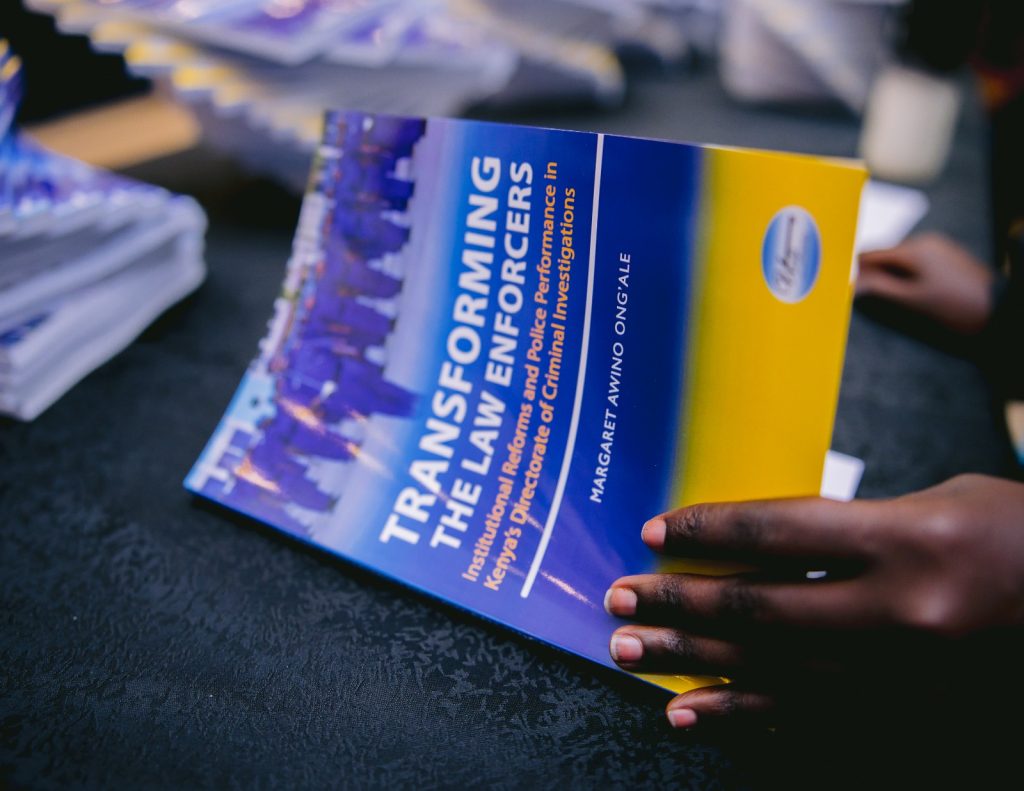
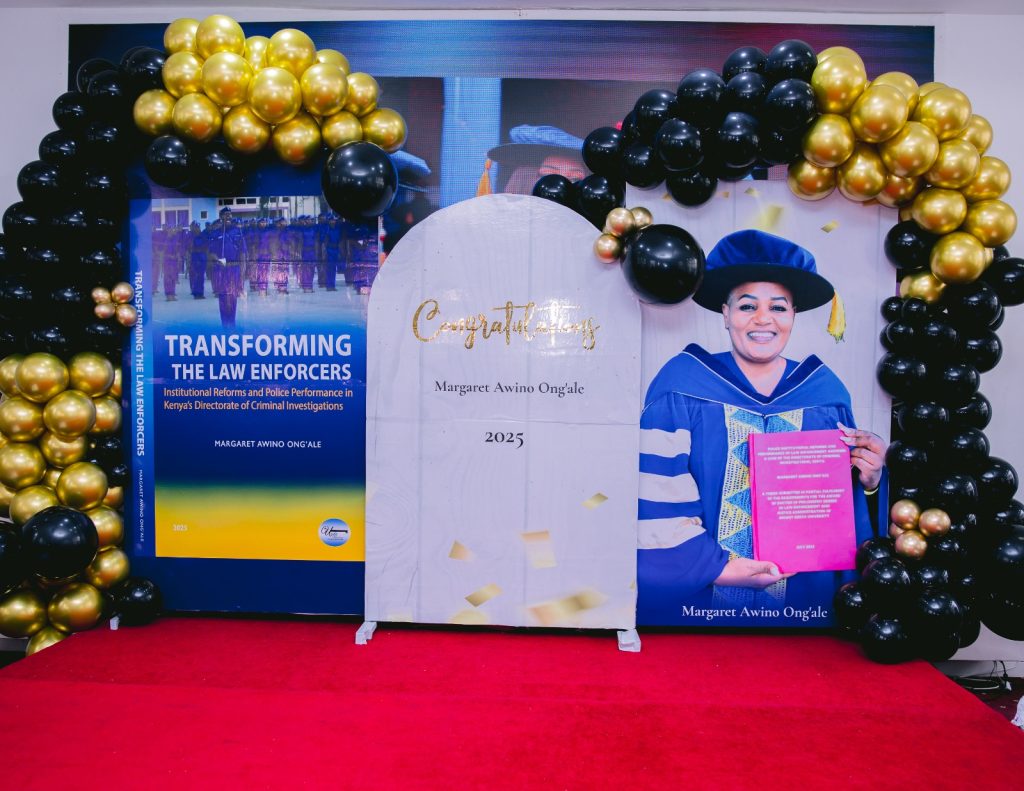
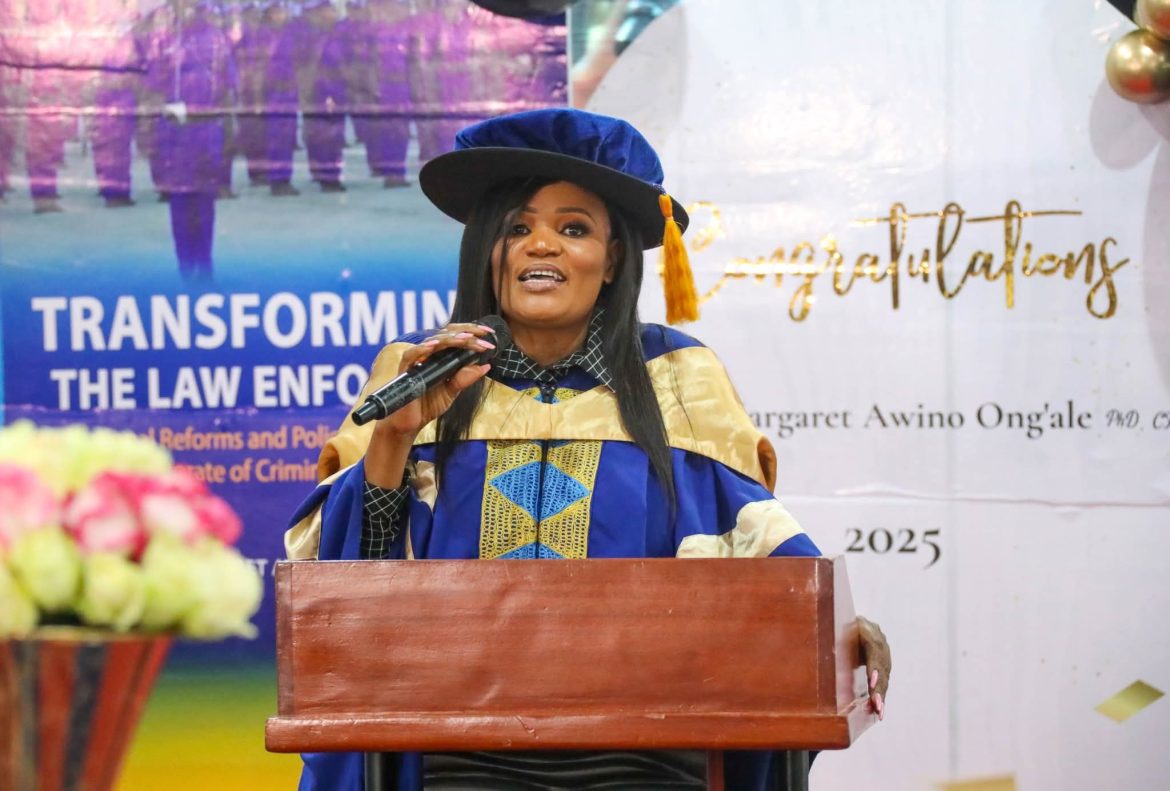
Dr. Margaret Awino Ong’ale, the first DCI female officer to earn a doctorate degree, has officially launched her new book Transforming the Law Enforcers, a detailed and research-backed examination of how targeted reforms within the Directorate of Criminal Investigations (DCI) can improve performance, ethics, and public service delivery.

The book is based on extensive quantitative and qualitative research involving DCI officers, civil society representatives, and community leaders. It explores how reforms in training, personnel management, and the use of modern technology affect the way officers perform their duties.

Dr. Ong’ale’s findings show that while enhanced training significantly improves professional skills, sustainable change depends on fair and transparent personnel policies, strategic deployment of technology, and active engagement with the communities the police serve.

The launch came just days after Dr. Ong’ale graduated with her doctorate, marking a double milestone in her career — achieving the highest academic qualification while unveiling a work she hopes will spark critical conversations and reforms within the DCI and the wider policing community.

Speaking during the launch in Nairobi, Dr. Ong’ale said the book was inspired by both her professional journey and her academic research. Having served within the DCI for years, she witnessed first-hand the difference reforms can make in training standards, leadership approaches, and technological adoption.

She explained that her doctoral work provided the evidence and analysis she needed to present these lessons beyond the academic world, to policymakers, young officers, and the wider public.

This is more than just a book—it is my journey as an officer, a researcher, and a reform advocate,” she said. “I have seen how targeted changes in training, leadership, and technology can reshape the way we fight crime. My hope is that this work inspires integrity, service, and bold action, especially among young officers. I also want it to encourage more women to step forward into leadership roles in law enforcement, in policy, and in research.”

The launch of Transforming the Law Enforcers comes at a critical time for the DCI, which is under pressure to adapt to increasingly complex criminal networks while improving accountability and public trust. Dr. Ong’ale’s research notes that while progress has been made—particularly in specialist training and the introduction of digital investigative tools—there is a risk that these gains could be eroded if underlying management systems remain opaque or if accountability mechanisms fail to meet public expectations.

The book calls for transparent recruitment and promotion processes, continuous professional development for officers at all ranks, improved resource allocation for investigative tools, and stronger frameworks for cooperation between police and the public. Dr. Ong’ale argues that these steps are necessary to create a police service that is responsive, ethical, and trusted by the communities it serves.

While her research focuses on Kenya’s DCI, Dr. Ong’ale believes the lessons in the book have relevance far beyond the country’s borders. She points out that many African countries face similar structural and operational challenges in law enforcement, and that strengthening police institutions at the national level will also improve regional cooperation in tackling crime.

Transforming the Law Enforcers is now available in select bookstores Currently the book is at Nuria stores, Kibanga books, online and can be ordered directly from the author too. With its blend of personal insight, rigorous research, and practical recommendations, the book is expected to become an important resource for law enforcement leaders, policymakers, scholars, and members of the public who care about building a policing system that delivers on its mandate while upholding the highest ethical standards.

She’s currently the Imenti central Criminal investigations officer

This is how the Booklaunching event went down at Weston Hotel . Watch it HERE

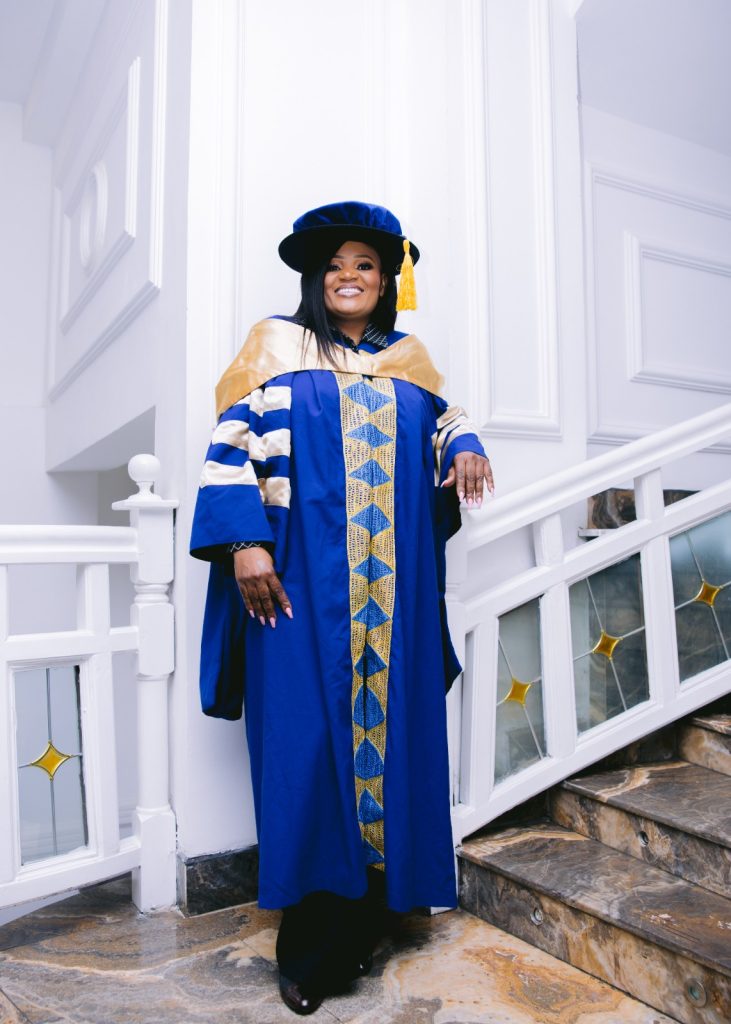
Below are her pics during her graduation.

0 comment
0 FacebookTwitterPinterestLinkedinTumblrWhatsappTelegramEmail

Education PS Julius Bitok has reaffirmed the government’s commitment to monetizing students’ creative talents and showcasing their art on the global stage. Speaking at the 97th edition of the Kenya Music Festival (KMF) in Meru, PS Bitok emphasized the importance of elevating the festival’s reach beyond national borders, envisioning a future where Kenyan performers dominate international platforms with their unique blend of creativity and cultural heritage.

“As we approach the 100th year of this festival, I want one of our legacies to be that Kenya is performing and leading globally in master music,” he remarked. “Music is a powerful tool for storytelling and conveying messages that transcend language and cultural barriers.”

This year’s KMF theme, “Enhancing the Creative Economy through Artistic Expression for Sustained Development,” highlights the critical role of music and arts in shaping Kenya’s national identity, fostering innovation, and driving socio-economic growth. PS Bitok reiterated the Ministry of Education’s vision to transform the festival into a sustainable economic engine by monetizing the artistic talents displayed during the event.

“The lifespan of the cream of our talent should outlive the few minutes of stage glory,” he stated. “It should be immortalized in commercially tradeable formats that generate real cash and future royalties.” He revealed plans to engage the Talent Fund and other strategic partners to develop frameworks that will enable young artists to earn from their creativity.

By nurturing and commercializing talent, the festival can create income-generating opportunities for students, teachers, and schools while contributing to Kenya’s broader socio-economic development. PS Bitok encouraged students and teachers to view music and arts education as more than just extracurricular activities.

“We appreciate an important platform for discovering and modeling talents. We see incubation sessions for future local and global stars. We see potential income-generating opportunities and job creation avenues that will be crucial contributors to the socio-economic development we aspire for. Music education, arts, and culture are not mere co-curricular activities but vital components of a well-rounded education that fosters creativity, innovation, and national identity,” he emphasized.

Earlier, KMF Chair Prof. Frederick Ngala echoed Bitok’s vision of global recognition, emphasizing the festival’s evolution into a globally significant event. He highlighted the celebration of diverse African, occidental, oriental, and Arabic cultures as a distinctive strength capable of elevating the festival to the international stage.

“This festival is not just about competition; it is about social learning where students, teachers, and adjudicators learn from one another. Our learners are already winners for making it to the national level,” said Prof. Ngala. He also noted the festival’s role as a practical platform for applying classroom knowledge under the competency-based curriculum while fostering inclusivity by integrating learners with special needs into the competition.

Recognizing the collaborative efforts that make such inclusivity possible, the PS also acknowledged the indispensable role of sponsors in growing the creative industry, calling their support “a testament to the power of partnership and collaboration in achieving excellence.”

“In a special way, I also wish to acknowledge and appreciate the magnanimity of our sponsors, including the Sports Fund, Equity Bank, KICD, Communication Authority, Jubilee Insurance, Kenya Cultural Centre, Brookside East Africa, Kenya Wildlife Service, among others, who have generously made this festival a reality. Together, let us harness the transformative power of music and art to shape our national identity, foster creativity, and drive socio-economic development,” he stated.

Equity Bank, the festival’s main sponsor, supported students performing under the bank’s KMF theme, “Securing Lives Transformed and Wealth Created through Life, Health, and Wealth Insurance.” Schools such as Moi Forces Academy Nairobi, Nzoia Sugar Primary, Holy Cross Primary from Western Kenya, and Mii Primary School will showcase their pieces before President William Ruto at the State Lodge in Sagana.

Winners under the Equity-sponsored insurance theme will receive Ksh100,000, Ksh50,000, and Ksh30,000 for first, second, and third positions, respectively, alongside trophies and certificates.

The festival, featuring over 150,000 participants from preschools, primary schools, junior secondary schools, secondary schools, teacher training colleges, TVET institutions, and universities, is still underway. Events are taking place across Meru School, Meru Teachers College, and Kaaga Girls High School from August 4 to August 12, 2025. Winners’ galas are scheduled for August 13 and 14, culminating in a State Concert at Sagana State Lodge on August 16, 2025.

0 comment
0 FacebookTwitterPinterestLinkedinTumblrWhatsappTelegramEmail

The 97th Kenya National Music Festivals officially kicked off in Meru County, with students showcasing their creativity and cultural heritage. Speaking at the opening ceremony held at Meru School, Governor Isaac Mutuma warmly welcomed participants, emphasizing the festival’s significance in promoting local culture, youth empowerment, and national development.

“It is both an honour and a great privilege for Meru County to host the 2025 edition of the Kenya National Music Festivals, a celebration of rich culture, creativity, and youthful brilliance,” Governor Mutuma declared. “Today, Meru comes alive with the sounds of our national soul, the beat of tradition, the vibrancy of youth, and the spirit of unity. For our young performers, your stage is here. Your time is now. Shine with confidence, sing your truth, dance your heritage, speak your soul.”

Beyond artistic expression, Governor Mutuma highlighted the festival’s critical role in driving economic growth and strengthening national identity. “This festival enhances the creative economy through artistic expression for sustainable development. It speaks to the future of our country. Through music, we nurture unity and shared citizenship,” he noted. “Our oral traditions, folk dances, and ancestral melodies are not museum relics. They are the living heartbeats of who we are. This stage has launched numerous stars. What begins as a school performance often becomes a lifelong career, and that journey begins here.”

Governor Mutuma also emphasised the festival’s broader economic impact, noting the vast ecosystem it supports beyond the stage. He detailed Meru County’s commitment to fostering the creative economy through investments in talent studios, enabling youth to produce, record, and earn a living from their creativity. “These performances are not only entertainment but also education. They provoke thoughts, offer solutions, and awaken a collective responsibility,” he said, pointing to their potential to address issues such as peacebuilding, mental health, climate change, and gender equality.

Elyas Abdi Jillaow, Director General of the Ministry of Education, echoed these sentiments, emphasizing the Kenya Music Festival theme, ‘Enhancing the Creative Economy through Artistic Expression for Sustainable Development.’ as a call to cultivate young talent as future content producers and innovators.

“Artistic expression through music, elocution, dance, and drama is not merely for entertainment but a powerful vehicle for innovation, job creation, community building, and national identities,” Jillaow stated.

He further linked the festival to Kenya’s Competency-Based Curriculum (CBC), which promotes diverse skills and contributes to national unity. “The creative economy is one of the fastest-growing sectors globally. In Kenya, it is time we position our learners to be producers of content, not just consumers; to be job creators, not just job seekers,” he asserted. “Through this festival, we are nurturing the next generation of composers, poets, playwrights, producers, entertainers, and cultural ambassadors. These learners are not just performing; they are building Kenya’s future.”

Equity Group partnered with the 2025 Kenya Music Festivals, providing a significant sponsorship of Ksh 25 million highlighting its commitment to promoting cultural diversity, talent, and creativity. Peter Muturi, Head of Commercial Marketing at Equity Bank, emphasized the bank’s dedication to empowering communities through comprehensive insurance solutions.

“This year’s KMF theme aligns perfectly with Equity’s own theme: ‘Securing Lives Transformed and Wealth Created through Life, Health, and Wealth Insurance,’ reflecting our dedication to securing lives, transforming futures, and fostering sustainable wealth,” Muturi explained. “We firmly believe that investing in creative talent leads to thriving communities and national prosperity. Young artists are future visionaries and change-makers, and Equity Group is proud to champion their growth as part of Kenya’s 80 billion gig economy.”

The festival will feature participants from preschools, primary schools, junior secondary schools, secondary schools, teacher training colleges, TVET institutions, and universities. Events are taking place across Meru School, Meru Teachers College, and Kaaga Girls High School from August 4 to August 12, 2025. Winners’ galas are scheduled for August 13 and 14, culminating in a State Concert at Sagana State Lodge on August 16, 2025.

0 comment
0 FacebookTwitterPinterestLinkedinTumblrWhatsappTelegramEmail

It’s the last week of April Holiday. The kids are rushing to finalize their homework and arrange school bags in readiness for the new term.  As a parent, you are scrolling your calendar in disbelief, school starts next week. And let’s not even talk about the school supply list the school sent you, did the pencils and the rubbers go missing again over the holiday?

You’re somewhere between excitement that the kids are going back to school and full-blown panic of where to get cash for all that’s required. As the back-to-school hustle intensifies, one thing is clear: parents everywhere are feeling the strain. From school fees to buying supplies, the costs add up quickly. What every parent needs right now is a financial partner, someone who can provide handy, adaptable solutions to assist them deal with these stresses while saving time and keeping them focused.

Digital loans are the ultimate solution for quick, reliable funds, without the hassle. Eazzy Loan is designed to help cover back-to-school expenses, whether it’s paying fees or shopping for supplies. Access funds instantly by dialing *247*6#, using the Equity Mobile App, or Equitel, with no paperwork or branch visits required. You can borrow up to Kshs. 3 million to meet your back-to-school needs.

And if you find yourself short when making payments using Equity *247#, the app, or Equitel, simply accept the Boostika prompt to top up your funds. Simple, fast, and secure.

When it comes to paying school fees, digital payment solutions such as Equity Online provide a seamless and convenient way to settle payments directly to the school’s account in real-time. This service is available on both laptops and mobile devices, allowing you to monitor your payments and ensure everything is settled on time. Simply enter the school’s account number, followed by the student’s name and admission number in the remarks field. You can also download a payment summary for sending to the bursar or school treasurer and for easy reconciliation with the school.

For back-to-school shopping, Pay with Equity offers a convenient, zero-charge solution. Look for the One Equity Till Number sign or ask the merchant if they accept payments via Pay with Equity when shopping. Payments can be made via *247#, the Equity Mobile App, or Equitel, and you can also use your Equity Visa, Mastercard, or Amex cards for FREE. Every shilling counts. Look out for shopping discounts and where you can save a shilling here and there.

To safeguard your child’s pocket money and ensure they can manage their spending with ease, equip them with an Equity Prepaid Card. The card is easily available at any Equity branch and is issued instantly. This secure card ensures your child’s funds are safe from theft or misplacement, giving you peace of mind while allowing your child the freedom to manage their purchases.

0 comment
0 FacebookTwitterPinterestLinkedinTumblrWhatsappTelegramEmail
15 Institutions Offering Unaccredited Degrees and Postgraduate Diplomas

Parents and students are being cautioned against enrolling in degree and postgraduate programs offered by 15 institutions that have been highlighted by the Commission for University Education (CUE) for lacking accreditation.

The government magazine MyGov published a notification on Tuesday, March 11, stating that these institutions are functioning illegally and that Kenya will not recognize their degrees.

The commission claims that the schools and universities that have been marked are not authorized to offer degree programs or work with other recognized institutions since they are not operating with a grant of authority.

Students who attend these colleges run the danger of having their credentials rejected by employers and other educational institutions, the CUE said. According to the notification, “any organization functioning as a university or degree-granting organization that is not listed among the Commission’s approved institutions is unlawful, and their degree credentials will not be accepted in Kenya.”

The flagged institutions are:

  1. Grace Life Bible College – Vihiga
  2. Africa Theological Seminary – Kitale
  3. Regions Beyond Ministry Bible College – Thika
  4. Baraton College – Kapsabet
  5. The Africa Talent University – Kisumu
  6. Breakthrough Bible College – Nairobi
  7. Theophilus Theological College – Kiambu
  8. Northwestern Christian University – Kakamega
  9. Logos University – Kakamega
  10. Harvest Land University – Kisumu
  11. Word of Faith Bible College – Vihiga
  12. Kenya Anglican University-Kanyuambora – Embu
  13. The East African University Bradgate International University – Nyeri
  14. Eldoret Bible College – Uasin Gishu
  15. Al-Munawwarah College – Mombasa

0 comment
0 FacebookTwitterPinterestLinkedinTumblrWhatsappTelegramEmail
KUCCPS application

The Kenya Universities and Colleges Central Placement Service (KUCCPS) has opened the portal for the KCSE 2023 cohort to select their programs and institutions of higher learning.

While this presents an exciting opportunity for students, some have encountered technical difficulties during the application process.

To address these challenges, KUCCPS has extended the application period to February 26, 2024, and in this guide, Daily Trends will walk you through a step-by-step process to ensure a seamless application experience, especially when dealing with payment references.

Navigating the KUCCPS Student Portal

  1. Start by visiting the KUCCPS website and search for ‘KUCCPS Students Portal’ on your preferred search engine.
  2. Click on ‘Student Login’ and enter your KCSE Index Number, exam year, and password (birth certificate number or KCPE Index number). If issues persist, contact KUCCPS for assistance.

Selecting KUCCPS Programs

  1. After logging in, go to the ‘Programme lists’ tab to access documents for various programs, including degrees, diplomas, certificates, and artisan programs.
  2. Choose your desired program, and download the associated PDF file containing information such as available programs, program codes, and previous cut-off points.

KUCCPS Application Process

  1. Return to the portal, click on ‘Application/Revision,’ and fill in the codes for the chosen courses. The system will indicate whether you meet the minimum requirements.
  2. Click ‘Submit’ and follow the payment instructions in the pop-up box.

KUCCPS Payment Instructions

  1. Click on “Click HERE to make payment” to obtain the account number needed for payment via the 222222 paybill number on eCitizen.
  2. Access your MPESA menu, select Lipa na MPESA, choose paybill, enter 222222 as the paybill number, and input the account number provided by the portal (e.g., GHMNYZ).
  3. Complete the payment, but remember, when asked for the payment reference during the application, use the same account number you used for payment (e.g., GHMNYZ). Don’t use the MPESA reference code.

Confirmation of Application

  1. After entering the correct details, a pop-up message will confirm the successful application.

By following these step-by-step instructions, you can navigate the KUCCPS application process smoothly, minimizing the risk of encountering errors and ensuring a successful application for your desired programs.

0 comment
0 FacebookTwitterPinterestLinkedinTumblrWhatsappTelegramEmail
2023 KCSE top scorer

In the realm of academic achievements, there are stories that stand out as extraordinary, breaking conventional norms and showcasing the indomitable spirit of perseverance.

One such story is that of Ochieng Clinton, a tenacious individual whose academic journey is nothing short of inspiring.

The Initial Aspiration

Ochieng’s dream of pursuing medicine was not an overnight decision.

Back in 2016, he sat for the Kenya Certificate of Secondary Education (KCSE) and scored a commendable B+.

Despite his zeal for medicine, his cluster points did not align with the requirements for the coveted course.

A Detour into Public Health

Undeterred by the setback, Ochieng embraced an alternative path.

He accepted an offer to study public health at the university, showcasing his resilience and adaptability.

Not only did he complete his degree, but he also graduated with first-class honors in 2021. This accomplishment demonstrated Ochieng’s commitment to excellence, even in the face of unexpected turns.

Returning to High School

With his first-class degree in hand, Ochieng made a bold decision—to return to high school.

In a rare move, he enrolled in Form 3 at Magwar Model Secondary School in Kisumu County. His aim was clear: to improve his cluster points and pursue his lifelong dream of studying medicine.

Second Attempt at KCSE

The year 2023 marked a significant chapter in Ochieng’s academic journey as he sat for the KCSE once again as he faced the examination with a fresh perspective.

A Triumph Straight A’s Unveiled

In the results that were released by Education Cabinet Secretary Ezekiel Machogu on January 8, 2024, Ochieng Clinton emerged as one of the top scorers.

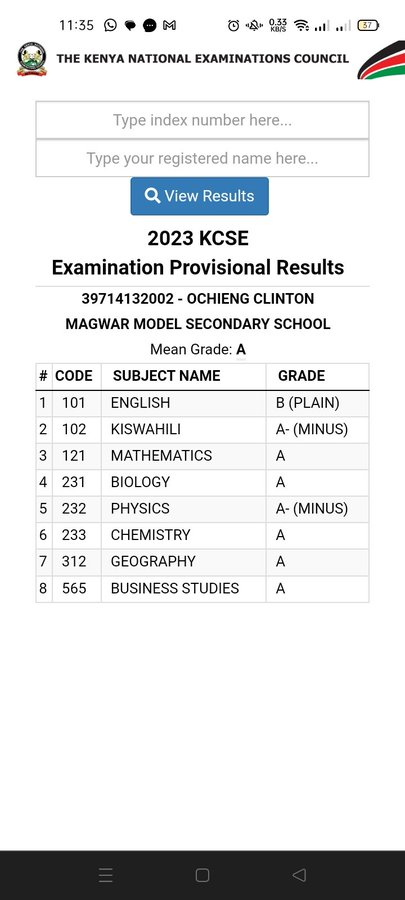
He achieved the remarkable feat of straight A’s in five of the subjects he was tested, with two A-‘s and a B plain in one subject.

Ochieng scored a B (plain) in English, A- (minus) in Kiswahili, A (plain) in Mathematics, A (plain) in Biology, A- (minus) in Physics, A (plain) in Chemistry, A (plain) in Geography, and A (plain) in Business Studies.

His brother Steve Otieno took to his X account to celebrate the results.

This outstanding accomplishment not only reflected his academic prowess but also underscored the transformative power of unwavering determination.

Fulfilling the Dream

With his newfound success, Ochieng is now poised to embark on the journey he had envisioned from the beginning—studying medicine.

The hurdles and detours along the way have only strengthened his resolve, turning his dream into a triumph against all odds.

His journey serves as a beacon of hope for aspiring individuals navigating the complex landscape of academic pursuits.

As Ochieng takes the next step towards realizing his dream of studying medicine, he leaves an indelible mark, inspiring others to persevere and embrace the extraordinary possibilities that lie within their reach.

0 comment
0 FacebookTwitterPinterestLinkedinTumblrWhatsappTelegramEmail
2023 kcse exam results

Over 1,000 students scored straight As in the recently released 2023 KCSE exam results.

This is according to an announcement by Education Cabinet Secretary Ezekiel Machogu, who released the results on Monday, January 8, 2024, at Moi Girls High School in Eldoret, Uasin Gishu County.

Machogu indicated that 1,216 candidates, representing 0.14 per cent, got straight As in 2023 compared to 1,146 in 2022.

Broken down, a total of 7,254 got A- (minus), 18,078 attained B+ (plus), 36,728 got B (plain) while 78,343 got C+ (plus).

A total of 92, 612 candidates got C (plain), 107,471 C-(minus), 125, 006 D+ (plus), 155, 276 D (plain), 165, 861 D-, and 48, 174 E.

In total, 201,133 candidates, representing 22.27 per cent, scored C+ and above and will be eligible for direct access to the university. The improvement in performance was attributed to the new grading system. 

825 male students achieved As compared to 391 female counterparts while 4,472 male students got A- (minus) compared to 2,782 female students.

A total of 903,260 students sat last year’s KCSE exams, an increase from 881,416 candidates who took the exams in 2022.

Of the 899,453 candidates who sat the 2023 KCSE Examination, 450,554 were male, while 448,899 were female, representing 50.09% and 49.91% of the total candidature respectively. 

Parents, candidates and teachers had problems accessing the results on the KNEC portal, which had earlier on crashed.

The technical issues on the portal have since been solved, and here is a step by step guide on how to access the 2023 KCSE exam results.

0 comment
1 FacebookTwitterPinterestLinkedinTumblrWhatsappTelegramEmail

Education Cabinet Secretary Ezekiel Machogu has officially announced the 2023 KCSE exam results.

Unlike the previous years, parents and candidates will have to check the results through an online portal.

While announcing the results in Eldoret, Uasin Gishu County this morning, CS Machogu said the results can be accessed through the Kenya National Examinations Council (KNEC) portal.

“Individual 2023 KCSE candidates’ examination results will be accessed online through a link on the KNEC website or directly through the URL: https://results.knec.ac.ke. The results will be immediately available after this exercise,” CS Machogu said.

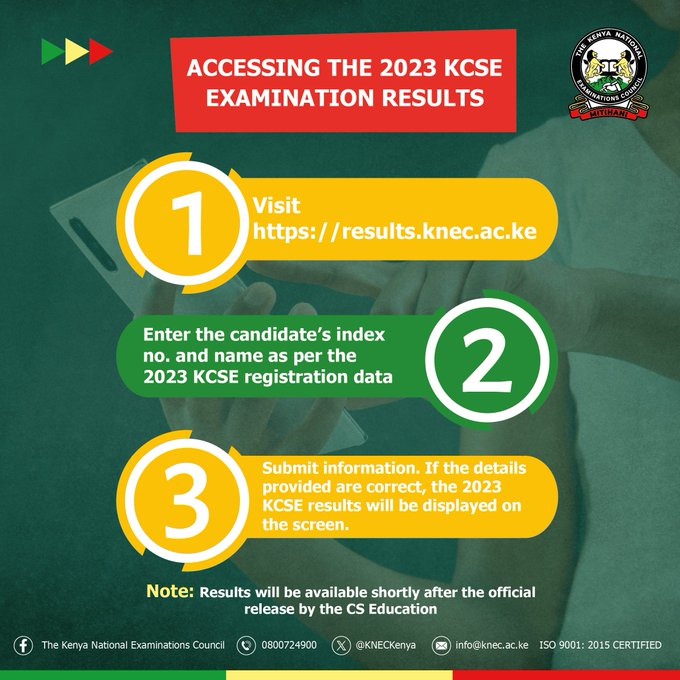
KNEC through their official social media accounts posted a step by step guide on how the 2023 KCSE exam results can be accessed.

First, open a search engine of your choice (such as google, Mozilla Firefox, Opera etc) on your mobile phone or computer then key in the url https://results.knec.ac.ke.

After accessing the portal, enter the candidate’s index number and name as per the 2023 KCSE registration data, then submit the information.

The 2023 KCSE results of the particular candidate will display on the screen.

0 comment
0 FacebookTwitterPinterestLinkedinTumblrWhatsappTelegramEmail

Education Cabinet Secretary Ezekiel Machogu is set to release the 2023 KCSE Exam Results today, Monday January 8, 2024.

The CS is expected to brief President William Ruto this morning before he releases the results from Moi Girls High School in Eldoret.

The brief will focus on the exam preparations, administration, conduct, marking and moderation of the tests.

According to sources, the meeting was scheduled to start at 7:30am.

Ministry officials are already in Eldoret.

This will be the second time the ministry of Education will be releasing the results away from the Kenya National Examinations Council (KNEC) headquarters in Nairobi.

Last year, Machogu had indicated that the 2023 KCSE exam results would be released in the second week of January 2024.

0 comment
0 FacebookTwitterPinterestLinkedinTumblrWhatsappTelegramEmail

Education CS Ezekiel Machogu has announced new timeline for the release of the KCSE 2023 exam results.

Machogu has said the much awaited results will be announced in the second week of January, 2024.

The CS on Thursday December 28 said compilation, verification and validation of scores is currently ongoing.

The ministry of Education has been under pressure to release the 2023 KCSE exam results.

The KCSE exam marking started on November 27th and ended on December 13th, 2023.

The marking exercise was initially scheduled to conclude on December 11, 2023, but was extended by two additional days, disrupting the planned release date for the results between December 16th and 22nd.

The Kenya National Union of Teachers (Knut) urged CS Machogu over the weekend to grant examiners more time to compile and award KCSE applicants the grades they deserve.

Aggrey Namisi, National Vice Chairperson KNUT, told the press in Bungoma on Saturday that the KCPE results were hurried, resulting in inaccuracies.

Because of technical difficulties encountered during the transmission of the KCPE results, the KCSE results will not be available via Short Messaging Service (SMS).

The 2023 KCSE results will be available via the Kenya Education Management Information System (KEMIS) portal.

To obtain the results, parents and candidates will go to the website and enter the KCSE names and index numbers.

A total of 903,260 candidates sat for the 2023 KCSE exam.

0 comment
0 FacebookTwitterPinterestLinkedinTumblrWhatsappTelegramEmail

ODM leader Raila Odinga’s staunch supporter Nuru Okanga has finally broken his silence on his 2023 KCPE results.

Soon after Education Cabinet Secretary Ezekiel Machogu announced the last KCPE results, screenshots started doing rounds on social media, indicating that Nuru Okanga had scored 401 marks.

However, the Bunge la Mwananchi member has distanced himself from the said screenshot.

Nuru Okanga became the number one trending topic across almost all social media platforms after the fake results estimated that he got between 401 and 405 marks placing him among the top 20 students nationally.

Nuru Okanga sat for the 2023 KCPE examinations at Mumias Muslim Primary School.

Okanga has, however, disclosed that he has not yet received his results after sending his index number to to 40054.

In a phone interview with Daily Trends, the index number 37610677055 doing rounds did not belong to him as his starts with the figures 379.

He said he will disclose his marks once he receives the sms.

The top candidate in the 2023 KCPE scored 428 marks out of a possible 500.

Only 8,525 candidates were able to score 400 marks and above with 352,782 students scoring between 300 and 399 marks. 

0 comment
0 FacebookTwitterPinterestLinkedinTumblrWhatsappTelegramEmail

The 2023 Kenya Certificate of Primary Education (KCPE) exams top candidate scored 428 marks out of a possible 500. 

Education Cabinet Secretary Ezekiel Machogu announced the results on Thursday November 23, 2023.

This last KCPE exam as the Ministry of Education phases out the 8-4-4 curriculum to be fully replaced by a Competence Based Curriculum (CBC).

Out of the over 1.4 million candidates that sat for the exam, only 8,525 candidates were able to score 400 marks and above with 352,782 students scoring between 300 and 399 marks. 

The majority of pupils scored between 200 to 299 with 658,278 candidates falling into that category. 

383,025 candidates scored between 100 to 199 marks with the rest of the candidates scoring below 100 marks. 

The national examination had minimum malpractice with only two pupils out of 1.4 million candidates engaging in exam irregularity. 

0 comment
0 FacebookTwitterPinterestLinkedinTumblrWhatsappTelegramEmail

Education Cabinet Secretary Ezekiel Machogu has broken his silence after yet another student lost his testicle after he was assaulted by his teachers in a school in Kisii County.

A 19-year-old form four student at Nyabisia Secondary School, in Nyamache division, Bobasi constituency has stirred a debate after he narrated how teachers at the school brutalized him.

According to the student, five teachers and a school security guard brutalized him and damaged one of his testicles which doctors at Hema Hospital in Kisii said had raptured.

The students testicle raptured following the beating he received. It was removed at the hospital.

CS Machogu while commenting on the incident said the law should take its course.

Machogu termed the perpetrators as criminals and not teachers, who should be taken to court and dismissed from the service.

The CS said teachers are not allowed to go to that extent while administering discipline.

“To me, these are just criminals and I cannot even call them teachers. The law should take its course. They should be taken to court and dismissed from service,” Machogu was quoted by Nation as having said.

This is the second incident involving rogue teachers beating up and leading to a student losing his testis, after minor offences committed by the learners. A week ago, another student suffered the same fate after vicious beatings by his teachers.

0 comment
0 FacebookTwitterPinterestLinkedinTumblrWhatsappTelegramEmail