
Home Latest News
Category:

Latest News

KPA CEO Captain William K Ruto. PHOTO/KPA

The man at the helm of Kenya Ports Authority, Managing Director William K. Ruto, is facing mounting scrutiny—not from dockworkers or shipping lines, but from courtrooms and a growing wave of public controversy surrounding multi-billion shilling tenders.

While no court has found him guilty of wrongdoing, a series of high-stakes procurement disputes and allegations have placed the KPA boss at the center of what is fast becoming a slow-burning governance storm at one of Kenya’s most strategic state agencies.

A Sh31 Billion Tender at the Heart of the Storm

At the center of the controversy is a Sh31.2 billion procurement deal, now the subject of an active court petition.

The case, filed at the High Court of Kenya, accuses the KPA leadership of:

  • Flouting procurement procedures
  • Lacking transparency in the tendering process
  • Irregularly awarding a contract to a foreign firm

The petitioner has gone further—seeking to have William K. Ruto declared unfit to hold public office.

KPA, through its legal team, has strongly denied the claims, insisting that due process was followed.

But the case has already achieved something significant: it has dragged internal decision-making at the port into public scrutiny.

From Courtroom to Political Battlefield

Beyond the legal filings, the controversy has spilled into the political arena.

Claims—some unproven—have linked the KPA boss to a broader Sh100 billion procurement scandal narrative, amplifying public attention and raising the stakes.

Yet, in a sharply divided response:

  • Critics have framed the issue as a test of accountability in public procurement
  • Allies have dismissed it as a politically and commercially motivated smear campaign

Coast leaders and political figures have stepped forward to defend the KPA chief, praising his leadership and warning against what they describe as “character assassination.”

“Embattled” Tag Signals a Shift in Perception

In recent months, William K. Ruto has increasingly been described in sections of the media as “embattled”—a label that reflects not a legal verdict, but a shift in public narrative.

That shift is being driven by:

  • Ongoing litigation
  • Repeated procurement questions
  • Intensifying public and political debate

For a position as sensitive as the head of Kenya Ports Authority, perception can be as consequential as proof.

The Weight of History

Complicating matters further is the long shadow of the institution itself.

Kenya Ports Authority has, for years, been associated with:

  • Multi-billion shilling procurement controversies
  • Past corruption investigations involving officials

This history means that any fresh allegation—proven or not—lands on already fertile ground for public suspicion.

As a result, critics argue that the current controversy is not just about one man, but about whether the institution has truly reformed.

Performance vs. Pressure

Supporters of the KPA boss point to operational gains at the Port of Mombasa, including improved efficiency and throughput, as evidence of effective leadership.

But analysts caution that:

“Performance metrics do not cancel out governance concerns. Procurement transparency is a separate test altogether.”

This creates a dual narrative:

  • Operational success on one hand
  • Legal and reputational pressure on the other

A Slow-Burn Crisis?

Unlike headline-grabbing corruption scandals involving arrests or raids, the situation unfolding around William K. Ruto is more subtle, but potentially just as significant.

It is a slow-burn controversy, defined by:

  • Court petitions rather than convictions
  • Allegations rather than findings
  • Political defense rather than institutional silence

Yet history shows that such slow-building pressure can evolve into full-blown crises if not decisively addressed.

Silence, Strategy—or Confidence?

So far, the KPA leadership has opted for a measured response, addressing the matter through legal channels rather than public rebuttals.

Whether this reflects:

  • Confidence in the strength of its case
  • A strategy to avoid escalating the controversy
  • Or an underestimation of reputational risk

…remains an open question.

The Bigger Question

As the court case progresses and public debate intensifies, a critical issue is emerging:

Are the allegations against the KPA boss isolated legal challenges—or warning signs of deeper procurement vulnerabilities within one of Kenya’s most critical state agencies?

For now, the answers lie in the corridors of justice.

But one thing is clear:
The storm around William K. Ruto is far from over—and its outcome could reshape not just a career, but confidence in how billions of public funds are managed at Kenya’s busiest port.

0 comment
0 FacebookTwitterPinterestLinkedinTumblrWhatsappTelegramEmail
KCB Bank
  • From the Employment and Labour Relations Court to the High Court of Kenya, KCB Bank’s name is appearing with notable frequency in 2026 rulings and filings.
  • Individually, each case may appear routine for a bank of KCB’s size. But collectively, they point to a broader narrative: persistent legal friction cutting across multiple areas of the institution.
  • Unlike explosive fraud scandals, KCB’s situation in 2026 is unfolding as a “slow-burn controversy”, a steady accumulation of legal battles that, over time, could prove just as damaging.

KCB Bank Kenya is facing renewed scrutiny, not from regulators or auditors, but from the courts, where a steady stream of cases in 2026 is raising uncomfortable questions about the bank’s internal operations, labour practices, and lending decisions.

Even as the lender posts strong financial results, court records reviewed from the Kenya Law database reveal a pattern that critics say cannot be ignored: KCB is increasingly entangled in multi-front litigation, ranging from employee disputes to high-stakes commercial battles.

KCB’s Trail of Cases Across Kenya’s Courts

From the Employment and Labour Relations Court to the High Court of Kenya, KCB’s name is appearing with notable frequency in 2026 rulings and filings.

Among the standout cases:

  • Mwaluma vs KCB Bank Kenya Plc (2026)
    A labour dispute in which the claimant challenges the circumstances surrounding their exit from the bank, alleging irregularities tied to restructuring. The case underscores ongoing tensions between KCB and sections of its workforce.
  • KCB Bank Kenya vs Gillys Security & Investigations Ltd
    A high-value commercial dispute centered on a KSh 84 million loan facility, with questions raised over documentation and the manner in which the loan was issued. The case has drawn attention to lending practices and transparency concerns.
  • Ndiritu vs KCB Bank Kenya (2026)
    A financial dispute before the High Court tied to earlier banking transactions, highlighting how past deals are resurfacing as present-day legal risks.
  • Kitise vs KCB Bank Kenya Limited (2026)
    An appeal case illustrating how disputes involving the bank can stretch across years, evolving into prolonged legal battles with significant implications.
  • In re KCB Bank Kenya Limited (2026)
    A procedural application that, while technical in nature, reinforces the perception of constant legal activity involving the bank.

Not Isolated Incidents, But a Pattern?

Individually, each case may appear routine for a bank of KCB’s size. But collectively, they point to a broader narrative: persistent legal friction cutting across multiple areas of the institution.

Legal observers argue that the issue is no longer about isolated disputes, but about the frequency and diversity of litigation.

“When you see employment disputes, loan-related cases, and appeals all happening concurrently, it suggests systemic pressure points within the institution,” a Nairobi-based legal analyst noted.

Labour Disputes Signal Internal Strain

Cases like Mwaluma vs KCB highlight a recurring theme—employee grievances spilling into courtrooms.

Many of these disputes revolve around:

  • Allegations of unfair termination
  • Questions over disciplinary processes
  • Claims linked to organizational restructuring

Insiders say this could be fallout from the bank’s tightened compliance and anti-fraud measures, which have led to dismissals in recent years—moves that may be triggering legal pushback from affected staff.

Lending Practices Under the Microscope

On the commercial front, the Gillys Security case stands out as a potential flashpoint.

At its core are allegations touching on:

  • Loan documentation integrity
  • Borrower consent and obligations
  • Internal approval processes

While the matter remains before the courts, it raises broader concerns about how lending decisions are structured and enforced, a sensitive issue for any major financial institution.

Old Deals, Lingering Consequences

The Ndiritu and Kitise cases tell another story: the long tail of financial decisions.

These disputes, rooted in past transactions, are only now being resolved—or contested—years later. The result is a growing docket of cases that:

  • Tie up legal resources
  • Prolong uncertainty
  • Keep the bank in continuous litigation cycles

Profitability vs. Perception

Despite the courtroom activity, KCB Group remains financially strong, reporting solid profits and maintaining its position as a regional banking powerhouse.

But analysts warn that financial performance does not cancel out reputational risk.

“You can be profitable and still have governance concerns. Courts reflect real disputes, and those disputes matter to investors and customers alike,” another expert observed.

A Slow-Burn Controversy

Unlike explosive fraud scandals, KCB’s situation in 2026 is unfolding as a “slow-burn controversy”, a steady accumulation of legal battles that, over time, could prove just as damaging.

Persistent litigation can:

  • Erode employee trust
  • Raise investor concerns
  • Invite regulatory scrutiny

Silence or Strategy?

So far, KCB has largely allowed these matters to play out in court, maintaining a measured public stance.

Whether this reflects confidence in its legal position or a deliberate effort to avoid amplifying controversy remains unclear.

The Question Facing KCB

As more cases surface and existing ones progress, a critical question is emerging:

Are these courtroom battles simply the cost of doing business at scale or signs of deeper cracks within one of Kenya’s most powerful banks?

For now, the answers lie not in press releases but in the courtrooms where KCB Bank Kenya continues to defend its record.

0 comment
0 FacebookTwitterPinterestLinkedinTumblrWhatsappTelegramEmail

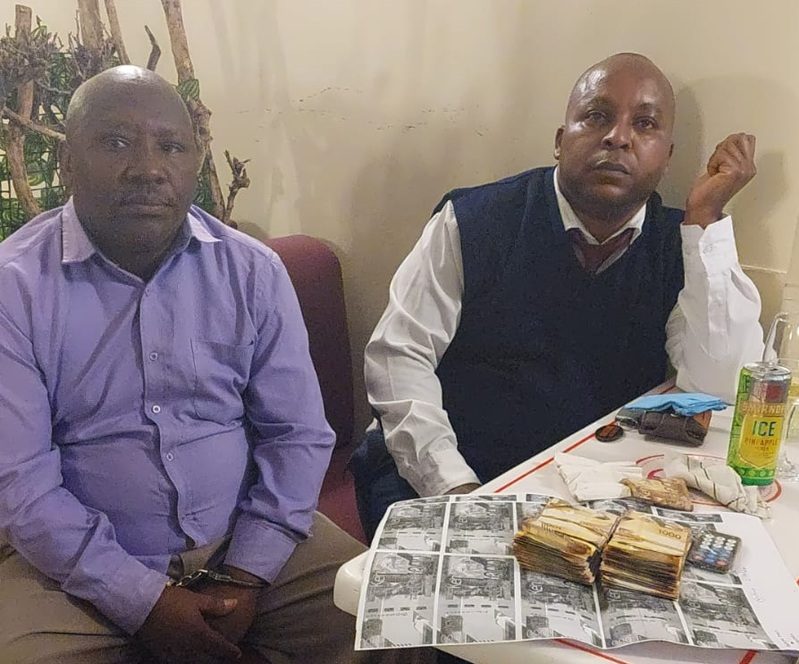
Two suspects have been arrested in Rongai following a coordinated police operation that led to the recovery of a stolen firearm, imitation weapons, and other security equipment.

Detectives from the Directorate of Criminal Investigations (DCI), working jointly with officers from Ngong Police Station, carried out the intelligence-led raid in the Kware and Mandazi Road areas within Rongai town.

The operation resulted in the arrest of 54-year-old Cyrus Mureithi Mburu and 49-year-old Peter Kangethe.

According to investigators, the arrests followed credible intelligence linking the suspects to possession of a firearm that had earlier been stolen from a police officer.

During a search at Mburu’s residence, detectives recovered a magazine loaded with 15 rounds of 9mm ammunition, as well as a container of gun oil.

Further investigations led to the recovery of a Ceska pistol, identified by serial number F9418, which had previously been robbed from an officer attached to the Security of Government Buildings (SGB).

Authorities described the recovery as a significant breakthrough in efforts to track and retrieve stolen government-issued weapons.

Fake Weapons and Security Gear Seized

In addition to the firearm, officers also seized two imitation guns believed to have been used to intimidate victims, a pair of handcuffs, keys, and a Maasai sword.

All recovered items have been secured as exhibits to support ongoing investigations.

The two suspects are currently being held at Ngong Police Station and are expected to be arraigned in court once investigations are complete.

Police say they are pursuing additional leads to determine whether the suspects are part of a larger criminal network operating within the region.

In a statement, the DCI reiterated its commitment to maintaining public safety and protecting government assets.

Authorities also urged members of the public to continue sharing information that could aid in crime prevention through anonymous reporting channels.

The arrests come amid heightened security operations targeting illegal firearms and organized crime in the Nairobi metropolitan area.

Police have encouraged citizens to report suspicious activity, emphasizing that community cooperation remains critical in the fight against crime.

0 comment
0 FacebookTwitterPinterestLinkedinTumblrWhatsappTelegramEmail
Safaricom CEO Peter Ndegwa

Kenya’s leading telecommunications giant, Safaricom, is facing mounting scrutiny after claims emerged that its board quietly extended the tenure of group CEO Peter Ndegwa without issuing any public communication, fueling outrage among shareholders, regulators, and consumer rights groups.

As of mid-April 2026, Ndegwa remains firmly in office despite his expected contract lapse on March 31, raising serious governance questions for one of East Africa’s most influential listed firms.

Governance Storm Over “Silent Extension”

The controversy stems from what critics describe as a troubling lack of transparency. Unlike previous leadership transitions, there has been no formal announcement regarding Ndegwa’s contract renewal, exit timeline, or succession plan.

Consumer lobby group Consumers Federation of Kenya has warned that the situation has devolved into “speculation and guesswork,” an unusual state for a publicly traded company of Safaricom’s stature.

“Shareholders deserve clarity. Silence on leadership succession is not just poor governance—it undermines confidence,” COFEK said in a statement.

Safaricom’s board charter reportedly caps CEO tenure at seven years, placing Ndegwa close to the upper limit, yet the company has offered no clarity on whether an extension has been formally approved.

A Sharp Departure from Past Leadership

The unfolding controversy stands in stark contrast to the transparent tenures of Ndegwa’s predecessors.

Founding CEO Michael Joseph oversaw a decade of structured growth before a clearly communicated exit in 2010, while his successor Bob Collymore had his contract extensions publicly announced in advance.

Both leaders maintained a clear governance framework that analysts say strengthened investor confidence and institutional credibility.

Ndegwa’s tenure, by comparison, is now being defined as opaque, with critics arguing that the absence of clear communication has eroded trust.

Internet Outage Sparks Lingering Questions

Public criticism intensified following the June 2024 nationwide internet outage, which coincided with Gen Z-led protests against the Finance Bill.

While Ndegwa attributed the disruption to undersea cable issues, monitoring groups disputed the explanation, noting inconsistencies in the scale and timing of the outage.

The incident drew condemnation from rights groups, including the Kenya Human Rights Commission, which later cited court orders barring internet shutdowns.

Although Ndegwa issued a public apology, the episode left lingering questions about whether external pressure may have influenced network operations.

Explosive Data Privacy Allegations

Further controversy erupted in October 2024 after investigative reports alleged that Safaricom had enabled security agencies to access customer call data records without proper judicial oversight.

The reports triggered strong reactions from civil society organizations, including Muslims for Human Rights, which accused the company of facilitating surveillance practices that could violate constitutional protections.

Safaricom denied the claims and defended its data handling practices, but tensions escalated after it reportedly withdrew advertising from Nation Media Group following the publication of the exposé.

Press freedom watchdog Reporters Without Borders criticized the move, warning of potential media intimidation.

Monopoly Concerns Resurface

Beyond governance and privacy issues, Safaricom is also under renewed scrutiny over its dominant market position.

Data from the Communications Authority of Kenya shows the company controls a majority share of mobile subscriptions and an overwhelming portion of mobile money transactions through M-Pesa.

Consumer advocates argue that such dominance stifles competition and disadvantages smaller players, calling for stricter regulatory oversight.

Ndegwa has previously dismissed such concerns, urging competitors to invest more aggressively—remarks that critics say overlook structural barriers in the market.

Rising Pressure on the Board

Despite the growing controversies, Safaricom continues to post strong financial performance, including record earnings and expansion into Ethiopia.

However, analysts warn that financial success alone may not shield the company from governance backlash.

“The issue is no longer just performance—it’s accountability,” a Nairobi-based market analyst noted. “Investors want transparency on leadership, especially in a company this critical to the economy.”

Calls for Transparency

Stakeholders are now demanding immediate action from Safaricom’s board, including:

  • Public disclosure of Ndegwa’s contract status
  • A clear succession roadmap
  • Greater transparency on governance and oversight

For many Kenyans, the board’s silence has become the central issue.

As pressure mounts, the question remains whether Safaricom will address the concerns head-on—or continue to weather a storm that is rapidly escalating into one of the most contentious corporate governance debates in the country.

Safaricom’s leadership uncertainty, combined with unresolved scandals and growing monopoly concerns, has placed the telecom giant at a crossroads, where transparency and accountability may prove just as critical as profitability.

0 comment
0 FacebookTwitterPinterestLinkedinTumblrWhatsappTelegramEmail
Fuel scandal 2026

Narok Senator Ledama Ole Kina has named three key figures he claims are at the centre of a multi-billion shilling fuel scandal that has rocked Kenya’s energy sector.

In explosive remarks before the Senate Energy Committee, the senator linked Joel Mburu, Joseph Wafula, and tycoon Mohammed Jaffer to what he described as a “fuel cabal” behind an alleged Sh11.8 billion scheme involving the importation of substandard and overpriced petroleum products.

Allegations of a Manufactured Crisis

According to Ole Kina, the scandal goes beyond isolated misconduct, pointing instead to a coordinated effort to manipulate fuel supply data and manufacture an artificial shortage.

The alleged shortage, he said, was used to justify emergency procurement outside the government-to-government (G2G) fuel supply framework, effectively bypassing established safeguards.

“This timeline suggests premeditated planning and an orchestrated crisis,” Ole Kina told the committee, citing internal communications and documentation he claimed to have reviewed.

The Named Individuals

Ole Kina’s statement placed Mburu, a supply and logistics manager at the Kenya Pipeline Company (KPC), at the heart of fuel inventory data management—an influential role in determining national stock levels.

Wafula, the Deputy Director of Petroleum at the Ministry of Energy, was accused of playing a role in approving procurement processes linked to the emergency imports.

Meanwhile, Jaffer, a prominent Mombasa-based businessman associated with One Petroleum Limited, was identified as a key beneficiary, with his company allegedly positioned to supply fuel during the crisis.

Controversial Fuel Imports

At the centre of the scandal is a consignment of fuel imported outside the G2G framework at significantly higher prices than prevailing government rates.

The senator claimed the fuel was procured at a marked-up cost, potentially pushing pump prices higher for consumers had authorities not intervened.

Further controversy surrounds reports that the fuel failed to meet required quality standards, with concerns raised over elevated levels of harmful substances.

Arrests and Resignations

The scandal has already triggered a wave of high-profile arrests and resignations within the energy sector.

Several senior officials, including former Petroleum Principal Secretary Mohamed Liban, have stepped aside as investigations intensify.

Authorities are now pursuing additional suspects as the probe widens to include both public officials and private sector players.

Calls for Accountability

Ole Kina has called for swift and decisive action, urging authorities to move beyond administrative measures and pursue criminal prosecutions.

“Kenyans need to see real charges filed in court… not theatrics,” he said, emphasizing the need for accountability at all levels.

Government Response

Energy Cabinet Secretary Opiyo Wandayi has defended his position, maintaining that due process must be followed and that investigations should be allowed to run their course.

The government has also indicated that the cost of the controversial fuel consignment will not be factored into current pump prices, in a bid to shield consumers from immediate impact.

Growing Public Concern

The revelations have sparked widespread concern over governance in the energy sector, with civil society groups and lawmakers demanding transparency in fuel procurement and pricing.

Analysts warn that if proven true, the allegations point to systemic weaknesses that could expose the country to repeated exploitation.

As investigations continue, attention now turns to whether the evidence presented will lead to prosecutions and structural reforms within the energy sector.

For many Kenyans, the outcome of the probe will serve as a critical test of the government’s commitment to tackling high-level corruption and protecting consumers from exploitation.

0 comment
0 FacebookTwitterPinterestLinkedinTumblrWhatsappTelegramEmail

Kibwezi West MP Mwengi Mutuse has come under fire for hijacking UDA activities in Ukambani region and sidelining party loyalists.

Mutuse who recently announced he had defected from Maendeleo Chap Chap party to UDA has ruffled feathers, with long time UDA leaders and supporters from the region accusing him of running a one-man show and attempting to isolate and sideline other leaders.

“He is causing divisions and rifts within UDA and this will frustrate our efforts to popularize UDA and campaign for President Ruto’s second term,” said a senior UDA leader from the Ukambani region.

At the same time, it has emerged that the leaders who are unhappy with the developments have hatched a plot to “impeach” Mutuse.

According to reliable reports, Mutuse’s main opponent for the Kibwezi West parliamentary seat James Mbaluka has launched a drive to collect signatures to have him recalled.

“The same thing he did to the then Deputy President Rigathi Gachagua is coming back to haunt him,” said political activist from Makueni county. “He will also be impeached”.

Mutuse’s dwindling political influence in Ukambani was evident over the weekend during during a function to distribute relief food in Kibwezi East Constituency.
Cabinet secretary for public service, human capital development and special programmes Geoffrey Ruku was the chief guest for the function held at Ulilinzi in Kibwezi East and Masumba in Kibwezi West.

Mutuse made a poster indicating that key UDA and government officials from Ukambani such as Principal Secretary for Aviation Teresia Mbaika, Fred Muteti, Regina Ndambuki, George Mwangangi and Kisoi Munyao would attend the function.

In what confirmed the widening rift within local UDA leadership, all the leaders, with the exception of Mwangangi skipped the high-profile event. The absence of the top UDA leaders sent a strong and clear message that all is not well within the UDA ranks in Ukambani.

According to insiders, the leaders were unhappy with Mutuse’s style of politics which they see as favouring short term populist interventions instead of structured long term development plans

Local residents also took to social media to criticize Mutuse over the same. The comments on Mutuse’s Facebook page were very critical of the MP.
“You are flying choppers to distribute mwolyo (relief food) while others are flying to give roads, stima and water? Maajab”.

“Come up with a permanent remedy like construction of dams and boreholes to enable citizens grow vegetables, fruits and also crop farming.”

At the same time, local leaders accused Mutuse of usurping other leaders’ mandate. “Why is he organizing an event in Kibwezi East without involving the area MP,” one UDA official pondered.

The UDA leaders have also noted the mischief of Mutuse recruiting candidates in the Machakos , Makueni and Kitui counties whom he has instructed to pretend to be in UDA but agenda is to use state funds to build their individual profiles and at the right time stand with Maendeleo Chap Chap Party and try and force No. 1 to negotiate with them as the alternative force to Wiper in the region.

The leaders have accused Mutuse of propping up his henchmen to sideline recognized popular UDA leaders.
In KIbwezi East, Mutuse is accused of promoting newcomer George Mwangangi at the expense of the more experienced and popular Amos Ngumbi who flew the UDA flag during 2022 elections and got respectable 5508 votes. “ He is fronting Mwangangi because he can manipulate him easily,” said the UDA official.

Similarly, Mutuse is accused of bypassing Onesmus Kimilu in Mbooni Constituency. Kimilu vied for the seat on UDA ticket in 2022 but Mutuse is now using Michael Kiosi who vied on Muungano ticket.

In an interesting turn of events, Mutuse’s scheme to use Francis Mutungi at the expense of Fred Muteti came to a dramatic end. The day Mutuse was to auction and deliver Mutungi to State House, he kept him waiting for over six hours at Palacina Hotel on Dennis Pritt road until Fred Muteti got wind of the sabotage and rushed to State House.

In Kilome constituency, Mutuse is using Monari Tangai in lieu of Regina Ndambuki while in Kaiti, Mutuse is grooming Elizabeth Ndinda to upstage PS Terry Mbaika.

Observers view Mutuse’s sinister moves as an elaborate scheme to finish UDA in Ukambani with Cabinet Secretary Alfred Mutua being part of the scheme.
In Kitui South he is wooing former MP, envoy Kiema kilonzo to upstage current MP Nimrod Mbai with whom they have sharp differences going back to their days when they served under then Governor Mutua.

According to insiders, all these guys who have been brought on board by Mutuse are riding on the support of state machinery to popularise their bid, and later pull a mass exit from UDA to Maendeleo Chap Chap Party ((MCCP) so that Mutua and Mutuse can package MCCP as a formidable force in Ukambani to negotiate for a stake in Ruto’s government.

But the schemes have failed to bear fruit.

Mutuse and MCCP’s failure to gain political traction in Ukambani can be attributed to Mutuse’s divisive style of leadership and his tendency to undermine other leaders especially those who refuse to bow down to his desired deity status. Other leaders doubt his level of discretion especially when he is in late night social engagements.

0 comment
0 FacebookTwitterPinterestLinkedinTumblrWhatsappTelegramEmail

Kenya remains one of the most active betting markets in Africa. From football and virtuals to casino games and crash betting, local players now have more options than ever. A few years ago, most bettors were mainly focused on sports. Today, the market is broader. Players are registering not just for football odds, but also for Aviator, slots, jackpots, live casino, short-format games, and daily promotions that fit mobile play.

That growth has created a different kind of player. The average Kenyan bettor is mobile-first, uses M-Pesa, expects quick deposits, wants simple navigation, and pays close attention to welcome bonuses, withdrawal speed, and trust. People are not just asking which site has odds. They are asking which betting site feels easiest to use, pays out smoothly, has the best promo structure, and actually suits how they play.

100% Karibu Bonus offered by Radabet, a new betting site in Kenya

That is why the phrase best betting sites in Kenya remains one of the biggest betting terms searches in the category. The player searching this term is usually not looking for theory. They are actively comparing bookmakers and deciding where to register.

In this guide, we break down what makes a betting site worth using in Kenya, what players should look out for before depositing, and which types of betting platforms stand out in 2026.

What makes a betting site one of the best in Kenya?

There is no single feature that makes a bookmaker the best. In Kenya, the strongest betting sites usually perform well across a few key areas.

1. Easy M-Pesa deposits and withdrawals

For most Kenyan players, the first test is simple. Can I deposit quickly using M-Pesa, and can I withdraw without stress?

A betting site may have flashy branding, but if the payment flow is poor, players will not stay. The best platforms in Kenya make mobile money seamless. That means:

  • simple deposit instructions
  • fast wallet crediting
  • low minimum deposits
  • local currency support
  • straightforward withdrawal process

A site that understands the Kenyan market has to treat M-Pesa as core, not optional.

2. Strong welcome bonus and useful ongoing promos

A lot of players discover betting sites through bonuses. This is especially true for new customers comparing two or three bookmakers at once.

The best betting sites in Kenya usually offer one or more of the following:

  • first deposit bonus
  • free bet structure
  • Aviator or crash promos
  • cashback
  • loyalty levels
  • tournaments
  • daily or weekly reward campaigns

A bonus alone is not enough. The real question is whether the promo is understandable, relevant, and actually useful to the player after registration.

3. Good mobile experience

Most Kenyan bettors are not using a desktop. They are betting directly from their phones. That makes mobile usability one of the biggest ranking and conversion factors for any betting brand.

A strong mobile betting site should:

  • load quickly
  • use data efficiently
  • make navigation easy
  • have a clean bet slip or game lobby
  • allow fast switching between deposit, account, and games

A cluttered or slow betting site will always lose to a cleaner one, especially in casino and crash.

4. Product depth

Different players come for different reasons. Some want football only. Some want Aviator. Some want casino and slots. Others want virtuals or a full mix of betting products.

The strongest betting sites in Kenya are usually the ones that serve more than one audience well. That means a good site should ideally offer a combination of:

  • sports betting
  • live betting
  • Aviator or crash games
  • slots and casino
  • virtual games
  • promotions that match those products

5. Trust and responsible play

Trust matters more than many operators admit. Kenyan players are increasingly aware of support quality, payout reliability, account verification, and how serious a site is about player protection.

A stronger betting brand does not just talk about winnings. It also makes it easy to find:

  • support contacts
  • payment information
  • bonus terms
  • responsible gaming tools
  • company and compliance information

That kind of transparency supports both conversion and long-term brand credibility.

How we assess betting sites in Kenya

When comparing online betting sites in Kenya, we focus on the things that matter most to real players on the ground:

  • ease of registration
  • M-Pesa deposit flow
  • quality of welcome bonus
  • relevance of ongoing promotions
  • strength of sports, crash, casino, or virtual offering
  • speed and simplicity on mobile
  • support accessibility
  • overall trust signals

This is important because not every site serves the same kind of player. A football-heavy bettor may prefer one operator. A crash-and-casino player may prefer another. A first-time bettor may care most about ease and bonus value.

So instead of pretending there is one perfect site for everyone, the better question is this: which betting site is best for the kind of betting you actually do?

Best betting sites in Kenya for 2026

1. Radabet

For players focused on crash games, casino entertainment, mobile betting, and promotions built around fast play, Radabet is one of the most interesting betting brands in Kenya right now. It is especially relevant for users who want more than just traditional football betting.

Radabet is built around how many younger Kenyan bettors already play. Mobile first. Fast deposits. Quick access to games. Ongoing promos that reward activity. A clean path from registration to deposit to gameplay.

What makes Radabet stand out is that it is not trying to be just another generic sportsbook. Its positioning is stronger around Aviator, casino, crash entertainment, promos, and M-Pesa convenience.

Key highlights include:

  • 100% Karibu Bonus
  • Daily Aviator Rains
  • Levels and loyalty progression
  • Tournaments
  • Affiliate program
  • Responsible gaming support
  • M-Pesa payments
  • mobile-friendly gameplay

This makes Radabet especially attractive to players who enjoy crash gaming, casino sessions, and a more promotion-driven experience rather than only pre-match football betting.

2. Betika

Betika remains one of the most recognized names in the local market and has built strong brand familiarity over time. It is usually associated with football betting, jackpots, and broad mass-market visibility.

Its biggest strengths tend to be awareness, retail familiarity, and broad sports appeal. For players who are used to mainstream football betting and are comfortable with established local brands, it remains one of the names that always comes up in comparisons.

That said, many players comparing sites in 2026 are now also judging operators on mobile entertainment depth, game variety, and whether the experience feels modern enough beyond sports.

3. SportPesa

SportPesa still carries major name recognition in Kenya and remains one of the brands many bettors instinctively mention when discussing bookmakers. It has historically had strong sports identity and market visibility.

For some users, SportPesa is a familiar football-first choice. For others, newer platforms may feel more agile depending on product preferences and promotional depth.

4. Odibets

Odibets continues to be part of the conversation for Kenyan bettors looking at sports, jackpots, and general betting access. It has maintained a place in local betting comparisons and is often considered by users who want a familiar local operator.

5. Mozzart Bet

Mozzart has grown visibility in Kenya and typically appears in comparisons around sports betting and general bookmaker access. It is one of the brands users may consider when comparing established names in the market.

Which betting site is best for different types of Kenyan players?

Not every player is looking for the same thing. This is where many generic comparison pages fail. They list brands but do not actually help the reader decide.

Here is the more useful way to think about it.

If you want a site for crash gaming and casino entertainment

A player focused on Aviator, casino games, daily promos, levels, and tournaments will likely prefer a brand such as Radabet, where that experience sits closer to the center of the product.

If you mainly care about football betting

A football-first bettor may still compare names like Betika, SportPesa, Odibets, and other sports-led operators depending on market depth and comfort level.

If you are a bonus-hunter

The strongest option is not always the one with the biggest headline number. The better choice is the one whose bonus is clear, usable, and relevant to how you actually bet. For many users, that means comparing the welcome bonus, qualifying deposit, and the promos that continue after sign-up.

If you want easy M-Pesa play on mobile

A bookmaker that makes registration, deposit, and play feel smooth on mobile will usually win. In Kenya, this matters far more than fancy design alone.

Why welcome bonuses matter so much in Kenya

Welcome bonuses remain one of the main reasons players compare betting sites before registering. In a competitive market like Kenya, the bonus acts as both a marketing hook and a trust signal.

A useful welcome bonus can help a player:

  • start with more balance
  • test the platform
  • try new games
  • feel there is immediate value in signing up

But players should look beyond the headline percentage. The right questions are:

  • Is the bonus easy to understand?
  • Is the minimum deposit realistic?
  • Does it apply to the products I want to use?
  • Are the terms clear?
  • Does the site offer good promos after the first deposit too?

This is where a platform like Radabet has an opportunity to stand out. A 100% Karibu Bonus works best when it is supported by strong follow-up retention offers such as Daily Aviator Rains, Levels, and Tournaments. That creates a fuller player journey, not just a one-time acquisition hook.

M-Pesa and why it shapes the Kenyan betting market

It is impossible to talk about the best betting sites in Kenya without talking about M-Pesa.

M-Pesa changed the local betting market by making deposits and withdrawals simple enough for everyday users. A player no longer needs a card or complicated wallet setup. They just need a phone, a registered line, and enough balance to deposit.

That is one reason betting has grown so strongly in Kenya. The friction is lower.

For betting brands, this means payment UX is part of SEO conversion strategy too. A site may rank well, but if the M-Pesa journey feels slow or confusing, the traffic will not convert.

For Radabet, this should be emphasized clearly in content because it aligns with how people search and how they act after landing on the page.

What Kenyan players should check before signing up

Before registering on any betting site, players should take a minute to assess the basics.

Check the payment flow

Can you deposit and withdraw using methods you trust, especially M-Pesa?

Check the bonus properly

Do not stop at the headline number. Read the basic conditions and make sure the promotion fits your preferred type of betting.

Check product fit

If you mainly play Aviator or casino, choose a platform that is actually strong there. If you only care about sports, choose a site that leads with sports.

Check support access

Can you easily find a support number, chat, or help option if something goes wrong?

Check responsible gaming tools

A serious operator should make responsible play visible and accessible, not buried.

Betting regulation and trust in Kenya

When evaluating betting sites in Kenya, regulation still matters. Players are more confident when a platform shows clear trust signals and takes responsible gaming seriously.

A reference point in the market is the Betting Control and Licensing Board, often referred to as BCLB, which is widely associated with gambling regulation in Kenya.

Why Radabet deserves to be in the conversation

Radabet deserves inclusion because it is aligned with several of the strongest trends in the Kenyan market right now:

  • mobile-first play
  • M-Pesa convenience
  • crash gaming demand
  • casino growth
  • promo-led retention
  • loyalty progression
  • tournament mechanics
  • support visibility
  • responsible gaming positioning

That gives Radabet a more modern profile than a purely sports-led operator. It also creates content angles that can rank across multiple supporting clusters such as:

  • Aviator in Kenya
  • best casino sites in Kenya
  • betting sites with M-Pesa
  • best welcome bonus betting sites in Kenya
  • crash games Kenya
  • betting promos Kenya

Final thoughts on the best betting sites in Kenya for 2026

The best betting site in Kenya depends on the type of player you are.

If you are mainly interested in football betting, you will likely compare the bigger mainstream names first. But if you are looking for a mobile-first betting experience built around M-Pesa, welcome bonuses, crash entertainment, casino play, and daily promotional activity, Radabet is one of the brands worth serious consideration.

The Kenyan betting market is no longer one-dimensional. Players now want convenience, value, entertainment, and trust all at once. The operators that understand this shift are the ones that will win more of the market in 2026.

For users who want to try a modern Kenya-focused platform, Radabet offers a clear route in: Register Now, deposit via M-Pesa, Claim the 100% Karibu Bonus, explore Aviator and casino, and engage with Daily Aviator Rains, Levels, and Tournaments on a platform built for local mobile play.

0 comment
0 FacebookTwitterPinterestLinkedinTumblrWhatsappTelegramEmail

By Jackline Opiyo

The Chairperson of the Commission of Inquiry into violence surrounding the October 29, 2025 General Election and its aftermath in Tanzania , retired Chief Justice Mohammed Chande Othman, has outlined four reasons for the 21-day extension of the commission’s mandate.

Justice Othman has said the additional time was necessitated by the scale and complexity of the task, delayed submission of key evidence, and the requirement to produce the final report in both Kiswahili and English.

“First, more evidence is still being submitted; second, we are receiving expert advice from scientific specialists we consulted; third, there is a need for in-depth analysis; and fourth, to ensure the report is available in both Kiswahili and English,” he said, while speaking to journalists in Dare salaam.

Justice Othman also noted that although the commission had initially planned to conduct investigations in six regions, it has since expanded its scope to 12 regions to gather comprehensive information.

Justice Chande further clarified that the Commission is independent, operates with professionalism, and faces no interference in its duties, adding that no one can dictate to them what to write or what to leave out.

0 comment
0 FacebookTwitterPinterestLinkedinTumblrWhatsappTelegramEmail

Negotiating foreign exchange (FX) rates has traditionally been a cumbersome process, requiring individuals and businesses to visit bank branches or get on call with Treasury desks. This process can often be time-consuming and inconvenient, leading to delays for those with urgent financial needs. Additionally, the limited accessibility of these services, restricted to banking hours, meant customers could not transact during evenings, weekends, or public holidays, making it particularly challenging for those with tight schedules.

To address these challenges and meet the growing demand, Equity Bank has introduced the FX Preferential Rate Solution. According to the bank, this platform is tailored to meet the needs of individuals and businesses that frequently handle foreign currency transactions. It allows customers to access preferential FX rates directly through the bank’s digital platforms, Equity Mobile App and online, eliminating the need for branch visits or lengthy phone calls.

The Preferential FX Rate Solution enables users to access discounted rates via the app or online, based on the value of their transactions. Customers can view discounted rates tailored to their account and transaction details and execute transactions directly through the app or online. Each transaction is assigned a unique reference number for transparency and tracking. The system is designed to automatically apply discounted rates, with higher transaction values attracting better rates. Once the rate is confirmed, users can finalize the transaction in real time, avoiding delays and manual processes.

This solution comes at a time when Kenya’s foreign exchange market is experiencing significant growth and transformation. The Central Bank of Kenya (CBK) reported record-high foreign exchange reserves of $12.5 billion as of January 2026, providing 5.4 months of import cover. This growth has been supported by remittance inflows, which totalled $435 million in December 2025, and a booming retail forex trading market, which now boasts over 100,000 active traders in Kenya. Kenya’s international trade volume reached Ksh973.6 billion in the second quarter of 2025, further reflecting the critical need for seamless cross-border payment solutions for businesses.

These developments highlight the increasing demand for efficient and accessible forex solutions.

Equity’s Preferential FX Rate Solution is ideal for a wide range of customers. This solution simplifies international payments, enabling organizations to focus on their core operations without being hindered by the delays and complexities of traditional FX processes.

It allows travelers to access competitive foreign exchange rates for their trips abroad, freelancers and expatriates to manage regular foreign currency transactions with ease, and businesses to streamline cross-border payments. NGOs and development sector organizations can facilitate payments for international projects, while traders dealing in large currency transactions can negotiate better rates, ensuring both cost savings and convenience.

As technology reshapes how individuals, businesses and organisations manage cross-border transactions, more Kenyans hope that these solutions will lead to greater financial inclusion, reduced transaction costs, and improved access to global markets, enabling them to fully participate in the opportunities of a connected world.

0 comment
0 FacebookTwitterPinterestLinkedinTumblrWhatsappTelegramEmail
Mwalimu Rachel and DJ Xclusive on the decks during the Gilbeys Hangout

Kenya’s favourite gin brand, Gilbey’s, hosted a memorable edition of the Gilbey’s Hangout at Burudani Address, delivering an immersive experience that brought together thousands of consumers in celebration of authentic connections and shared moments.

Held on Friday, April 3rd, the event was hosted by Mwalimu Rachel, DJ Xclusive, and DJ Chunky, who kept the energy high and the crowd engaged throughout the night.

The Hangout brought Gilbey’s Real Moments campaign to life, creating a space for consumers to unwind, connect, and celebrate with their crews. From curated music sets to interactive brand experiences, attendees were treated to a seamless blend of entertainment and lifestyle.

Attendees also enjoyed Gilbey’s signature serves, including the new Gilbey’s Berry Bramble RTD cocktail, reinforcing the brand’s commitment to innovation and accessible high-quality gin, perfect for both intimate hangouts and vibrant social occasions.

The vibe came alive with a touch of red, adding a playful and stylish element that tied the night together visually and reflected the energy of the brand.

“The Gilbey’s Hangout is about celebrating the moments that truly matter, the ones shared with friends, full of laughter and real connection. Through this platform, we are creating experiences that are not only memorable but also accessible, staying true to our commitment of delivering quality and value to our consumers,” said Lilian Mbugua, the Brand Manager, Gilbeys.

The event further amplified Gilbey’s ongoing Ksh 999 offers on ke.thebar.com, positioning the brand as the ideal choice for consumers seeking to enjoy premium experiences without compromise.

The Gilbey’s Hangout continues to establish itself as a key cultural platform, reflecting the evolving social landscape where consumers are embracing more intentional and relatable ways to connect.

The Gilbey’s Real Moments campaign celebrates authentic connections and invites consumers to share their unfiltered moments with their “day ones”.

0 comment
0 FacebookTwitterPinterestLinkedinTumblrWhatsappTelegramEmail

The UEFA Champions League returns tonight with two heavyweight quarter-final clashes set to define the direction of Europe’s elite season.

At 10pm, Real Madrid face familiar rivals Bayern Munich in a tie dripping with history, pedigree, and expectation.

But for many, the real intrigue lies elsewhere.

Sporting CP host Arsenal in a clash that carries more than just quarter-final stakes — it carries questions.

For Arsenal, the dream of a historic double is still technically alive. But reality tells a harsher story.

Defeat to Manchester City in the Carabao Cup final, followed by a shocking FA Cup quarter-final exit to Southampton FC, has exposed cracks in a team once seen as unstoppable.

Now, they head to Portugal not just chasing progression — but redemption.

Reading Between the Lines

This is where it gets uncomfortable.

Because while Real Madrid vs Bayern Munich promises quality, structure, and elite-level control… Sporting vs Arsenal offers something more unpredictable.

Tension.
Narrative.
And the possibility of collapse.

A growing section of football fans aren’t just watching Arsenal to see them win — they’re watching to see how they respond when the pressure tightens again.

Will this be the night the Gunners steady themselves on the European stage?
Or another chapter in a season slowly slipping from their grasp?

What’s at Stake

For Arsenal, this is no longer just about progression. It’s about identity.

A team that once looked like challengers on all fronts is now being forced to answer deeper questions — about mentality, resilience, and their ability to deliver when it matters most.

Sporting, meanwhile, step into this tie with freedom — and that makes them dangerous.

One game is about legacy.
The other is about pressure.

And sometimes… pressure makes for the better story.

0 comment
0 FacebookTwitterPinterestLinkedinTumblrWhatsappTelegramEmail
How $300M Ecobank Nigeria Deal and Zakhem International Pipeline Contract Drained Kenya Pipeline Company: The Ksh78B Scandal Exposed

A complex web of international financing, opaque legal instruments, and years of litigation has exposed what could rank among Kenya’s most costly public infrastructure scandals, with potential losses linked to the Kenya Pipeline Company (KPC) now exceeding Ksh78 billion.

At the centre of the storm is a $300 million credit facility issued by Ecobank Nigeria to Zakhem International, backed by a sweeping debenture and reinforced through controversial domiciliation letters that effectively redirected proceeds from a major Kenyan government contract.

A Deal Rooted in Nigeria

The origins of the dispute trace back to 2006, when Zakhem Construction Nigeria Limited executed a far-reaching debenture in Lagos in favour of Ecobank Nigeria. The agreement pledged all of Zakhem’s present and future assets globally—including receivables—as security for financial facilities.

For years, the instrument remained dormant.

That changed in July 2014, when Kenya Pipeline Company awarded Zakhem a contract worth approximately $484.5 million (about Ksh62.9 billion) to construct the 450-kilometre Mombasa–Nairobi Line 5 pipeline, a flagship Vision 2030 project.

Within months, Zakhem secured a $300 million facility from Ecobank Nigeria, using the KPC contract proceeds as collateral.

The Domiciliation Letters That Changed Everything

In October 2014, Zakhem issued “irrevocable” domiciliation instructions directing KPC to channel 70 percent of all contract payments to Ecobank Nigeria accounts and the remaining 30 percent to Ecobank Kenya.

KPC acknowledged and stamped the letters.

That move effectively inserted Ecobank into the transaction as a primary beneficiary—despite the bank not being part of the officially mandated financing consortium for the project.

The consortium, as previously reported, included institutions such as CFC Stanbic, Citibank, Co-operative Bank, and Standard Chartered—but not Ecobank.

Legal experts now argue that by accepting the domiciliation terms, KPC may have exposed itself to a binding financial obligation to a foreign bank without parliamentary approval or Treasury oversight.

From Infrastructure Project to Financial Dispute

Ecobank is documented as having financed the project up to $206 million. However, it only recovered about $26.8 million, leaving a disputed balance of over $52 million.

In 2018, Ecobank Nigeria and its Kenyan subsidiary sued Zakhem and KPC in the High Court, effectively dragging the state corporation into a foreign debt recovery dispute.

KPC, which had not borrowed directly from Ecobank, found itself defending a claim arising purely from the domiciliation letters it had endorsed.

The corporation reportedly spent at least Ksh90 million in legal fees in a single year defending the suit.

The Costly DCI Intervention

In July 2019, the Directorate of Criminal Investigations ordered KPC to suspend payments to Zakhem pending investigations.

At the time, both parties had reportedly agreed on a settlement figure of $44 million for contract variations and delays.

The directive derailed the agreement.

A court later awarded Zakhem the same amount, but with accrued interest and penalties due to delayed payment. According to audit reports, the delay cost Kenyan taxpayers over Ksh3 billion in avoidable penalties.

No criminal charges were ultimately filed in connection with the halted payments.

Settlements, Then More Claims

In September 2023, KPC and Zakhem recorded a consent judgment of $69.6 million (approximately Ksh9 billion), which was presented as a “full and final” settlement.

However, within months, Zakhem returned to court seeking additional payments.

In 2025, a garnishee order led to Ksh485 million being withdrawn directly from KPC accounts at Equity Bank and paid into a law firm’s client account.

The cycle of litigation—featuring multiple applications, injunctions, and appeals—has continued, raising concerns about abuse of court processes.

Tax, Payments, and Double Exposure

Complicating matters further, the Kenya Revenue Authority demanded tax payments linked to the Zakhem settlement.

KPC remitted over Ksh4 billion to KRA.

However, later court rulings indicated that these payments did not absolve KPC of its obligations to Zakhem, effectively leaving the corporation exposed on both fronts.

Subcontractors Left Unpaid

While billions moved through international accounts and legal channels, local subcontractors were left stranded.

Azicon Kenya Limited is among firms owed over Ksh460 million despite completing contracted works. Efforts to recover the funds through court orders have so far failed.

Other firms have reported similar challenges, with some alleging deliberate asset shielding by Zakhem-linked entities.

A Familiar Pattern at KPC

The scandal adds to a long history of financial controversies at KPC, including:

  • The 2009 Triton oil scandal (Ksh7.6 billion loss)
  • The inflated hydrant pit valves procurement case
  • The Kisumu Oil Jetty project controversy

The recurrence of large-scale financial disputes has raised questions about governance and oversight within the corporation.

Key Figures Under Scrutiny

Former KPC Managing Director Joe Sang, who served during critical phases of the contract and subsequent disputes, has recently resigned following a separate fuel procurement scandal.

Authorities have also turned attention to senior government and regulatory officials, with calls for a comprehensive forensic investigation into the entire Zakhem-Ecobank arrangement.

Calls for Accountability

Legal and financial experts are now urging:

  • A full forensic audit of the debenture and domiciliation structure
  • Investigations into potential fraud and money laundering
  • Parliamentary inquiry into KPC’s financial exposure
  • Professional review of legal practitioners involved in the settlements

The Director of Public Prosecutions and investigative agencies are under pressure to act.

The Bottom Line

What began as a strategic infrastructure project has evolved into a decade-long financial and legal quagmire.

With documented exposure exceeding Ksh78 billion, and additional claims still pending, the Zakhem-Ecobank saga underscores deep systemic vulnerabilities in public contracting, financial oversight, and legal enforcement.

For Kenyan taxpayers, the cost continues to mount.

0 comment
0 FacebookTwitterPinterestLinkedinTumblrWhatsappTelegramEmail
IEBC chairperson Erastus Ethekon

The Independent Electoral and Boundaries Commission (IEBC) has clarified widespread confusion over whether Kenyans who registered to vote before 2012 need to re-register ahead of the upcoming elections.

In a statement released on Saturday, April 4, 2026, the commission confirmed that citizens who registered before 2012 do not need to register again, provided they were captured in the biometric Register of Voters (ROV) introduced under the 2010 Constitution and the subsequent boundary delimitation in 2012.

“Not at all UNLESS they DID NOT register as voters from 2012 when the new Register of Voters (ROV) was established,” the commission said.

Before 2012, the voter register was manual. In 2012, the IEBC introduced a biometric system, requiring all eligible Kenyans to enroll and have their fingerprints and other details captured. This biometric ROV has been the official register since 2013 and was used in the 2022 General Election.

“As of the 2022 General Election, the Commission maintained an accurate and audited register comprising 22,120,458 voters,” IEBC noted.

The commission emphasized that only a few who may have missed registering in 2012 and never enrolled under the biometric system need to do so now. Everyone else who registered in 2012 or after is already in the system.

“No panic!! Hapa kazi tu!” the commission said, reassuring voters that the system is inclusive and participatory as Kenya deepens its democratic processes.

The clarification comes amid growing online discussions and misinformation, with some suggesting all old voters must re-register, potentially causing unnecessary anxiety among the electorate.

Voters are encouraged to verify their registration details online or at IEBC offices to ensure they can participate in the 2027 General Election.

IEBC reiterated that the electoral body remains committed to ensuring a smooth, transparent, and credible voting process for all Kenyans.

0 comment
0 FacebookTwitterPinterestLinkedinTumblrWhatsappTelegramEmail
A photo collage of Petroleum PS Mohamed Liban, Energy and Petroleum Regulatory Authority Director General, Daniel Kiptoo and Kenya Pipeline Company Managing Director (KPC) Joe Sang, who have all resigned.

In a dramatic escalation of the ongoing petroleum supply chain scandal, Kenya’s top energy officials have tendered resignations following revelations of substandard fuel procurement and alleged misrepresentation of in-country fuel stocks.

The resignations come in the wake of a government inquiry into irregularities linked to emergency fuel shipments procured at inflated prices, outside the Government-to-Government (G2G) framework established in 2023.

Those who have resigned are Petroleum Principal Secretary Mohamed Liban, Energy and Petroleum Regulatory Authority (EPRA) Director General Daniel Kiptoo, and Kenya Pipeline Company (KPC) Managing Director Joe Sang.

The move has sent shockwaves through the energy sector, raising questions about oversight, governance, and accountability in one of the country’s most critical sectors.

On Thursday, April 2, 2026, investigative agencies acting on a Presidential directive effected the arrest of key officeholders responsible for administering Kenya’s petroleum supply chain.

Among those implicated were PS Liban who has since submitted his resignation following the probe, KPC Managing Director Joe Sang , who has also resigned from his post ands Daniel Kiptoo Bargoria, Director General of the Energy and Petroleum Regulatory Authority (EPRA), who also stepped down.

The inquiry revealed that the officials allegedly manipulated data on fuel stocks, creating a false impression of impending shortages.

This misrepresentation reportedly facilitated the repeated procurement of emergency fuel shipments at above-contract rates, with some consignments later found to be of substandard quality.

A statement from the Office of the Chief of Staff and Head of the Public Service, Felix K. Koskei, on Saturday, April 4, 2026, emphasized the gravity of the misconduct:

“Such falsification of information and misrepresentation by primary duty bearers within the petroleum supply chain constitute serious breaches of public trust and may amount to economic crimes under the Anti-Corruption and Economic Crimes Act (Chapter 65, Laws of Kenya) and the Penal Code (Chapter 63, Laws of Kenya).”

The government confirmed that administrative actions are ongoing against other senior officials, including Joseph Wafula, Deputy Director of Petroleum, and Joel Mburu, Supply and Logistics Manager at KPC. Investigative agencies will continue inquiries to ensure full accountability and reversal of irregular shipment requisitions to align with the G2G framework.

The G2G arrangement, introduced in 2023, was intended to stabilize fuel supply, mitigate price volatility, and safeguard Kenya against foreign exchange constraints.

Despite its success in ensuring uninterrupted fuel availability, the scheme has now been overshadowed by allegations of exploitation and malpractice within the sector.

The resignations come hours after Kakamega County Senator Boni Khalwale called for the immediate arrest or dismissal of Energy and Petroleum Cabinet Secretary Opiyo Wandayi following a widening scandal over the alleged diversion of substandard fuel into the Kenyan market.

In a strongly worded statement issued via his official X account on Saturday, April 4, 2026, the Kakamega senator accused the Energy Cabinet Secretary of failing in his core mandate, arguing that he should be held accountable over the reported circulation of condemned fuel valued at Ksh4 billion.

Khalwale said Wandayi, as the head of the Ministry of Energy and Petroleum, bears ultimate responsibility for policy implementation and oversight.

“CS Opiyo Wandayi’s core responsibility is to develop, implement, review and enforce policies in the Ministry of Energy & Petroleum. He is the leader, reporting directly to the President. He knew or aught to have known the diversion of condemned fuel worth Sh 4billion, by those 3 thieves, into the Kenyan market,” Khalwale stated.

0 comment
0 FacebookTwitterPinterestLinkedinTumblrWhatsappTelegramEmail
Senator Boni Khalwale

Kakamega County Senator Boni Khalwale has called for the immediate arrest or dismissal of Energy and Petroleum Cabinet Secretary Opiyo Wandayi following a widening scandal over the alleged diversion of substandard fuel into the Kenyan market.

In a strongly worded statement issued via his official X account on Saturday, April 4, 2026, the Kakamega senator accused the Energy Cabinet Secretary of failing in his core mandate, arguing that he should be held accountable over the reported circulation of condemned fuel valued at Ksh4 billion.

Khalwale said Wandayi, as the head of the Ministry of Energy and Petroleum, bears ultimate responsibility for policy implementation and oversight.

“CS Opiyo Wandayi’s core responsibility is to develop, implement, review and enforce policies in the Ministry of Energy & Petroleum. He is the leader, reporting directly to the President. He knew or aught to have known the diversion of condemned fuel worth Sh 4billion, by those 3 thieves, into the Kenyan market,” Khalwale stated.

He added that if the CS had prior knowledge of the alleged scheme, he should be arrested for criminal culpability. If not, Khalwale argued, Wandayi should take political responsibility and resign or be sacked for what he termed “gross incompetence”.

The senator further warned that failure by the executive to act should trigger parliamentary intervention.

“If he knew he must be arrested immediately for criminal culpability. If he didn’t know he must immediately take political responsibility and resign or be sacked for cross incompetence. If the President fails to sack him because of shenanigans of broad-based government, the National Assembly must then exercise its constitutional mandate and impeach him,” he said.

Khalwale’s remarks come in the wake of the arrest of four senior government officials linked to the alleged procurement and distribution of substandard fuel.

Among those arrested are Petroleum Principal Secretary Mohamed Liban, Energy and Petroleum Regulatory Authority (EPRA) Director General Daniel Kiptoo, and Kenya Pipeline Company (KPC) Managing Director Joe Sang.

The officials were apprehended on Thursday evening by detectives from the Directorate of Criminal Investigations (DCI) as part of ongoing investigations into the alleged fuel scandal.

Following his arrest, Liban was taken to the DCI headquarters along Kiambu Road in Nairobi for questioning before reportedly being rushed to hospital. The other suspects spent the night in police custody at Gigiri Police Station.

The unfolding scandal has raised fresh concerns about fuel quality in the country, with fears that contaminated or substandard petroleum products may have already made their way into the supply chain.

Khalwale’s demands add to growing political pressure on the Energy Ministry, as lawmakers and the public call for accountability and transparency in the management of the country’s fuel supply.

The controversy also places the spotlight on regulatory agencies tasked with ensuring quality control in the petroleum sector.

0 comment
0 FacebookTwitterPinterestLinkedinTumblrWhatsappTelegramEmail
Nyali MP Mohamed Ali alias Moha Jicho Pevu. PHOTO/Mohamed Ali/X

Nyali Member of Parliament (MP) Mohamed Ali has called on motorists to exercise extreme caution on the roads following a tragic accident involving the family of Capt. William K. Ruto, the Chief Executive Officer of the Kenya Ports Authority (KPA).

In a heartfelt message issued via his official X account on Saturday, April 4, 2026, the Nyali MP expressed deep sorrow over the incident, which claimed the life of the CEO’s daughter and left Capt. Ruto and other family members injured.

“Heartbroken by the tragic road accident that claimed the life of the daughter of KPA’s Captain William K. Ruto, and injured him and his family,” Mohamed Ali said.

KPA CEO Captain William K Ruto. PHOTO/KPA

He offered prayers for strength and healing to the bereaved family, urging them to remain steadfast during what he described as a moment of immense grief.

“I pray that God grants him and the family a swift recovery and holds them in strength and faith as they navigate this immense grief,” he added.

Beyond the condolence message, the legislator used the moment to remind Kenyans of the importance of road safety, especially during the busy holiday period.

“To all road users, let us exercise extreme caution and vigilance during this holiday break,” he urged.

His remarks come amid increased travel across the country, a period often marked by a spike in road accidents due to high traffic volumes and, in some cases, reckless driving.

The accident, confirmed by KPA earlier, occurred on Friday evening as Capt. Ruto was traveling with his family. While he and other family members survived and are reported to be in stable condition, the loss of his daughter has drawn widespread sympathy from leaders and the public.

Mohamed Ali joins a growing list of leaders and Kenyans who have expressed condolences to the KPA boss and his family, with many also using the tragedy to emphasize the need for safer roads.

0 comment
0 FacebookTwitterPinterestLinkedinTumblrWhatsappTelegramEmail