
Home Author
Author

Daily Trends

Serious safety concerns have been raised over the possible return of a Kenyan national, Stephen Thairu Kamau, who is reportedly facing deportation from Sweden back to Kenya.

According to information circulating among his community members and shared with local authorities, Kamau, who previously lived in Nakuru County before disappearing in 2022, may be at immediate risk of violence if he returns to the country.

Sources allege that he has received explicit threats to his life from his family and community.

During his time in Kenya, Kamau was reportedly involved in advocacy and online activity related to LGBTQ issues, which remain highly sensitive and controversial in parts of the country. Human rights observers warn that individuals associated—whether accurately or through allegation—with such activities often face harassment, mob violence, and extrajudicial punishment.

Family members of George Kamau, have publicly disowned him and, according to reports, have issued statements expressing extreme hostility toward him. These statements include threatening language that human rights experts say could incite violence and place Kamau in grave danger if he is identified publicly upon his return.

There are also growing concerns about the safety of a minor allegedly connected to the case, with reports suggesting that hostility toward Kamau could extend to members of his family.

legal analysts say that international law prohibits returning individuals to countries where they face a real risk of death or persecution.

Human rights groups are calling on Swedish immigration not to deport Kamau to Kenya and prioritize the preservation of life.

“This is not just a legal matter,” one advocate said. “It is a test of whether swedish immigration department will deport Kamau owing to a well founded fear of persecution due to his involvement with LGBTQ”

0 comment
0 FacebookTwitterPinterestLinkedinTumblrWhatsappTelegramEmail
James Wanjohi

By Honorable James Wanjohi

Leadership is the backbone of any thriving constituency. It shapes development priorities, determines how resources are allocated, and ultimately influences the daily lives of residents.

Kabete, a constituency with immense potential and a vibrant population, stands at a critical crossroads.

While progress has been made over the years, the rapidly changing social and economic landscape calls for fresh leadership—leadership that can re-energize the constituency and position it for a more prosperous future.

One of the strongest arguments for new leadership is the need for innovative thinking. Communities evolve, and so must the strategies used to govern them. Issues such as youth unemployment, infrastructure expansion, urban planning, and access to quality education require modern solutions.

New leaders often bring fresh perspectives, creative problem-solving skills, and a readiness to adopt technology-driven approaches that can improve service delivery. Kabete’s growing population deserves leadership that can anticipate future challenges rather than simply react to them.

Equally important is accountability. Leadership transitions can provide an opportunity to reassess priorities and strengthen transparency in governance. Residents are increasingly aware of their rights and expect leaders who actively engage them in decision-making processes. A new generation of leadership can foster a culture of openness—one where public participation is not just encouraged but embedded in how the constituency operates. When citizens feel heard, trust in institutions grows, and collective progress becomes more achievable.

Kabete is also home to a large youth population whose energy and ambition remain one of its greatest assets.

However, many young people seek greater opportunities for employment, entrepreneurship, and skills development. New leadership can place stronger emphasis on empowering this demographic through targeted programs, partnerships with the private sector, and support for innovation hubs. By investing in youth today, Kabete secures a stronger economic foundation for tomorrow.

Infrastructure is another area where renewed leadership could make a meaningful difference. Efficient transport networks, well-maintained roads, reliable water supply, and accessible healthcare facilities are not luxuries—they are necessities.

Forward-looking leadership can prioritize sustainable development while ensuring that growth benefits every ward within the constituency. Balanced development helps reduce inequality and ensures that no community feels left behind.

Moreover, leadership renewal is healthy for democracy. It encourages competition of ideas and prevents stagnation. When leaders know they are entrusted with responsibility for a limited time, they are often more motivated to deliver measurable results. For voters, the opportunity to evaluate alternatives reinforces the principle that leadership is a service, not an entitlement.

This is not to dismiss past contributions but to recognize that every era demands a different style of leadership. Kabete’s aspirations are expanding, and meeting them requires energy, adaptability, and a clear vision for long-term prosperity.

Ultimately, the call for new leadership is a call for progress. It is about embracing possibility, strengthening community engagement, and unlocking the full potential of Kabete. With thoughtful, forward-looking leadership, the constituency can move confidently into the future—more inclusive, more dynamic, and better prepared for the opportunities ahead.

0 comment
0 FacebookTwitterPinterestLinkedinTumblrWhatsappTelegramEmail

Wote Technical Training Institute in Makueni County has transitioned from fuelwood to Liquefied Petroleum Gas (LPG), a move expected to significantly reduce deforestation, lower carbon emissions and improve health outcomes for learners and staff.

The shift to clean cooking has eliminated thick smoke that previously filled the institution’s kitchen and nearby classrooms, exposing cooks and students to respiratory risks. Beyond health benefits, the migration is expected to ease pressure on forests in the semi-arid county, where institutions remain among the biggest consumers of fuelwood.

The clean cooking system, comprising a one-tonne LPG bulk cylinder and related accessories, was installed at a cost of Ksh3.5 million financed by Equity Bank through Equity Group Foundation, in partnership with Heatmax Energy. The facility now serves more than 3,300 trainees and staff at the institution.

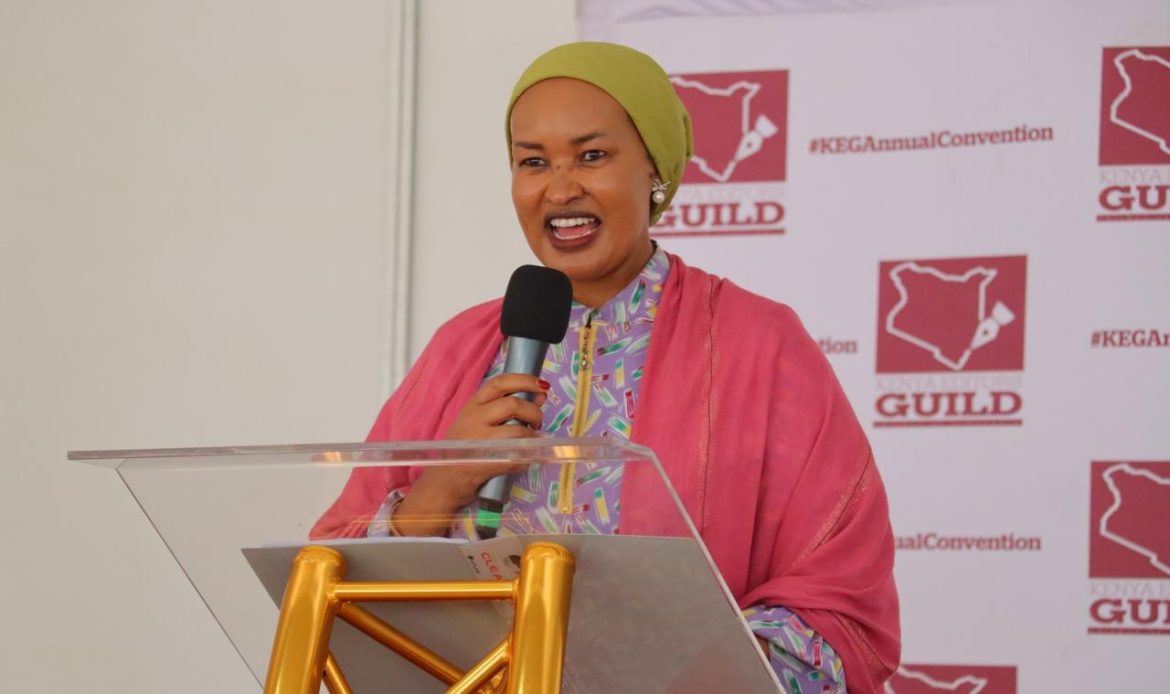
Speaking during the commissioning of the facility, the Principal Secretary for Technical and Vocational Education and Training (TVETs), Esther Muoria, said the continued use of fuelwood in learning institutions undermines national climate goals by accelerating deforestation and increasing carbon emissions.

Equity Associate Director of Energy, Environment and Climate Change Dr Julius Kamau (left), with the Governor of Makueni County, Mutula Kilonzo Junior (right), during a courtesy call at the
Governor’s office in Wote.

The PS said that while awareness about clean energy exists, adoption has been slower because institutions often fail to explain why change is necessary. Her remarks were delivered by Anne Kamonjo, Director of Greening TVETs at the State Department, who represented her at the event.

“If people are not shown the reason for adopting a new way of doing things, transformation of mindset becomes slow,” Muoria said in the statement.

“Wote TTI is setting the pace by demonstrating that LPG is cleaner, healthier and environmentally sustainable. When young people see this in practice, they carry that knowledge home and into the wider community.”

She noted that embedding clean cooking solutions in learning institutions offers a powerful pathway for climate action, given the scale of Kenya’s education sector.

“We cannot be telling students to plant trees while at the same time cutting millions of trees in our institutions without offering alternatives,” the PS said.

“That contradiction weakens climate education.”

Kenya has over 23,000 secondary schools, 45,000 primary schools and about 250 TVET institutions.

According to the State Department, learning institutions alone consume an estimated 10 million trees annually for cooking fuel, even as the country pushes a national target of planting 15 billion trees to restore forest cover.

The project was launched following a courtesy call by the Equity team on Makueni Governor Mutula Kilonzo Jnr, who said the initiative positions Wote TTI as a climate leadership hub in the county.

“Wote Institute is a trailblazer in skills training, and there is no doubt other TVETs will emulate this transition to clean cooking,” the Governor said. “This will allow our trees to grow and improve forest cover in the county.”

Equity Associate Director for Energy, Environment and Climate Change, Dr Julius Kamau, said the initiative is part of a wider effort by Equity Group Foundation to advance sustainable development and climate resilience.

“To date, 214 institutions have transitioned to clean cooking solutions, while more than 1,856 have expressed interest,” said Dr Kamau, who is also the acting Equity Group Director of Sustainability.

“Clean energy adoption is critical not only for environmental conservation but also for improved health and long-term economic sustainability.”

Wote TTI Board of Governors chair Prof. Joseph Mwinzi said the facility positions the institution as a centre of excellence in environmentally responsible training.

“This exposure to modern energy systems and improved safety standards opens doors for employment and entrepreneurship in the growing clean energy sector,” he said, urging students to become ambassadors for climate-conscious practices.

College Principal Joshua Munyoki said the transition marks the end of decades of reliance on firewood, which saw the institution consume two lorryloads every month.

“This is the most significant development we have had in over ten years,” he said. “Apart from environmental gains, it will lower costs and improve efficiency.”

Anne Manyatta, an ICT student and Vice-Chairperson of the Wote TTI Students Council, welcomed the shift to gas cooking, saying it had eliminated smoky meals and dining halls while improving time management. Plumbing student John Omolo, noted that the gas ensures meals are prepared on time, tastes better, and has inspired him to promote clean cooking at home where his family still uses firewood.

Present at the commissioning were principals from other institutions in Makueni County, many of whom said the project had strengthened the case for adopting clean energy in schools as part of Kenya’s broader climate response.

0 comment
0 FacebookTwitterPinterestLinkedinTumblrWhatsappTelegramEmail
Syncfusion

Global software development company Syncfusion is facing fresh allegations of financial mismanagement and workplace intimidation at its Kisumu operations, as employees report being pressured to refund salary overpayments through irregular channels following what they describe as systematic payroll errors.

The latest controversy centers on alleged payroll discrepancies that resulted in overpayments to staff members, followed by what employees characterize as heavy-handed attempts by management to recover the funds outside normal company procedures.

According to multiple sources who spoke to this publication on condition of anonymity, citing fears of retaliation, the payroll errors occurred over several months before being detected by the finance department.

“We received our salaries as usual, and suddenly weeks later we were being told there were overpayments and that we needed to return the money immediately,” explained one affected employee. “The pressure was intense, and the methods they wanted us to use raised serious questions.”

The controversy deepened when management allegedly requested that employees remit the excess funds through personal mobile money accounts or direct bank transfers to individual staff members, rather than through official company accounts with proper documentation and receipts.

Several employees reportedly objected to these irregular recovery methods, insisting that any financial transactions with their employer should be conducted through formal company channels with appropriate accounting procedures and paper trails.

“We asked for official company account details and proper documentation,” said another staff member. “We wanted receipts, proper records. This is our money we’re talking about, and we needed protection in case of future disputes.”

Faced with this resistance, management reportedly abandoned the recovery efforts altogether, leaving the matter unresolved and raising questions about financial controls and accountability within the organization.

“If there were genuine overpayments, why wouldn’t they use proper company procedures to recover the funds?” questioned a source familiar with the situation. “The fact that they dropped it entirely when we insisted on transparency tells you something isn’t right.”

The payroll controversy has intensified existing concerns about the qualifications and oversight of personnel in key human resources and finance positions at the Kisumu office.

Employees allege that individuals holding critical roles lack the necessary professional credentials or experience to manage sensitive financial and personnel matters effectively.

“We have people making decisions about our salaries and employment who don’t seem to understand basic HR and financial management principles,” claimed one long-serving staff member. “This payroll mess is just one example of a broader pattern of incompetence.”

The allegations extend beyond payroll mismanagement to the Procurement department, where employees have raised serious concerns about the integrity of tendering processes.

Multiple sources allege that certain officials involved in procurement have solicited inducements from suppliers, particularly those providing food services and other essential goods to the office.

“It’s an open secret,” said one employee. “Vendors who want contracts know they need to ‘cooperate’ with certain people in procurement. Those who refuse find their bids rejected regardless of price or quality.”

If substantiated, these allegations would represent serious ethical violations and potential criminal conduct under Kenyan anti-corruption laws. The claims also raise questions about how Syncfusion’s vaunted compliance systems could fail to detect or prevent such practices.

The procurement allegations take on added significance given previous reports of food safety issues at the Kisumu office, where employees claimed they were served expired or contaminated meals that resulted in food poisoning incidents.

The connection between allegedly compromised procurement processes and substandard food provision suggests a systematic failure of oversight rather than isolated incidents.

Employees describe a workplace culture where fear and intimidation discourage staff from raising legitimate concerns about management practices.

“People are terrified to speak up,” explained one worker. “We’ve seen what happens to those who question things, demotions, hostile treatment, sudden dismissals. The message is clear: keep your head down or face consequences.”

This climate of fear has reportedly contributed to prolonged silence about workplace issues, even as problems have multiplied over time.

Several employees noted that only when issues became too serious to ignore, such as the food poisoning incidents or the irregular payroll recovery demands, did staff feel compelled to push back despite the risks.

The workplace culture allegations align with previous reports from July 2025, when employees at the Kisumu office exposed what they described as toxic leadership, health risks, and sexual harassment.

Those earlier revelations included accusations against the office’s General Manager of making unwelcome sexual advances toward female employees and retaliating against those who rejected him through demotions or dismissals.

The persistence of similar complaints nearly seven months later suggests that earlier publicity and promised investigations did not result in meaningful reforms or accountability.

“Nothing changed after the last expose,” said one frustrated employee. “There were investigations, people came asking questions, but then everything went quiet and it was business as usual. That’s why people are skeptical that anything will be different this time.”

The latest allegations create a particularly stark contrast with Syncfusion’s carefully cultivated global image as a security-conscious, compliance-focused technology company.

The firm prominently promotes its SOC 2 Type 2 certification, a rigorous auditing standard that specifically evaluates an organization’s controls related to security, availability, processing integrity, confidentiality, and privacy.

Syncfusion also emphasizes its compliance with the European Union’s General Data Protection Regulation (GDPR), one of the world’s most stringent privacy frameworks, and markets itself to major financial institutions and Fortune 500 companies based on its trustworthiness and security protocols.

However, employees in Kenya allege a troubling disconnect between these stated corporate commitments and operational realities on the ground.

Screenshots and internal communications reviewed by this publication allegedly show Syncfusion staff in Kenya requesting or sharing sensitive customer and vendor information in ways that appear inconsistent with the company’s published data protection policies.

In one particularly concerning set of exchanges, employees allegedly shared login credentials and requested access to suppliers’ personal email accounts and Kenya Revenue Authority tax portals, practices that would violate basic data security principles.

These data handling concerns gained additional prominence following September 2025 reports that Syncfusion employees in Kenya had demanded sensitive personal information from suppliers, including Gmail credentials, KRA account details, passwords, and one-time authentication codes.

Suppliers who resisted these demands reportedly warned that such requests constituted breaches of contractual privacy provisions and threatened to escalate matters to the Directorate of Criminal Investigations.

The pattern of alleged misconduct spanning financial management, procurement integrity, workplace culture, and data protection suggests potential systemic failures rather than isolated incidents.

For a company serving over one million developers worldwide and counting more than 36,000 customers including major financial institutions, the reputational and regulatory stakes could not be higher.

The Kisumu County Labour Office has confirmed it is reviewing complaints from Syncfusion employees regarding workplace conditions and alleged violations of labour rights.

“We are taking these matters seriously,” said a spokesperson for the Labour Office. “Every worker in Kisumu County has the right to a safe workplace, fair treatment, and dignity. We will investigate thoroughly and take appropriate action based on our findings.”

The County Public Health Department has also indicated ongoing interest in workplace health and safety concerns at the Kisumu office, particularly given the region’s vulnerability to waterborne diseases and the importance of food safety standards.

Labour rights advocates are encouraging affected Syncfusion employees to come forward with information, promising confidentiality and protection from retaliation during investigations.

“Workers should not have to choose between their livelihoods and their safety or dignity,” said a representative from a Kenyan workers’ rights organization. “The law provides protections for whistleblowers, and we urge anyone with information about workplace violations to report them to the appropriate authorities.”

The organization noted that patterns of workplace abuse often persist because employees feel powerless to challenge management, creating an environment where misconduct can continue unchecked.

At the time of publication, Syncfusion’s corporate leadership had not responded to detailed questions about the payroll allegations, procurement concerns, or the broader pattern of workplace issues at the Kisumu office.

The company’s silence on these latest revelations stands in contrast to its public commitments to transparency and accountability, raising questions about how seriously the organization is taking concerns from its Kenyan operations.

For Syncfusion, a company that has built its business model on trust and reliability, the mounting controversies from Kenya represent a fundamental threat to its competitive position and customer relationships.

In an industry where a single data breach or compliance failure can trigger billions in regulatory fines and irreparable reputational damage, the company cannot afford to treat these allegations as merely local operational issues.

The interconnected nature of modern business means that workplace and compliance problems in one market can quickly escalate into global crises, particularly for companies operating across multiple regulatory jurisdictions.

The response from Syncfusion’s leadership in the coming days will be closely watched by customers, employees, regulators, and industry observers. The company faces critical decisions about how to investigate these claims transparently, what disciplinary measures to implement if violations are confirmed, and how to rebuild trust with stakeholders who may question whether its commitment to ethical business practices extends beyond marketing materials.

For employees at the Kisumu office, the question is whether this latest public attention will finally result in meaningful reforms or whether, as with previous controversies, the spotlight will fade and business will continue as usual.

“We want to believe things can change,” said one employee. “But we’ve been disappointed before. Real change requires real accountability, and so far we haven’t seen it.”

As investigations proceed and scrutiny intensifies, Syncfusion finds itself at a critical juncture. The company must decide whether to treat these allegations as an opportunity to demonstrate genuine commitment to its stated values or as a crisis to be managed through public relations efforts.

That choice will likely determine not only its immediate reputation but its long-term viability as a trusted technology partner in an industry built on trust and integrity.

0 comment
0 FacebookTwitterPinterestLinkedinTumblrWhatsappTelegramEmail
Startimes CEO Carter Luo

StarTimes has rolled out a nationwide expansion of its Business Halls as part of a strategy to strengthen customer engagement, improve accessibility, and enhance service delivery across Kenya.

The digital television provider says the move is aimed at bringing its services closer to customers while deepening physical interaction with the brand. The new centres are designed to offer walk-in support, expert guidance, product sales, upgrades, and other StarTimes services under one roof.

With the expansion, StarTimes Business Halls are now operational in Upperhill and Buruburu in Nairobi, as well as in Emali, Mombasa, Ukunda, Malindi, Nakuru, Meru, Kisumu, Kisii, Eldoret, Kakamega, and Kapsabet—ensuring a wider national footprint.

Speaking on the rollout, StarTimes PR and Communications Officer Robert Ouma said the expansion is already strengthening customer relationships and improving service turnaround.

“This expansion has come in handy for both our customers and the business. We believe good customer service should not be far away, which is why we made a deliberate decision to move closer to our customers,” he said.

Ouma added that the physical centres allow StarTimes to offer timely support, build trust, and create meaningful face-to-face interactions that enhance the overall customer experience.

The company says the Business Halls, together with its dealership network, form part of a broader customer-centric strategy focused on convenience, service quality, and long-term growth—ensuring that wherever customers are, StarTimes services are always within reach.

0 comment
0 FacebookTwitterPinterestLinkedinTumblrWhatsappTelegramEmail
Equity Bank CEO James Mwangi

Equity Bank Group Chief Executive Officer James Mwangi has suffered a major legal and personal setback after the Court of Appeal declined to stop the execution of a judgment ordering his eviction from a sprawling Sh1 billion mansion in Nairobi’s leafy Muthaiga suburb.

In a ruling delivered on Wednesday, a three-judge bench of the Court of Appeal — comprising Justices Daniel Musinga, Patrick Kiage, and Agrey Muchelule — rejected Mwangi’s application to halt enforcement of an earlier Environment and Land Court decision that found he was unlawfully occupying property belonging to another party.

Instead, the appellate court ordered Mwangi and his wife, Jane Wangui Mundia, to deposit Sh10 million as security in an interest-earning joint account within 60 days as their appeal proceeds. The judges also directed that the status quo over the contested three-acre property be maintained pending the hearing and determination of the appeal.

However, court documents reveal that the eviction had already been carried out.

According to filings dated January 7, 2026, Mount Pleasant Limited — the firm that successfully sued Mwangi — executed the eviction order under the supervision of officers from Gigiri Police Station, effectively taking possession of the property.

“The above court order has been executed today the 07/01/2026 under supervision of the OCS Gigiri and now the plaintiff Mount Pleasant Ltd has now gained possession of the property,” reads the court document signed by the Gigiri police commander.

The development marks a dramatic fall from grace for Mwangi, one of Kenya’s most influential business leaders, whose rags-to-riches story has long symbolised African entrepreneurship. The Equity Bank CEO had claimed to have purchased the property in 2013 from former President Daniel arap Moi for Sh306 million.

At the centre of the dispute is businessman Anverali Amershi Karmali, who through Mount Pleasant Limited insists he bought the same property seven years earlier, in July 2006, from former Finance Minister Arthur Magugu and his wife Margaret Wairimu for Sh130 million.

In a stinging judgment delivered in October 2025, Environment and Land Court Judge Oscar Angote ordered Mwangi and his wife to vacate the property within 30 days or face forcible eviction by police from Gigiri and Muthaiga stations. The court also awarded Mount Pleasant Limited Sh10 million in damages for trespass, citing the property’s prime location, its three-acre size, the duration of the alleged trespass and its estimated value of Sh1 billion based on 2022 assessments.

Justice Angote further directed the Chief Land Registrar to cancel all titles, entries and conveyances linked to Mwangi’s claimed ownership and to nullify the amalgamation of subdivided parcels into a single title — effectively wiping out any legal record of the banker’s claim to the land.

While Mwangi maintained that he took possession of the property immediately after receiving his title in 2013, the court found that Mount Pleasant’s security guards remained on the land until March 2020, when they were allegedly forcefully removed by the Mwangis.

Although the Directorate of Criminal Investigations did not conclusively establish forgery, the court ruled that the numerous procedural and documentary anomalies surrounding Mwangi’s title were sufficient, on a balance of probabilities, to impeach it.

“While the court stops short of finding fraud attributable to the defendants to the requisite standard of proof, the procedural and documentary irregularities would, on their own, suffice to impeach the title,” Justice Angote ruled.

Court records paint a picture of a property saga riddled with irregularities dating back nearly two decades. The land had initially been charged to National Bank in the late 1980s by MDC Holdings Limited to secure a Sh10.5 million loan. After default, the bank sued, eventually agreeing in 2002 to sell the property for Sh90 million to recover its debt and compensate Magugu.

Karmali told the court that after acquiring the land in good faith, land registry files relating to the property mysteriously disappeared from the Ministry of Lands. He later discovered that duplicate titles had been issued, with both parties holding certificates showing them as registered owners of the same property.

The dispute escalated into open confrontation in June 2020 when Mwangi allegedly arrived at the property accompanied by police officers, removed Karmali’s guards and installed his own — prompting Mount Pleasant Limited to seek court intervention.

The Court of Appeal has now directed that the matter be fast-tracked, ordering the parties to attend a case management conference within 30 days and to file written submissions ahead of the hearing.

Until then, Mwangi must comply with the Sh10 million security order as Mount Pleasant Limited remains in possession of the contested Muthaiga estate — a sobering chapter for a banking executive whose career has been built on financial discipline, now caught in a legal battle that has once again exposed deep-seated flaws in Kenya’s land ownership system.

0 comment
0 FacebookTwitterPinterestLinkedinTumblrWhatsappTelegramEmail
Pius Mbugua Ngugi,

Billionaire businessman Pius Mbugua Ngugi, one of Kenya’s most powerful agribusiness figures and the estranged husband of Nairobi Woman Representative Esther Passaris, is now a wanted man after a Nakuru court issued a warrant for his arrest over an unpaid legal bill amounting to Sh4.2 million.

Ngugi, 81, the founder of the Kenya Nut Company and a dominant player in the global macadamia market, is being sought by police following orders issued by the Environment and Land Court in Nakuru on January 29, 2026. The warrant authorises officers to pursue him to all his known residences and business premises, both in Nairobi and upcountry.

Police Foiled at CBD Offices

Police officers from Central Police Station have reportedly been camping outside Ngugi’s offices at the iconic Volvo House on Loita Street, Nairobi CBD, but were left frustrated after failing to arrest him despite intelligence suggesting he was inside the building.

Billionaire businessman Pius Mbugua Ngugi

Sources familiar with the operation describe a dramatic cat-and-mouse chase, with the tycoon allegedly slipping through the police dragnet, leaving officers empty-handed in a scene likened to a Nollywood thriller.

The warrant gives police wide latitude to execute the arrest, including provisions for travel expenses. Officers are entitled to bus or railway fare, or Sh1 per mile if using motor vehicles, in addition to out-of-pocket expenses incurred during the manhunt.

The Debt Behind the Drama

At the centre of the unfolding saga is a legal fee dispute involving Githogori & Harisson Associates, a law firm that previously represented Ngugi.

Court documents show that the tycoon owes the firm:

  • Sh3.7 million in principal fees
  • Sh475,948 in accrued interest
  • Sh5,500 in collection fees
  • Sh1,500 in court filing costs

The total stands at approximately Sh4.2 million, a figure widely regarded as pocket change for a businessman whose empire spans agriculture, insurance, real estate, manufacturing, and finance.

Advocate Harrison Musyoka, representing the law firm, has been pushing for swift enforcement. In a letter dated February 4, 2026, addressed to the Officer Commanding Station (OCS) at Central Police Station, Musyoka underscored the urgency of executing the warrant.

The matter is scheduled for directions in court on February 5, with the judge expecting an update on progress made in arresting Ngugi. The OCS is said to have received the warrant only a day earlier, piling pressure on police to act fast.

A Familiar Scandal for Passaris

For Nairobi Woman Representative Esther Passaris, the latest controversy involving her husband is another chapter in a long and public history of personal turmoil.

Passaris has previously spoken openly about the challenges of her polygamous marriage to Ngugi. In a 2016 interview, she admitted that while she never planned to be in such an arrangement, she had learned to accept it. The couple has two children together—Makenna and Lefteris—while Ngugi also has four children with his first wife, Josephine Wambui Ngugi.

Their relationship has repeatedly made headlines. In 2003, Passaris sued Ngugi, accusing him of breaching a promise to marry her after the two had lived together as husband and wife since 1992. In 2014, another woman, Lynette Lucy Buddery, took Ngugi to court over delayed school fees for their daughter.

Legal Troubles Beyond Family Matters

Ngugi’s run-ins with the law are not limited to domestic disputes.

In 2020, the Court of Appeal ordered Kenya Nut Company to pay the Kenya Revenue Authority (KRA) Sh33.5 million in withholding tax linked to commissions paid to foreign agents between 2002 and 2005. The judges castigated the firm’s arrangements, describing them as “reckless” and seemingly designed to deny the country tax revenue.

A Colossal Empire, A Small Debt

Ngugi controls roughly 10 per cent of the global macadamia market, with business interests that include Thika Coffee Mills, Kenya Alliance Insurance, Tatu City, sweet manufacturing, dairy farming, wineries, and prime real estate.

His consumer brands—Out of Africa nuts, Nassu Snacks, Aberdare Tea, and Leleshwa Wines—are household names across Kenya.

That such a titan of industry is now evading arrest over unpaid legal fees has stunned observers and raised uncomfortable questions about accountability among Kenya’s elite.

From Coffee Farmer to Macadamia King

Ngugi’s rise is the stuff of legend. A coffee farmer in Kiambu in the early 1970s, he pivoted to macadamia farming after coffee prices collapsed in 1972. With government backing and Japanese investors, he built a processing empire that today employs more than 4,000 people and manages over 8,000 acres of farmland.

For decades, he shunned the limelight, so much so that many Kenyans only saw his face in a 1995 Kenya Newsreel broadcast shown in cinemas before the movie Crimson Tide.

A Fall from Grace Playing Out in Public

Now, the once-elusive billionaire is making headlines for all the wrong reasons.

As police intensify the manhunt and the court deadline looms, the question remains: will Pius Ngugi settle the debt and face the court, or will he continue dodging arrest?

One thing is clear—the macadamia king cannot run forever. And as the streets watch and the law closes in, this extraordinary chapter in his storied life is unlikely to be forgotten anytime soon.

0 comment
0 FacebookTwitterPinterestLinkedinTumblrWhatsappTelegramEmail
Willstone Homes Director Ejidio Kinyanjui at a past event

For thousands of Kenyans living abroad, the dream of owning a home back home has turned into a financial and emotional catastrophe. What began as hopeful investments in off-plan housing projects has, for many, ended in millions of shillings lost to elaborate property scams allegedly orchestrated by developers such as George Mburu of Mizizi Africa Homes, Ejidio Kinyanjui of Willstone Homes, and David Mureithi Kanyi of Kenya Projects.

From Malaa and Ruiru to Kamakis and Mombasa, a pattern has emerged: slick marketing, convincing paperwork, grand promises—and, ultimately, empty land or abandoned structures.

The Mburu Model: Dreams Sold on YouTube

In November 2021, US-based Kenyan Josphat Ndambo paid Sh4.25 million after watching a polished YouTube video advertising Asali Estate in Malaa, a project by Mizizi Africa Homes Limited. The video showcased computer-generated images of modern three-bedroom maisonettes set against Mount Kilimambogo.

Two years later, Ndambo’s “home” does not exist.

A visit to the site reveals unfinished foundations, no electricity, no infrastructure, and no active construction. Multiple investors tell similar stories. The mastermind behind the project, George Mburu, previously worked at the now-defunct Banda Homes before launching Mizizi Africa Homes.

Despite mounting complaints, Mburu has continued to project an image of success—operating from offices near Sarit Centre in Westlands and flaunting luxury cars and a lavish lifestyle on social media—while investors struggle to recover their money.

Willstone Homes: Fake Titles, Wrong Counties

Another major scandal centres on Willstone Homes Limited, linked to director Ejidio Kinyanjui, alongside Patrick Thuo Marigi and Victor Muusya Cosmus.

One of the Willstome Homes’ projects.

US-based investor Mellen Bwari Okari invested Sh57 million to purchase five maisonettes at White Park Gardens, an off-plan development marketed as being in Ruai East, Nairobi County.

A site visit revealed shocking truths:

  • Poor, substandard construction
  • The land was actually located in Mavoko, Machakos County, not Nairobi
  • The land registration numbers in the sale agreements were fabricated
  • The referenced title, Block 3/90489, does not exist

Further investigations showed that the directors of Willstone Homes had already moved on, registering a new company, Ubuni Investments, from the same Park Suites offices in Westlands. Meanwhile, investors were left holding worthless contracts.

Ejidio Kinyanjui of Willstone Homes.

Like Mburu, Kinyanjui has continued to display a lavish lifestyle online—posting first-class flights, helicopters, and luxury vehicles—while victims pursue stalled court cases.

Kenya Projects: Low Deposits, High Losses

Perhaps the most devastating cases involve David Mureithi Kanyi, the elusive businessman behind Kenya Projects, whose schemes targeted ordinary Kenyans with “affordable” housing offers.

In Kamakis, George Gitonga invested Sh2.9 million, money raised by cashing in his children’s education policy and selling his car, to buy a two-bedroom maisonette. He later discovered he was one of 37 victims of the same project.

Buyers were eventually forced to complete construction using their own funds. Even then, they have never received title deeds.

On the Coast, Kanyi allegedly went further. Victims, including Eva Mmbone Kiti, Nana Mohammed, Faud Ali Ahmed, and Nana Khadija Omar, wired Sh13 million for houses at Royal Palm Villas—only to discover the developer had taken a Sh55 million bank loan using the same property as collateral.

A Well-Rehearsed Scam Playbook

Across these cases, the tactics are strikingly similar:

  • Formation of legitimate-looking companies
  • Offices in upscale Nairobi locations
  • Slick brochures, videos, and influencer promotions
  • Fake or manipulated land registration numbers
  • Minimal construction to create an illusion of progress
  • Use of new buyers’ money to prop up older failing projects

Diaspora investors are particularly targeted because distance limits their ability to conduct due diligence or make frequent site visits.

Regulation Failure and Total Impunity

Kenya’s off-plan housing market remains poorly regulated. There is:

  • No mandatory escrow system
  • Weak licensing requirements
  • Poor enforcement by regulators
  • No central database of developers’ track records

Legislative attempts to reform the sector, including a proposal requiring developers to deposit Sh500 million as a licensing bond, have stalled in Parliament.

Meanwhile, criminal prosecutions are rare. Developers simply shut down one company and open another, leaving court judgments unenforced and victims drained by legal fees.

Broken Lives, Not Just Broken Projects

Most victims are not wealthy speculators. They are nurses, drivers, teachers, and security guards working double shifts abroad, sending money home with the hope of retiring with dignity.

Instead, they are left with:

  • Worthless paperwork
  • Crippling debt
  • Years of litigation
  • Psychological trauma

A System That Enables Theft

Experts say the fraud thrives because of systemic failures:

  • Forged land records
  • Complicit officials
  • Weak banking due diligence
  • Ineffective industry self-regulation

Until Kenya enforces mandatory escrow accounts, strict licensing, criminal penalties, and transparent developer registries, the carnage will continue.

A Warning to the Diaspora

The stories of George Mburu, Ejidio Kinyanjui, and Kenya Projects are not isolated incidents—they are symptoms of a broken system.

For now, diaspora Kenyans are left to warn each other in WhatsApp groups and online forums, while rogue developers continue to operate openly.

The question is no longer if reform is needed—but how many more millions must be lost, and how many more dreams destroyed, before action is taken.

0 comment
0 FacebookTwitterPinterestLinkedinTumblrWhatsappTelegramEmail

Initial Public Offerings (IPOs) present a unique opportunity for investors to participate in the growth of companies as they list on the Nairobi Securities Exchange (NSE). By investing in IPOs, you can own a stake in businesses that are shaping Kenya’s economy and take part in long-term value creation.

To participate in any IPO, you need a Central Depository & Settlement (CDS) account. This account is your gateway to the NSE, enabling you to buy, hold, and trade shares in listed companies. Equity Bank is here to make your investment journey simple and accessible, empowering you to confidently take advantage of IPO opportunities as they arise.

Why Open a CDS Account with Equity?

The Nairobi Securities Exchange (NSE) has been on a remarkable growth trajectory, with the Nairobi All Share Index (NASI) surging by an impressive 51% in 2025, closing the year at 186.58 points. By opening a CDS account, you not only gain access to the floated IPOs but also position yourself to benefit from Kenya’s thriving capital markets.

Equity is committed to ensuring that every Kenyan can take full advantage of IPOs. Setting up your CDS Account early is crucial to avoid last-minute rushes and administrative hurdles.

Our nationwide network of branches and dedicated Relationship Managers are ready to guide you through the process, ensuring you’re fully prepared to invest.

Your Gateway to Long-Term Investment Opportunities

An Equity CDS Account is more than just a requirement for the IPOs – it’s your entry point to Kenya’s vibrant capital markets. With this account, you can:

  • Buy and manage listed securities: Build a diversified portfolio and track your investments with ease.
  • Access expert guidance: Our Relationship Managers provide personalized advice to help you align your investments with your financial goals.
  • Enjoy long-term financial growth: Take advantage of future IPOs and market opportunities as they arise.

Flexible Credit Solutions for Investors

Equity goes beyond account opening by offering investment-related credit solutions. For eligible customers, we provide tailored financing options to help you participate in IPOs without straining your cash flow. This ensures you can seize this opportunity while maintaining financial stability.

Personalized Support at Your Nearest Equity Branch

Equity’s branch-based approach ensures that every customer receives personalized, professional support. Whether you’re a seasoned investor or a first timer, our Relationship Managers will walk you through the process step by step, helping you understand the requirements, complete the necessary documentation, and make informed investment decisions.

Don’t let administrative delays keep you from participating in historic investments. Visit your nearest Equity Bank branch today to open your CDS Account and secure your place in Kenya’s economic future.

For more information, you can contact the team on EIB Client Services , call 0763 000 000 or walk into any Equity Branch near you.

0 comment
0 FacebookTwitterPinterestLinkedinTumblrWhatsappTelegramEmail
KETRACO SGR Deal

Fresh questions are emerging over a controversial Sh24.2 billion Standard Gauge Railway (SGR) electrification deal after the Kenya Electricity Transmission Company Limited (KETRACO) quietly deleted key webpages detailing the project, which was signed in 2018 under the leadership of then Managing Director Fernandes Barasa.

The deleted webpage had announced the signing of a $240 million (approximately Sh24.2 billion) contract between KETRACO and China Electric Power Equipment and Technology Company Limited, promising to electrify the Mombasa–Nairobi SGR line and have electric trains running by 2021.

A screengrab of the deleted webpage on the KETRACO website.

It is now 2026, and the SGR continues to operate on diesel-powered locomotives, raising concerns that the ambitious electrification project may have been nothing more than a paper deal.

Screenshots of the now-deleted page, which have been circulating online, show KETRACO once celebrated the agreement as a major milestone in modernising Kenya’s flagship railway project. The disappearance of the page has triggered suspicions of a possible cover-up and renewed scrutiny of decisions made during Barasa’s tenure.

The development comes amid growing accountability pressure on KETRACO, particularly after Auditor General Nancy Gathungu revealed that the agency owes landowners more than Sh4 billion in unpaid compensation linked to various transmission projects.

At the time of signing the SGR electrification deal in January 2018, KETRACO announced plans to construct 14 substations along the 472-kilometre railway corridor, with completion expected within 28 months. Fernandes Barasa publicly championed the project, touting zero carbon emissions, lower operating costs, faster trains, and expanded economic activity along the corridor.

However, doubts about the project’s feasibility surfaced almost immediately. Then Kenya Railways Managing Director Atanas Maina questioned whether Kenya had sufficient power supply and financing capacity to sustain an electric railway. Those concerns were later echoed by then Transport Cabinet Secretary James Macharia, who told Parliament that the country lacked both the guaranteed electricity supply and the financial muscle to support SGR electrification.

In a little-noticed clarification issued after the signing ceremony, KETRACO admitted that the agreement was only a commercial contract and not a financing deal. The agency stated that the contract would only take effect after the National Treasury secured funding—something that never happened.

“KETRACO has not borrowed any loan for the electrification of the SGR Project,” the agency said at the time, sharply contradicting earlier triumphant messaging suggesting the project was ready for implementation.

Critics are now asking why KETRACO publicly announced a Sh24.2 billion contract without secured financing, and whether the move was misleading by design or a result of gross mismanagement.

The controversy has revived scrutiny of Fernandes Barasa’s tenure at KETRACO, which was marred by several high-profile scandals. Barasa, now the Governor of Kakamega County, previously faced investigations by the Ethics and Anti-Corruption Commission over the Sh18 billion lost in penalties related to the delayed Lake Turkana Wind Power transmission line, as well as unexplained excess payments and irregular transactions.

Former KETRACO MD and Kakamega Governor Fernandes Barasa.

His resignation from KETRACO in 2022, shortly before appearing before Parliament’s Public Investments Committee, was widely viewed as controversial.

The SGR electrification saga also highlights Kenya’s growing embarrassment when compared to regional peers. Ethiopia completed a 750-kilometre electric railway to Djibouti in 2016, while Morocco operates Africa’s first high-speed electric rail. Tanzania and Uganda are also planning electric SGR systems, raising fears that Kenya’s diesel railway could face interoperability challenges in the future.

Despite repeated requests, KETRACO has not explained why the webpage detailing the SGR electrification deal was deleted, who authorised the action, or whether any funds were ever paid to the Chinese contractor. Calls and emails to the agency’s current management went unanswered by the time of publication.

The silence has only fueled speculation that authorities may be attempting to erase public records of a failed or fictitious mega project.

As Kenyans continue to grapple with rising fuel costs and a struggling SGR that bleeds billions annually, the unanswered questions surrounding the Sh24.2 billion electrification deal remain glaring.

Was the project a genuine plan that collapsed, or a costly illusion sold to the public? And why, eight years later, does KETRACO appear more eager to delete evidence than to provide answers?

For now, the deleted webpage has become a symbol of broken promises, missing accountability, and a growing public demand to know what really happened to Kenya’s Sh24.2 billion.

0 comment
0 FacebookTwitterPinterestLinkedinTumblrWhatsappTelegramEmail
Del Monte Kenya

Multinational pineapple producer caught red-handed siphoning profits offshore while ordinary Kenyans shoulder crippling tax burden

The veil has been lifted on one of Kenya’s most brazen corporate tax scandals, with Del Monte Kenya now facing a KSh1.76 billion bill after a tribunal exposed how the multinational used shadowy offshore deals to rob the country of desperately needed public funds.

In a damning ruling that has sent shockwaves through Kenya’s corporate sector, the Tax Appeals Tribunal dismissed Del Monte’s appeal and upheld the Kenya Revenue Authority’s assessment, confirming what ordinary Kenyans have long suspected: some of the country’s biggest and most profitable companies are systematically cheating the tax system while workers and small businesses are squeezed to breaking point.

The case centers on transfer pricing, a complex financial maneuver that allows multinationals to manipulate the prices they charge their own foreign subsidiaries, artificially slashing their Kenyan profits and shifting billions to tax havens where rates are lower or non-existent.

KRA’s 2018 audit uncovered that Del Monte was using a cost-plus pricing model that grossly undervalued its Kenyan operations while funneling inflated profits to related companies abroad, particularly its Swiss affiliate DMI GmbH. The tribunal found the pineapple giant could not justify why it was earning modest returns in Kenya, where all the real work happens, while its offshore entities raked in the profits.

“The tribunal found that the pineapple giant could not justify why it was shifting profits to offshore companies when the real value of the business is created in Kenya,” the ruling stated, laying bare the mechanics of corporate tax abuse.

Del Monte had argued it was simply following a standard cost-plus approach, applying a meager 4.83 percent markup to its costs when selling to its Swiss sister company. The firm insisted this was fair compensation for its role as a manufacturer supplying a related distributor.

But the tribunal was having none of it. Judges ruled that Del Monte’s documentation failed to reflect the economic reality of its massive Kenyan operations. The company could not explain why the Kenyan business, which does all the planting, harvesting, processing and initial distribution, should earn only a pittance while foreign affiliates that simply handle onwards sales captured the lion’s share of profits.

The ruling also exposed Del Monte’s attempts to obscure its corporate structure. The company claimed a multi-billion shilling intercompany loan came from Del Monte Fund B.V., owned by its ultimate parent in the Cayman Islands, a notorious tax haven. But KRA presented registry records proving the lending entity was actually wholly owned by the Swiss affiliate, a finding Del Monte could not refute with official documentation.

The KSh1.76 billion that Del Monte sought to avoid paying could have transformed lives across Kenya. According to the Kenya Human Rights Commission, which welcomed the tribunal’s decision, that money could build 1,760 public school classrooms, construct eight fully equipped county hospitals, tarmac 29 kilometers of road, employ over 3,500 nurses or teachers for a year, or fund multiple rural water projects.

Instead, while Del Monte contested billions in taxes through expensive legal battles, ordinary Kenyans were being told to tighten their belts, accept higher VAT on basic goods, and pay new levies on essential services.

The Kenya Human Rights Commission pulled no punches in its response, accusing Del Monte and other multinationals of looting what rightfully belongs to Kenyan citizens.

“For years, ordinary Kenyans have been told to tighten their belts, pay more VAT, and accept new levies on basic goods and services. However, some of the country’s largest and most profitable corporations, like Del Monte, continue to contest paying billions in taxes aggressively. This is unjust and unacceptable,” the commission said in a scathing press statement.

The rights body warned that corporate tax evasion weakens the state’s ability to deliver basic services and shifts the tax burden onto workers, small businesses and low-income households. When multinationals dodge taxes, children sit in overcrowded classrooms, patients go without medicine, and communities lack clean water.

KHRC revealed it is now examining other corporations, focusing on the land they occupy, the terms of their leases, and what they actually pay in land rates and taxes. Early findings suggest the scale of revenue loss will shock many Kenyans, especially at a time when households are strained by PAYE, VAT and rising levies on basic necessities.

The commission is demanding sweeping reforms to stop multinationals from bleeding the country dry. It wants all foreign corporations operating in Kenya to publicly disclose their revenues, profits, taxes paid, number of employees and assets for each country where they operate. It is calling for a dedicated, well-resourced program for annual transfer pricing audits targeting high-risk sectors like agribusiness, extractives, manufacturing, energy and digital services.

Where aggressive tax avoidance is proven, KHRC insists penalties must go beyond mere recovery of tax and interest to include heavy punitive fines and possible criminal investigations. The commission wants strict restrictions on the deductibility of management fees, marketing fees, royalties, and interest on related-party loans unless companies can demonstrate clear economic substance.

It is also demanding publication of an annual list of the largest corporate taxpayers and companies with major unresolved tax disputes, joint work with the Ministry of Lands to establish a public register linking large landholdings to tax records, and active challenges to treaty shopping and artificial routing of payments through low-tax jurisdictions.

Most provocatively, KHRC wants companies with histories of aggressive tax avoidance barred from receiving tax incentives, accessing public procurement or benefiting from any form of state support.

The Del Monte case is not an isolated incident but part of a broader pattern. KHRC’s 2025 publication “Who Owns Kenya?” revealed how corporate tax abuse fuels inequality and leaves essential public services underfunded. The report showed that while multinationals employ armies of accountants and lawyers to minimize their tax bills, schools crumble, hospitals run out of drugs, and roads remain impassable.

Tax justice campaigners say Kenya loses billions annually to profit shifting by multinationals. A 2024 study estimated that African countries collectively lose around $88.6 billion per year to illicit financial flows, with transfer pricing abuse being a major component. Kenya is believed to lose between $1.1 billion and $1.5 billion annually, though the true figure may be higher given the opacity of multinational operations.

The global context makes Kenya’s predicament even more galling. Multinationals operating in Africa often pay far lower effective tax rates than their statutory obligations would suggest, using intricate structures involving subsidiaries in places like Mauritius, the Netherlands, Switzerland and the Cayman Islands to minimize their African tax footprint.

Del Monte Kenya has not publicly commented on the tribunal ruling or indicated whether it will seek further appeals. The company’s managing director Wayne Cook has previously defended the firm’s tax practices as compliant with Kenyan law.

But the tribunal’s decision suggests that era may be ending. Tax authorities worldwide are cracking down on transfer pricing abuses, and Kenya appears determined to claim its fair share of the wealth generated on its soil.

For the millions of Kenyans struggling with the rising cost of living, the Del Monte case crystallizes a profound injustice. While they pay tax on every shilling they earn and every item they buy, some of the wealthiest corporations doing business in Kenya deploy sophisticated schemes to avoid contributing their fair share to the country that provides their workers, their infrastructure, their markets and ultimately their profits.

The question now is whether the Del Monte ruling marks a turning point or remains an isolated victory in a long war against corporate tax abuse. With KHRC and other civil society organizations now turning their spotlight on other multinationals, and with KRA apparently emboldened by its tribunal win, more corporate tax scandals may soon come to light.

What is certain is that ordinary Kenyans are watching, and they are running out of patience with a system that squeezes the poor while allowing the powerful to game the rules. The Del Monte case has proven that when authorities have the will to act, corporate tax dodgers can be held to account. Now Kenyans want to see that will applied across the board, to every multinational that treats Kenya as a place to extract wealth rather than a country deserving of fair contribution to the common good.

The KSh1.76 billion Del Monte must now pay is not just a number on a balance sheet. It represents classrooms that can be built, hospitals that can be equipped, roads that can be paved, and services that can be delivered. It represents a small measure of justice in a system that has for too long favored corporate interests over the public good.

As the tribunal put it bluntly: multinationals cannot use paperwork to export profits when the actual work, risks and value addition happen on Kenyan soil. That principle, if consistently enforced, could transform Kenya’s fiscal landscape and ensure that those who profit from Kenya also contribute to Kenya’s development.

The battle is far from over, but for once, the people of Kenya can claim a victory.

0 comment
0 FacebookTwitterPinterestLinkedinTumblrWhatsappTelegramEmail
Tourism CS Rebecca Miano at World governments summit in Dubai.

The government is embracing artificial intelligence and smart data as transformative tools to redefine the future of tourism, Tourism and Wildlife Cabinet Secretary Rebecca Miano announced during the ongoing World Governments Summit in Dubai.

Speaking during the ongoing World governments summit in Dubai, Miano emphasized that technology is no longer optional in the rapidly evolving travel landscape but central to building a resilient, inclusive, and globally competitive tourism sector.

“By leveraging AI and smart data to personalize the visitor experience and moving beyond talk to action with low-carbon solutions for conservation-led tourism, we are ensuring our local communities are the primary beneficiaries of the tourism value chain,” said Miano.

Tourism CS Rebecca Miano at the World Government Summit in Dubai.

According to the Cabinet Secretary, artificial intelligence is already opening new possibilities for the sector, from predictive analytics that help stakeholders understand travel patterns to intelligent platforms capable of tailoring itineraries based on visitor preferences.

“Truly, the world has majorly shifted — mass tourism is making way for purpose-driven travel, and Kenya is leading this charge,” she noted.

Miano made the remarks during a panel discussion at the Future of Tourism & Destination Global South forum alongside her Lebanese counterpart, Hon. Laura Lahoud, where she outlined Kenya’s roadmap toward a digitally-forward tourism ecosystem.

Beyond enhancing visitor experiences, smart data is set to strengthen conservation efforts by enabling real-time monitoring of ecosystems, improving park management, and supporting evidence-based decision-making. This approach aligns with Kenya’s longstanding commitment to ensuring that conservation and economic development go hand in hand.

At the sidelines of the summit, Miano also held a strategic bilateral meeting with the newly appointed UN Tourism Secretary-General, H.E. Shaikha Al Nowais, where they explored areas of cooperation in advancing sustainable tourism.

“As we congratulate H.E. Shaikha Al Nowais on her new role, Kenya looks forward to strengthening our partnership as we seek to upscale the tourism sector’s future workforce, attract more investments, and collaborate with other UN-led agencies and international organizations,” she said.

With destinations worldwide competing for digitally savvy travelers, Kenya is positioning itself at the forefront of innovation.

“The Global South is no longer a passive player; we are the new frontier of authenticity and innovation,” Miano affirmed.

As the country advances the Magical Kenya vision, the integration of AI and smart technologies is expected to drive smarter marketing, unlock new economic opportunities, and ensure that tourism growth remains sustainable, inclusive, and future-ready.

0 comment
0 FacebookTwitterPinterestLinkedinTumblrWhatsappTelegramEmail
Marjan Hussein Marjan

In a dramatic move that shocked Kenya’s political establishment Tuesday evening, newly appointed IEBC Chairman Erastus Ethekon orchestrated the unceremonious exit of Chief Executive Officer Hussein Marjan, bringing down the curtain on more than a decade of service in the controversial 399 days before his contract was due to expire.

The bloodless coup at Anniversary Towers culminated in five commissioners being urgently recalled from a week-long workshop in Naivasha on Monday for a crisis meeting that sealed Marjan’s fate, with the executive’s future dissected in sessions held both in his presence and behind closed doors.

Sources privy to the boardroom drama revealed that Ethekon, barely seven months into his tenure as chairman, had been methodically building a case against Marjan since the commission was fully constituted last July, focusing on procurement decisions made when commissioners were absent and questions around the extension of the controversial Smartmatic contract.

The final act played out with surgical precision. When Marjan learned his days were numbered, he approached Ethekon seeking a dignified exit. The chairman obliged, offering a written confirmation that the departure would be by mutual consent. But in a twist that stunned the commission, Marjan returned on Friday at 5pm armed with legal counsel and a counter-proposal demanding full payment through March 2027 and compensation for unused leave.

That move proved fatal. Ethekon convened an emergency session on Monday afternoon with five commissioners, deliberately excluding Vice Chairperson Fahima Araphat Abdallah who was attending to private matters. The session, fully minuted, became the formal basis for terminating Marjan’s contract and marked the point of no return.

Commissioner Alutalala Mukhwana was first to arrive at Tuesday’s concluding meeting that began at 3:30pm, followed by Commissioner Anne Nderitu and Professor Francis Aduol. By 5:36pm, the verdict was sealed. When Marjan appeared at reception around 6pm, he found media already gathered, tipped off about the seismic shift underway. His terse “Sorry, I’m not going to speak to the media” response betrayed the tension of a man whose career had just been demolished.

The catalyst for Marjan’s downfall was a perfect storm of opposition pressure and internal discontent. Opposition leaders led by Wiper’s Kalonzo Musyoka had spent weeks demanding his removal, accusing him of hastily renewing Smartmatic’s contract when the commission was not in office. The company, which supplied the Kenya Integrated Elections Management System kits for the 2022 polls, has been dogged by controversy across multiple countries.

“We cannot have free and fair elections with Marjan at the IEBC,” Kalonzo had thundered at a funeral in Machakos County in January. “When there was no commission in place, he moved very fast and renewed Smartmatic’s contract. When the new commissioners came in, they found that he had already renewed those contracts. It was an illegal act.”

DAP-Kenya leader Eugene Wamalwa went further, demanding not just Marjan’s exit but his prosecution for abuse of office. The opposition’s fury was amplified by explosive allegations from a former Venezuelan military intelligence chief linking Smartmatic to election manipulation in multiple countries.

But it was not just external pressure that sealed Marjan’s fate. Inside the commission, questions swirled around procurement decisions and an Auditor-General’s report that raised governance concerns. During one particularly brutal confrontation, a commissioner pointedly asked Marjan whether his continued stay was sustainable given that the entire commission had lost confidence in him.

The sticking point was the Smartmatic contract extension. Commissioners discovered that a two-year extension approved in 2024 to expire at the end of 2026 had been signed unilaterally by the CEO when commissioners were not in office. Under IEBC’s standard operating procedures, all purchases of strategic election materials including ballot papers, voter registration kits, and ballot boxes must receive commissioner approval.

When Marjan attempted in November 2025 to extend the framework agreement to allow purchase of new equipment, commissioners flatly rejected the move. That rejection, sources say, was the beginning of the end.

Marjan’s final hours at IEBC were a study in contrasts. On Monday, he reported for duty at 8am and left at 3pm. It remains unclear whether he attended the meeting that ratified his contract termination. By Tuesday evening, he was penning an emotional farewell to staff, thanking them for “over decade of invaluable experience in elections management.”

“As I move on, I do so wiser, enriched and deeply grateful,” Marjan wrote, his words carefully chosen to maintain the fiction of mutual consent even as the walls closed in around him.

The timing of Marjan’s exit, coming just 15 months before the 2027 General Election, has raised eyebrows about the wisdom of such upheaval at a critical moment. But Ethekon was unrepentant, framing the move as necessary for institutional reform.

“The changes are meant to enhance effectiveness, efficiency, transparency, and accountability of the secretariat in service delivery to the people of Kenya,” the chairman declared in his statement, promising that the commission would embark on “critical reforms within the Secretariat.”

For Marjan, who joined IEBC as Deputy Commission Secretary in March 2015 and rose to become CEO in March 2022 after serving nearly five years in an acting capacity, the fall from grace has been swift and stunning. He shepherded the commission through the tumultuous 2022 General Election and held the fort when the electoral body operated without commissioners for months.

But in the cutthroat world of Kenya’s electoral politics, past service counts for little when new power arrives with its own vision. Ethekon, the 48-year-old Turkana native and former county attorney, had made clear during his vetting that he intended to restore integrity and public confidence in the commission.

His first major act as chairman has sent an unmistakable message: there is a new sheriff in town at Anniversary Towers, and he answers to no one but the Constitution and the Kenyan people. Whether this shake-up will indeed enhance the commission’s credibility or plunge it into fresh turmoil ahead of 2027 remains to be seen.

The commission has promised to announce an interim replacement “in due course” while the recruitment process for a substantive CEO begins. Marjan’s deputies, Ruth Kulundu and Obadiah Keitany, are scheduled to exit in March and May 2027 respectively, raising questions about whether they too might face the axe as Ethekon moves to put his stamp on the secretariat.

As Marjan clears his desk and contemplates his next move, one fact is inescapable: his tenure, which began with such promise and survived years of political turbulence, ended not with a bang but with a carefully worded statement about “mutual consent” that fooled no one who watched the drama unfold over those fateful 48 hours.

The real question now is whether Ethekon’s bold move will indeed deliver the credible, transparent electoral process he has promised or whether it has simply opened a new chapter of instability at Kenya’s most critical constitutional commission.

0 comment
0 FacebookTwitterPinterestLinkedinTumblrWhatsappTelegramEmail

If you have ever wondered why your skin feels dull, irritated or just not its best, Nairobi might be partly to blame.

Living in this fast-growing African city exposes your skin to a cocktail of stressors — from polluted air and contaminated food to stress and modern diets — that rural skin simply doesn’t have to deal with as intensely.

One of the biggest culprits is air pollution. Nairobi’s air struggles with high levels of particulate matter. Studies show that fine particulate matter in the city can average nearly four times higher than the World Health Organization’s recommended limit, largely due to traffic, old vehicles, waste burning and industrial emissions.

These tiny particles can penetrate the skin barrier and trigger oxidative stress, inflammation, and premature aging, which in turn worsens acne, dryness and pigmentation.

In contrast, air in rural parts of Kenya is generally cleaner, with fewer vehicles, less industrial activity and more vegetation to filter out pollutants. That means rural skin is less burdened by the same environmental assault.

But the city doesn’t stop at polluted air. Urban lifestyles introduce other skin stressors too. The pressure of city life; long work hours, constant connectivity and little sleep raises stress hormone levels like cortisol. Elevated cortisol can increase oil production and inflammation, making breakouts and dullness more common.

Then there’s the food. Nairobi residents often eat more processed and high-sugar foods due to busy schedules and easy availability. Ingredients commonly found in these foods like high-fructose syrups, trans fats and preservatives are linked to internal inflammation. This inflammation doesn’t just affect your heart or waistline; it can disrupt collagen production and stimulate acne. Rural diets, which rely more on fresh produce and traditional staples, typically expose the skin to fewer of these ingredients.

Add to that indoor pollution (from cooking with charcoal or paraffin in poorly ventilated homes found in some Nairobi neighborhoods) and heavy traffic dust and grime, and the city’s environment becomes a relentless assault on your skin barrier.

So, what can city dwellers do? Beyond systemic solutions like cleaner transport and better waste management, everyday habits help. Gentle, barrier-strengthening skincare can support skin under stress — especially products designed for sensitive, irritated skin.

Brands like Avene and Ducray, for example, focus on calming and hydrating stressed skin without harsh ingredients. Their formulas can help soothe inflammation and reinforce the skin’s protective layer, making it easier to cope with daily environmental threats.

In the end, Nairobi’s environment doesn’t have to sentence your skin to permanent damage — but understanding the why is the first step to healthier skin.

0 comment
0 FacebookTwitterPinterestLinkedinTumblrWhatsappTelegramEmail
Osman Erdinc Elsek

On the evening of January 12, somewhere between Vipingo and Kikambala on the rain-slicked Mombasa to Malindi Highway, a Toyota Land Cruiser V8 and a convoy of Orange Democratic Movement politicians collided in more ways than one. By the time the dust settled, two Turkish nationals were in custody, a Glock pistol had been seized, and within forty-eight hours, the Anti-Terrorism Police Unit was before a Mombasa court alleging links to one of the most feared terror organisations in the Horn of Africa. What began as a road rage incident had morphed into what the Kenyan State now describes as a terrorism case of the highest order. The Standard has spent weeks piecing together the full story of Osman Erdinc Elsek, and what it reveals is far more unsettling than a single night on a dark highway.

Elsek is not an unknown quantity in Kenya. For nearly two decades, he has been a fixture along the Coast, a man who built affordable housing estates, constructed parts of courthouses, partnered with Eco-Bank on mortgage schemes, and claimed investments worth over six billion shillings. He is, by his own telling and by the corporate branding of his Elsek Group Conglomerate, a benefactor. He is also, according to the Office of the Director of Public Prosecutions, a member of Al-Shabaab.

Osman Erdinc Elsek — sworn affidavit, January 2026

The charge sheet presented before a Mombasa court on Monday, February 2, is a six-count document that lays bare the scope of what investigators have assembled. In the first count, the prosecution alleges that Elsek was a member of Harakat Al-Shabaab Mujahideen, the full formal designation of the terrorist group that carried out the 2013 Westgate Mall attack in Nairobi, killing 67 people, and the 2015 Garissa University massacre that claimed 148 lives. In the second and third counts, investigators claim that a Samsung Flip 7 phone recovered from Elsek contained video recordings with titles referencing Osama bin Laden and bearing the hallmarks of jihadist propaganda. In the fourth count, he is accused of unlawfully possessing a Glock pistol, serial number RBV973. The fifth charge sees his associate, Gokmen Sandikci, accused of consorting with an armed man. The sixth and final count, added nearly twenty days after the initial arrest, accuses both men of assaulting Boniface Katana on the night the whole saga began.

For a man who claims to have built parts of the Shanzu courthouse where he once stood trial, the irony of now facing the court’s judgment on terrorism charges is not lost on observers. But it is the Glock pistol, serial number RBV973, that keeps appearing at the centre of this story, and it is where the pattern becomes difficult to ignore.

The Glock Pistol — Serial No. RBV973

  • Oct 2020 Seized from Elsek after he shot 15-year-old Frank Omwenga in the chest during an altercation following a football match in Kilifi. Police impounded the pistol along with 15 rounds of 9mm ammunition. Elsek’s civilian firearm licence was also held.
  • Jan 12, 2026 The same Glock pistol, same serial number, same 15 rounds of ammunition, recovered from associate Gokmen Sandikci during the arrest of both men in Mtwapa, Kilifi County.
  • Jan 14, 2026 Elsek tells the Mombasa court that the firearm is lawfully licensed and that his possession of it is entirely legal.
  • Feb 2, 2026 The DPP formally charges Elsek with unlawful possession of the firearm, alleging it was intended for use in a manner prejudicial to public order.

In October 2020, Elsek was arrested at Kilifi Police Station after shooting a teenager named Frank Omwenga, who was fifteen years old, in the chest during a street scuffle. Police filed the report at Kijipwa Police Station. The Glock was confiscated. Elsek’s civilian licence was surrendered. The case attracted media attention, drew public outrage on social media, and then, as so many cases involving wealthy individuals in Kenya tend to do, it faded quietly from public discourse. The Standard found no record of a successful prosecution arising from that shooting.

Now, five years later, that same pistol, identified by the same serial number, is back in police custody. This time it was found in the possession of Sandikci, not Elsek. The prosecution has not yet explained publicly how a firearm that was impounded in 2020 came to be in the hands of a man travelling with Elsek in 2026. The defence, for its part, has insisted the weapon was lawfully re-licensed. The court has yet to rule on the matter.

A Refugee With Six Billion Shillings

To understand how Osman Erdinc Elsek ended up in a Mombasa courtroom facing terrorism charges, it is necessary to understand the unusual shape of his life in Kenya. Court records and official filings paint a portrait that defies easy categorisation.

Elsek arrived in Kenya in December 2008. According to his own statements in court, he came after falling out with the then Turkish president. He was granted refugee status by the Kenyan government, a designation that typically applies to individuals fleeing persecution, war, or serious threats to their safety. He settled in Kikambala, a coastal town in Kilifi County, and began building.

Through the Elsek Group Conglomerate, he registered eighteen companies in Kenya operating across construction, real estate, hospitality, quarrying, transport, production, and mortgage banking. The company’s own website boasts of projects across East Africa including housing estates in Kikambala, a tourism university in Rwanda, and a consulate building in South Sudan. The firm partnered with Eco-Bank to offer mortgage financing and displayed model houses at trade expos in Mombasa. By the time he stood before the court in January 2026, Elsek claimed property worth more than six billion shillings, all invested in Kenya.

A refugee with billions. A man who built courthouses and appeared before them. A philanthropist who shot a child. The contradictions in Elsek’s story are not new. They have been present for years, quietly accumulating like sediment, and it is only now, with the terrorism charges, that the full weight of the file is being examined.

Timeline of Key Events

Dec 2008

Elsek arrives in Kenya, granted refugee status. Begins establishing businesses along the Coast.

2016

Charged in Mombasa court with defrauding a Mogadishu construction company of Sh7.6 million. Case later withdrawn after parties reportedly settle.

Jan 2019

Arrested by DCI, GSU and Interpol. Charged with ten counts of defilement and child prostitution involving minors aged 15 and 17 at his Kikambala home. Case transferred from Shanzu to Malindi after court finds Elsek had close relations with judicial officers at Shanzu.

Oct 2020

Arrested for shooting 15-year-old Frank Omwenga in the chest in Kilifi. Glock pistol serial no. RBV973 seized. No known successful prosecution follows.

2021–22

Charged with conspiring to defeat justice by interfering with witnesses in the defilement case. Case remains pending before Mombasa magistrate’s court.

Jan 12, 2026

Road altercation with ODM convoy on Mombasa-Malindi Highway involving Wajir Governor Ahmed Abdullahi Jiir. Elsek allegedly punches the governor and slaps his driver while brandishing a firearm.

Jan 13, 2026

Elsek and Sandikci arrested in Mtwapa at 1:37 am. Booked at Nyali Police Station. ATPU begins investigation into terrorism financing.

Feb 2, 2026

DPP okays prosecution. Six-count charge sheet presented in Mombasa court including Al-Shabaab membership, possession of terrorist material, firearm charges, and assault.

The Night on the Highway

The events of January 12 have been told differently by each side, and the version of events matters enormously to how the terrorism charges are understood. The ODM party had concluded a Central Management Committee meeting at Vipingo. A convoy of party leaders, which included Wajir Governor Ahmed Abdullahi Jiir, was making its way towards Moi International Airport in Mombasa when, according to police and multiple witnesses, a vehicle driven by one of the Turkish nationals cut aggressively into the convoy and struck the governor’s car from behind.

What happened next has become the subject of fierce legal contest. Police sources and the initial reports indicate that Elsek alighted from his vehicle, drew a firearm, punched the governor, and slapped his driver. The Council of Governors issued a furious statement demanding to know who had authorised a foreigner to carry a gun along Kenyan roads. Interior Cabinet Secretary Kithure Kindiki ordered a probe.

Elsek’s account is starkly different. In a sworn affidavit, he states that he was the one hit from behind, that the governor’s convoy fled the scene, and that when he gave chase and confronted the occupants, he was assaulted. He claims the convoy members attempted to beat him using their own firearms. He says he identified the governor only afterwards, and that the governor subsequently threatened him with deportation.

The truth of what happened on that highway may eventually emerge through the courts. But what is remarkable is how quickly the narrative shifted from a road rage incident to a terrorism investigation. Within hours of the arrest, the Anti-Terrorism Police Unit was involved. Within a day, the State was before a court alleging terrorism financing. Within three weeks, the DPP had approved a charge sheet alleging Al-Shabaab membership.

The Propaganda Videos and the Phone

The terrorism charges hinge in significant part on what was allegedly found on a Samsung Flip 7 mobile phone recovered from Elsek. The charge sheet states that the phone contained video recordings that constitute articles connected to the commission of a terrorist act. The titles cited in the charge sheet include content referencing Osama bin Laden and phrases characteristic of jihadist recruitment material.

The prosecution has framed these videos as evidence that Elsek was knowingly collecting information intended for use in terrorist activities. The offence, the State says, was committed on January 14 at the Anti-Terrorism Police Unit offices at Mombasa Police Station, the same location where Elsek was being held at the time.

The defence has not yet publicly addressed the content of the videos in detail, focusing instead on the procedural defects in the charge sheet. In the hearing on February 2, Elsek’s three advocates raised a preliminary objection arguing that the first count, alleging Al-Shabaab membership, failed to specify a date, time, or location. They argued that without these particulars, the charge was fatally defective and that proceeding on it would amount to a miscarriage of justice.

The prosecution countered that the absence of a specific date did not mean that no offence had been committed, and that investigators were entitled to add charges as they emerged during the course of an investigation. The magistrate is expected to rule on whether the charges will stand on February 3.

Al-Shabaab and the Money Trail

To appreciate the gravity of the charges against Elsek, it is necessary to understand the scale of the threat that Al-Shabaab poses and the sophistication of its financial operations. The United States Department of Treasury has repeatedly sanctioned networks of businesspeople across the Horn of Africa, the UAE, and Cyprus who have been identified as financial facilitators for the group. In 2024 alone, the Treasury designated sixteen entities and individuals comprising a money laundering network that funnelled funds to Al-Shabaab through business fronts in Kenya, Uganda, Somalia, and Cyprus.

Al-Shabaab generates between one hundred million and two hundred million dollars annually. A West Point counterterrorism assessment published in 2025 identified the group as al-Qaeda’s wealthiest affiliate in the world. Its funding streams include extortion of local businesses, taxation of imported goods, smuggling, trade-based money laundering, and the exploitation of hawala money transfer systems. The US State Department has placed a ten million dollar bounty on information leading to the disruption of Al-Shabaab’s financial mechanisms.

Kenya’s Coast has long been understood as a region vulnerable to Al-Shabaab influence. In late 2024, an Interpol and AFRIPOL joint operation across eight East African countries resulted in the arrest of 37 terror suspects, including 17 in Kenya alone. Some of those arrested were connected to terrorism financing and propaganda networks.

The question that the prosecution has not yet fully answered in open court is precisely how Elsek’s business empire, if at all, connects to these networks. The charge sheet alleges membership of Al-Shabaab but provides no specific date or location for when that membership began or how it was demonstrated. It alleges possession of propaganda material but has not detailed the chain of custody for the phone or the forensic analysis that was conducted on it. Investigators told the court in January that they were still analysing Elsek’s financial records, banking data, and call logs.

The Six Counts — Charge Sheet, Feb 2, 2026

1

Membership of a Terrorist Organisation — Alleged membership of Harakat Al-Shabaab Mujahideen, contrary to Section 24 of the Prevention of Terrorism Act. No specific date, time or location cited.

2

Collecting Information for Terrorist Act — Possession of a Samsung Flip 7 phone allegedly containing video recordings intended for use in the commission of a terrorist act. Offence noted on January 14 at ATPU offices, Mombasa.

3

Possession of Articles Connected to Terrorism — The same video recordings, framed as articles connected to the commission of a terrorist act, contrary to Section 30 of POTA.

4

Unlawful Possession of a Firearm — Possession of a Glock pistol, serial number RBV973, on January 12, in circumstances raising suspicion of use prejudicial to public order.

5

Consorting with Armed Person — Gokmen Sandikci charged with being in the company of Elsek while aware that Elsek was unlawfully armed.

6

Assault Causing Actual Bodily Harm — Both men jointly charged with assaulting Boniface Katana on January 12 at Majengo Kananai, Kilifi South.

The Questions That Remain

The case of Osman Erdinc Elsek sits at the intersection of several uncomfortable truths about how Kenya handles powerful foreigners, how terrorism charges are deployed, and how quickly political altercations can be reframed as matters of national security.

The first question concerns the speed of the escalation. Senior police sources confirmed to reporters in the days after the arrest that the two Turkish nationals were being detained in connection with the altercation with ODM politicians. The terrorism financing investigation, by the State’s own account, arose from intelligence received prior to the arrest. If that intelligence existed before January 12, the question becomes why Elsek was not detained or investigated on that basis before the highway incident brought him into contact with powerful political figures.

The second question concerns the defilement case. In 2019, Elsek was arrested by the DCI, the GSU, and Interpol on charges of sexually abusing three minors at his home. The case was transferred out of Shanzu after the court itself acknowledged that Elsek had close relations with judicial officers at that station and had helped construct the courthouse. The case eventually collapsed after witnesses recanted and the prosecution failed to prove its case. A related charge of witness interference remains pending. No one has been held publicly accountable for the collapse of that prosecution, and no formal inquiry into the circumstances has been reported.

The third question concerns the firearm. A Glock pistol that was seized in 2020 after Elsek shot a teenager is now back in the possession of his associate. The Standard has found no public record of the outcome of the 2020 shooting case. The pistol’s re-emergence raises questions about the integrity of evidence custody and the functioning of Kenya’s firearms licensing and enforcement regime.

The fourth and perhaps most consequential question is whether the terrorism charges will survive judicial scrutiny. The defence has already argued that the first count is fatally defective for failing to specify when and where the alleged membership took place. The prosecution has not disclosed the intelligence that reportedly preceded the arrest. The financial analysis that investigators said they needed time to complete has not been summarised in open court. The magistrate’s ruling on February 3 will be the first significant test of whether the State has built a case or merely assembled allegations.

“At this point, it is not possible to tell what kind of evidence the state has against the respondents.”

Senior Resident Magistrate David Odhiambo — ruling, January 2026

Elsek has maintained throughout that he is a victim, not a suspect. He has pointed to his investments, his corporate social responsibility programmes, and his years of residence as proof that he has no reason to flee Kenya and no motive to support terrorism. His lawyers, including prominent advocates George Khaminwa and Cliff Ombeta, have dismissed the terrorism allegations as politically motivated retaliation for the altercation with the governor’s convoy.

The State, for its part, has said nothing publicly beyond what is contained in the charge sheet and the affidavits filed in court. The investigating officer, Hassan Sugal of the ATPU, told the court that credible intelligence was received before the arrest. What that intelligence was, where it came from, and what it contained has not been disclosed.

What is clear is that a Mombasa court is now being asked to decide whether a Turkish businessman who has lived in Kenya for nearly two decades, built parts of its infrastructure, shot a child, and been charged with sexually abusing minors, is also a member of Al-Shabaab. The answer to that question will say as much about the Kenyan State as it will about Osman Erdinc Elsek.

0 comment
0 FacebookTwitterPinterestLinkedinTumblrWhatsappTelegramEmail
Oketch Salah

Three months after the death of former Prime Minister Raila Odinga, questions continue to swirl around Mohammed Abdi Jama, better known as Oketch Salah, the self-styled adopted son who has emerged from the shadows to position himself at the intersection of Kenya’s most powerful political and business networks.

At the heart of the mystery lies a simple question that has captivated and divided the nation. What business was Salah really conducting with Raila, and how did a relatively unknown figure from Migori transform himself into a man who now arrives at political events by helicopter, dines with presidents, and claims intimate knowledge of Kenya’s most revered politician’s final wishes?

The answer, investigations reveal, lies in the lucrative and politically connected world of gold mining in Nyatike, where fortunes are made not just underground but in the corridors of power.

Salah’s family background offers the first clue to understanding his trajectory. Born to Abdi Salah, a wealthy businessman who owned Migori’s first storey building in the 1970s and ran a successful bakery, young Mohammed grew up in relative privilege. The family, part of the Somali immigrant community that settled in Migori through Mandera, integrated fully into Luo society. Salah became fluent in Dholuo, attended Ombo Primary School and later Kangeso Secondary School, and built the cultural bridges that would later serve his ambitions.

But his path was far from linear. After his father’s death and burial in a Migori cemetery, Salah moved to Mombasa, where he worked as a loader for a transport company in Miritini before being promoted to supervisor. From there, he made his way to Somalia and eventually to the United States under the Temporary Protected Status program, a humanitarian provision that Congress created for nationals from countries facing armed conflict or disasters.

It was during this period abroad that Salah accumulated capital that he would later wire back to Kenya. When President Donald Trump’s administration ended the protected status for Somali immigrants in March this year, Salah had already returned to Kenya with a fortune and a plan.

The gold rush in Nyatike provided the perfect opportunity. The Migori Greenstone Belt, an extension of the gold-rich Tanzanian Craton, has long been one of Kenya’s most productive gold regions. With an estimated production of 34 tonnes per year generating approximately 67 billion shillings, the area attracts investors from around the world. But success in this sector requires more than geological knowledge. It demands political connections and government goodwill.

This is where Raila Odinga entered the picture, and where Salah’s story takes a calculated turn.

Sources familiar with the arrangement say Salah initially befriended former Nyatike MP Onyango Anyanga while the politician was still in Parliament and close to Raila. Through Anyanga, who later fell out with the ODM leader so spectacularly that he vowed to denounce his party membership, Salah gained his crucial introduction to the former Prime Minister.

What followed was a masterclass in leveraging political proximity for business advantage. Salah registered a gold mining company and began telling potential partners and investors across Africa that Raila was not just his mentor but a shareholder in his ventures. His social media pages, which only became active in late September 2025 as Raila’s health declined, became a carefully curated showcase of access and influence.

Photos showed Salah with Raila on flights, enjoying meals, dancing at events, and visiting foreign capitals. Unlike many Muslims, Salah was photographed enjoying hard drinks and shisha with the political elite, a detail that former schoolmates say reflects his pragmatic approach to business and networking. The images served a dual purpose: they cemented his credentials as Raila’s confidant while simultaneously advertising his access to power for business purposes.

The strategy worked spectacularly. Salah secured meetings with African leaders, including Zimbabwe’s President Emmerson Mnangagwa, framing his visits as business missions focused on mining and energy. For a private Kenyan citizen with no formal government position, such access raised obvious questions about the networks and interests at play. Was he genuinely Raila’s adopted son, or was this designation a convenient business card that opened doors across the continent?

Dr. Oburu Oginga, Raila’s elder brother who now leads ODM, has publicly endorsed Salah, calling him “a son of Raila” and highlighting his role during the former Prime Minister’s final days in India. At Salah’s son Abdinoor’s wedding at Serena Hotel on October 25, just ten days after Raila’s death, Oburu told the gathering that Salah “was taking care of Raila until the day he breathed his last.”

But Raila’s own family tells a starkly different story. His daughter Winnie Odinga has been unequivocal in her rejection of Salah’s claims. In a recent television interview, she dismissed him as someone she “would like to believe nobody really knows” and suggested he should be “rushed to Mathare or the DCI” for making false and dangerous statements about her father. Her sister Ruth Odinga, Kisumu Woman Representative and Raila’s sister, was equally devastating in her assessment, admitting she cannot even place who Salah is despite his claims of intimate family ties.

The contradictions extend to Salah’s professional credentials. While he styles himself as “Dr. Oketch Salah” and claimed to be Raila’s personal physician, investigations by multiple media houses have found no trace of his name in the Kenya Medical Practitioners, Dentists and Pharmacists Council registers. The real Raila family doctor was Dr. David Oluoch Olunya, a respected neurosurgeon who attended to the former Prime Minister for over two decades.

Some of Salah’s claims strain credulity entirely. Reports have credited him with performing brain surgeries on hippopotamuses in Muhuru Bay, heart operations on hyenas in Seme, stopping coronavirus spread among animals in the Serengeti and Maasai Mara, and upgrading the Raboral VRG vaccine, all supposedly done “using pure talent, not textbooks.” Medical professionals describe these claims as fantastical.

Yet despite these red flags, Salah has successfully inserted himself into Kenya’s political machinery in ways that suggest either genuine connections or sophisticated manipulation. He attended State House functions alongside President William Ruto and Oburu Oginga during celebrations for broad-based government legislators. He has pledged to financially support ten youths from Jacaranda Bunge la Wananchi with 50,000 shillings each, plus motorcycles for men and hairdressing equipment for women, mirroring Raila’s 2022 campaign promise of a 6,000 shilling monthly stipend.

Most controversially, Salah claimed at an ODM meeting in Bondo that Raila wanted the party to endorse President Ruto in the 2027 presidential race, a statement that has split ODM down the middle and thrust him into the eye of a political storm. Neither Government Spokesperson Isaac Mwaura nor State House Spokesman Hussein Mohamed has commented on who Salah is or whether he holds any official government position.

The silence from State House is particularly telling given Salah’s documented visits and the fact that when Raila died in India, President Ruto stated he had been briefed by both the family and “his friend who was in India.” Multiple sources suggest Salah was providing intelligence from Raila’s inner circle to government operatives, much as critics now accuse Junet Mohamed of having done during the 2022 elections.

Political analyst David Makali draws parallels between Salah’s operations and those of Mohamed Noor, the feared oil tycoon and State House agent during the Moi era who wielded enormous power through his proximity to the presidency. “The pattern is familiar,” Makali says. “Position yourself close to a political figure, claim special knowledge and access, and monetize that proximity. The question is always: who benefits, and what is being traded?”

For Salah, the benefits appear substantial. He now travels by helicopter, maintains multiple business interests including his gold mining operations in Nyatike, and has positioned himself as a kingmaker within ODM factions supporting the broad-based government. His financial backing of pro-government ODM politicians has become an open secret in political circles.

But the arrangement raises troubling questions about the final months of Raila Odinga’s life. Why was Salah, rather than long-time aide Maurice Ogetta, present during critical moments in India? In his own statements, Salah revealed that the security officer present when Raila had a health scare at his Karen home was Francis Ogolla, not Ogetta, contradicting earlier accounts and fueling speculation about who controlled access to the ailing leader.

Activists and Raila supporters have noted Salah’s shifting and contradictory accounts of the former Prime Minister’s final days. Some claim he is traveling across the country distributing money to quell dissent and questions about what really transpired in India. Others point to allegations that Salah was secretly recording Raila using high-tech surveillance equipment, pens, buttons, and other discreet spying gadgets, then forwarding information to unnamed masters.

The broader implications extend beyond one man’s alleged opportunism. Salah’s story illuminates the murky intersection of business and politics in Kenya, where mining licenses, government contracts, and political influence are often traded in ways that benefit a connected few while excluding the communities most affected.

In Nyatike, where artisanal miners dig 400 feet underground in dangerous conditions for a fraction of the profits, the gold sector generates billions while locals struggle. County officials complain that bureaucratic processes and national government involvement mean the county sees little benefit despite hosting such lucrative operations. Artisanal miners capture only 25 percent of the gold value, with 75 percent remaining in waste materials later collected by those with “advanced technology,” a category that likely includes well-connected businessmen like Salah.

The question of what business Salah was really doing with Raila may never be fully answered. The former Prime Minister took many secrets to his grave. But the evidence suggests a transactional relationship in which Salah provided companionship, assistance, and perhaps intelligence during Raila’s declining years, while extracting in return the ultimate business asset: proximity to power.

Whether Salah was genuinely devoted to Raila or skillfully exploiting an aging politician’s need for support may be less important than understanding the system that allowed such arrangements to flourish. In a country where political connections can transform a Migori businessman into a player on the national stage, the Oketch Salah phenomenon is less an aberration than a symptom.

Attempts to reach Salah for comment were unsuccessful. His social media pages continue to post photos from political events and business meetings, each image a testament to a proximity he claims as family ties but which others see as something far more calculated.

As Kenya heads toward the 2027 elections with ODM fractured and Raila’s legacy contested, the shadow of Oketch Salah looms large. His gold mining ventures in Nyatike continue. His political influence appears to be growing. And the questions about what really happened during Raila Odinga’s final days, and who benefited most from that access, remain largely unanswered.

In the end, the mystery of Oketch Salah and the business he was doing with Raila reveals an uncomfortable truth about Kenyan politics. Power, proximity, and profit form a triangle in which the lines between family, friendship, and transaction blur beyond recognition. And in that ambiguity, fortunes are made while the public is left to wonder who was serving whom, and at what cost.

0 comment
0 FacebookTwitterPinterestLinkedinTumblrWhatsappTelegramEmail