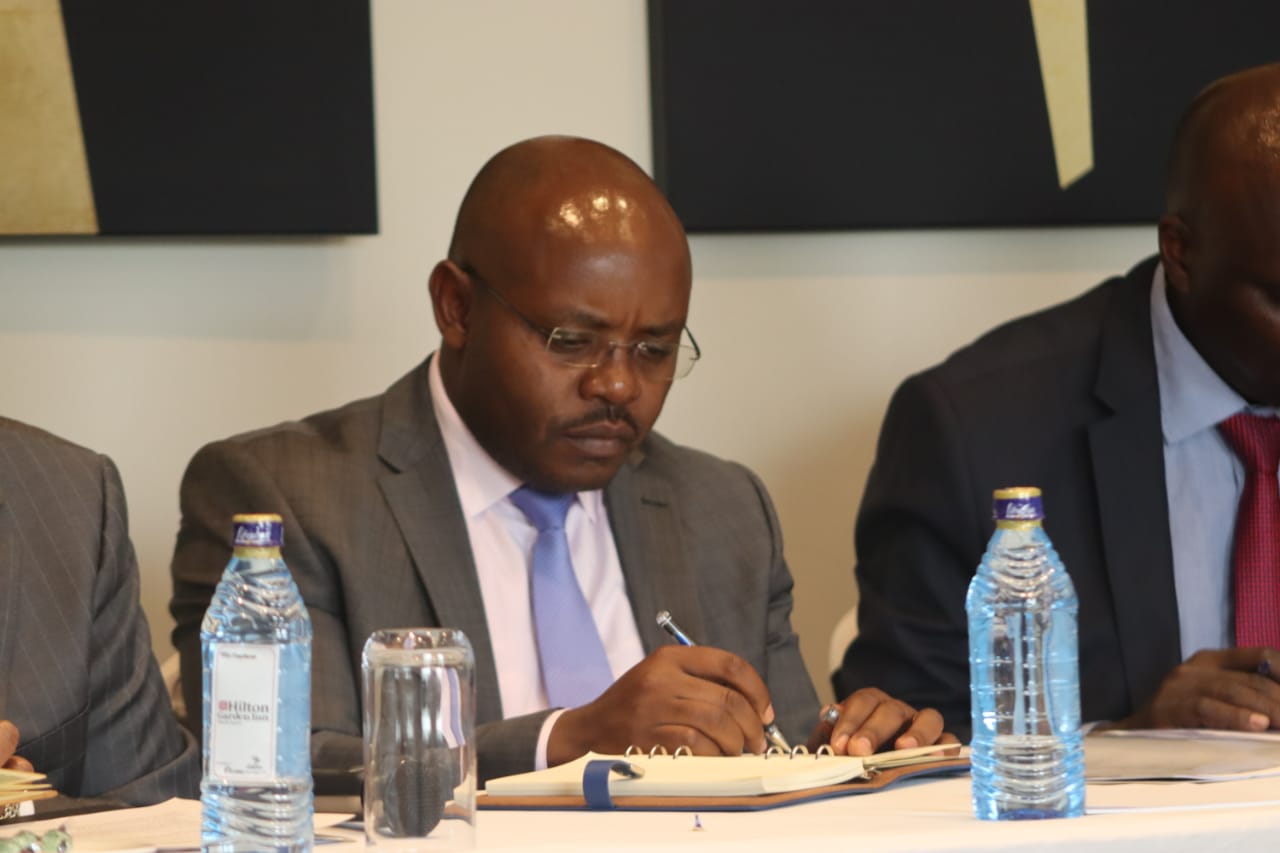
A bombshell audit report tabled in Parliament has revealed that Defence Principal Secretary Patrick Mariru approved procurement proceedings for the Sh41.9 billion renovation of Bomas of Kenya without budgetary authority, in what the Auditor-General describes as a breach of Kenya’s public finance and procurement laws.
The scathing findings by Nancy Gathungu, contained in the Ministry of Defence’s latest audited accounts, expose what could become one of the most explosive accountability battles in recent government history.
Backdated Approval Raises Legal Red Flag
At the centre of the controversy is a critical discrepancy in the timeline. According to the audit, PS Mariru signed a request for direct procurement authorisation on February 17, 2025, four days after tender invitation documents and a site visit certificate had already been issued on February 13 and 14, 2025.
Under Section 69(2) of the Public Procurement and Asset Disposal Act, 2015, procurement approvals cannot operate retrospectively except in cases of urgent need. No emergency was declared, and no exemption was sought.
The Auditor-General concluded that the Ministry of Defence acted in contravention of procurement law and warned that the government risks incurring penalties and additional charges if payments are delayed.
No Budget Allocation
Perhaps more troubling is the audit’s finding that the Bomas renovation — now rebranded as the Bomas International Convention Centre (BICC) — was not included in the approved 2024/25 development budget of the State Department for Culture, Arts and Heritage, the entity originally mandated to oversee the project.
Sections 68 and 149 of the Public Finance Management Act require accounting officers to ensure that expenditure falls within an approved budget. Any procurement without authorised funding is classified as financial misconduct and may attract personal liability for the responsible officer.
This raises the prospect that PS Mariru could be held personally accountable for losses arising from the irregular procurement.
Legal Battles and the Turkish Tender
The Sh41.9 billion Phase II project follows an earlier tender worth Sh31.6 billion awarded in November 2023 to Turkish construction firm Summa Turizm Yatirimciligi Anonim Sirketi.
The Ministry of Defence later terminated the award without signing a formal contract, citing lack of funds and changes in scope. The Public Procurement Administrative Review Board ruled in December 2024 that a tender cannot be cancelled after award.
Subsequent attempts by the ministry to overturn the decision in the High Court and later at the Court of Appeal failed, with judges upholding the firm’s rights.
Despite these losses, the ministry initiated a fresh procurement process for Phase II — the same process now flagged by the Auditor-General as unlawful.
Funding Secrecy Unravels
For months, the source of financing for the Bomas project remained unclear, with officials citing national security grounds due to the involvement of the Kenya Defence Forces.
However, outgoing Tourism Fund Board Chair Samson Some recently confirmed that the Tourism Fund was financing Phase II through a Public-Private Partnership model. The arrangement involves committing a portion of annual levy collections toward repaying private investors.
The audit report also flagged contradictions in the repayment structure: while the contract agreement provided for nine instalments payable within 24 months, the National Treasury approved a deferred payment plan stretched over 10 years — a discrepancy auditors described as a significant red flag.
Mounting Pressure
The findings come as PS Mariru faces other legal challenges, including contempt proceedings over delayed compensation payments to former soldiers.
Meanwhile, Parliament’s Public Investments Committee has called for a forensic audit of Sh500 million spent on feasibility studies for the renovation, intensifying scrutiny of the project.
What began as an ambitious plan to transform Bomas into a world-class convention centre has now spiralled into a procurement and finance controversy with far-reaching implications.
With the Auditor-General’s findings now before Parliament, lawmakers are expected to summon key officials to explain how a Sh41.9 billion project proceeded without clear budget authority — and whether personal accountability will follow.