Home Latest News Crime & Investigations
Category:

Crime & Investigations

EACC

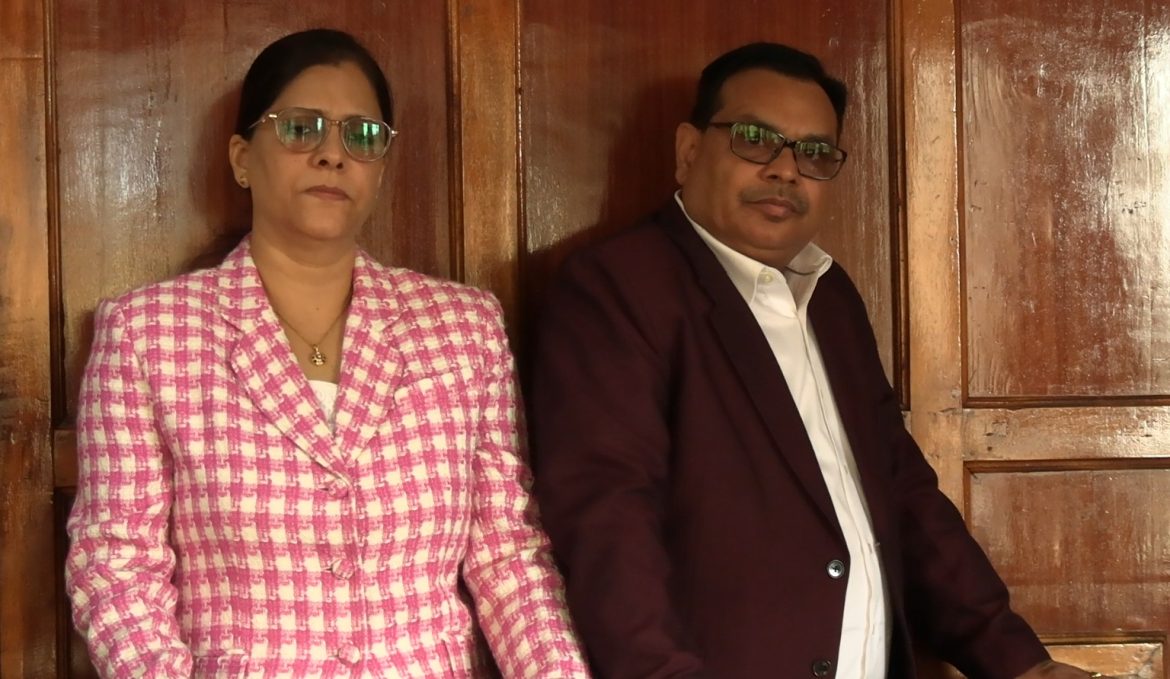
The Ethics and Anti-Corruption Commission (EACC) has arrested a serving Garissa Member of County Assembly (MCA) and two former senior county officials over the alleged fraudulent payment of Ksh51,495,516 to a private company for goods and services that were never delivered.

The suspects are set to be arraigned before the Garissa Law Courts for plea taking.

The Arrests

Those arrested include:

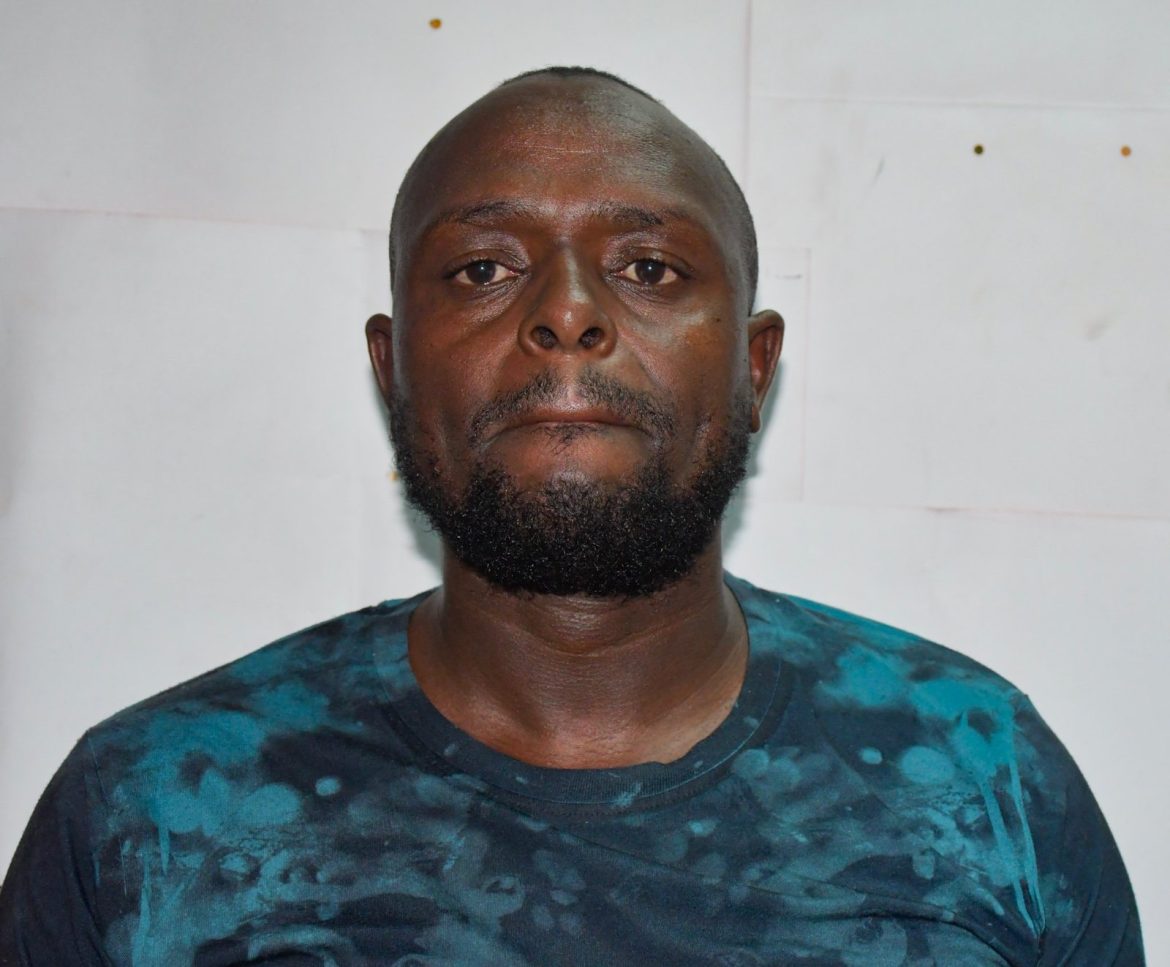
  • Abdi Ibrahim Daar, MCA for Balambala Ward and sole director of Qorjarey Enterprise & General Supplies Limited.
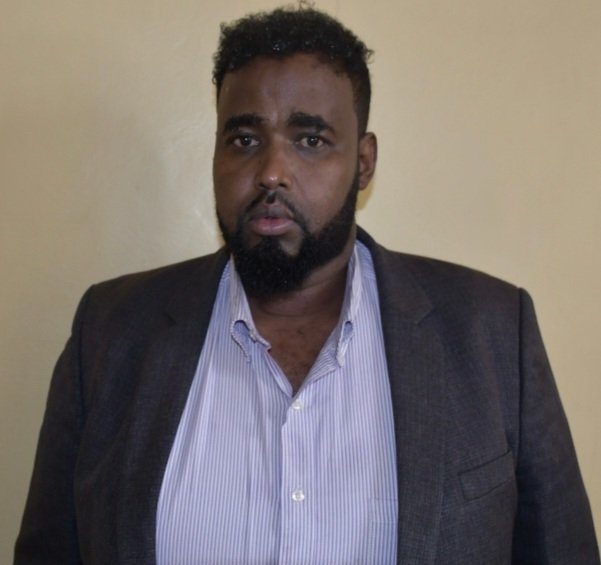
  • Mohamud Dubow Korane, former Director of Accounting Services, County Government of Garissa.
  • Yussuf Bethe Ali, former Senior Principal Economist at the county.

According to EACC, investigations established that the County Government of Garissa irregularly paid Ksh51,495,516 to Qorjarey Enterprise & General Supplies Limited between August 2021 and September 2022. The payments were purportedly for the supply of emergency relief food items and water trucking services during the 2021/2022 and 2022/2023 financial years.

However, investigators found that the goods and services were never delivered.

Alleged Irregularities

The anti-graft agency revealed several irregularities in the transactions, including:

  • Lack of budgetary provision and absence of an approved procurement plan for the alleged emergency supplies.
  • The company not being among pre-qualified suppliers for the relevant financial years.
  • Forged documents allegedly used to facilitate the payments.
  • Approval and processing of payments without any procurement process.

Investigations further established that Daar, who served as a Social Development Officer at the County Government of Garissa between 2018 and 2022, was the sole director and bank signatory of the company that received the funds.

The EACC alleges that Korane and Ali processed and approved the payments in favour of the company despite the absence of supporting procurement documentation or evidence of service delivery.

Charges and Prosecution

Upon conclusion of investigations, the Commission forwarded the file to the Office of the Director of Public Prosecutions (DPP), which concurred with the recommendation to charge the suspects.

They are expected to face charges including:

  • Conspiracy to commit an offence of corruption contrary to Section 47A (3) of the Anti-Corruption and Economic Crimes Act.
  • Abuse of office contrary to Section 46 of the Act.
  • Forgery contrary to Section 345 of the Penal Code.
  • Fraudulent acquisition of public property contrary to Section 45 (1) of the Act.

The three suspects were arrested on Sunday, February 22, 2026, and are scheduled to appear in court on Monday, February 23, 2026.

Civil Recovery

In addition to the criminal proceedings, the EACC said it will institute civil proceedings to recover the allegedly unlawful payments.

The Commission reiterated its commitment to safeguarding public resources and urged public officers to uphold integrity and accountability in the management of public funds.

The case adds to a growing list of corruption prosecutions targeting county governments over alleged misuse of public funds earmarked for essential services.

0 comment
0 FacebookTwitterPinterestLinkedinTumblrWhatsappTelegramEmail
PS Patrick Mariru

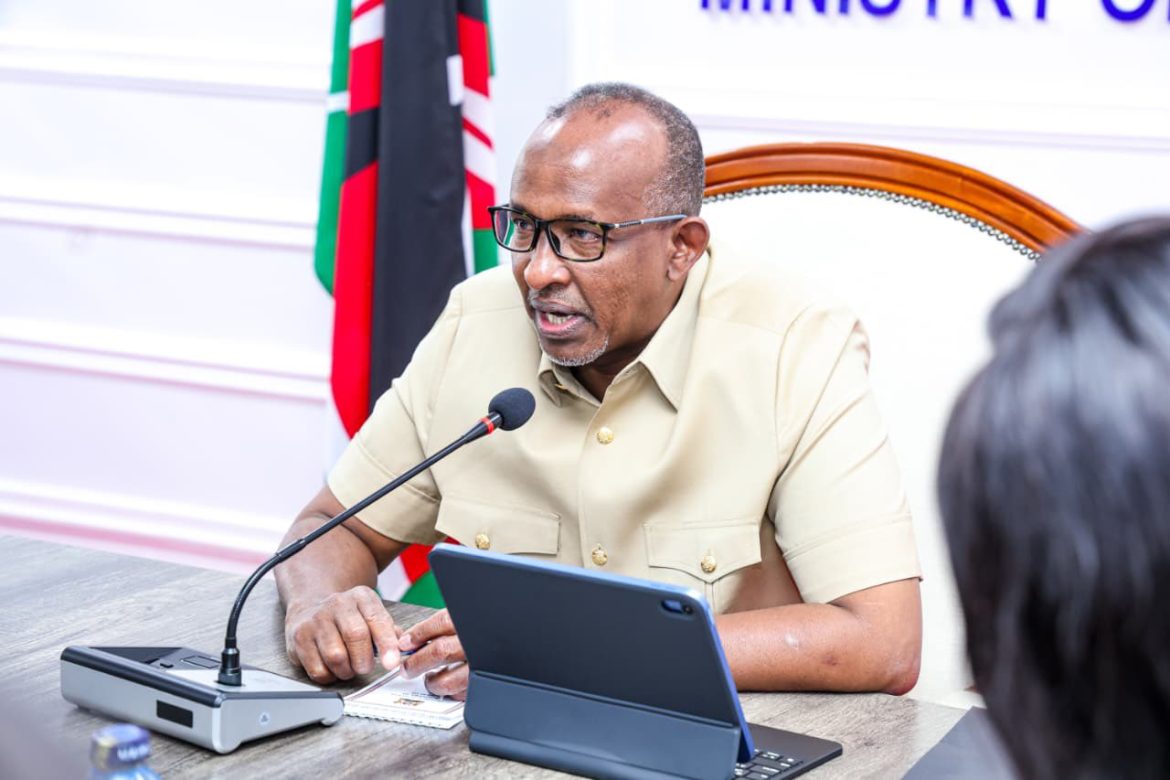
A bombshell audit report tabled in Parliament has revealed that Defence Principal Secretary Patrick Mariru approved procurement proceedings for the Sh41.9 billion renovation of Bomas of Kenya without budgetary authority, in what the Auditor-General describes as a breach of Kenya’s public finance and procurement laws.

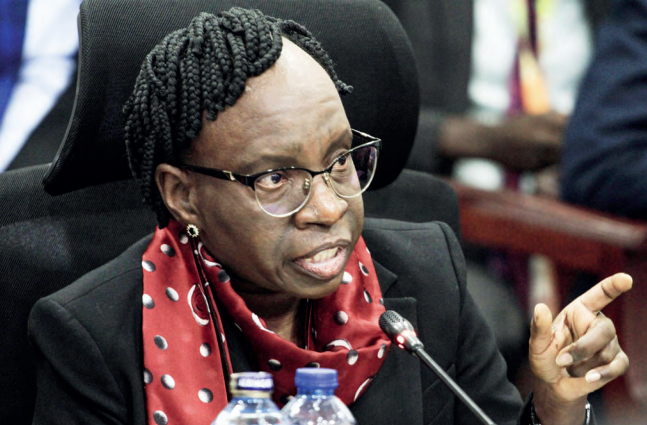
The scathing findings by Nancy Gathungu, contained in the Ministry of Defence’s latest audited accounts, expose what could become one of the most explosive accountability battles in recent government history.

Backdated Approval Raises Legal Red Flag

At the centre of the controversy is a critical discrepancy in the timeline. According to the audit, PS Mariru signed a request for direct procurement authorisation on February 17, 2025, four days after tender invitation documents and a site visit certificate had already been issued on February 13 and 14, 2025.

Under Section 69(2) of the Public Procurement and Asset Disposal Act, 2015, procurement approvals cannot operate retrospectively except in cases of urgent need. No emergency was declared, and no exemption was sought.

The Auditor-General concluded that the Ministry of Defence acted in contravention of procurement law and warned that the government risks incurring penalties and additional charges if payments are delayed.

No Budget Allocation

Perhaps more troubling is the audit’s finding that the Bomas renovation — now rebranded as the Bomas International Convention Centre (BICC) — was not included in the approved 2024/25 development budget of the State Department for Culture, Arts and Heritage, the entity originally mandated to oversee the project.

Sections 68 and 149 of the Public Finance Management Act require accounting officers to ensure that expenditure falls within an approved budget. Any procurement without authorised funding is classified as financial misconduct and may attract personal liability for the responsible officer.

This raises the prospect that PS Mariru could be held personally accountable for losses arising from the irregular procurement.

Legal Battles and the Turkish Tender

The Sh41.9 billion Phase II project follows an earlier tender worth Sh31.6 billion awarded in November 2023 to Turkish construction firm Summa Turizm Yatirimciligi Anonim Sirketi.

The Ministry of Defence later terminated the award without signing a formal contract, citing lack of funds and changes in scope. The Public Procurement Administrative Review Board ruled in December 2024 that a tender cannot be cancelled after award.

Subsequent attempts by the ministry to overturn the decision in the High Court and later at the Court of Appeal failed, with judges upholding the firm’s rights.

Despite these losses, the ministry initiated a fresh procurement process for Phase II — the same process now flagged by the Auditor-General as unlawful.

Funding Secrecy Unravels

For months, the source of financing for the Bomas project remained unclear, with officials citing national security grounds due to the involvement of the Kenya Defence Forces.

However, outgoing Tourism Fund Board Chair Samson Some recently confirmed that the Tourism Fund was financing Phase II through a Public-Private Partnership model. The arrangement involves committing a portion of annual levy collections toward repaying private investors.

The audit report also flagged contradictions in the repayment structure: while the contract agreement provided for nine instalments payable within 24 months, the National Treasury approved a deferred payment plan stretched over 10 years — a discrepancy auditors described as a significant red flag.

Mounting Pressure

The findings come as PS Mariru faces other legal challenges, including contempt proceedings over delayed compensation payments to former soldiers.

Meanwhile, Parliament’s Public Investments Committee has called for a forensic audit of Sh500 million spent on feasibility studies for the renovation, intensifying scrutiny of the project.

What began as an ambitious plan to transform Bomas into a world-class convention centre has now spiralled into a procurement and finance controversy with far-reaching implications.

With the Auditor-General’s findings now before Parliament, lawmakers are expected to summon key officials to explain how a Sh41.9 billion project proceeded without clear budget authority — and whether personal accountability will follow.

0 comment
0 FacebookTwitterPinterestLinkedinTumblrWhatsappTelegramEmail

The the Office of the Director of Public Prosecutions (ODPP) has today urged a Milimani court to Jail and convict former Migori Governor Zachary Okoth Obado and his co-accused over the brutal killing of university student Sharon Otieno.

Appearing before the Milimani High Court, Senior Assistant Director of Public Prosecutions Gikui Gichuhi painted what she described as a chilling and meticulously coordinated assassination plot designed to eliminate Otieno and silence a key witness to avert political scandal and reputational ruin.

“The evidence paints a coherent picture of the accused acting in concert, with a shared intention to eliminate Sharon Otieno and silence witness (XYZ) to avoid political fallout, reputational harm and embarrassment,” Gichuhi told a packed courtroom.

According to the prosecution, the murder was not spontaneous but a carefully orchestrated joint criminal enterprise executed through trusted insiders. Co-accused Michael Juma Oyamo and Casper Ojwang Obiero were allegedly central operatives in the deadly plan.

The court heard that the pair were present at Graca Hotel on the night of September 3, 2018 — the last confirmed location where the deceased and a surviving witness were seen before their alleged abduction. Prosecutors said the vehicle used in the operation, registration number KCL 418K, was linked directly to Obiero’s household and driven by a longtime associate, tightening what they termed an “unbroken chain of evidence.”

In gripping submissions, the prosecution walked the court through what it described as overwhelming proof — including witness testimonies, cyber-forensic reports, phone data analysis and investigative findings — all allegedly converging on the accused.

“From the start, we committed to showing the court that the evidence, like pieces of a puzzle, forms a complete picture of the events that led to Sharon’s tragic death,” Gichuhi said.

The State further tore into the defence strategy, dismissing it as inconsistent, contradictory and crafted as an afterthought meant to muddy the waters.

“There is no reasonable doubt,” the prosecution insisted, maintaining that the accused must be held fully accountable.

Obado, Oyamo and Obiero face charges of murdering Otieno, whose death in 2018 sparked national grief and renewed debate about power, gender violence and political impunity.

The court has already ruled that the trio have a case to answer, setting the stage for a dramatic conclusion to the years-long legal battle. Judges will reconvene on March 18, 2026, when the date for the long-awaited judgment is expected to be announced.

0 comment
0 FacebookTwitterPinterestLinkedinTumblrWhatsappTelegramEmail
Safaricom

The acquittal of Moi University student David Mokaya by the Milimani Law Courts has opened a legal Pandora’s box that threatens to embarrass both Kenya’s dominant telecommunications company and the Directorate of Criminal Investigations in equal measure, as the young man’s lawyers announced plans to pursue the State for malicious prosecution while the court itself placed Safaricom on notice over what it described as a blatant and illegal breach of a subscriber’s constitutional rights.

Magistrate Caroyne Mugo, in a ruling delivered on February 19, 2026, did not merely acquit Mokaya of charges that he published false information about President William Ruto.

She went further, pointedly flagging Safaricom as a company with serious questions to answer after it emerged during trial that the telecommunications giant had surrendered Mokaya’s private subscriber data to police investigators without any court order authorising the disclosure.

The magistrate’s remarks were not obiter.

They were deliberate, targeted and carry the weight of judicial censure that Safaricom’s legal and regulatory affairs teams will find impossible to ignore.

David Mokaya outside Milimani Courts after being acquitted.

The facts of the case, as they emerged during weeks of testimony, paint a disturbing picture of a security apparatus that moved with remarkable speed and remarkable disregard for constitutional safeguards once a social media post touching on the President’s name entered the system.

On November 13, 2024, a post appeared on platform X under the username “Landlord @bozgabi” depicting a funeral procession with a military escort carrying a casket draped in the Kenyan flag, accompanied by a caption that investigators said referenced President Ruto.

Within twenty-four hours, a senior police officer identified in court as Michael K. Sang had written directly to Safaricom demanding the subscriber details behind the account.

By November 15, a team of detectives from the Serious Crimes Unit had descended on Eldoret, tracked Mokaya to an area opposite Moi University’s Annex, and arrested him.

A Samsung phone, a laptop and his identity card were seized before anyone had troubled themselves to obtain a search warrant.

It was Chief Inspector Bosco Kisau who delivered the most damaging admissions from the prosecution’s own witness stand.

Under cross-examination by defence lawyers Danstan Omari, Ian Mutiso and Shadrack Wambui, Kisau conceded that he had not been served with a court order authorising the investigation of Mokaya’s devices. He admitted he was unaware of a High Court ruling requiring law enforcement to obtain judicial authority before compelling mobile service providers to release subscriber details.

He further admitted that he could not confirm the origin, source or geographic location of the disputed post.

He could not confirm whether the SIM card linked to the account had been properly registered. He had not recorded a statement from the complainant, President Ruto.

And crucially, when pressed directly, he conceded that the post in question did not actually contain a photograph of the President.

Safaricom employee Daniel Hamisi, who also took the stand, confirmed that he had released Mokaya’s details upon a written request from a senior police officer, without any court order having been presented or demanded.

His testimony crystallised what civil liberties advocates have long argued: that Kenya’s Data Protection Act of 2019 and the constitutional right to privacy exist on paper in a manner that is, in practice, subordinate to a phone call or a letter bearing a senior officer’s signature when matters touching on political figures are involved.

The magistrate was unsparing.

She found that police had failed miserably in their duty, that the accused had been framed, and that no direct evidence linked Mokaya to the alleged offence.

She noted that Mokaya’s social media account was shared with three other individuals who were never traced or called as witnesses, creating reasonable doubt that could not be resolved by the prosecution’s threadbare evidence.

She noted that the alleged offence was said to have been committed in Nairobi while Mokaya was physically in Eldoret.

She noted the complete absence of forensic or digital evidence tying him to the post. She observed that the court could not rule out the possibility that the post itself had been fabricated and planted on an account associated with his name.

She also noted something that ought to concern the leadership of the Safaricom corporation and its board.

The company’s compliance with an unlawful police request, without demanding judicial authorisation, may constitute a violation of the Data Protection Act.

That legislation imposes clear obligations on data controllers and processors regarding the circumstances under which personal data may be disclosed to third parties, including law enforcement.

Disclosure without a court order, in circumstances where one is legally required, is not a procedural technicality.

It is a substantive breach carrying potential regulatory consequences from the Office of the Data Protection Commissioner and civil liability in the courts.

Omari and Mutiso, who led Mokaya’s defence and who are no strangers to high-profile constitutional litigation, wasted no time in signalling what comes next.

They told the court after the ruling that they intend to sue the State for malicious prosecution. Legal analysts familiar with their track record consider this not an idle threat but a certainty.

A malicious prosecution claim would require establishing that the prosecution was initiated without reasonable and probable cause, that it was actuated by malice, and that it terminated in the accused’s favour. On the facts as found by the magistrate, all three elements appear to be richly available.

The civil suit, when filed, will almost certainly name Safaricom as a defendant or at minimum as a party from whom discovery is sought.

The company will need to account for its internal processes around law enforcement data requests. It will need to explain why its compliance team released subscriber data without demanding what the law requires.

It will need to address whether this was an isolated incident or systemic practice. These are questions that Safaricom’s corporate communications machinery cannot deflect with a press statement.

For Mokaya himself, the personal cost of this ordeal is not easily quantified.

He was charged on November 13, 2024, and the case dragged through a full trial over a period of roughly three months.

His lawyer told the court that the student could not even speak in the immediate aftermath of the ruling due to mental trauma and shock that had gripped him since his arrest.

He spent the duration of the case on a bond of one hundred thousand shillings or a cash bail of fifty thousand shillings, money that a finance student at a public university would not easily produce. His devices were confiscated. His movements were constrained. His studies were disrupted.

The broader significance of this case extends well beyond one young man’s acquittal.

It arrives at a moment when the relationship between digital speech, state power and telecommunications infrastructure is under intense scrutiny across Africa.

Kenya’s Data Protection Act was celebrated when it passed as a significant step toward aligning the country with international data protection standards.

The Mokaya case suggests that the legislation’s practical force remains weak in the face of political pressure and institutional habit.

When a senior police officer can write a letter to a telecommunications company on a Tuesday and have subscriber location data by Wednesday morning without a magistrate or judge having been involved at any point, the statute’s protections are nominal at best.

The Law Society of Kenya, through Mutiso’s involvement in the case, has effectively placed its institutional weight behind the argument that telecom companies must resist unlawful data requests regardless of who is making them and regardless of whose name appears in the underlying social media post.

That argument will now be tested in the civil courts, where Mokaya’s lawyers say they will press it with full force.

Safaricom has not issued a public statement on the matter at the time of publication.

The company, which controls the overwhelming majority of Kenya’s mobile subscriber market and whose M-Pesa platform is embedded in the economic life of tens of millions of Kenyans, has significant reputational exposure if the civil litigation proceeds and produces further uncomfortable disclosures about the ease with which law enforcement has historically been able to extract personal data from its systems.

The magistrate reminded police, in terms that deserve to be read widely, that the duty to observe the law does not diminish because the name of the President or any other powerful figure appears in a social media post.

She reminded them that cases of this nature must be handled with caution and free from public or political pressure.

She reminded them that the criminal procedure code and the Constitution are not suspended when someone posts something uncomfortable about a head of state.

For a twenty-four-year-old finance student from Moi University who spent months answering charges that a court ultimately found may have been built on a fabricated foundation, those reminders came at significant personal cost.

The question that will now occupy Kenya’s legal community is whether the institutions that failed him will be made to pay one.

0 comment
0 FacebookTwitterPinterestLinkedinTumblrWhatsappTelegramEmail
Kaplan and Stratton’s Peter Gachuhi

A legal storm of historic proportions is gathering around Senior Counsel Fred Ojiambo and Paul Gachuhi senior partners at Kaplan &Stratton as explosive allegations of forgery and deception threaten to unravel reputations built over decades.

Eighty-year-old Senior Counsel Fred Ojiambo, a revered church elder at Nairobi Baptist Church and long celebrated as one of Kenya’s most formidable legal minds, is now staring down a stunning credibility crisis that threatens to shake his law firm’s legacy.

The veteran advocate ‘s partner has been dragged into a storm of controversy after being implicated in an alleged cover-up involving a sensational forgery claim at the prestigious law firm Kaplan & Stratton.

At the heart of the scandal is an accusation that his partner Gachuhi forged the will of former Attorney General James Karugu.

Kaplan &Stratton now finds it’s legacy under intense scrutiny, as questions mount over what it knew, when it knew it, and whether one of the country’s most respected legal institutions was used to mask an alleged fraud at the highest level.

This comes a day after Ojiambo was reported to the Directorate of Criminal Investigations(DCI), by Raphael Tuju over claims that he facilitated the filing of a false affidavit in a dispute pitting himmthe East African Development bank,(EADB).

While addressing the press on Monday, Tuju accused Ojiambo of putting his family at risk yet he claims to be a Christian.

“While Kaplan and Stratton over the years have managed to cultivate an image of a respected international law firm complete with a British sounding name stemming from the original owners, the firm has been in the news lately with senior partner Mr. Peter Gachuhi being investigated and prosecuted in respect of the forgery of the will of the late former AG Karugu. Fred Ojiambo operates behind a facade of being an upright born-again Christian lawyer who is a Church Elder carrying Bibles in the right hand. In reality, with the left hand he is filing documents filled with lies in court in support of a scheme to wrongfully deprive my family and I of properties acquired through decades of hard work”,he said

In a dramatic twist, six suspects who include a pastor from Nyandarua , are accused of forging the will of former Ag Karugu have appointed Ojiambo , the senior partner at Kaplan & Stratton to argue their case, despite mounting allegations of conflict of interest and claims that the firm has been entangled in what critics call a two-year cover-up.

At the center of the scandal is Ojiambo’s partner, Gachuhi, and six others accused by Victoria Nyambura Karugu ,the late AG’s daughter of orchestrating what she describes as an “elaborate cut-and-paste forgery” of her father’s will.

Nyambura has alleged that the contested document is riddled with “poor grammatical mistakes” inconsistent with her father’s writing style and worse, bears forged initials. Forensic examination, she claims, revealed it was a crude “cut and paste job.”

The AG Dorcas Oduor ,has now thrown the full weight of the State behind the prosecution, declaring that forgery is a criminal offence that must be investigated and prosecuted.

In court filings, the AG backed both the Director of Public Prosecutions and the DCI, terming attempts by Gachuhi and other suspects to halt investigations an “abuse of court process.”

Courtroom drama escalated when Ojiambo allegedly refused to hand over the disputed will to investigators, claiming he had a court order barring the DCI from accessing it.

That claim, according to filings, turned out to be false. Gachuhi was ultimately compelled to surrender the document for forensic examination.

Further controversy erupted when Ojiambo allegedly sought to have the DPP unlawfully interfere in the succession dispute ,a request that was flatly denied, leaving the senior counsel politically and professionally exposed.

Meanwhile, Nyambura has moved to formally join the case at the High Court, describing her earlier exclusion as “mischievous and calculated.”

She has filed hundreds of pages of evidence, including what she says are DCI findings that were withheld from Justice Mwamuye when the suspects secured ex parte orders halting their arraignment before the Chief Magistrate on charges of forgery and conspiracy to defraud

He is also facing a fresh call for investigation by former Cabinet Minister Raphael Tuju, who has accused him of fabricating evidence in a commercial dispute linked to the East African Development Bank.

If found culpable, both Ojiambo and Gachuhi risk professional ejection from Kaplan & Stratton for gross misconduct and potentially lengthy prison terms.

0 comment
0 FacebookTwitterPinterestLinkedinTumblrWhatsappTelegramEmail

As Kenya’s beauty industry expands and social media fuels increasingly complex skincare routines, dermatologists in the country are now urging Kenyans to rethink what healthy skin really means.

Speaking during the official launch of Pierre Fabre’s dermo-cosmeceutical portfolio in Kenya, Dr. Roop Saini, a committee member of the Kenya Association of Dermatologists (KAD), delivered a clear message: more products do not equal better skin. She emphasized that skincare is fundamentally a medical issue, not just a cosmetic one.

“Effective skincare is not defined by the number of products we use, but by how well those products respect skin biology and support long-term skin health,” Dr. Saini said.

Kenya’s skincare market is rapidly expanding, with the sector projected to reach about USD 125 million (roughly KSh 16 billion) by December 2026, driven by rising demand for dermo-cosmetics and increased consumer awareness.

Yet this growth has coincided with a surge in complex and often counterproductive routines. According to local healthcare reports, conditions such as acne, eczema, dry skin and hyperpigmentation now account for roughly 10-30 percent of all outpatient dermatology visits nationwide.

According to her, whereas skincare should be simple and rewarding, most Kenyans are doing too much and too often and this she says, is the cause of most skin problems in the country.

This overuse, she warned, often leads to barrier damage, chronic irritation and inflammation, particularly problematic in a country where hyperpigmentation is a common concern.

“Many patients today are using multiple active ingredients at the same time, harsh exfoliants and inappropriate viral or TikTok trends from social media,” she warns.

Healthcare reports tracking dermatological trends in Kenya indicate that conditions such as acne, eczema, hyperpigmentation, and dry skin make up roughly 10–30 percent of all outpatient dermatology visits nationwide, a notable proportion that highlights a broad public health concern rather than a niche issue.
To effectively tackle this, Dr. Saini advocates for a straightforward approach.

“The honest truth is, a simple skincare routine. Simple routines are sustainable, and sustainable routines are effective. Consistency for us is far more important than the number of products that are used on the skin,” she advises.

0 comment
0 FacebookTwitterPinterestLinkedinTumblrWhatsappTelegramEmail
Mohammed Noor Muhyadhin Mohammed

Detectives from the Operation Support Unit (OSU) have arrested a second suspect in connection with the Sh28 million fake gold scam that defrauded an American national of USD 217,900 in a botched 495-kilogram gold deal.

The suspect, Mohammed Noor Muhyadhin Mohammed, was apprehended in Nairobi as investigators widened the probe into what authorities describe as a well-coordinated money laundering network.

Funds Traced to Business Account

Investigations revealed that on February 3, 2026, Mohammed allegedly received USD 217,900 through his company, Mohazcom Trading, into an account held at the National Bank of Kenya.

The funds had reportedly been debited from accounts belonging to MOAC Advocates at the same bank and were purportedly payment for 495 kilograms of gold that was never delivered to the victim.

Detectives say that shortly after the funds were credited, Mohammed wired the entire amount to accounts held by Tecno Mobile Limited at Citibank in Hong Kong. The transfer was allegedly meant to facilitate a new shipment of mobile phones, which investigators say has yet to arrive in Kenya.

Alleged Forex Bureau Link

Further inquiries established that Mohammed has maintained a business relationship spanning more than a decade with a forex bureau located along Standard Street in Nairobi.

Investigators believe the forex bureau may have played a key role in facilitating substantial cross-border transfers, including the transaction now under investigation.

Authorities are examining whether the transfers exhibit classic indicators of money laundering, including layering and rapid offshore movement of funds.

Connection to Earlier Arrest

Mohammed’s arrest follows the earlier arraignment of Willis Onyango Wasonga, also known as “Marcus,” who was presented before the Milimani Law Courts on February 16, 2026.

Wasonga was charged with conspiracy to defraud, obtaining money by false pretences, and multiple offences under the Proceeds of Crime and Anti-Money Laundering Act (POCAMLA). He pleaded not guilty and was granted a bond of Sh1 million with two contact persons or an alternative cash bail of Sh350,000.

Alleged Cover-Up Attempts

In what detectives describe as an attempt to legitimise the transfer of USD 217,900, MOAC Advocates reportedly presented a debt settlement agreement allegedly signed by Mohammed and another suspect still at large.

However, investigators have since determined that the document was allegedly designed to create the appearance of a legitimate transaction and conceal fraudulent activity.

More Suspects Pursued

Mohammed remains in custody undergoing processing pending arraignment, while detectives pursue three additional suspects believed to be linked to the scheme.

The Directorate of Criminal Investigations (DCI) says the case underscores its ongoing commitment to dismantling gold scam syndicates and combating money laundering networks that exploit international investors and damage Kenya’s commercial reputation.

Authorities have urged members of the public to report suspicious gold transactions and financial crimes through anonymous reporting channels as investigations continue.

0 comment
0 FacebookTwitterPinterestLinkedinTumblrWhatsappTelegramEmail
Willis Onyango Wasonga

A Kenyan man, Willis Onyango Wasonga, has been arraigned at the Milimani Law Courts in Nairobi over an alleged Sh28 million international fake gold scam that targeted an American investor in a botched 495-kilogram gold deal destined for Dubai.

Wasonga, who detectives say also used the alias “Marcus,” was presented in court after investigations linked him to a sophisticated scheme that reportedly defrauded a U.S. national of USD 217,900 (approximately Sh28 million).

The Complaint

The case was reported at Capitol Hill Police Station by Gershonov Oleg on behalf of his American business partner, John Sodipo. According to investigators, Oleg first travelled to Kenya in September 2025 to pursue a gold transaction that ultimately failed to materialize.

During his visit, he allegedly established contact with individuals posing as gold dealers, among them Wasonga, who would later become the main suspect in the probe.

The 495kg Gold Deal

Detectives say negotiations between Sodipo and Wasonga led to an agreement for the purchase and chartering of 495 kilograms of gold to Dubai.

Following the agreement, Sodipo is said to have deposited the agreed chartering fees into what was presented as an escrow account under advocate Michael Otieno Owano of MOAC Advocates. Oleg later travelled back to Kenya to oversee the shipment process.

However, the gold consignment allegedly failed to ship within the agreed timelines. As pressure mounted for delivery, investigators say it became clear that the deal was fictitious.

Alleged Web of Deception

According to the Directorate of Criminal Investigations (DCI), the suspects’ modus operandi involved an elaborate network designed to give the transaction a veneer of legitimacy.

Detectives allege that SRK Logistics Limited misrepresented its capacity to supply gold, while fictitious legal representation agreements were generated to portray MOAC Advocate LLP as handling a legitimate commercial transaction.

Further investigations revealed that funds were allegedly moved swiftly between company accounts before being transferred overseas — a pattern investigators say bears the hallmarks of money laundering, including layering and concealment of proceeds of crime.

Arrest and Court Proceedings

With investigations closing in, Wasonga secured anticipatory bail at the High Court before presenting himself at DCI Headquarters on February 13, 2026, for statement recording.

He was later arraigned at the Milimani Law Courts where he pleaded not guilty to the charges.

The court granted him a bond of Sh1 million with two contact persons or, in the alternative, a cash bail of Sh350,000.

Investigations Ongoing

Detectives say investigations remain ongoing as authorities pursue additional suspects believed to be connected to the alleged scam.

The case is scheduled for mention on March 3, 2026, as the prosecution continues to piece together what investigators describe as a calculated and sophisticated international gold fraud scheme.

0 comment
0 FacebookTwitterPinterestLinkedinTumblrWhatsappTelegramEmail
Equity Bank CEO James Mwangi

Equity Bank Group Chief Executive Officer James Mwangi has suffered a major legal and personal setback after the Court of Appeal declined to stop the execution of a judgment ordering his eviction from a sprawling Sh1 billion mansion in Nairobi’s leafy Muthaiga suburb.

In a ruling delivered on Wednesday, a three-judge bench of the Court of Appeal — comprising Justices Daniel Musinga, Patrick Kiage, and Agrey Muchelule — rejected Mwangi’s application to halt enforcement of an earlier Environment and Land Court decision that found he was unlawfully occupying property belonging to another party.

Instead, the appellate court ordered Mwangi and his wife, Jane Wangui Mundia, to deposit Sh10 million as security in an interest-earning joint account within 60 days as their appeal proceeds. The judges also directed that the status quo over the contested three-acre property be maintained pending the hearing and determination of the appeal.

However, court documents reveal that the eviction had already been carried out.

According to filings dated January 7, 2026, Mount Pleasant Limited — the firm that successfully sued Mwangi — executed the eviction order under the supervision of officers from Gigiri Police Station, effectively taking possession of the property.

“The above court order has been executed today the 07/01/2026 under supervision of the OCS Gigiri and now the plaintiff Mount Pleasant Ltd has now gained possession of the property,” reads the court document signed by the Gigiri police commander.

The development marks a dramatic fall from grace for Mwangi, one of Kenya’s most influential business leaders, whose rags-to-riches story has long symbolised African entrepreneurship. The Equity Bank CEO had claimed to have purchased the property in 2013 from former President Daniel arap Moi for Sh306 million.

At the centre of the dispute is businessman Anverali Amershi Karmali, who through Mount Pleasant Limited insists he bought the same property seven years earlier, in July 2006, from former Finance Minister Arthur Magugu and his wife Margaret Wairimu for Sh130 million.

In a stinging judgment delivered in October 2025, Environment and Land Court Judge Oscar Angote ordered Mwangi and his wife to vacate the property within 30 days or face forcible eviction by police from Gigiri and Muthaiga stations. The court also awarded Mount Pleasant Limited Sh10 million in damages for trespass, citing the property’s prime location, its three-acre size, the duration of the alleged trespass and its estimated value of Sh1 billion based on 2022 assessments.

Justice Angote further directed the Chief Land Registrar to cancel all titles, entries and conveyances linked to Mwangi’s claimed ownership and to nullify the amalgamation of subdivided parcels into a single title — effectively wiping out any legal record of the banker’s claim to the land.

While Mwangi maintained that he took possession of the property immediately after receiving his title in 2013, the court found that Mount Pleasant’s security guards remained on the land until March 2020, when they were allegedly forcefully removed by the Mwangis.

Although the Directorate of Criminal Investigations did not conclusively establish forgery, the court ruled that the numerous procedural and documentary anomalies surrounding Mwangi’s title were sufficient, on a balance of probabilities, to impeach it.

“While the court stops short of finding fraud attributable to the defendants to the requisite standard of proof, the procedural and documentary irregularities would, on their own, suffice to impeach the title,” Justice Angote ruled.

Court records paint a picture of a property saga riddled with irregularities dating back nearly two decades. The land had initially been charged to National Bank in the late 1980s by MDC Holdings Limited to secure a Sh10.5 million loan. After default, the bank sued, eventually agreeing in 2002 to sell the property for Sh90 million to recover its debt and compensate Magugu.

Karmali told the court that after acquiring the land in good faith, land registry files relating to the property mysteriously disappeared from the Ministry of Lands. He later discovered that duplicate titles had been issued, with both parties holding certificates showing them as registered owners of the same property.

The dispute escalated into open confrontation in June 2020 when Mwangi allegedly arrived at the property accompanied by police officers, removed Karmali’s guards and installed his own — prompting Mount Pleasant Limited to seek court intervention.

The Court of Appeal has now directed that the matter be fast-tracked, ordering the parties to attend a case management conference within 30 days and to file written submissions ahead of the hearing.

Until then, Mwangi must comply with the Sh10 million security order as Mount Pleasant Limited remains in possession of the contested Muthaiga estate — a sobering chapter for a banking executive whose career has been built on financial discipline, now caught in a legal battle that has once again exposed deep-seated flaws in Kenya’s land ownership system.

0 comment
0 FacebookTwitterPinterestLinkedinTumblrWhatsappTelegramEmail
Willstone Homes Director Ejidio Kinyanjui at a past event

For thousands of Kenyans living abroad, the dream of owning a home back home has turned into a financial and emotional catastrophe. What began as hopeful investments in off-plan housing projects has, for many, ended in millions of shillings lost to elaborate property scams allegedly orchestrated by developers such as George Mburu of Mizizi Africa Homes, Ejidio Kinyanjui of Willstone Homes, and David Mureithi Kanyi of Kenya Projects.

From Malaa and Ruiru to Kamakis and Mombasa, a pattern has emerged: slick marketing, convincing paperwork, grand promises—and, ultimately, empty land or abandoned structures.

The Mburu Model: Dreams Sold on YouTube

In November 2021, US-based Kenyan Josphat Ndambo paid Sh4.25 million after watching a polished YouTube video advertising Asali Estate in Malaa, a project by Mizizi Africa Homes Limited. The video showcased computer-generated images of modern three-bedroom maisonettes set against Mount Kilimambogo.

Two years later, Ndambo’s “home” does not exist.

A visit to the site reveals unfinished foundations, no electricity, no infrastructure, and no active construction. Multiple investors tell similar stories. The mastermind behind the project, George Mburu, previously worked at the now-defunct Banda Homes before launching Mizizi Africa Homes.

Despite mounting complaints, Mburu has continued to project an image of success—operating from offices near Sarit Centre in Westlands and flaunting luxury cars and a lavish lifestyle on social media—while investors struggle to recover their money.

Willstone Homes: Fake Titles, Wrong Counties

Another major scandal centres on Willstone Homes Limited, linked to director Ejidio Kinyanjui, alongside Patrick Thuo Marigi and Victor Muusya Cosmus.

One of the Willstome Homes’ projects.

US-based investor Mellen Bwari Okari invested Sh57 million to purchase five maisonettes at White Park Gardens, an off-plan development marketed as being in Ruai East, Nairobi County.

A site visit revealed shocking truths:

  • Poor, substandard construction
  • The land was actually located in Mavoko, Machakos County, not Nairobi
  • The land registration numbers in the sale agreements were fabricated
  • The referenced title, Block 3/90489, does not exist

Further investigations showed that the directors of Willstone Homes had already moved on, registering a new company, Ubuni Investments, from the same Park Suites offices in Westlands. Meanwhile, investors were left holding worthless contracts.

Ejidio Kinyanjui of Willstone Homes.

Like Mburu, Kinyanjui has continued to display a lavish lifestyle online—posting first-class flights, helicopters, and luxury vehicles—while victims pursue stalled court cases.

Kenya Projects: Low Deposits, High Losses

Perhaps the most devastating cases involve David Mureithi Kanyi, the elusive businessman behind Kenya Projects, whose schemes targeted ordinary Kenyans with “affordable” housing offers.

In Kamakis, George Gitonga invested Sh2.9 million, money raised by cashing in his children’s education policy and selling his car, to buy a two-bedroom maisonette. He later discovered he was one of 37 victims of the same project.

Buyers were eventually forced to complete construction using their own funds. Even then, they have never received title deeds.

On the Coast, Kanyi allegedly went further. Victims, including Eva Mmbone Kiti, Nana Mohammed, Faud Ali Ahmed, and Nana Khadija Omar, wired Sh13 million for houses at Royal Palm Villas—only to discover the developer had taken a Sh55 million bank loan using the same property as collateral.

A Well-Rehearsed Scam Playbook

Across these cases, the tactics are strikingly similar:

  • Formation of legitimate-looking companies
  • Offices in upscale Nairobi locations
  • Slick brochures, videos, and influencer promotions
  • Fake or manipulated land registration numbers
  • Minimal construction to create an illusion of progress
  • Use of new buyers’ money to prop up older failing projects

Diaspora investors are particularly targeted because distance limits their ability to conduct due diligence or make frequent site visits.

Regulation Failure and Total Impunity

Kenya’s off-plan housing market remains poorly regulated. There is:

  • No mandatory escrow system
  • Weak licensing requirements
  • Poor enforcement by regulators
  • No central database of developers’ track records

Legislative attempts to reform the sector, including a proposal requiring developers to deposit Sh500 million as a licensing bond, have stalled in Parliament.

Meanwhile, criminal prosecutions are rare. Developers simply shut down one company and open another, leaving court judgments unenforced and victims drained by legal fees.

Broken Lives, Not Just Broken Projects

Most victims are not wealthy speculators. They are nurses, drivers, teachers, and security guards working double shifts abroad, sending money home with the hope of retiring with dignity.

Instead, they are left with:

  • Worthless paperwork
  • Crippling debt
  • Years of litigation
  • Psychological trauma

A System That Enables Theft

Experts say the fraud thrives because of systemic failures:

  • Forged land records
  • Complicit officials
  • Weak banking due diligence
  • Ineffective industry self-regulation

Until Kenya enforces mandatory escrow accounts, strict licensing, criminal penalties, and transparent developer registries, the carnage will continue.

A Warning to the Diaspora

The stories of George Mburu, Ejidio Kinyanjui, and Kenya Projects are not isolated incidents—they are symptoms of a broken system.

For now, diaspora Kenyans are left to warn each other in WhatsApp groups and online forums, while rogue developers continue to operate openly.

The question is no longer if reform is needed—but how many more millions must be lost, and how many more dreams destroyed, before action is taken.

0 comment
0 FacebookTwitterPinterestLinkedinTumblrWhatsappTelegramEmail
KETRACO SGR Deal

Fresh questions are emerging over a controversial Sh24.2 billion Standard Gauge Railway (SGR) electrification deal after the Kenya Electricity Transmission Company Limited (KETRACO) quietly deleted key webpages detailing the project, which was signed in 2018 under the leadership of then Managing Director Fernandes Barasa.

The deleted webpage had announced the signing of a $240 million (approximately Sh24.2 billion) contract between KETRACO and China Electric Power Equipment and Technology Company Limited, promising to electrify the Mombasa–Nairobi SGR line and have electric trains running by 2021.

A screengrab of the deleted webpage on the KETRACO website.

It is now 2026, and the SGR continues to operate on diesel-powered locomotives, raising concerns that the ambitious electrification project may have been nothing more than a paper deal.

Screenshots of the now-deleted page, which have been circulating online, show KETRACO once celebrated the agreement as a major milestone in modernising Kenya’s flagship railway project. The disappearance of the page has triggered suspicions of a possible cover-up and renewed scrutiny of decisions made during Barasa’s tenure.

The development comes amid growing accountability pressure on KETRACO, particularly after Auditor General Nancy Gathungu revealed that the agency owes landowners more than Sh4 billion in unpaid compensation linked to various transmission projects.

At the time of signing the SGR electrification deal in January 2018, KETRACO announced plans to construct 14 substations along the 472-kilometre railway corridor, with completion expected within 28 months. Fernandes Barasa publicly championed the project, touting zero carbon emissions, lower operating costs, faster trains, and expanded economic activity along the corridor.

However, doubts about the project’s feasibility surfaced almost immediately. Then Kenya Railways Managing Director Atanas Maina questioned whether Kenya had sufficient power supply and financing capacity to sustain an electric railway. Those concerns were later echoed by then Transport Cabinet Secretary James Macharia, who told Parliament that the country lacked both the guaranteed electricity supply and the financial muscle to support SGR electrification.

In a little-noticed clarification issued after the signing ceremony, KETRACO admitted that the agreement was only a commercial contract and not a financing deal. The agency stated that the contract would only take effect after the National Treasury secured funding—something that never happened.

“KETRACO has not borrowed any loan for the electrification of the SGR Project,” the agency said at the time, sharply contradicting earlier triumphant messaging suggesting the project was ready for implementation.

Critics are now asking why KETRACO publicly announced a Sh24.2 billion contract without secured financing, and whether the move was misleading by design or a result of gross mismanagement.

The controversy has revived scrutiny of Fernandes Barasa’s tenure at KETRACO, which was marred by several high-profile scandals. Barasa, now the Governor of Kakamega County, previously faced investigations by the Ethics and Anti-Corruption Commission over the Sh18 billion lost in penalties related to the delayed Lake Turkana Wind Power transmission line, as well as unexplained excess payments and irregular transactions.

Former KETRACO MD and Kakamega Governor Fernandes Barasa.

His resignation from KETRACO in 2022, shortly before appearing before Parliament’s Public Investments Committee, was widely viewed as controversial.

The SGR electrification saga also highlights Kenya’s growing embarrassment when compared to regional peers. Ethiopia completed a 750-kilometre electric railway to Djibouti in 2016, while Morocco operates Africa’s first high-speed electric rail. Tanzania and Uganda are also planning electric SGR systems, raising fears that Kenya’s diesel railway could face interoperability challenges in the future.

Despite repeated requests, KETRACO has not explained why the webpage detailing the SGR electrification deal was deleted, who authorised the action, or whether any funds were ever paid to the Chinese contractor. Calls and emails to the agency’s current management went unanswered by the time of publication.

The silence has only fueled speculation that authorities may be attempting to erase public records of a failed or fictitious mega project.

As Kenyans continue to grapple with rising fuel costs and a struggling SGR that bleeds billions annually, the unanswered questions surrounding the Sh24.2 billion electrification deal remain glaring.

Was the project a genuine plan that collapsed, or a costly illusion sold to the public? And why, eight years later, does KETRACO appear more eager to delete evidence than to provide answers?

For now, the deleted webpage has become a symbol of broken promises, missing accountability, and a growing public demand to know what really happened to Kenya’s Sh24.2 billion.

0 comment
0 FacebookTwitterPinterestLinkedinTumblrWhatsappTelegramEmail
Osman Erdinc Elsek

On the evening of January 12, somewhere between Vipingo and Kikambala on the rain-slicked Mombasa to Malindi Highway, a Toyota Land Cruiser V8 and a convoy of Orange Democratic Movement politicians collided in more ways than one. By the time the dust settled, two Turkish nationals were in custody, a Glock pistol had been seized, and within forty-eight hours, the Anti-Terrorism Police Unit was before a Mombasa court alleging links to one of the most feared terror organisations in the Horn of Africa. What began as a road rage incident had morphed into what the Kenyan State now describes as a terrorism case of the highest order. The Standard has spent weeks piecing together the full story of Osman Erdinc Elsek, and what it reveals is far more unsettling than a single night on a dark highway.

Elsek is not an unknown quantity in Kenya. For nearly two decades, he has been a fixture along the Coast, a man who built affordable housing estates, constructed parts of courthouses, partnered with Eco-Bank on mortgage schemes, and claimed investments worth over six billion shillings. He is, by his own telling and by the corporate branding of his Elsek Group Conglomerate, a benefactor. He is also, according to the Office of the Director of Public Prosecutions, a member of Al-Shabaab.

Osman Erdinc Elsek — sworn affidavit, January 2026

The charge sheet presented before a Mombasa court on Monday, February 2, is a six-count document that lays bare the scope of what investigators have assembled. In the first count, the prosecution alleges that Elsek was a member of Harakat Al-Shabaab Mujahideen, the full formal designation of the terrorist group that carried out the 2013 Westgate Mall attack in Nairobi, killing 67 people, and the 2015 Garissa University massacre that claimed 148 lives. In the second and third counts, investigators claim that a Samsung Flip 7 phone recovered from Elsek contained video recordings with titles referencing Osama bin Laden and bearing the hallmarks of jihadist propaganda. In the fourth count, he is accused of unlawfully possessing a Glock pistol, serial number RBV973. The fifth charge sees his associate, Gokmen Sandikci, accused of consorting with an armed man. The sixth and final count, added nearly twenty days after the initial arrest, accuses both men of assaulting Boniface Katana on the night the whole saga began.

For a man who claims to have built parts of the Shanzu courthouse where he once stood trial, the irony of now facing the court’s judgment on terrorism charges is not lost on observers. But it is the Glock pistol, serial number RBV973, that keeps appearing at the centre of this story, and it is where the pattern becomes difficult to ignore.

The Glock Pistol — Serial No. RBV973

  • Oct 2020 Seized from Elsek after he shot 15-year-old Frank Omwenga in the chest during an altercation following a football match in Kilifi. Police impounded the pistol along with 15 rounds of 9mm ammunition. Elsek’s civilian firearm licence was also held.
  • Jan 12, 2026 The same Glock pistol, same serial number, same 15 rounds of ammunition, recovered from associate Gokmen Sandikci during the arrest of both men in Mtwapa, Kilifi County.
  • Jan 14, 2026 Elsek tells the Mombasa court that the firearm is lawfully licensed and that his possession of it is entirely legal.
  • Feb 2, 2026 The DPP formally charges Elsek with unlawful possession of the firearm, alleging it was intended for use in a manner prejudicial to public order.

In October 2020, Elsek was arrested at Kilifi Police Station after shooting a teenager named Frank Omwenga, who was fifteen years old, in the chest during a street scuffle. Police filed the report at Kijipwa Police Station. The Glock was confiscated. Elsek’s civilian licence was surrendered. The case attracted media attention, drew public outrage on social media, and then, as so many cases involving wealthy individuals in Kenya tend to do, it faded quietly from public discourse. The Standard found no record of a successful prosecution arising from that shooting.

Now, five years later, that same pistol, identified by the same serial number, is back in police custody. This time it was found in the possession of Sandikci, not Elsek. The prosecution has not yet explained publicly how a firearm that was impounded in 2020 came to be in the hands of a man travelling with Elsek in 2026. The defence, for its part, has insisted the weapon was lawfully re-licensed. The court has yet to rule on the matter.

A Refugee With Six Billion Shillings

To understand how Osman Erdinc Elsek ended up in a Mombasa courtroom facing terrorism charges, it is necessary to understand the unusual shape of his life in Kenya. Court records and official filings paint a portrait that defies easy categorisation.

Elsek arrived in Kenya in December 2008. According to his own statements in court, he came after falling out with the then Turkish president. He was granted refugee status by the Kenyan government, a designation that typically applies to individuals fleeing persecution, war, or serious threats to their safety. He settled in Kikambala, a coastal town in Kilifi County, and began building.

Through the Elsek Group Conglomerate, he registered eighteen companies in Kenya operating across construction, real estate, hospitality, quarrying, transport, production, and mortgage banking. The company’s own website boasts of projects across East Africa including housing estates in Kikambala, a tourism university in Rwanda, and a consulate building in South Sudan. The firm partnered with Eco-Bank to offer mortgage financing and displayed model houses at trade expos in Mombasa. By the time he stood before the court in January 2026, Elsek claimed property worth more than six billion shillings, all invested in Kenya.

A refugee with billions. A man who built courthouses and appeared before them. A philanthropist who shot a child. The contradictions in Elsek’s story are not new. They have been present for years, quietly accumulating like sediment, and it is only now, with the terrorism charges, that the full weight of the file is being examined.

Timeline of Key Events

Dec 2008

Elsek arrives in Kenya, granted refugee status. Begins establishing businesses along the Coast.

2016

Charged in Mombasa court with defrauding a Mogadishu construction company of Sh7.6 million. Case later withdrawn after parties reportedly settle.

Jan 2019

Arrested by DCI, GSU and Interpol. Charged with ten counts of defilement and child prostitution involving minors aged 15 and 17 at his Kikambala home. Case transferred from Shanzu to Malindi after court finds Elsek had close relations with judicial officers at Shanzu.

Oct 2020

Arrested for shooting 15-year-old Frank Omwenga in the chest in Kilifi. Glock pistol serial no. RBV973 seized. No known successful prosecution follows.

2021–22

Charged with conspiring to defeat justice by interfering with witnesses in the defilement case. Case remains pending before Mombasa magistrate’s court.

Jan 12, 2026

Road altercation with ODM convoy on Mombasa-Malindi Highway involving Wajir Governor Ahmed Abdullahi Jiir. Elsek allegedly punches the governor and slaps his driver while brandishing a firearm.

Jan 13, 2026

Elsek and Sandikci arrested in Mtwapa at 1:37 am. Booked at Nyali Police Station. ATPU begins investigation into terrorism financing.

Feb 2, 2026

DPP okays prosecution. Six-count charge sheet presented in Mombasa court including Al-Shabaab membership, possession of terrorist material, firearm charges, and assault.

The Night on the Highway

The events of January 12 have been told differently by each side, and the version of events matters enormously to how the terrorism charges are understood. The ODM party had concluded a Central Management Committee meeting at Vipingo. A convoy of party leaders, which included Wajir Governor Ahmed Abdullahi Jiir, was making its way towards Moi International Airport in Mombasa when, according to police and multiple witnesses, a vehicle driven by one of the Turkish nationals cut aggressively into the convoy and struck the governor’s car from behind.

What happened next has become the subject of fierce legal contest. Police sources and the initial reports indicate that Elsek alighted from his vehicle, drew a firearm, punched the governor, and slapped his driver. The Council of Governors issued a furious statement demanding to know who had authorised a foreigner to carry a gun along Kenyan roads. Interior Cabinet Secretary Kithure Kindiki ordered a probe.

Elsek’s account is starkly different. In a sworn affidavit, he states that he was the one hit from behind, that the governor’s convoy fled the scene, and that when he gave chase and confronted the occupants, he was assaulted. He claims the convoy members attempted to beat him using their own firearms. He says he identified the governor only afterwards, and that the governor subsequently threatened him with deportation.

The truth of what happened on that highway may eventually emerge through the courts. But what is remarkable is how quickly the narrative shifted from a road rage incident to a terrorism investigation. Within hours of the arrest, the Anti-Terrorism Police Unit was involved. Within a day, the State was before a court alleging terrorism financing. Within three weeks, the DPP had approved a charge sheet alleging Al-Shabaab membership.

The Propaganda Videos and the Phone

The terrorism charges hinge in significant part on what was allegedly found on a Samsung Flip 7 mobile phone recovered from Elsek. The charge sheet states that the phone contained video recordings that constitute articles connected to the commission of a terrorist act. The titles cited in the charge sheet include content referencing Osama bin Laden and phrases characteristic of jihadist recruitment material.

The prosecution has framed these videos as evidence that Elsek was knowingly collecting information intended for use in terrorist activities. The offence, the State says, was committed on January 14 at the Anti-Terrorism Police Unit offices at Mombasa Police Station, the same location where Elsek was being held at the time.

The defence has not yet publicly addressed the content of the videos in detail, focusing instead on the procedural defects in the charge sheet. In the hearing on February 2, Elsek’s three advocates raised a preliminary objection arguing that the first count, alleging Al-Shabaab membership, failed to specify a date, time, or location. They argued that without these particulars, the charge was fatally defective and that proceeding on it would amount to a miscarriage of justice.

The prosecution countered that the absence of a specific date did not mean that no offence had been committed, and that investigators were entitled to add charges as they emerged during the course of an investigation. The magistrate is expected to rule on whether the charges will stand on February 3.

Al-Shabaab and the Money Trail

To appreciate the gravity of the charges against Elsek, it is necessary to understand the scale of the threat that Al-Shabaab poses and the sophistication of its financial operations. The United States Department of Treasury has repeatedly sanctioned networks of businesspeople across the Horn of Africa, the UAE, and Cyprus who have been identified as financial facilitators for the group. In 2024 alone, the Treasury designated sixteen entities and individuals comprising a money laundering network that funnelled funds to Al-Shabaab through business fronts in Kenya, Uganda, Somalia, and Cyprus.

Al-Shabaab generates between one hundred million and two hundred million dollars annually. A West Point counterterrorism assessment published in 2025 identified the group as al-Qaeda’s wealthiest affiliate in the world. Its funding streams include extortion of local businesses, taxation of imported goods, smuggling, trade-based money laundering, and the exploitation of hawala money transfer systems. The US State Department has placed a ten million dollar bounty on information leading to the disruption of Al-Shabaab’s financial mechanisms.

Kenya’s Coast has long been understood as a region vulnerable to Al-Shabaab influence. In late 2024, an Interpol and AFRIPOL joint operation across eight East African countries resulted in the arrest of 37 terror suspects, including 17 in Kenya alone. Some of those arrested were connected to terrorism financing and propaganda networks.

The question that the prosecution has not yet fully answered in open court is precisely how Elsek’s business empire, if at all, connects to these networks. The charge sheet alleges membership of Al-Shabaab but provides no specific date or location for when that membership began or how it was demonstrated. It alleges possession of propaganda material but has not detailed the chain of custody for the phone or the forensic analysis that was conducted on it. Investigators told the court in January that they were still analysing Elsek’s financial records, banking data, and call logs.

The Six Counts — Charge Sheet, Feb 2, 2026

1

Membership of a Terrorist Organisation — Alleged membership of Harakat Al-Shabaab Mujahideen, contrary to Section 24 of the Prevention of Terrorism Act. No specific date, time or location cited.

2

Collecting Information for Terrorist Act — Possession of a Samsung Flip 7 phone allegedly containing video recordings intended for use in the commission of a terrorist act. Offence noted on January 14 at ATPU offices, Mombasa.

3

Possession of Articles Connected to Terrorism — The same video recordings, framed as articles connected to the commission of a terrorist act, contrary to Section 30 of POTA.

4

Unlawful Possession of a Firearm — Possession of a Glock pistol, serial number RBV973, on January 12, in circumstances raising suspicion of use prejudicial to public order.

5

Consorting with Armed Person — Gokmen Sandikci charged with being in the company of Elsek while aware that Elsek was unlawfully armed.

6

Assault Causing Actual Bodily Harm — Both men jointly charged with assaulting Boniface Katana on January 12 at Majengo Kananai, Kilifi South.

The Questions That Remain

The case of Osman Erdinc Elsek sits at the intersection of several uncomfortable truths about how Kenya handles powerful foreigners, how terrorism charges are deployed, and how quickly political altercations can be reframed as matters of national security.

The first question concerns the speed of the escalation. Senior police sources confirmed to reporters in the days after the arrest that the two Turkish nationals were being detained in connection with the altercation with ODM politicians. The terrorism financing investigation, by the State’s own account, arose from intelligence received prior to the arrest. If that intelligence existed before January 12, the question becomes why Elsek was not detained or investigated on that basis before the highway incident brought him into contact with powerful political figures.

The second question concerns the defilement case. In 2019, Elsek was arrested by the DCI, the GSU, and Interpol on charges of sexually abusing three minors at his home. The case was transferred out of Shanzu after the court itself acknowledged that Elsek had close relations with judicial officers at that station and had helped construct the courthouse. The case eventually collapsed after witnesses recanted and the prosecution failed to prove its case. A related charge of witness interference remains pending. No one has been held publicly accountable for the collapse of that prosecution, and no formal inquiry into the circumstances has been reported.

The third question concerns the firearm. A Glock pistol that was seized in 2020 after Elsek shot a teenager is now back in the possession of his associate. The Standard has found no public record of the outcome of the 2020 shooting case. The pistol’s re-emergence raises questions about the integrity of evidence custody and the functioning of Kenya’s firearms licensing and enforcement regime.

The fourth and perhaps most consequential question is whether the terrorism charges will survive judicial scrutiny. The defence has already argued that the first count is fatally defective for failing to specify when and where the alleged membership took place. The prosecution has not disclosed the intelligence that reportedly preceded the arrest. The financial analysis that investigators said they needed time to complete has not been summarised in open court. The magistrate’s ruling on February 3 will be the first significant test of whether the State has built a case or merely assembled allegations.

“At this point, it is not possible to tell what kind of evidence the state has against the respondents.”

Senior Resident Magistrate David Odhiambo — ruling, January 2026

Elsek has maintained throughout that he is a victim, not a suspect. He has pointed to his investments, his corporate social responsibility programmes, and his years of residence as proof that he has no reason to flee Kenya and no motive to support terrorism. His lawyers, including prominent advocates George Khaminwa and Cliff Ombeta, have dismissed the terrorism allegations as politically motivated retaliation for the altercation with the governor’s convoy.

The State, for its part, has said nothing publicly beyond what is contained in the charge sheet and the affidavits filed in court. The investigating officer, Hassan Sugal of the ATPU, told the court that credible intelligence was received before the arrest. What that intelligence was, where it came from, and what it contained has not been disclosed.

What is clear is that a Mombasa court is now being asked to decide whether a Turkish businessman who has lived in Kenya for nearly two decades, built parts of its infrastructure, shot a child, and been charged with sexually abusing minors, is also a member of Al-Shabaab. The answer to that question will say as much about the Kenyan State as it will about Osman Erdinc Elsek.

0 comment
0 FacebookTwitterPinterestLinkedinTumblrWhatsappTelegramEmail

Wambugu Muchiri & Company Advocates is under criminal investigation for attempted insurance fraud, after allegedly filing claims for fake accident victims.

The matter relates to a minor road accident that occured on 28th July 2025 along Limuru Road involving a Toyota Matatu, registration KBV 043P, in which three passengers sustained minor injuries, according to official police reports.

Despite this, the law firm reportedly filed claims asserting that 10 passengers had suffered varying degrees of injuries, listing the following as alleged victims:

Dick Davis Akello, Rose Kadogo Makhana, Margret Wanjiku Kahoro, Mary Nyambura Irungu, Scholastica Dibango, Eshibachi Michael Obuchere, Silas Nalanya, John Limuli, Jane Rose Mutegi, and Antony Gachoka Kuria.

Investigations by AMACO Insurance Company ltd revealed that the claims were allegedly supported by fake P3 forms and police abstracts. AMACO subsequently wrote to the Base Commander of Gigiri Police Station on 6th January 2026 seeking verification of the documents.

In a response dated 7th January 2026, the Base Commander stated: “Following our review and verification, we hereby formally inform you that the police abstract and P3 form brought to our office by your representative are forged documents and did not originate from Gigiri Traffic Base. We have confirmed that the said documents are not genuine and are not traceable to our records. Kindly note that we disassociate ourselves entirely from the said documents and any claims arising from them.”

After the Base Commander disowned the documents, AMACO reported the matter to the Directorate of Criminal Investigations (DCI). The lawyer involved was arrested but later released under circumstances that remain unclear.

Further fraudulent matters are being sorted across various files for follow-up and further action.
The case has raised serious concerns about insurance fraud, document forgery, and accountability within the legal profession, and investigations are ongoing.

0 comment
0 FacebookTwitterPinterestLinkedinTumblrWhatsappTelegramEmail

Kitutu Chache South Member of Parliament (MP) Antony Kibagendi has been arrested.

The lawmaker revealed via his social media accounts on Tuesday, January 20, that he had been blocked by officers from the Directorate of Criminal Investigations (DCI).

“I Have been aggressively blocked by DCI officers and arrested,being taken to DCI HQs,” Kibagendi stated.

Kibagendi later clarified that he had been taken to Muthaiga Police Station. While he did not reveal the reasons behind his arrest, the lawmaker took to social media to call out Interior Cabinet Secretary Kipchumba Murkomen and President William Ruto, saying that he will not be intimidated.

“Someone tell MURKOMEN AND WILLIAM RUTO that we shall not be intimidated. #WantamNiConstant,” he said.

However, Daily Trends has learnt that Kibagendi might have been arrested in connection with an assault incident which was captured on CCTV and went viral in December 2025. 

Reports indicate that a 38-year old man had filed an assault case against Kibagendi on November 27, 2025. 

In the footage that went viral, a man believed to be Kibagendi approached another fellow seated at the corner of a food establishment before proceeding to physically assault him in broad daylight. 

0 comment
0 FacebookTwitterPinterestLinkedinTumblrWhatsappTelegramEmail
Homa Bay region KERRA manager, Mr. Calvince Thomas

A Kenyan businessman has broken his silence with a disturbing account that points to alleged corruption at the heart of a key public institution. He claims a Homa Bay region KERRA manager, Mr. Calvince Thomas, used his office, influence, and fear to con him out of Ksh 2 million with promises of road construction tenders that never existed.

The victim describes a calculated scheme built on trust, intimidation, and claims of political protection. His story exposes how power, silence, and weak oversight can turn public offices into tools for private gain.

How a KERRA Region Manager Allegedly Turned Tenders Into a Personal Scam

According to the victim, the ordeal began as a promising business opportunity. He says associates introduced him to Calvince Thomas, the Kenya Rural Roads Authority Homa Bay Region Manager, as a man who controlled access to lucrative rural road projects.

The businessman claims Thomas presented himself as a decisive authority within KERRA. He allegedly spoke with confidence about procurement timelines, project allocations, and internal processes. The victim says Thomas insisted he had influence over who won tenders in Homa Bay County.

Their discussions focused on road works in Ndhiwa and Kasipul constituencies. These areas often receive KERRA funding for grading, drainage, and routine maintenance. The victim says Thomas framed the projects as already lined up and waiting for “trusted contractors.”

The complainant admits no written contract existed. Instead, he says Thomas relied on verbal assurances, official language, and his senior title to build trust. The victim claims Thomas also hinted at powerful backing, which discouraged questions and resistance.

That trust, the businessman says, proved costly.

Cash Payments and a Carefully Planned Meeting

The victim states that on October 30, 2023, he met Thomas at Willow Garden in Kileleshwa, Nairobi. He remembers the details clearly. He places the time at 12:37 PM.

During that meeting, the victim says he handed over Ksh 2 million in cash to the KERRA Homa Bay region manager.  He insists the amount matched their agreement in full.

According to the complainant, Thomas described the money as a facilitation fee. He allegedly promised that five KERRA road projects would follow. Three projects were to fall under Ndhiwa Constituency, while two were linked to Kasipul Constituency.

The victim says Thomas assured him his companies would receive priority once the tenders opened. He claims Thomas spoke with authority and certainty, leaving little room for doubt. The businessman says Thomas’s senior role within KERRA made the promises feel credible and safe.

After the payment, the victim expected formal tender notices, calls, or site visits. None came.

Political Protection Claims and Threats That Enforced Silence

When months passed with no progress, the victim sought answers. He recounts a follow-up meeting in February 2023 at Artcaffé in Hurlingham. There, he says the story changed.

According to the complainant, Thomas claimed the promised projects had already gone to companies linked to powerful government figures. He specifically mentioned Interior Principal Secretary Raymond Omolo. The victim stresses that these claims came from Thomas and remain unverified.

What disturbed him more, he says, was Thomas’s alleged attitude. The  KERRA manager reportedly bragged that other victims had reported him to the Directorate of Criminal Investigations over losses totaling Ksh 2.6 million.

The victim claims Thomas dismissed those reports and said political connections made him untouchable. He says Thomas laughed and spoke casually about investigations, sending a clear message of fear and intimidation.

Rather than refund the money, Thomas allegedly proposed a new verbal deal. He promised to allocate alternative projects before the end of the financial year. The victim says he agreed out of desperation and hope.

Nothing followed.

Broken Promises, Vanishing Calls and the Cost of Fear

Since that last meeting, the victim says Thomas went silent. He alleges the KERRA boss stopped answering calls, ignored messages, and cut off all contact.

The businessman admits he has not yet filed a formal police report. Fear has played a major role. He says the repeated claims of political protection made him doubt the value of reporting. He also worried about retaliation and blacklisting within the construction sector.

Still, the financial loss weighs heavily. He says the KSh 2 million came from years of work and strained his business operations. The pressure now affects his family and employees.

This publication confirms that these allegations remain untested in court. Efforts to reach Calvince Thomas for comment were unsuccessful by the time of publication. The Interior Principal Secretary named in the claims has not been linked to any wrongdoing, and no evidence connects him to the alleged scheme.

Even so, the account raises serious red flags. It highlights how procurement corruption, abuse of office, and fear can thrive when oversight fails. Contractors remain vulnerable when senior officials operate without accountability.

As calls grow for transparency and action, this case underscores the urgent need to scrutinize how a KERRA region manager wields power. Public institutions exist to serve citizens, not to enrich individuals. Silence only protects wrongdoing. Accountability restores trust.

0 comment
0 FacebookTwitterPinterestLinkedinTumblrWhatsappTelegramEmail
Maurice Akech

The walls are closing in on National Construction Authority Executive Director Maurice Akech as a damning legal petition lays bare what activists describe as years of catastrophic regulatory failure that has turned Kenya’s construction sector into a killing field.

Human rights activist Francis Awino has thrown down the gauntlet at the High Court, demanding Akech be declared unfit for office and immediately removed for what the petition describes as gross negligence, incompetence and a systemic failure to enforce construction laws that has cost lives and left thousands of Kenyans living in death traps.

The explosive court documents paint a devastating picture of an authority asleep at the wheel while developers flouted safety regulations with impunity, buildings rose illegally into the sky, and enforcement notices were treated as mere suggestions rather than legal orders.

The latest tragedy, the South C building collapse that killed two people, has become the catalyst for what could be Akech’s professional downfall. But it is far from an isolated incident. The petition reveals a chilling pattern of regulatory lapses stretching back years, with deadly consequences that Awino argues were entirely preventable.

According to court filings, investigations by both Nairobi City County and the NCA itself revealed that the doomed South C building was constructed without approved structural plans, lacked mandatory geotechnical assessment reports, and never underwent required statutory inspections. The developer allegedly exceeded the approved 12 floors by adding extra storeys without authorisation, yet construction continued unchecked.

Most damning is the timeline of inaction. The petition reveals that Nairobi City County issued enforcement notices to the developer and contractor warning of violations in May, July and December 2025. Three separate warnings. Three opportunities for the NCA to step in and halt construction. Three chances to save lives.

Yet nothing happened. Construction continued. Workers toiled on the illegal floors. And on January 2, 2026, physics and gravity combined to deliver their inevitable verdict as the building pancaked to the ground, crushing two people to death.

“The NCA, under the leadership of its CEO, failed to enforce compliance with construction and safety standards despite having the mandate to do so,” the petition states bluntly. Awino argues that Akech had direct authority over compliance but failed to enforce regulations, halt construction or sanction developers, describing his inaction as administrative maladministration and abuse of office.

When asked by journalists why the NCA failed to stop construction at the South C site despite the obvious non-compliance, Akech declined to explain, instead directing reporters to a statement issued by Public Service Cabinet Secretary Geoffrey Ruku. The deflection speaks volumes.

Even more troubling is what Awino describes as Akech’s public admission after the collapse that the building was non-compliant at the time it fell. In other words, the regulator knew the building was illegal, knew it was dangerous, yet did nothing to protect the public until it was too late.

But South C is merely the latest chapter in what the petition describes as a broader pattern of regulatory failure under Akech’s watch. The activist points to previous building collapses in Zimmerman in September 2023 and Kahawa West in October 2024, each attributed to poor workmanship, substandard materials and weak oversight.

In Kahawa West, the multi-agency team had condemned the eight-storey building on Wednesday, October 16, 2024, and issued an evacuation order. By Sunday, October 20, the building had collapsed. While tenants were evacuated in time, preventing mass casualties, residents revealed that instead of demolishing the structure, the developer had been allowed to attempt repairs to visible cracks, essentially papering over a structural catastrophe waiting to happen.

The statistics are horrifying. Kenya has recorded 87 building collapses over the past five years, with an estimated 200 people losing their lives and over 1,000 injured, according to NCA’s own reports. The 2018 audit by the National Building Inspectorate found that of 14,925 buildings examined, only 2,194 were safe. That means 723 buildings were classified as very dangerous, while 10,791 were deemed unsafe.

A subsequent 2021 NCA audit revealed that 35 per cent of buildings in Kenya are at risk of failure. These are not hidden problems. These are known dangers, documented in official reports, sitting in government files while Akech has led the authority tasked with preventing exactly these disasters.

The timeline of Akech’s tenure raises uncomfortable questions. Appointed as Executive Director on September 27, 2019, for a four-year term, Akech came to the role with impressive credentials: a master’s degree in Construction Engineering and Management and a bachelor’s degree in Civil Engineering, both from Jomo Kenyatta University of Agriculture and Technology. He is registered as a civil engineer by the Engineers Board of Kenya and holds over 20 years of experience in design, construction supervision and management.

Yet despite this pedigree, the building collapses have continued. In fact, data shows that after a promising decline from 21 collapses in 2015 to just two in 2019, the numbers began rising again under Akech’s watch, with three buildings collapsing in a single week in Nairobi in November 2022.

Professional bodies have been scathing in their assessment of the regulatory environment. Institution of Engineers of Kenya President Shammah Kiteme’s question cuts to the heart of the accountability crisis: “Who was the responsible structural engineer? Is it the one in the NCA records? The one on site?”

The Architects Alliance President Senator Sylvia Kasanga has demanded that the NCA blacklist all contractors with compliance issues and make the list public. “Can NCA blacklist all contractors who have issues? Make it public,” she stated, highlighting what she sees as a culture of impunity enabled by weak enforcement.

Architectural Association of Kenya President Prof George Ndege warned that many buildings would collapse if even a minor tremor struck Nairobi, describing the built environment as living on borrowed time. “We are living by the grace of God,” he said, a damning indictment of the regulatory regime under Akech’s leadership.

The petition seeks a court declaration that Akech is unfit to hold office, along with orders for his removal or suspension. But Awino is not stopping there. He also demands immediate halts to all non-compliant construction projects in Nairobi, full accountability for enforcement lapses between 2021 and 2026, and mandatory inspections and sanctions for violators.

The activist contends that Akech’s actions, or more accurately his inaction, violated constitutional rights to life, fair administrative action and access to safety information, while also breaching the National Construction Authority Act, the Physical and Land Use Planning Act, and county building laws.

The State Department of Public Works and Infrastructure and the NCA itself are listed as interested parties in the case, which has been filed before Justice Lawrence Mugambi.

Perhaps most troubling is the culture of impunity that appears to have taken root under Akech’s tenure. Despite the establishment of the NCA in 2011 specifically to control the construction sector and prevent such disasters, professional bodies say there is no evidence that lessons have been learned from previous investigations.

“Many investigations have been done. There is no evidence that we have implemented the lessons learnt from the dissections and investigations. The failure to make people take responsibility makes this culture of impunity entrenched and there is no way to stop it,” the professional lobbies warned.

The South C building itself exemplifies this culture. The NCA issued registration for the project on November 8, 2023, before mandatory approvals from county government and the National Environment Management Authority were secured. Additional floors were approved without proof of structural review or inspection of ongoing works. The developer was listed as the engineer, creating obvious conflicts of interest. And perhaps most damningly, construction continued despite enforcement notices and stop orders from both the NCA and county government.

All of this happened on Akech’s watch. All of this occurred while he held the authority’s highest office, with direct responsibility for compliance and enforcement.

When Cabinet Secretary Alice Wahome promised that those responsible for the South C collapse would be held accountable and would “carry the burden of punishment,” she may not have anticipated that the net would widen to include the very regulator tasked with preventing such disasters.

“A building that is professionally designed and constructed using the right materials should not collapse and kill people. Those responsible will carry the burden of punishment, and we will crack down on rogue developers, contractors and quacks,” Wahome declared.

But what about rogue regulators? What about enforcement officials who watch violations multiply and do nothing? What about authority directors who preside over a system where 85 per cent of buildings in the capital city are unsafe for human habitation?

The petition argues these are not mere administrative lapses but fundamental breaches of the public trust that demand the ultimate professional sanction: removal from office.

As the case proceeds through the courts, Akech’s defenders may point to the complexity of the construction sector, the multiple actors involved, the political interference, the corruption that oils the wheels of illegal development. All true. All documented. All damning in their own right.

But Francis Awino’s petition poses a simpler question: If the head of the National Construction Authority cannot or will not enforce construction laws, halt illegal developments, or protect Kenyans from buildings that kill, then what exactly is he there for?

Two bodies pulled from the rubble in South C deserve an answer. So do the 200 people who have died in building collapses over the past five years. So do the millions of Kenyans who go to bed each night in structures that professional engineers warn could become their tombs at any moment.

The question before Justice Mugambi is stark: Has Maurice Akech failed in his duty to protect Kenyan lives, and if so, should he pay the price with his job?

As the evidence mounts, the answer appears increasingly clear. And increasingly damning.

0 comment
0 FacebookTwitterPinterestLinkedinTumblrWhatsappTelegramEmail