
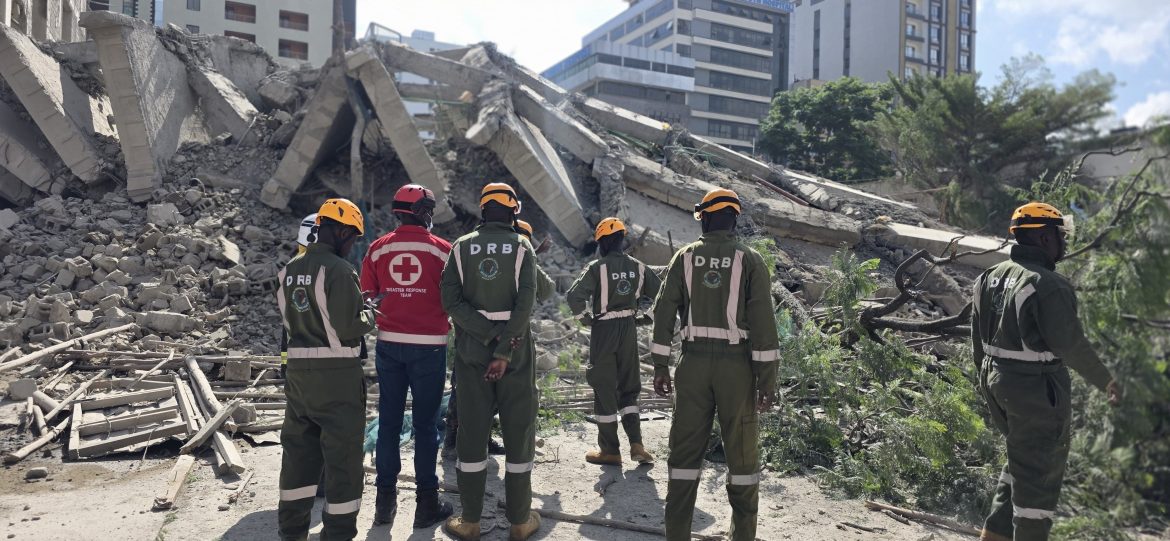
The Ministry of Health has issued a public health advisory warning Kenyans to remain vigilant during the ongoing March–April–May (MAM) long rains, citing an increased risk of collapsing buildings and damaged infrastructure caused by prolonged rainfall.
According to the advisory released by the State Department for Public Health and Professional Standards, heavy rains can weaken building foundations, trigger landslides, and damage structures such as buildings, roads, and bridges—raising the risk of injuries, fatalities, and other public health emergencies.
The ministry is urging residents, landlords, and communities to take precautionary steps to reduce the risk of harm during the rainy season.
1. Avoid unsafe buildings
The ministry advises members of the public to stay away from buildings that show signs of structural weakness.
Residents should avoid occupying structures that appear cracked, flooded, or unstable. Landlords and property owners are also encouraged to inspect their buildings and repair any structural weaknesses, such as damaged walls, cracked foundations, or weakened support structures.
Construction on unstable slopes, riparian areas, and flood-prone zones should also be avoided as these locations are particularly vulnerable during heavy rains.
2. Follow official safety advisories
Kenyans have been urged to follow safety instructions issued by authorities, including the National Disaster Operations Centre and county governments.
Authorities may issue evacuation alerts for areas considered high-risk, especially those prone to flooding or landslides. The ministry emphasized that residents should comply with such instructions promptly.
Members of the public are also encouraged to report visible structural risks or buildings that appear close to collapse to local authorities immediately.
3. What to do if a building collapses
If a building or structure collapses, individuals should move away from the area immediately to avoid falling debris or secondary collapse.
Emergency responders such as police, firefighters, and county disaster response teams should be contacted without delay.
The ministry cautioned against attempting risky rescue operations unless it is safe to do so, noting that trained emergency teams are better equipped to conduct rescue missions.
If someone is trapped, witnesses are advised to reassure the victim and quickly inform rescue teams of their location.
4. Provide basic first aid if necessary
In the event of injuries, victims should be taken to the nearest health facility as quickly as possible.
Where immediate medical help is not available, basic first aid can help stabilise victims. Bleeding should be controlled using a clean cloth or bandage, while fractures should be immobilised to prevent further injury.
People should also watch for symptoms of shock, severe bleeding, breathing difficulties or unconsciousness—conditions that require urgent medical attention.
5. Prevent secondary health risks
Floodwaters and debris can also pose additional health hazards. The ministry warns residents to avoid contact with contaminated water and ensure they use safe drinking water.
Communities are advised to maintain proper sanitation practices to prevent waterborne diseases and to dispose of debris safely. Residents should also avoid exposed electrical lines and damaged gas systems that may pose further danger.
6. Strengthen community preparedness
The advisory also encourages communities to identify safe evacuation routes and assembly points in case of emergencies.
Local leaders are urged to establish community alert systems that can quickly warn residents about structural hazards or impending danger.
Special attention should be given to vulnerable populations such as children, the elderly, pregnant women and persons with disabilities during evacuations.
7. Seek mental health support after traumatic incidents
Building collapses and disaster-related incidents can leave survivors emotionally distressed. The ministry advises affected individuals to seek psychosocial support and counselling services available at health facilities or through community networks.
Health Principal Secretary Mary Muthoni Muriuki urged Kenyans to remain alert and cooperate with authorities during the rainy season.
“Public safety is a shared responsibility. Prompt reporting of hazards and adherence to safety guidance can save lives,” she said.
For emergencies, the public can contact local emergency services or reach national emergency helplines 719, 0729 471 414, or 0732 353 535.