Home Latest News Business
Category:

Business

In the middle of a busy workday, a parent’s phone lights up.

“Hi Mum, I’ve run out of cash. Can you top up my pocket money?”

It is a message many Kenyan parents know too well. The term is barely halfway through; the budget was carefully planned, and yet the pocket money has vanished. No one quite knows how. There is no record, no breakdown, just urgency.

For decades, handing over cash has been the default way to equip students for school life. It felt practical. Simple. Trusted. But in a world where almost every other financial transaction has gone digital, cash is beginning to look like the weakest link in the system.

Cash moves fast. In school environments, it can be misplaced, borrowed, and not paid back, stolen or spent impulsively under peer influence. There are no alerts. No spending history. No way to pause or recover it if it disappears.

For teenagers who are still developing financial discipline, unrestricted cash can quietly undermine learning. The result? Mid-term panic calls, emergency transfers, and budgets stretched thinner than planned.

Digital era

Kenya’s financial habits have shifted significantly. Parents pay bills on mobile apps. Groceries are settled through digital wallets. Transport fares and utility payments are traceable with a tap. Yet, when it comes to students’ pocket money, many parents still prefer folded notes tucked into wallets.

Prepaid cards are increasingly offering a practical alternative. They allow a parent to load a fixed amount while maintaining visibility over how it is used. The student spends independently but within limits.

Among the institutions offering such solutions is Equity Bank, whose prepaid cards are designed for families seeking safer, more structured spending tools for students.

Reshaping independence

A prepaid card does not remove independence; it reshapes it.

Students can withdraw money, pay for items at school canteens, or make online purchases where permitted. But every transaction leaves a trace. Parents can review spending patterns. If a card is misplaced, it can be blocked instantly.

That small layer of structure introduces accountability. It also opens the door to practical financial education such as teaching young people how to manage finances, prioritise needs, and plan within limits.

Equity prepaid card, for example, provides access through ATMs, point-of-sale machines, agency banking, and e-commerce platforms. It reduces exposure of a primary bank account while giving students a secure way to transact. Getting an Equity prepaid card is easy: simply visit any Equity branch with your ID, and KRA PIN to get started.

Pocket money has always been about more than snacks and toiletries. It is often a child’s first lesson in managing finances. The point is not to monitor every purchase. It is to replace guesswork with clarity.

Teaching students to navigate structured, traceable financial systems can prepare them better for adulthood.

0 comment
0 FacebookTwitterPinterestLinkedinTumblrWhatsappTelegramEmail
Vodacom Safaricom share deal

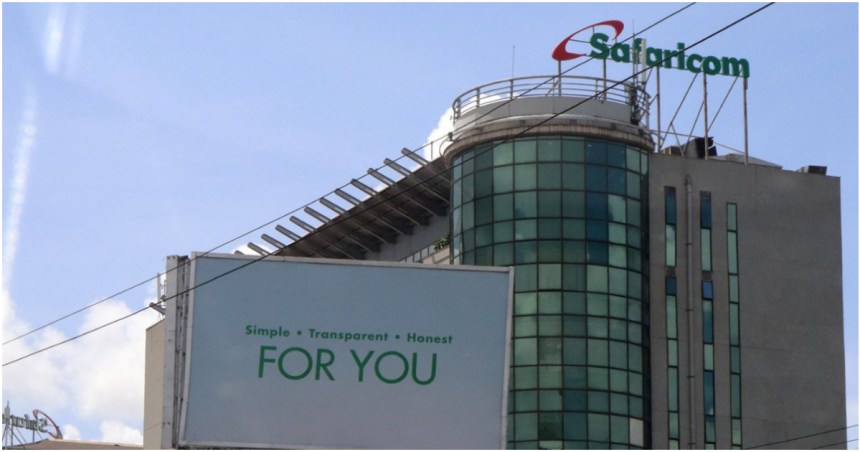
A fresh storm is brewing over a controversial Sh244 billion plan to offload the government’s stake in Safaricom PLC, with critics now accusing South Africa’s Vodacom Group of complicity in what they describe as a questionable restructuring that could alter control of Kenya’s most valuable company.

The unfolding row has triggered political, legal, and economic debate, with opponents warning that the proposed transaction could shift influence over Safaricom, and by extension its flagship mobile money platform M-Pesa, without sufficient public scrutiny.

Allegations and Political Pushback

The controversy centers on claims that a structured share transaction, reportedly valued at Sh244 billion, could dilute the government’s influence in Safaricom while strengthening Vodacom’s effective control.

Critics argue that although the deal is being framed as a financial restructuring or capital optimization strategy, its long-term implications could affect decision-making authority, dividend flows, and oversight of sensitive telecommunications infrastructure.

In a social media post on February 24, 2026, veteran journalist Tony Gachoka did not mince words: “VODACOM ENGLISH COMPANY BEING USED BY WILLIAM RUTO TO STEAL BILLIONS OF SHILLINGS FROM KENYANS, IN A SECRET DEAL WORTH 200 BILLION HAS PANICKED.” That, in a single capitalised declaration, is the Gachoka doctrine: a South African-registered, London-parentage corporate vehicle is being weaponised to siphon the birthright of ordinary Kenyans — and President William Ruto is holding the door open.

Gachoka has since filed a constitutional petition at the Milimani High Court alongside economics professor Fredrick Onyango Ogola, naming as respondents the Cabinet Secretaries for the National Treasury and for ICT, the Communications Authority, the Competition Authority, the Attorney General, Safaricom PLC itself, and Vodacom Group. The petition is a grenade rolled into the gilded machinery of Kenya’s biggest privatisation in a generation.

The Gachoka- lawyer Steve Ogola petition, filed at the Constitutional and Human Rights Division of the High Court in January 2026, reads less like a legal pleading and more like an indictment. Its central allegations are as follows:

Gross undervaluation: The petitioners contend that the KSh 34 price is a gross misrepresentation of Safaricom’s worth. Independent economic analysis places the shares’ intrinsic value at between KSh 70 and KSh 80 per share — a differential that, extrapolated across the 6 billion shares being sold, translates into a potential loss to the Kenyan public of over KSh 250 billion. The petition argues this price was “poorly and selectively negotiated by the respondents to the grave detriment of the Kenyan public.”

Opaque, non-competitive process: The sale was structured as a negotiated block trade with a single buyer — Vodacom — with no public tender, no competitive bids solicited, no disclosure of who advised the government, and no evidence that alternative buyers or structures were considered. The petition describes the process as “rushed, opaque, non-competitive and procedurally dubious.”

Constitutional violations: The petition invokes Articles 1, 10, and 227 of the Constitution — the pillars of public participation, national values, and transparency in the disposal of public property. The petitioners argue the Public Procurement and Asset Disposal Act, 2015 was bypassed, that the Privatisation Act, 2025 was not properly observed, and that Parliament’s role was reduced to a statutory rubber stamp — a 28-day window within which lawmakers must act or the deal proceeds automatically by March 26, 2026.

National security and sovereignty: Perhaps the most explosive allegation involves what Safaricom actually is — not merely a telecom company but a data sovereign, a financial artery, and a national security infrastructure. M-Pesa alone processes over 100 million transactions daily, services 38 million Kenyan customers, and forms the backbone of Kenya’s digital financial inclusion story. The petition argues that handing Vodacom 55 percent control would “irreversibly undermine Kenya’s strategic leverage over critical data infrastructure, mobile money systems and national security interests.”

On February 24, 2026 — the same day Gachoka published his explosive social media broadside — The Standard reported that Vodacom Group had filed a formal application before High Court Judge Lawrence Mugambi, asking to be struck out entirely as a respondent. The company’s argument: it is not a party to the government’s shareholding decision and exercises no control over it.

Safaricom PLC has taken a similar position, telling the court it is not the proper respondent as shareholding decisions rest with the government. Both companies, in effect, are pointing the finger at State House and the National Treasury — and asking the court to let them watch from the sidelines.

For Gachoka, this is precisely the tell. In his social media post, he claimed Vodacom was “trying to pull out“ and attributed this to fears of being linked to the kind of corruption scandals that have followed UK-connected corporate deals in Kenya’s recent past. Whether or not the legal manoeuvre amounts to a retreat under fire — or merely a legitimate procedural point — it has given Gachoka fresh ammunition to fire across every social media platform available to him.

Government’s Position

The National Treasury has previously defended proposals to restructure or divest certain state assets as part of a broader fiscal consolidation strategy aimed at easing public debt pressure and raising capital for development priorities.

Officials maintain that any transaction involving Safaricom would comply with the Capital Markets Authority (CMA) regulations, Nairobi Securities Exchange listing rules, and shareholder approval requirements.

However, critics insist that transparency must go beyond regulatory minimums given Safaricom’s central role in Kenya’s economy.

Vodacom’s Role Under Scrutiny

Vodacom, which already holds a significant stake in Safaricom alongside the Government of Kenya and public shareholders, has now been drawn into the controversy.

Accusers claim that the structure of the proposed transaction could disproportionately benefit Vodacom, potentially consolidating its strategic leverage over Safaricom’s operations and cross-border M-Pesa expansion.

Neither Safaricom nor Vodacom had publicly admitted wrongdoing at the time of publication. Insiders within corporate circles describe the accusations as politically charged and lacking documentary proof.

Market analysts caution that public rhetoric could unsettle investor confidence if not addressed promptly and clearly.

Market Reaction and Investor Concerns

Safaricom is one of the largest counters on the Nairobi Securities Exchange, with millions of Kenyans holding shares directly or indirectly through pension funds and investment schemes.

Any perception of governance instability could trigger volatility in the stock, analysts warn.

“Investors are watching closely. The issue isn’t just control — it’s predictability and regulatory certainty,” said a Nairobi-based investment advisor.

The company’s dominance in mobile money, connectivity, and enterprise solutions makes it a cornerstone of Kenya’s digital infrastructure. As such, changes in ownership dynamics carry broader economic implications.

Legal and Regulatory Outlook

Lawyers familiar with capital markets law note that allegations of “complicity” would require substantial evidence to sustain any formal legal challenge. For now, the dispute appears to be unfolding in the court of public opinion rather than in a courtroom.

Still, petitions or injunction applications cannot be ruled out if political pressure intensifies.

What Next?

The controversy comes at a time when the government is under pressure to manage public debt while preserving strategic national assets.

With Safaricom’s dividends forming a significant revenue stream for the state, the political sensitivity of the Sh244 billion figure is unlikely to fade quickly.

As calls for disclosure grow louder, the key question remains whether the proposed share deal represents a prudent fiscal strategy — or a restructuring that could permanently reshape control of Kenya’s digital giant.

For now, the accusations against Vodacom remain claims awaiting substantiation, but the political and market tremors they have sparked are already being felt across Kenya’s corporate and financial landscape.

0 comment
0 FacebookTwitterPinterestLinkedinTumblrWhatsappTelegramEmail

Kenya’s growing digital adoption is transforming how individuals manage their daily lives, from mobile banking to online shopping and e-commerce. However, this convenience comes with significant risks. While the Communications Authority (CA) recently reported an 82% drop in cyberattacks—down from 4.6 billion incidents in the previous quarter to 842.3 million—the threat to personal cybersecurity remains high.

Cybercriminals are shifting tactics, targeting individuals through weak passwords, outdated software, and poor online security practices. This has left many Kenyans vulnerable to exploitation, with identity theft emerging as a particularly alarming issue.

Fraudsters are taking advantage of gaps in verification systems to steal personal information, leaving victims to deal with financial losses, damaged reputations, and the stress of reclaiming their identities.

#KaaChonjo

Take Justus for example. One morning, he received a call from a fake bank representative claiming that his national ID had been used to register multiple SIM cards and take out loans he knew nothing about. The caller urged him to share his ID number and other personal details to “resolve the issue” immediately.

Feeling uneasy, Justus remembered Equity Bank’s fraud awareness campaigns that emphasized: “Always verify before you act.” Instead of sharing his details, he hung up and called Equity Bank’s official customer care line at 0763 000 000. The bank’s representative confirmed that the call was a scam, reassured him that his account was secure, and verified that no new loans had been taken out in his name. They also guided him on steps to protect his identity, including reporting the incident to the relevant authorities and safeguarding his personal information.

Thanks to his quick thinking and the bank’s support, Justus avoided becoming a victim of identity theft and ensured his finances remained safe.

How Fraudsters Operate

Unfortunately, not everyone is as prepared as Justus. Fraudsters are constantly devising new ways to exploit unsuspecting individuals. They often use tactics like:

  • SIM-swap fraud: Fraudsters gain access to your phone number and use it to intercept sensitive information like OTPs.
  • Phishing scams: Fake emails or messages trick victims into revealing personal details that are stolen.
  • Data breaches: Stolen personal information is used to access credit facilities or commit other fraudulent activities.

Equity Bank is committed to ensuring the safety of its customers by providing robust security measures and empowering you with the knowledge to stay ahead of fraudsters. Here’s how you can protect yourself and your finances:

  • Always verify: If you receive a suspicious message or call, contact Equity Bank’s official customer care line (0763 000 000) for guidance.
  • Enable two-factor authentication (2FA): Add an extra layer of security to your accounts.
  • Never share sensitive information: Your PIN, OTP, passwords, or account details should remain private. Equity Bank will never ask for this information via phone, text, or email.
  • Monitor your accounts: Regularly check your transactions and report any unusual activity immediately.
  • Secure your devices: Use strong passwords, enable two-factor authentication, and avoid saving your banking passwords on shared devices.
  • Avoid public Wi-Fi: Use mobile data for online banking to prevent fraudsters from intercepting your information.
  • Verify communication: Always confirm any communication from banks by contacting official customer service numbers.
  • Act quickly: If your card, phone, or SIM is lost, report it immediately to block unauthorized access.

By staying vigilant and following these tips, you can protect your hard-earned money and ensure a safer financial future. Remember, Equity Bank will never ask for your PIN, OTP, or password. If in doubt, always call the official customer care line for assistance.

For more tips on secure banking, visit: Secure Banking Tips | Equity Bank Kenya

0 comment
0 FacebookTwitterPinterestLinkedinTumblrWhatsappTelegramEmail

Treasury Cabinet Secretary John Mbadi has fired a warning shot at Kenya’s embattled microfinance and digital credit sector, threatening to revoke licences of firms that deliberately structure loans to make repayment impossible — even as four of the industry’s most controversial players walked free from court on a legal technicality.

Appearing before the Senate on Wednesday, Mbadi accused some lenders of issuing logbook-secured loans with the hidden objective of repossessing and selling borrowers’ vehicles rather than recovering debt.

“There are lenders who issue credit facilities and take borrowers’ logbooks with the objective of selling the vehicles. They have structured the loans in such a way that repayment becomes practically impossible. Such entities must operate within the law or we will revoke their licences,” Mbadi told senators during a session broadcast live.

His remarks come barely 48 hours after the High Court dismissed a constitutional petition seeking to eject Mwananchi Credit Limited, Platinum Credit Limited, Izwe Loans Limited and Premier Credit Limited from the market over allegations that they were advancing digital credit without proper licensing from the Central Bank of Kenya (CBK).

Court Escape on Technical Grounds

The petition, filed by Mark Muko, argued that the four lenders had been operating illegally, exposing borrowers to predatory interest rates and abusive recovery practices.

However, the High Court ruled that the petitioner had failed to exhaust dispute resolution mechanisms provided under the Microfinance Act Regulations before approaching the court, rendering the case premature and procedurally defective.

Legal experts note that the ruling was not a declaration of compliance by the lenders but a procedural dismissal. “The court did not give digital lenders a clean bill of health. It simply said the matter was brought to the wrong forum at the wrong time,” one Nairobi-based advocate observed.

Litigation Storm and Inflated Debt Claims

For some of the named firms — particularly Mwananchi Credit — the reprieve comes amid mounting litigation. A landmark 2023 High Court decision drastically reduced a Sh22 million loan demand to the original Sh7 million principal, affirming the application of the in duplum rule, which bars lenders from charging interest exceeding the principal loan amount.

Subsequent rulings have questioned ballooning loan claims and repossession tactics, with judges warning that courts will not allow microfinance firms to operate outside statutory protections designed to shield borrowers from exploitation.

Court records indicate a surge in cases challenging loan terms, with potential combined claims against some lenders running into billions of shillings if even a fraction succeed.

Regulatory Crackdown

Mbadi outlined sweeping regulatory reforms aimed at restoring order to a sector that has expanded rapidly in recent years.

He disclosed that the CBK now requires all Non-Deposit Taking Credit Providers to obtain licences under a strengthened Digital Credit Providers framework, which sets eligibility, governance and consumer protection standards.

As of December 2025, 195 licensed entities were advancing a combined Sh110.5 billion in credit to Kenyan borrowers.

The Treasury has also quadrupled fines for violations of the Banking Act from Sh500,000 to Sh2 million. Mbadi confirmed that credit providers’ pricing models must comply with the in duplum rule under Section 44 of the Act.

Additionally, the CBK is working with the Office of the Data Protection Commissioner to curb abusive debt collection practices, including doxxing and harassment of borrowers’ contacts.

Data from the Competition Authority of Kenya shows consumer complaints against microfinance and digital lenders rose by 28 percent in 2025 — the sharpest annual spike recorded.

A Sector at a Crossroads

The near-simultaneous Senate warning and court dismissal highlight the contradictory moment facing Kenya’s credit market. While the judiciary insists on procedural discipline, the Executive has signalled that regulatory tolerance for predatory lending has ended.

For lenders, the message is clear: comply with licensing rules, maintain transparent pricing structures and respect consumer protection laws — or risk losing the right to operate.

For borrowers emboldened by recent court precedents and Mbadi’s public stance, the legal battles are far from over. The petition may have collapsed on technical grounds, but the broader question of whether parts of Kenya’s digital lending sector have crossed the line from credit provision into financial exploitation remains very much alive.

0 comment
0 FacebookTwitterPinterestLinkedinTumblrWhatsappTelegramEmail

At the start of every year, many of us map out what we want to achieve: school fees, bills, savings, business goals, or even that long-awaited family purchase. We think about how to raise income, how to cut costs, and how to grow our finances. Yet one important piece of planning is often missing; Insurance! 

For many households, insurance feels distant or unnecessary. It is seen as something you think about later. But the truth is that life doesn’t wait. 

Take a farmer who depends on livestock for daily income. Suddenly, a prolonged drought, flash floods, or a disease outbreak wipes out this key source of income, leaving the family financially vulnerable.

Or think of the small shop owner who has worked for years to stock their shelves and build a steady clientele. One night, a short circuit causes a fire that destroys part of the store and stock. Recovery means expensive replacement costs and days without income.

A break in leaves a family without critical household items necessary for their day-to- day use. These are not distant possibilities; they happen every year; they are not just interruptions. They can derail the best laid financial plans and push families into debt or hardship. Laid financial plans and push families into debt or hardship.laid financial plans and push families into debt or hardship.

This year, as you set your financial goals, it’s worth asking: What would happen to my plan if the unexpected struck today?

Equity makes insurance accessible and relevant for everyday Kenyans by integrating insurance solutions into everyday banking. Make insurance part of your overall financial plan and protect yourself against common risks that can wipe out progress.

General insurance covers assets and risks many of us face daily; from motor vehicles and household items to fire, drought, flash floods, theft, burglary, and public liability.

With the right cover, the farmer can be compensated for livestock lost to drought, floods, or disease outbreak. The shop owner can recover lost stock without losing months of hard work. Families can replace essential household items lost to burglary without diverting money from school fees or other planned expenses.

Equity’s branch network and Relationship Managers are on hand to guide you through understanding what cover you need, how it works, and how it aligns with your financial goals. They help you choose protection that fits your needs and your budget, so you are prepared before risks turn into losses.

Including insurance in your financial plan does not mean expecting the worst. It means being prepared and protecting the progress you have worked hard to achieve. It means knowing that a single accident, fire, theft, or damage will not erase months or years of effort.

This year, consider Equity Insurance as part of your financial plan. Protect what you have and protect what you are building for the future.

0 comment
0 FacebookTwitterPinterestLinkedinTumblrWhatsappTelegramEmail

Wote Technical Training Institute in Makueni County has transitioned from fuelwood to Liquefied Petroleum Gas (LPG), a move expected to significantly reduce deforestation, lower carbon emissions and improve health outcomes for learners and staff.

The shift to clean cooking has eliminated thick smoke that previously filled the institution’s kitchen and nearby classrooms, exposing cooks and students to respiratory risks. Beyond health benefits, the migration is expected to ease pressure on forests in the semi-arid county, where institutions remain among the biggest consumers of fuelwood.

The clean cooking system, comprising a one-tonne LPG bulk cylinder and related accessories, was installed at a cost of Ksh3.5 million financed by Equity Bank through Equity Group Foundation, in partnership with Heatmax Energy. The facility now serves more than 3,300 trainees and staff at the institution.

Speaking during the commissioning of the facility, the Principal Secretary for Technical and Vocational Education and Training (TVETs), Esther Muoria, said the continued use of fuelwood in learning institutions undermines national climate goals by accelerating deforestation and increasing carbon emissions.

Equity Associate Director of Energy, Environment and Climate Change Dr Julius Kamau (left), with the Governor of Makueni County, Mutula Kilonzo Junior (right), during a courtesy call at the
Governor’s office in Wote.

The PS said that while awareness about clean energy exists, adoption has been slower because institutions often fail to explain why change is necessary. Her remarks were delivered by Anne Kamonjo, Director of Greening TVETs at the State Department, who represented her at the event.

“If people are not shown the reason for adopting a new way of doing things, transformation of mindset becomes slow,” Muoria said in the statement.

“Wote TTI is setting the pace by demonstrating that LPG is cleaner, healthier and environmentally sustainable. When young people see this in practice, they carry that knowledge home and into the wider community.”

She noted that embedding clean cooking solutions in learning institutions offers a powerful pathway for climate action, given the scale of Kenya’s education sector.

“We cannot be telling students to plant trees while at the same time cutting millions of trees in our institutions without offering alternatives,” the PS said.

“That contradiction weakens climate education.”

Kenya has over 23,000 secondary schools, 45,000 primary schools and about 250 TVET institutions.

According to the State Department, learning institutions alone consume an estimated 10 million trees annually for cooking fuel, even as the country pushes a national target of planting 15 billion trees to restore forest cover.

The project was launched following a courtesy call by the Equity team on Makueni Governor Mutula Kilonzo Jnr, who said the initiative positions Wote TTI as a climate leadership hub in the county.

“Wote Institute is a trailblazer in skills training, and there is no doubt other TVETs will emulate this transition to clean cooking,” the Governor said. “This will allow our trees to grow and improve forest cover in the county.”

Equity Associate Director for Energy, Environment and Climate Change, Dr Julius Kamau, said the initiative is part of a wider effort by Equity Group Foundation to advance sustainable development and climate resilience.

“To date, 214 institutions have transitioned to clean cooking solutions, while more than 1,856 have expressed interest,” said Dr Kamau, who is also the acting Equity Group Director of Sustainability.

“Clean energy adoption is critical not only for environmental conservation but also for improved health and long-term economic sustainability.”

Wote TTI Board of Governors chair Prof. Joseph Mwinzi said the facility positions the institution as a centre of excellence in environmentally responsible training.

“This exposure to modern energy systems and improved safety standards opens doors for employment and entrepreneurship in the growing clean energy sector,” he said, urging students to become ambassadors for climate-conscious practices.

College Principal Joshua Munyoki said the transition marks the end of decades of reliance on firewood, which saw the institution consume two lorryloads every month.

“This is the most significant development we have had in over ten years,” he said. “Apart from environmental gains, it will lower costs and improve efficiency.”

Anne Manyatta, an ICT student and Vice-Chairperson of the Wote TTI Students Council, welcomed the shift to gas cooking, saying it had eliminated smoky meals and dining halls while improving time management. Plumbing student John Omolo, noted that the gas ensures meals are prepared on time, tastes better, and has inspired him to promote clean cooking at home where his family still uses firewood.

Present at the commissioning were principals from other institutions in Makueni County, many of whom said the project had strengthened the case for adopting clean energy in schools as part of Kenya’s broader climate response.

0 comment
0 FacebookTwitterPinterestLinkedinTumblrWhatsappTelegramEmail
Startimes CEO Carter Luo

StarTimes has rolled out a nationwide expansion of its Business Halls as part of a strategy to strengthen customer engagement, improve accessibility, and enhance service delivery across Kenya.

The digital television provider says the move is aimed at bringing its services closer to customers while deepening physical interaction with the brand. The new centres are designed to offer walk-in support, expert guidance, product sales, upgrades, and other StarTimes services under one roof.

With the expansion, StarTimes Business Halls are now operational in Upperhill and Buruburu in Nairobi, as well as in Emali, Mombasa, Ukunda, Malindi, Nakuru, Meru, Kisumu, Kisii, Eldoret, Kakamega, and Kapsabet—ensuring a wider national footprint.

Speaking on the rollout, StarTimes PR and Communications Officer Robert Ouma said the expansion is already strengthening customer relationships and improving service turnaround.

“This expansion has come in handy for both our customers and the business. We believe good customer service should not be far away, which is why we made a deliberate decision to move closer to our customers,” he said.

Ouma added that the physical centres allow StarTimes to offer timely support, build trust, and create meaningful face-to-face interactions that enhance the overall customer experience.

The company says the Business Halls, together with its dealership network, form part of a broader customer-centric strategy focused on convenience, service quality, and long-term growth—ensuring that wherever customers are, StarTimes services are always within reach.

0 comment
0 FacebookTwitterPinterestLinkedinTumblrWhatsappTelegramEmail

Initial Public Offerings (IPOs) present a unique opportunity for investors to participate in the growth of companies as they list on the Nairobi Securities Exchange (NSE). By investing in IPOs, you can own a stake in businesses that are shaping Kenya’s economy and take part in long-term value creation.

To participate in any IPO, you need a Central Depository & Settlement (CDS) account. This account is your gateway to the NSE, enabling you to buy, hold, and trade shares in listed companies. Equity Bank is here to make your investment journey simple and accessible, empowering you to confidently take advantage of IPO opportunities as they arise.

Why Open a CDS Account with Equity?

The Nairobi Securities Exchange (NSE) has been on a remarkable growth trajectory, with the Nairobi All Share Index (NASI) surging by an impressive 51% in 2025, closing the year at 186.58 points. By opening a CDS account, you not only gain access to the floated IPOs but also position yourself to benefit from Kenya’s thriving capital markets.

Equity is committed to ensuring that every Kenyan can take full advantage of IPOs. Setting up your CDS Account early is crucial to avoid last-minute rushes and administrative hurdles.

Our nationwide network of branches and dedicated Relationship Managers are ready to guide you through the process, ensuring you’re fully prepared to invest.

Your Gateway to Long-Term Investment Opportunities

An Equity CDS Account is more than just a requirement for the IPOs – it’s your entry point to Kenya’s vibrant capital markets. With this account, you can:

  • Buy and manage listed securities: Build a diversified portfolio and track your investments with ease.
  • Access expert guidance: Our Relationship Managers provide personalized advice to help you align your investments with your financial goals.
  • Enjoy long-term financial growth: Take advantage of future IPOs and market opportunities as they arise.

Flexible Credit Solutions for Investors

Equity goes beyond account opening by offering investment-related credit solutions. For eligible customers, we provide tailored financing options to help you participate in IPOs without straining your cash flow. This ensures you can seize this opportunity while maintaining financial stability.

Personalized Support at Your Nearest Equity Branch

Equity’s branch-based approach ensures that every customer receives personalized, professional support. Whether you’re a seasoned investor or a first timer, our Relationship Managers will walk you through the process step by step, helping you understand the requirements, complete the necessary documentation, and make informed investment decisions.

Don’t let administrative delays keep you from participating in historic investments. Visit your nearest Equity Bank branch today to open your CDS Account and secure your place in Kenya’s economic future.

For more information, you can contact the team on EIB Client Services , call 0763 000 000 or walk into any Equity Branch near you.

0 comment
0 FacebookTwitterPinterestLinkedinTumblrWhatsappTelegramEmail
Del Monte Kenya

Multinational pineapple producer caught red-handed siphoning profits offshore while ordinary Kenyans shoulder crippling tax burden

The veil has been lifted on one of Kenya’s most brazen corporate tax scandals, with Del Monte Kenya now facing a KSh1.76 billion bill after a tribunal exposed how the multinational used shadowy offshore deals to rob the country of desperately needed public funds.

In a damning ruling that has sent shockwaves through Kenya’s corporate sector, the Tax Appeals Tribunal dismissed Del Monte’s appeal and upheld the Kenya Revenue Authority’s assessment, confirming what ordinary Kenyans have long suspected: some of the country’s biggest and most profitable companies are systematically cheating the tax system while workers and small businesses are squeezed to breaking point.

The case centers on transfer pricing, a complex financial maneuver that allows multinationals to manipulate the prices they charge their own foreign subsidiaries, artificially slashing their Kenyan profits and shifting billions to tax havens where rates are lower or non-existent.

KRA’s 2018 audit uncovered that Del Monte was using a cost-plus pricing model that grossly undervalued its Kenyan operations while funneling inflated profits to related companies abroad, particularly its Swiss affiliate DMI GmbH. The tribunal found the pineapple giant could not justify why it was earning modest returns in Kenya, where all the real work happens, while its offshore entities raked in the profits.

“The tribunal found that the pineapple giant could not justify why it was shifting profits to offshore companies when the real value of the business is created in Kenya,” the ruling stated, laying bare the mechanics of corporate tax abuse.

Del Monte had argued it was simply following a standard cost-plus approach, applying a meager 4.83 percent markup to its costs when selling to its Swiss sister company. The firm insisted this was fair compensation for its role as a manufacturer supplying a related distributor.

But the tribunal was having none of it. Judges ruled that Del Monte’s documentation failed to reflect the economic reality of its massive Kenyan operations. The company could not explain why the Kenyan business, which does all the planting, harvesting, processing and initial distribution, should earn only a pittance while foreign affiliates that simply handle onwards sales captured the lion’s share of profits.

The ruling also exposed Del Monte’s attempts to obscure its corporate structure. The company claimed a multi-billion shilling intercompany loan came from Del Monte Fund B.V., owned by its ultimate parent in the Cayman Islands, a notorious tax haven. But KRA presented registry records proving the lending entity was actually wholly owned by the Swiss affiliate, a finding Del Monte could not refute with official documentation.

The KSh1.76 billion that Del Monte sought to avoid paying could have transformed lives across Kenya. According to the Kenya Human Rights Commission, which welcomed the tribunal’s decision, that money could build 1,760 public school classrooms, construct eight fully equipped county hospitals, tarmac 29 kilometers of road, employ over 3,500 nurses or teachers for a year, or fund multiple rural water projects.

Instead, while Del Monte contested billions in taxes through expensive legal battles, ordinary Kenyans were being told to tighten their belts, accept higher VAT on basic goods, and pay new levies on essential services.

The Kenya Human Rights Commission pulled no punches in its response, accusing Del Monte and other multinationals of looting what rightfully belongs to Kenyan citizens.

“For years, ordinary Kenyans have been told to tighten their belts, pay more VAT, and accept new levies on basic goods and services. However, some of the country’s largest and most profitable corporations, like Del Monte, continue to contest paying billions in taxes aggressively. This is unjust and unacceptable,” the commission said in a scathing press statement.

The rights body warned that corporate tax evasion weakens the state’s ability to deliver basic services and shifts the tax burden onto workers, small businesses and low-income households. When multinationals dodge taxes, children sit in overcrowded classrooms, patients go without medicine, and communities lack clean water.

KHRC revealed it is now examining other corporations, focusing on the land they occupy, the terms of their leases, and what they actually pay in land rates and taxes. Early findings suggest the scale of revenue loss will shock many Kenyans, especially at a time when households are strained by PAYE, VAT and rising levies on basic necessities.

The commission is demanding sweeping reforms to stop multinationals from bleeding the country dry. It wants all foreign corporations operating in Kenya to publicly disclose their revenues, profits, taxes paid, number of employees and assets for each country where they operate. It is calling for a dedicated, well-resourced program for annual transfer pricing audits targeting high-risk sectors like agribusiness, extractives, manufacturing, energy and digital services.

Where aggressive tax avoidance is proven, KHRC insists penalties must go beyond mere recovery of tax and interest to include heavy punitive fines and possible criminal investigations. The commission wants strict restrictions on the deductibility of management fees, marketing fees, royalties, and interest on related-party loans unless companies can demonstrate clear economic substance.

It is also demanding publication of an annual list of the largest corporate taxpayers and companies with major unresolved tax disputes, joint work with the Ministry of Lands to establish a public register linking large landholdings to tax records, and active challenges to treaty shopping and artificial routing of payments through low-tax jurisdictions.

Most provocatively, KHRC wants companies with histories of aggressive tax avoidance barred from receiving tax incentives, accessing public procurement or benefiting from any form of state support.

The Del Monte case is not an isolated incident but part of a broader pattern. KHRC’s 2025 publication “Who Owns Kenya?” revealed how corporate tax abuse fuels inequality and leaves essential public services underfunded. The report showed that while multinationals employ armies of accountants and lawyers to minimize their tax bills, schools crumble, hospitals run out of drugs, and roads remain impassable.

Tax justice campaigners say Kenya loses billions annually to profit shifting by multinationals. A 2024 study estimated that African countries collectively lose around $88.6 billion per year to illicit financial flows, with transfer pricing abuse being a major component. Kenya is believed to lose between $1.1 billion and $1.5 billion annually, though the true figure may be higher given the opacity of multinational operations.

The global context makes Kenya’s predicament even more galling. Multinationals operating in Africa often pay far lower effective tax rates than their statutory obligations would suggest, using intricate structures involving subsidiaries in places like Mauritius, the Netherlands, Switzerland and the Cayman Islands to minimize their African tax footprint.

Del Monte Kenya has not publicly commented on the tribunal ruling or indicated whether it will seek further appeals. The company’s managing director Wayne Cook has previously defended the firm’s tax practices as compliant with Kenyan law.

But the tribunal’s decision suggests that era may be ending. Tax authorities worldwide are cracking down on transfer pricing abuses, and Kenya appears determined to claim its fair share of the wealth generated on its soil.

For the millions of Kenyans struggling with the rising cost of living, the Del Monte case crystallizes a profound injustice. While they pay tax on every shilling they earn and every item they buy, some of the wealthiest corporations doing business in Kenya deploy sophisticated schemes to avoid contributing their fair share to the country that provides their workers, their infrastructure, their markets and ultimately their profits.

The question now is whether the Del Monte ruling marks a turning point or remains an isolated victory in a long war against corporate tax abuse. With KHRC and other civil society organizations now turning their spotlight on other multinationals, and with KRA apparently emboldened by its tribunal win, more corporate tax scandals may soon come to light.

What is certain is that ordinary Kenyans are watching, and they are running out of patience with a system that squeezes the poor while allowing the powerful to game the rules. The Del Monte case has proven that when authorities have the will to act, corporate tax dodgers can be held to account. Now Kenyans want to see that will applied across the board, to every multinational that treats Kenya as a place to extract wealth rather than a country deserving of fair contribution to the common good.

The KSh1.76 billion Del Monte must now pay is not just a number on a balance sheet. It represents classrooms that can be built, hospitals that can be equipped, roads that can be paved, and services that can be delivered. It represents a small measure of justice in a system that has for too long favored corporate interests over the public good.

As the tribunal put it bluntly: multinationals cannot use paperwork to export profits when the actual work, risks and value addition happen on Kenyan soil. That principle, if consistently enforced, could transform Kenya’s fiscal landscape and ensure that those who profit from Kenya also contribute to Kenya’s development.

The battle is far from over, but for once, the people of Kenya can claim a victory.

0 comment
0 FacebookTwitterPinterestLinkedinTumblrWhatsappTelegramEmail
Tourism CS Rebecca Miano at World governments summit in Dubai.

The government is embracing artificial intelligence and smart data as transformative tools to redefine the future of tourism, Tourism and Wildlife Cabinet Secretary Rebecca Miano announced during the ongoing World Governments Summit in Dubai.

Speaking during the ongoing World governments summit in Dubai, Miano emphasized that technology is no longer optional in the rapidly evolving travel landscape but central to building a resilient, inclusive, and globally competitive tourism sector.

“By leveraging AI and smart data to personalize the visitor experience and moving beyond talk to action with low-carbon solutions for conservation-led tourism, we are ensuring our local communities are the primary beneficiaries of the tourism value chain,” said Miano.

Tourism CS Rebecca Miano at the World Government Summit in Dubai.

According to the Cabinet Secretary, artificial intelligence is already opening new possibilities for the sector, from predictive analytics that help stakeholders understand travel patterns to intelligent platforms capable of tailoring itineraries based on visitor preferences.

“Truly, the world has majorly shifted — mass tourism is making way for purpose-driven travel, and Kenya is leading this charge,” she noted.

Miano made the remarks during a panel discussion at the Future of Tourism & Destination Global South forum alongside her Lebanese counterpart, Hon. Laura Lahoud, where she outlined Kenya’s roadmap toward a digitally-forward tourism ecosystem.

Beyond enhancing visitor experiences, smart data is set to strengthen conservation efforts by enabling real-time monitoring of ecosystems, improving park management, and supporting evidence-based decision-making. This approach aligns with Kenya’s longstanding commitment to ensuring that conservation and economic development go hand in hand.

At the sidelines of the summit, Miano also held a strategic bilateral meeting with the newly appointed UN Tourism Secretary-General, H.E. Shaikha Al Nowais, where they explored areas of cooperation in advancing sustainable tourism.

“As we congratulate H.E. Shaikha Al Nowais on her new role, Kenya looks forward to strengthening our partnership as we seek to upscale the tourism sector’s future workforce, attract more investments, and collaborate with other UN-led agencies and international organizations,” she said.

With destinations worldwide competing for digitally savvy travelers, Kenya is positioning itself at the forefront of innovation.

“The Global South is no longer a passive player; we are the new frontier of authenticity and innovation,” Miano affirmed.

As the country advances the Magical Kenya vision, the integration of AI and smart technologies is expected to drive smarter marketing, unlock new economic opportunities, and ensure that tourism growth remains sustainable, inclusive, and future-ready.

0 comment
0 FacebookTwitterPinterestLinkedinTumblrWhatsappTelegramEmail
Mwananchi Credit

Access to financing remains a major hurdle for many Kenyans. Even individuals with clear goals, viable projects, and good financial records often struggle to raise capital. As a result, promising ideas stall, businesses fail to expand, and personal ambitions are delayed. Reliable and accessible credit solutions are essential to unlocking economic growth and improving livelihoods.

Award-winning microfinance institution Mwananchi Credit is stepping in to close this financing gap by offering timely and practical loan solutions that help Kenyans turn their dreams into reality. With over five years of a strong and reputable track record, the company has built trust by providing customer-focused financial services designed for speed, convenience, and flexibility.

One of its standout products is the logbook loan, created specifically for vehicle owners who need quick access to funds without disrupting their daily routines. Under this arrangement, a customer’s vehicle logbook serves as security, but the client continues using the vehicle throughout the repayment period. This unique approach ensures borrowers maintain their mobility while accessing immediate liquidity for business or personal needs.

Qualifying for a logbook loan is straightforward. Applicants only need to be at least 18 years old, possess a valid driver’s license, and have comprehensive vehicle insurance. Mwananchi Credit offers some of the lowest interest rates in the Kenyan market, with approvals processed in less than six hours. Repayment terms are flexible, ranging from three to 24 months, and clients can access loans of up to KES 25 million.

Importantly, Mwananchi Credit is licensed by the Central Bank of Kenya, giving customers confidence in its credibility and regulatory compliance. The company also does not require a CRB rating, making financing accessible to a wider range of borrowers.

Beyond logbook loans, Mwananchi Credit provides additional financial products including check-off loans, title deed loans, import financing, and LPO loans. These diverse options ensure individuals and businesses can find solutions tailored to their unique financial needs.

With flexible terms and a customer-first approach, Mwananchi Credit is helping Kenyans fund their projects and move closer to financial independence.

0 comment
0 FacebookTwitterPinterestLinkedinTumblrWhatsappTelegramEmail

Xiaomi today announced the launch of REDMI Note 15 Series, comprising three models — REDMI Note 15 Pro+ 5G, REDMI Note 15 Pro, and REDMI Note 15. Defined by REDMI Titan Durability, the lineup highlights long-lasting battery performance, reinforced drop resistance, and enhanced dust and water protection, alongside upgraded imaging capabilities, flagship-level performance, and a seamless user experience.

REDMI Titan Durability, Engineered for Everyday Challenges

Spanning every model, REDMI Titan Durability integrates a long-lasting battery experience, enhanced drop resistance, and comprehensive dust and water resistance — establishing a new durability standard for REDMI Note Series. REDMI Note 15 Pro+ 5G lead the lineup with the most advanced durability features, while all models are engineered to meet the demands of everyday use.

At the core of this upgrade is an enhanced battery experience. REDMI Note 15 Pro+ 5G features a 6,500mAh Silicon–Carbon (SiC) Battery with 10% SiC content, paired with 100W HyperCharge³ and 22.5W reverse charging⁴, delivering flagship-level endurance and fast charging. Making its debut in REDMI Note Series, SiC battery technology enables higher energy density within a compact form factor. Across all Pro models, the SiC battery works alongside Xiaomi Surge battery management system, retaining 80% or more capacity after 1,600 charge cycles, equivalent to approximately six years of typical use. REDMI Note 15 features an upgraded 6,000 mAh battery.¹ Reverse charging support across the lineup, including 22.5W or 18W depending on model, adds everyday convenience and flexibility.⁴

Structural durability is reinforced across the series. REDMI Note 15 Pro+ 5G achieved SGS Premium Performance Certification,⁵ verifying resistance to drops, crushing, and bending. Built on REDMI Titan Structure, both models combine a high-strength motherboard, reinforced mid-frame, and multi-layer shock-absorbing design, complemented by Corning® Gorilla® Glass Victus® 2 — together enabling certified drop resistance from heights of up to 2.5 meters.⁷ REDMI Note 15 Pro+ 5G further incorporates an ultra-tough fiberglass back panel²² to improve impact absorption without adding unnecessary weight³¹. The rest of the lineup features a durable structural design that has passed the SGS Comprehensive Shock and Drop-Resistance test,⁶ delivering dependable protection in real-world use.

To deliver comprehensive everyday protection, REDMI Note 15 Series raises the bar for dust and water resistance. REDMI Note 15 Pro+ 5G meet IP66, IP68, IP69, and IP69K standards⁸ and are certified to withstand immersion at depths of up to 2 meters for 24 hours⁹. Verified by the TÜV SÜD Smartphone Water-Resistant Endurance Certification,¹⁰ these models incorporate 17 precision-engineered waterproof elements to ensure long-term reliability. REDMI Note 15 Pro and REDMI Note 15 also feature enhanced dust and water resistance designed to handle splashes, spills, and challenging environments. Across the entire lineup, Wet Touch 2.0 ensures the display remains responsive even when the screen or fingertips are wet, allowing smooth operation in everyday conditions.

Elevated Imaging System with Advanced AI

Engineered to deliver exceptional clarity in every shot, REDMI Note 15 Series brings a holistic imaging upgrade to the entire lineup. By combining high-resolution sensors, versatile focal lengths, and advanced AI-empowered photography within its segment.

At the center of this upgrade, REDMI Note 15 Pro+ 5G features a new 200MP ultimate-clarity camera, powered by the global debut of a 200MP HPE image sensor. This large 1/1.4-inch sensor, together with 2× and 4× optical-level in-sensor zoom, triple-focal-length DAG HDR, and advanced AI processing, delivers detailed, true-to-life images across a wide range of lighting conditions.

The Pro models support five focal lengths from 23mm to 92mm through a single lens, enabling flexible framing for landscapes, street photography, portraits, and close-ups. Meanwhile, REDMI Note 15 features a 108MP super-clear camera system, offering a 3× optical-level telephoto experience that covers perspectives from wide-angle shots to portrait close-ups.

Across the series, imaging is further enhanced with creative and AI-powered tools, including an ultra-clear portrait algorithm, Dynamic shots 2.0 for motion effects, and easy editing with direct sharing to Instagram.²³ Post-processing is easier than ever, with REDMI Note 15 Pro models featuring AI Creativity Assistant¹¹, while REDMI Note 15 offer a suite of AI image editing tools¹² designed for everyday creativity. Across the entire series, AI Remove Reflection and AI Beautify are supported, enabling cleaner images and one-tap enhancements with minimal effort.

Upgraded Performance and Smarter Connectivity

Beyond durability and imaging, REDMI Note 15 Series delivers balanced performance for a wide range of usage scenarios. At the top of the lineup, REDMI Note 15 Pro+ 5G is powered by Snapdragon® 7s Gen 4 mobile platform and introduces Xiaomi IceLoop cooling system to REDMI Note Series, standing out as the only LHP cooling solution in its price segment and delivering triple the heat-transfer efficiency.³¹

Across the lineup, a new generation of Snapdragon and MediaTek chipsets delivers faster performance, smoother graphics, and improved energy efficiency. All models support Google Gemini¹³ and Circle to Search with Google¹⁴, delivering personalized interactions and convenient search. At the top of the series, REDMI Note 15 Pro+ 5G further integrates Xiaomi HyperAI¹², delivering more personalized and intelligent AI experiences.¹²

For enhanced connectivity, the flagship-level Xiaomi Offline Communication is introduced on the Pro models,¹⁵ enabling kilometer-level voice transmission even without network coverage. REDMI Note 15 Pro+ 5G further benefits from Xiaomi Surge T1S Tuner, delivering stronger and more stable connectivity across Wi-Fi, Bluetooth®, GPS, and cellular networks.³¹

Immersive Experience With Large Display and Powerful Audio

REDMI Note 15 Series offers an upgraded immersive viewing experience with larger displays and improved clarity. REDMI Note 15 Pro+ 5G features a 6.83-inch displays, while REDMI Note 15 Pro, REDMI Note 15 comes equipped with 6.77-inch displays, delivering wide, near-borderless views. With up to 3,200 nits peak brightness, 3840Hz PWM dimming, and triple eye-care certifications, the series ensures both visibility and comfort in various lighting conditions.

Complementing the display, REDMI Note 15 Pro+ 5G introduces a 400% volume boost,¹⁶ while the rest of the lineup offers a 300% volume boost, delivering louder, clearer audio for movies, music, and games.¹⁷

Positioned to meet the diverse needs of users worldwide, REDMI Note 15 Series delivers a well-rounded combination of durability, imaging, performance, and display enhancements. Built on the trusted foundation of REDMI Titan Durability, the lineup is designed to withstand the demands of daily use while delivering high-quality imaging, smooth performance, and a seamless user experience.

Price, Availability, and Promotion²⁴

REDMI Note 15 Pro+ 5G comes in Mocha Brown, Glacier Blue, and Black,¹⁸ with three storage variants.²⁰ Suggested retail price starts from KES 54999/-

REDMI Note 15 Pro comes in Titanium Color¹⁹, Glacier Blue, and Black,¹⁸ with three storage variants.²⁰ Suggested retail price starts from KES 36999/-

REDMI Note 15 comes in Glacier Blue, Purple, Forest Green, and Black,¹⁸ with four storage variants²⁰. Suggested retail price starts from KES 24,999/-

To celebrate the launch of the REDMI NOTE 15 Series, Xiaomi Kenya is offering exciting promotions for its customers. With the purchase of a REDMI NOTE 15 or REDMI NOTE 15 Pro, customers will receive a FREE Redmi Buds 6 Play worth KES 1,600. Those who purchase the REDMI NOTE 15 Pro+ 5G (worth KES 49,999) will also enjoy exclusive benefits.

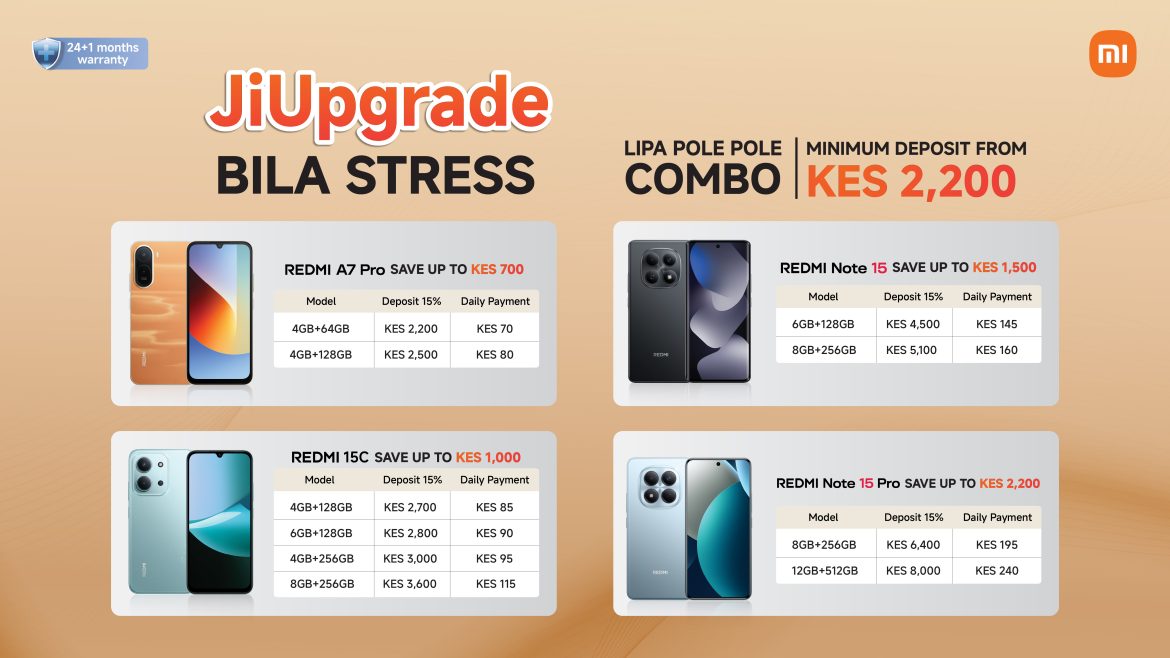
In collaboration with Onfon, Xiaomi Kenya introduces the Flexible Lipa Pole Pole plan for the REDMI NOTE 15 Series, offering 5% discount on deposit and 15% on Installments, which is one of  the most best offers in the market.

Additionally, in partnership with Safaricom, customers can unlock up to 15GB of data, an exclusive offer available across all Safaricom stores nationwide.

The REDMI NOTE 15 Series is now available at all Xiaomi Partner Stores, Safaricom outlets, and online via Mi.com/KE and Jumia, with a FREE 24+1 months warranty for added peace of mind.

Beyond smartphones, Xiaomi Kenya is expanding its portfolio of AIoT and smart products, including TVs, wearables, smart home appliances, audio devices, and connected lifestyle solutions, all designed to enhance everyday living.

To continue the momentum of the Titan Durability theme, Xiaomi will also host a Mini Marathon on 21st February. More details will be on Xiaomi Kenya Social Media

Product images are available here.

REDMI Note 15 Series Quick Specs

Pro models:

 REDMI Note 15 Pro+ 5GREDMI Note 15REDMI Note 15 Pro
DesignColors:¹⁸ Mocha Brown, Glacier Blue, BlackDimensions:²⁵163.34mm x 78.31mm x 8.47mm (Mocha Brown)163.34mm x 78.31mm x 8.19mm (Black, Glacier Blue)Weight:²⁵208.0g (Mocha Brown)207.1g (Black, Glacier Blue)IP66/IP68/IP69/IP69K dust and water resistance⁸Colors:¹⁸ Glacier Blue, Purple, Forest Green, BlackDimensions: 164.03mm x 75.42mm x 7.94mm²⁵Weight: 183.7g²⁵ IP64 dust and water resistance⁸Colors:¹⁸ Titanium Color,¹⁹ Glacier Blue, BlackDimensions: 163.22mm x 76.29mm x 7.96mm²⁵Weight: 195g²⁵IP65 dust and water resistance⁸
Camera200MP main camera2×/4× optical-level telephotoOISf/1.72.24μm 16-in-1 pixel binning1/1.4″ sensor size7P lens8MP ultra-wide cameraf/2.232MP front cameraf/2.2108MP main camera3× optical-level telephotof/1.70.64μm, 9in1 1.92μm1/1.67″ sensor size6P lens2MP depth cameraf/2.420MP front camera f/2.2200MP main camera2×/4× optical-level telephotoOISf/1.7 2.24μm 16-in-1 pixel binning1/1.4″ sensor size7P lens8MP ultra-wide cameraf/2.232MP front cameraf/2.2
AI FeaturesXiaomi HyperAI¹²AI Writing, AI Speech Recognition, AI Interpreter, AI Search, AI Dynamic Wallpapers, AI Creativity Assistant¹¹, and moreGoogle Gemini,¹³ Circle to Search with Google¹⁴AI image editing tools¹² AI Erase, AI Remove Reflection, AI Sky, AI Bokeh, AI Beautify Google Gemini,¹³ Circle to Search with Google¹⁴AI Creativity Assistant¹¹AI Erase Pro, AI Remove Reflection, AI Image Expansion, AI Sky, AI Bokeh, AI Image Enhancement, AI Beautify, AI Film, and more.Google Gemini,¹³ Circle to Search with Google¹⁴
Display6.83″ CrystalRes AMOLED displayResolution: 1.5K (2772 x 1280)Refresh rate: Up to 120HzBrightness: 3200 nits peak brightnessColor depth: 12-bitContrast ratio: 8,000,000:1DCI-P3 wide color gamutCorning® Gorilla® Glass Victus® 2Touch sampling rate: Up to 480HzInstantaneous touch sampling rate: 2560Hz²⁶HDR10+ | Dolby Vision®3840Hz PWM Dimming | 16,000-step automatic brightness adjustmentTÜV Rheinland Low Blue Light (Hardware Solution) Certification | TÜV Rheinland Flicker Free Certification | TÜV Rheinland Circadian Friendly Certification6.77″ AMOLED displayResolution: 2392 x 1080 Refresh rate: Up to 120Hz Brightness: 3200 nits peak brightnessColor depth: 12-bitContrast ratio: 8,000,000:1DCI-P3 wide color gamutTouch sampling rate: 240Hz   3840Hz PWM Dimming | 16,000-step automatic brightness adjustment TÜV Rheinland Low Blue Light (Hardware Solution) Certification | TÜV Rheinland Flicker Free Certification | TÜV Rheinland Circadian Friendly Certification6.77″ AMOLED displayResolution: 2392 x 1080 Refresh rate: Up to 120Hz Brightness: 3200 nits peak brightnessColor depth: 12-bitContrast ratio: 8,000,000:1DCI-P3 wide color gamutCorning® Gorilla® Glass Victus® 2 Touch sampling rate: 240Hz3840Hz PWM Dimming | 16,000-step automatic brightness adjustmentTÜV Rheinland Low Blue Light (Hardware Solution) Certification | TÜV Rheinland Flicker Free Certification | TÜV Rheinland Circadian Friendly Certification  
PerformanceSnapdragon® 7s Gen 4 Mobile Platform4nm manufacturing process technologyCPU: Octa-core processor, up to 2.7GHzGPU: Adreno GPULPDDR4X + UFS2.2 storage8GB + 256GB, 12GB + 256GB, 12GB + 512GB²⁰Xiaomi Offline Communication¹⁵Xiaomi Surge T1S TunerPowered by Xiaomi HyperOS²⁷MediaTek Helio G100-Ultra6nm manufacturing process technologyCPU: Octa-core processor, up to 2.2GHzGPU: Mali-G57 MC2LPDDR4X + UFS2.2 storage6GB + 128GB, 8GB + 128GB, 8GB + 256GB, 8GB + 512GB²⁰ Powered by Xiaomi HyperOS²⁷MediaTek Helio G200-Ultra6nm manufacturing process technologyCPU: Octa-core processor, up to 2.2GHzGPU: Mali-G57 MC2LPDDR4X + UFS2.2 storage8GB + 256GB, 12GB + 256GB, 12GB + 512GB²⁰Xiaomi Offline Communication¹⁵Powered by Xiaomi HyperOS²⁷
Battery & Charging6500mAh (typ) batterySilicon-Carbon Battery100W HyperCharge³22.5W reverse charging⁴6000mAh (typ) battery33W turbo charging³ 18W reverse charging⁴6500mAh (typ) battery Silicon-Carbon Battery45W turbo charging³ 18W reverse charging⁴
AudioDual speakers400% volume boost¹⁶Dolby Atmos® | Hi-ResDual speakers300% volume boost¹⁷ Dolby Atmos® | Hi-ResDual speakers300% volume boost¹⁷Dolby Atmos® | Hi-Res
ConnectivityWi-Fi 6E capability²⁸Dual SIM (nano SIM + nano SIM or nano SIM + eSIM)³²Supports NFC²⁹Bluetooth® 5.4Bands³⁰2G: GSM: 2/3/5/83G: WCDMA: 1/2/4/5/6/8/194G: LTE FDD: 1/2/3/4/5/7/8/12/13/17/18/19/20/26/28/32/66/714G: LTE TDD: 38/40/41/42/485G: n1/2/3/5/7/8/12/20/26/28/38/40/41/48/66/71/77/782.4GHz Wi-Fi | 5GHz Wi-Finano SIM 1 + Hybrid (nano SIM or microSD)Supports NFC²⁹ Bluetooth® 5.3Bands³⁰2G: GSM: 850/900/1800/1900MHz 3G: WCDMA: 1/2/4/5/6/8/19   4G: LTE FDD: 1/2/3/4/5/7/8/12/13/17/18/19/20/26/28/66 4G: LTE TDD: 38/40/41  2.4GHz Wi-Fi | 5GHz Wi-Finano SIM 1 + Hybrid (nano SIM or microSD)Supports NFC²⁹Bluetooth® 5.3Bands³⁰2G: GSM: 850/900/1800/1900MHz 3G: WCDMA: 1/2/4/5/8/6/194G: LTE FDD: 1/2/3/4/5/7/8/12/13/17/18/19/20/26/28/664G: LTE TDD: 38/40/41
SecurityIn-screen fingerprint sensorAI face unlockIn-screen fingerprint sensor AI face unlockIn-screen fingerprint sensorAI face unlock

Disclaimers

¹ REDMI Note 15 Pro+ 5G’s battery typical capacity is 6500mAh; REDMI Note 15 Pro’s battery typical capacity is 6500mAh; REDMI Note 15’s battery typical capacity is 6000mAh.

² This is based on theoretical calculations using test data from Xiaomi Internal Labs, simulating daily user habits (one full charge and discharge every 1.5 days). The battery retains 80% or more of its capacity after 1600 battery life cycles, corresponding to over 6 years of typical usage. Actual results may vary depending on testing conditions and usage habits.

³ Please consult the local seller on the availability of the power adapter in the box.

⁴ Supports up to 22.5W (REDMI Note 15 Pro+ 5G and REDMI Note 15 Pro 5G) or 18W (REDMI Note 15 Pro, REDMI Note 15 5G, and REDMI Note 15) wired reverse charging, compatible with devices verified through Xiaomi Internal Labs testing. Actual performance may vary depending on battery conditions and other factors. When using this feature, please ensure your phone has sufficient battery and verify the compatibility of the receiving device.

⁵ The product has obtained SGS 5-stars Premium Performance Certification, indicating that it meets the SGS technical standards for drop resistance, bending resistance, and compression resistance. As a precision electronic product, there is still a risk of damage if the phone falls. Please be careful to avoid drops or collisions.

⁶ The product has passed the SGS Comprehensive Shock & Drop-resistance test.

⁷ The 2.5-meter drop resistance data is certified by SGS. The phone can withstand a drop from a height of 2.5 meters onto a smooth granite surface under SGS-standard testing conditions. Actual results may vary. As a precision electronic device, the phone is still at risk of damage if dropped. Please be careful to avoid drops and collisions.

⁸ The device is certified to be water and dust resistant exclusively under specific laboratory conditions, not corresponding to normal use conditions. The warranty does not cover liquid damage caused by conditions other than test conditions. Ingress protection might deteriorate due to wear and tear, physical damage, and/or disassembly needed for repair. For more information, please see Xiaomi’s official website.

⁹ Please note that the test conditions of water resistance include: submersion in static freshwater up to a depth of 2 meters, up to 24 hours, water temperature with a variance of no more than 5°C compared to the device temperature. Such water resistance features only pertain to specific conditions tested in a laboratory environment, which do not correspond to normal usage conditions by consumers.

¹⁰ The product has passed the TÜV SÜD Smartphone Water-resistant Endurance Certification, meeting 8 test categories based on the PPP: CCB05071A:2025 testing standard. Certificate number: Z2GCN 099551 0585 / Z2GCN 099551 0584 Rev.00. This product is not a professional waterproof device. Its water and dust resistance is not permanent, and protective performance may degrade over time due to daily wear and tear. Do not charge the device while it is wet. Damage caused by liquid immersion is not covered under the warranty.

¹¹ Some of the AI Creativity Assistant features require an internet connection, and may vary by system software and Gallery Editor app versions. Please refer to actual use experience.

¹² Availability of AI features may vary based on region and model. Please check your local website for more information. An internet connection is required. Check responses for accuracy.

¹³ Google and Gemini are trademarks of Google LLC. Check responses. Set up required. Compatibility and availability vary.

¹⁴ Available on select devices, and an internet connection is required. Works on compatible apps and surfaces. Results may vary depending on visual matches. Google is a trademark of Google LLC.

¹⁵ Xiaomi Offline Communication requires a SIM card and a logged-in Xiaomi account to function. It supports kilometer-level voice calls in open, unobstructed environments. This feature is only available for devices that support Xiaomi Offline Communication. Feature availability may vary by region; please consult local resellers for more details. Actual call quality may vary depending on environmental conditions. Please refer to your actual experience. This feature is not designed or intended for emergency or life-saving communications.

¹⁶ Data compared with the previous generation of each model, respectively. Actual effects may vary due to software and scenarios. Please refer to the actual use.

¹⁷ Data tested by Xiaomi Internal Labs, 300% volume boost refers to 17 levels of volume compared to 15 levels, and actual effects may vary due to software and scenarios. Please refer to the actual use.

¹⁸ Color and material availability may vary between markets.

¹⁹ The term “Titanium Color” refers solely to the product’s color and surface appearance. It does not indicate that the product contains titanium or titanium alloy materials.

²⁰ Available storage and RAM are less than the total memory due to the storage of the operating system and software pre-installed on the device.

²¹ Data obtained from Xiaomi Internal Labs. Actual results may vary. Black and Glacier Blue measure 7.35mm, while Mist Purple measures 7.4mm. Thickness does not include camera bumps or other protrusions. Actual measurements may vary slightly depending on testing methods and environmental conditions.

²² Fiberglass back design available on Black and Glacier Blue.

²³ Feature available via OTA, availability may vary depending on software version, apps, and phone model. Please refer to the actual use.

²⁴ Prices and promotions for different markets may vary due to VAT, taxes, and other factors.

²⁵ Data tested by Xiaomi Internal Labs, actual results may vary.

²⁶ Activated in Game Turbo mode.

²⁷ Availability of Xiaomi HyperOS features, apps, and services may vary depending on region, software version, and phone model.

²⁸ Wi-Fi 6E/Wi-Fi 6 capability may vary based on regional availability and local network support. Wi-Fi connectivity (including Wi-Fi frequency bands, Wi-Fi standards, and other features as ratified in IEEE Standard 802.11 specifications) may vary based on regional availability and local network support. The function may be added via OTA when and where applicable.

²⁹ NFC availability may vary between markets.

³⁰ Connectivity and network bands may vary based on region availability and local operator support.

³¹ Data tested by Xiaomi Internal Labs, compared to REDMI Note 14 Pro+ 5G.

³² Use of eSIM requires a wireless service plan. This service plan may be subject to certain restrictions on use, on switching service providers, and roaming (even after contract expiration). eSIM availability may vary depending on country/region and carrier. For more details, please contact your carrier for more information.

³³ Sales partners and available promotions may vary by market. Please refer to local information for sales availability.

0 comment
0 FacebookTwitterPinterestLinkedinTumblrWhatsappTelegramEmail

Many Kenyans still rely on manual processes to manage recurring payments like SACCO contributions, rent, school fees, water and loan repayments. While this approach may have worked in the past, it often leads to missed deadlines, unnecessary stress, and wasted time.

Imagine: It is the start of the month, and Mary, a SACCO member, is in a familiar bind. She is rushing to the bank to deposit her monthly savings, only to realize she is late and may face penalties which could strain her budget due to extra charges.

Across town, John, a tenant, is scrambling to transfer his rent before his landlord starts calling. Meanwhile, Susan, a parent, is juggling school fees payments in instalments, unsure if she can keep up.

These stories reflect the struggles of many Kenyans. But what if there was a way to take the hassle out of these financial obligations?

What if you could avoid the stress of remembering payment deadlines, late payments, and the inconvenience of endless queues? That is where a standing order comes in, a simple yet powerful tool that is transforming how we manage our money.

What is a Standing Order?

Think of a standing order as your personal financial assistant, it is there to make your life easier. It is an instruction you give to your bank, for instance Equity Bank, to automatically transfer a set amount of money from your account to another account at regular intervals, be it weekly, monthly, or quarterly.

It is the ultimate “set it and forget it” solution for managing your financial commitments.

Why Standing Order Matter

Whether you are an individual with a single or joint account, a SACCO member, or a small business owner managing recurring expenses, standing order offers a convenient way to ensure your payments are always on time.

Unlike manual processes, which are not only inconvenient but also costly, standing orders save time, reduce stress, and eliminate the risk of penalties for missed payments. For SACCOs and banks, automating transactions reduces operational strain, shortens queues, and cuts down on paperwork.

For instance, Mary can automate her SACCO contributions, ensuring she stays on track with her savings goals John can avoid the embarrassment of late rent payments, and Susan can rest easy knowing her children’s school fees are taken care of. As a borrower, you can also maintain a good credit record by automating your loan repayment, ensuring no delays harm your credit score.

How to Set Up a Standing Order

Setting up a standing order at Equity Bank is simple and convenient. Use Equity Mobile App or Equity for Individuals, click transact and select Schedule payment.

Here is what you will need: Payment details: Your account number and the beneficiary’s bank and account details.

Frequency: Decide how often payments should be made, weekly, monthly, or quarterly.

Start date: Choose when the automatic deductions should begin.

Amount: Specify the amount to be deducted each time.

Beneficiary account: Provide the account where the money will be disbursed. Once you have entered these details, you are good to go.

The Bigger Picture: Financial Discipline Made Easy
A standing order is more than just a feature; it is a financial habit enabler.

It instils discipline by ensuring your savings and payments are consistent. It provides peace of mind by taking the stress out of managing recurring obligations. And it offers convenience by reducing the need for branch visits and paperwork.

Imagine a life where your SACCO contributions, rent, school fees, and loan repayments are all handled automatically, no more stress, no more missed deadlines. Just financial freedom and control.

With Equity, you can automate your payments at the click of a button and focus on what truly matters. Take control of your finances today and enjoy the freedom and peace of mind that comes with automated payments.

0 comment
0 FacebookTwitterPinterestLinkedinTumblrWhatsappTelegramEmail


For many Kenyan households, financial planning often starts with saving, budgeting, or investing. Yet financial experts opine that the most important step comes earlier: securing life assurance.

It is the safety net that protects everything else; your income, your dependants, and the goals you have set as a family.

Without life assurance, a single emergency can undo years of progress. An unexpected illness, the loss of a breadwinner, or a sudden disruption in income can drain savings, force the sale of assets, or plunge families into debt.

With community contributions, medical fundraisers and burial costs becoming a routine in societies, the emotional and financial toll is evidently devastating to many people.

Life assurance provides a cushion. It ensures dependants remain financially stable even when income is interrupted. It covers immediate needs, preserves dignity, and protects long-term plans such as education or home ownership.

Life Assurance protects education by guaranteeing that school fees continue to be paid even if the parent or breadwinner passes away, ensuring children’s learning is never interrupted.

It also safeguards home ownership by covering outstanding mortgages or home loans, thus preventing families from losing their homes during sudden financial disruptions.

Unlike traditional savings, which can be depleted quickly, life assurance provides a structured payout when it matters most.

Many families also rely on life assurance as a disciplined way to build long-term savings. Certain policies combine protection with a savings element, allowing households to plan milestone events, children’s education, emergencies, or retirement, while enjoying the security of insurance cover.

Equity Insurance has focused on offering life solutions that are simple to understand, accessible to everyday families, and aligned to real financial needs.
What Equity Insurance offers in Life Assurance
Equity has positioned itself around four key life assurance pillars that reflect what Kenyan families ask for.

Family Protection Covers

These ensure that dependants are financially secure in the event of death or permanent disability of the breadwinner. Benefits typically cover living expenses, education needs, and other critical family obligations.

Education policies

These allow parents and guardians to save consistently for a child’s future while remaining protected. Should anything happen to the parent, the insurer continues paying premiums, ensuring the child’s education plan is uninterrupted.

Credit life cover

This protects borrowers by ensuring that loans are automatically settled if the insured person passes away or becomes permanently disabled. It prevents families from inheriting debt.

Investment-linked life policies

These combine insurance protection with a savings or investment component, helping customers grow wealth over time while staying protected against risks.
Across these options, Equity also offers flexible premium payment plans.

Instead of paying a full year upfront, customers can spread payments over manageable instalments, a major advantage for salaried workers and small business owners juggling multiple financial commitments.

Dedicated bancassurance officers in Equity branches further assist customers in choosing the right type of cover, explaining benefits, clearing misconceptions, and ensuring that policies match each customer’s income level and goals.

As the cost of living rises and financial uncertainties increase, say life assurance is no longer optional. It is the foundation of responsible financial planning. It safeguards progress, preserves dignity, and ensures that one emergency doesn’t erase years of effort.
Life assurance is not for later; it is for now.

With accessible products and flexible payment structures, you can take the first step towards securing financial future today and protect the plans you are working so hard to build.

To get started visit any Equity Branch near you
Learn more visit: Insure with Equity | Equity Bank Kenya

0 comment
0 FacebookTwitterPinterestLinkedinTumblrWhatsappTelegramEmail
CS Rebecca Miano

By Rebecca Miano, Cabinet Secretary for Tourism and Wildlife

Kenya has set an ambitious but achievable target: attracting at least five million international tourists annually by 2028. This goal is not merely about increasing visitor numbers; it is about growing tourism revenue, expanding employment opportunities, and positioning tourism as a central pillar of inclusive economic growth. Achieving this target, however, will require a united national effort—one in which county governments play a leading role.

Tourism is a devolved opportunity. While the national government provides policy direction, international marketing, and strategic coordination, the tourism products that visitors experience are located within counties. Wildlife, landscapes, cultural heritage, adventure experiences, festivals, and community-based tourism initiatives are all managed at the county level. For Kenya to reach five million visitors by 2028, counties must actively come on board as partners in tourism development, promotion, and investment.

For too long, Kenya’s tourism performance has relied on a narrow product base, primarily wildlife safaris and coastal tourism. These products remain vital, but they alone cannot deliver the scale of growth required to meet our national targets. Many countries possess unique and compelling attractions that remain underdeveloped, under-promoted, or disconnected from national marketing efforts. Unlocking these assets through deliberate county action is essential to expanding Kenya’s tourism offering and competitiveness.

County governments must therefore prioritize tourism within their development agendas. This means integrating tourism diversification into County Integrated Development Plans, allocating adequate resources to product development, and creating enabling policy environments that attract private sector investment. Counties should focus on developing all-season tourism products that reduce seasonality, lengthen visitor stays, and spread tourism benefits more equitably across regions.

Data-driven planning will be central to this effort. The ongoing national tourism product mapping exercise is designed to provide counties with reliable data on tourism assets, gaps, and opportunities. Counties are encouraged to fully participate in this exercise and use the findings to guide infrastructure development, product management, and targeted marketing. Effective policy decisions must be grounded in evidence, not assumptions.

Equally important is destination branding. Counties must clearly define and promote their unique tourism identities while aligning with the national Magical Kenya brand. Strong county brands enhance the national brand by presenting Kenya as a diverse, multi-experience, year-round destination. Coordinated branding and marketing between national and county governments will be critical to attracting new markets and increasing repeat visitation.

Tourism growth is also a jobs agenda. As we work toward five million tourists by 2028, the sector has the potential to significantly expand employment, particularly for young people. Counties can support this by promoting youth entrepreneurship, digital tourism innovation, skills development, and community-based tourism enterprises.

Ultimately, reaching five million tourists by 2028 is a shared responsibility. National government cannot achieve this goal alone. I therefore call upon county governments to come on board fully—through policy alignment, investment, innovation, and collaboration. Together, we can unlock Kenya’s full tourism potential, grow arrivals and revenue, and ensure tourism delivers lasting benefits for our people and our economy.

0 comment
0 FacebookTwitterPinterestLinkedinTumblrWhatsappTelegramEmail
Smart tips for first-time car buyers in Kenya

Buying the first car often begins with excitement, scrolling through listings late at night, watching several car review videos, imagining weekend road trips, and picturing the freedom of no longer relying on matatus or ride-hailing apps.

But for many first-time buyers, the dream can quickly tangle with frustration. It might be the shock of hidden costs no one warned you about. Or walking into a dealership only to realize the “good deal” online looks like nothing the car parked in the yard. For some, it’s being handed over a long list of documents they’ve never heard of. Others get stuck between banks offering confusing financing terms or sellers pushing them to make decisions too fast.

In Kenya, many car owners will tell you buying your first car is not just a financial commitment, it’s an emotional journey full of learning moments, near-mistakes, and, for some, very expensive lessons. Whether you’re navigating it alone, leaning on advice from friends, or trying to decode online reviews, the process can feel overwhelming.

However, with the right preparation and a reliable financing partner, first-time car buyers can avoid the common traps and drive home with confidence, not regret. If you’re eyeing your first car, keeping these essentials in mind is critical to avoiding future regrets:

1. Set a realistic budget

Car buying is a one-time process, but car ownership is a long-term commitment. Before visiting a dealership or browsing online, work out what you can comfortably afford. Consider not just the purchase price, but insurance, fuel, service, taxes, parking, and, if financing, interest.

Many first-time buyers underestimate these costs and only realize later that the car is straining their monthly budget.

This is where Equity Asset Finance plays a key role. Equity allows flexible repayments on both the vehicle and insurance, enabling first-time buyers to spread costs in a predictable way that aligns with their income, reducing financial pressure from the very start.

2. New or used? Decide what fits your needs

New cars offer reliability and warranties but come at a higher cost. Used cars are more affordable but require careful inspection. First-time buyers are encouraged to consider popular models with readily available spare parts and strong service networks, making ownership easier and less costly in the long run.

3. Research, compare, and don’t rush

Take your time. Visit multiple dealerships, compare prices, and read reviews. A well-informed buyer has stronger negotiating power. The same principle applies to financing. Understanding your options ensures you choose terms that support, rather than strain, your finances.

4. Inspect thoroughly; preferably with a mechanic

For second-hand vehicles, inspection is non-negotiable. Check the engine, suspension, tyres, brakes, and service history. Hiring a trusted mechanic can help uncover hidden issues and protect you from costly mistakes after purchase.

5. Verify all legal documents

Always confirm the logbook is genuine, check for outstanding loans, and verify ownership via the NTSA portal. Many buyers get trapped by vehicles with hidden liabilities. Today, ownership transfer is done online, and the buyer must accept the transfer on their NTSA portal for the vehicle to be registered in their name. If the name on the logbook does not match the seller, that is a major red flag.

With Equity Asset Finance, the bank’s legal and operations teams facilitate and oversee this documentation process, significantly reducing the risk and administrative burden for first-time buyers.

6. Understand financing options

If buying on credit, critically examine loan terms. Look at monthly repayments, fees, and the total cost over time. Equity Bank offers up to 100% asset finance, allowing both salaried and business customers to apply using pay slip or bank statements. Repayments are matched to cash flow, and customers have the flexibility to clear their loans early without penalties.

For first-time buyers, this flexibility removes uncertainty and makes car ownership more manageable and sustainable.

7. Don’t be rushed into a deal

Salespeople often create artificial urgency to push quick decisions. Take time to think, walk away if unsure, and be ready to negotiate. In Kenya, bargaining is part of the buying culture and a rushed decision often leads to regret.

8. Consider future resale value

Choose models with strong resale value. Ex – Japan vehicles tend to retain value better, helping reduce the long-term cost of ownership and making it easier to upgrade in the future.

9. Insurance is mandatory; choose wisely

Always compare insurance options beyond price. It is also important to consider the claim settlement history, coverage limits, and reliability. Third-party insurance is cheaper but only covers damage to others, not your own vehicle.

Through Equity Bancassurance, customers can access competitive comprehensive insurance premiums, ensure proper protection while keeping insurance costs affordable and conveniently bundled with vehicle financing.

10. Learn basic maintenance

Routine maintenance keeps your car reliable and preserves its value. Basic knowledge helps you avoid being misled on repairs and allows you to make informed decisions. Follow service schedules, use trusted service centers, and keep proper records of all maintenance work.

In conclusion

Buying your first car doesn’t have to be stressful or confusing. With proper research, a clear budget, verified documentation, and an understanding of financing and insurance options, first- time buyers can avoid common pitfalls and enjoy the freedom that comes with vehicle ownership.

In the long run, a smart car purchase isn’t just about getting a good price; it’s about securing long-term peace of mind. With Equity Asset Finance, first-time buyers gain not just funding, but structured support, flexibility, and confidence throughout their car ownership journey.

0 comment
0 FacebookTwitterPinterestLinkedinTumblrWhatsappTelegramEmail