
Home Latest News Business
Category:

Business

Kenyan money

A storm is brewing at SIC Investment Co-operative as its chief executive officer, Churchill Winstones, has abandoned ship, leaving behind thousands of anxious depositors struggling to recover their hard-earned savings from the troubled society.

Winstones’ dramatic exit late last week comes as the once-popular Sacco, which counts current and former Safaricom employees among its 5,300 members, battles a crippling cash crunch that has left investors who sunk millions into its Pepea Fixed Deposit product stranded.

The departure marks yet another shake-up at the beleaguered institution, which in June witnessed the entire board being shown the door and replaced with interim directors who were only confirmed three months later. Winstones becomes the second CEO to flee the cooperative in less than four years, following Sarah Wahogo who served from March 2022 until early last year.

Multiple investors who each deposited at least Sh4 million into the Pepea Fixed Deposit account have told this writer that SIC has been playing a dangerous game of delay tactics, repeatedly postponing payments and citing liquidity problems as their investments reach maturity.

The scale of the crisis is laid bare in the cooperative’s annual report for 2024, which reveals a shocking Sh380 million bank run on the Pepea product as panicked customers rushed to pull out their money earlier than expected. The unexpected mass withdrawal has created a domino effect, leaving those who dutifully held their investments to maturity unable to access their funds.

Acting CEO Jared Odhiambo, who previously served as head of finance, has admitted the society is drowning in liquidity challenges but insists they have a plan to settle all investors by March next year. He claims the cooperative is gradually paying off depositors and is now restructuring the product to tie it to specific projects.

However, such assurances ring hollow for investors who were promised their principal and accrued interest within 10 days of maturity. Some have already written to the Commissioner for Co-operatives Development, David Obonyo, desperate letters seen by this publication that paint a picture of growing desperation.

The Pepea Fixed Deposit, which SIC marketed as an exclusive product offering lucrative returns of up to 12 percent annually, attracted depositors with promises of competitive rates second to none in the market. Investors who locked in amounts exceeding Sh3 million for 12 months were promised returns of 12 percent, significantly higher than what most banks offer.

The minimum investment of Sh50,000 could be locked in for six to 12 months, with returns ranging from 10 percent to 12 percent depending on the amount deposited and tenure selected. The product came with a harsh penalty clause, investors who withdrew before maturity forfeited all accrued interest, a trap that has now left many feeling cornered.

Adding to the mess, SIC was forced to restate its books for the year ended December 2023 to correct several misstatements, slashing retained earnings by Sh26.15 million. The accounting irregularities raise troubling questions about the financial management and oversight at the cooperative.

Interest payments on the Pepea product climbed to Sh48.95 million in 2024 from Sh40.35 million the previous year, indicating the product’s growing popularity just before the crisis hit. What triggered the sudden rush by many customers to withdraw their funds early remains unclear, but the consequences have been devastating for those who played by the rules.

The Commissioner for Co-operatives claims he was unaware of the liquidity crisis despite letters from distressed investors landing on his desk. Obonyo has now promised to intervene, but for many depositors watching their savings disappear into a black hole, such promises offer little comfort.

SIC Investment Co-operative, which started operations in 2009, built its reputation partly on its association with telecommunications giant Safaricom, attracting employees and former staff who trusted the society with their retirement savings and investment funds. The principal activities include real estate investment, marketable securities and private equity.


0 comment
0 FacebookTwitterPinterestLinkedinTumblrWhatsappTelegramEmail
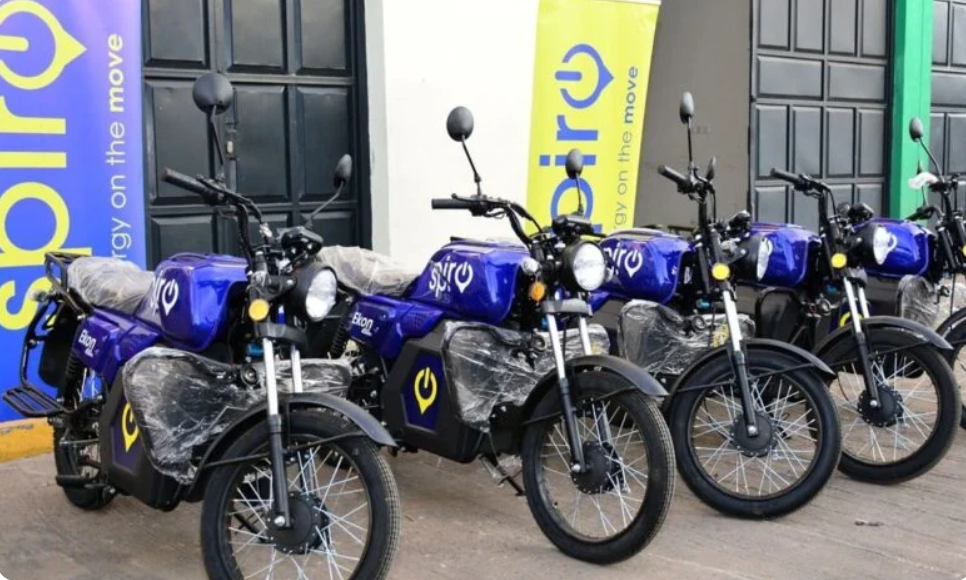
Spiro Kenya motorbikes
  • Riders pay roughly KES 95,000 for a Spiro Kenya motorbike, but without a Spiro battery, non-purchasable, non-chargeable at home, and usable only through Spiro’s swap stations, the bike is effectively a metal shell.
  • Spiro Kenya has since released an official statement attempting to contain the backlash.
  • Spiro Kenya also acknowledged rider frustration, admitting the system may feel “rigid or frustrating” during illness, accidents, or emergencies, and said it is reviewing how exceptions are handled.

When Electric Motorcycle startup Spiro expanded into Kenya, Spiro Kenya’s electric motorbikes were sold as salvation for boda boda riders battered by runaway fuel prices and shrinking profits. Clean energy. Lower costs. A smarter future.

By mid-December 2025, that dream had collapsed into one of Kenya’s fiercest tech-and-labour revolts yet, with riders accusing the company of exploitation, coercive control, and what many now openly call “digital slavery.”

President William Ruto riding a Spiro motorbike when the startup launched in Kenya.

What began as one rider’s complaint exploded into a national reckoning over ownership, power, and who truly benefits from Kenya’s electric mobility push.

The post that lit the match

The firestorm began with viral posts from @IAMRAPCHA (Rapcha The Sayantist), a Spiro rider who shared screenshots, videos, and voice notes alleging that Spiro:

  • Remotely disabled electric bikes
  • Flagged batteries as “stolen” after five days of inactivity
  • Grounded bikes even when inactivity was due to illness, breakdowns, or repairs
Spiro electric motorbikes

In raw, emotional posts that spread rapidly across X, Rapcha warned fellow riders:

“SPIRO ARE CRIMINALS!!! Avoid or lose your money!!! I’m a victim!!!”

Some posts clocked thousands of likes and hundreds of reposts within hours. Soon, other riders began sharing similar experiences or drawing chilling analogies.

One comparison stuck:

“This is like Safaricom disabling your SIM card because you didn’t make calls for five days.”

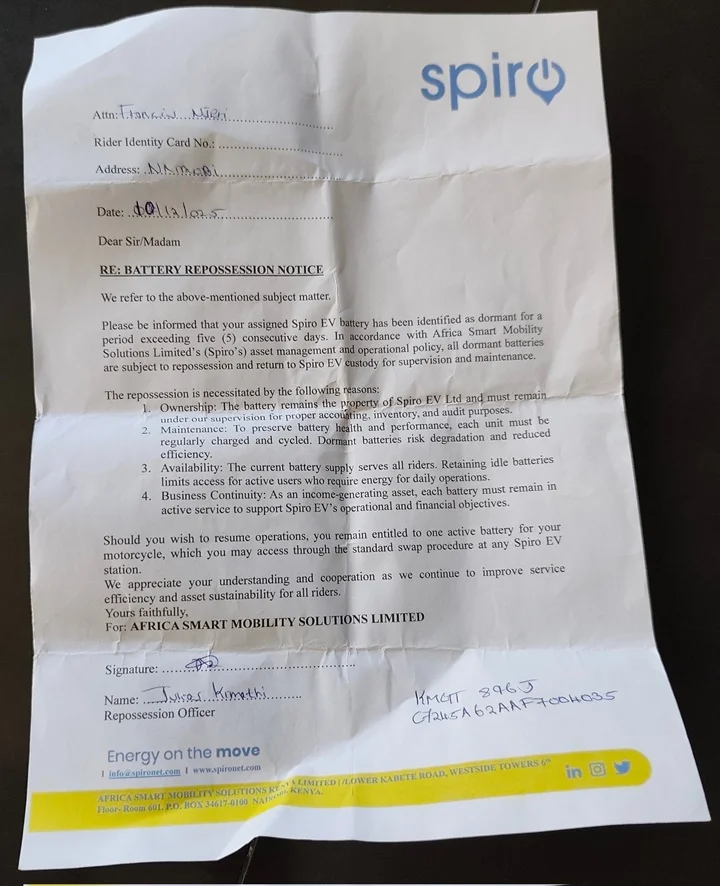
The Spiro repossession letter that changed everything

At the center of the outrage is a battery repossession notice issued by Africa Smart Mobility Solutions Limited, Spiro’s legal entity.
A spiro motorcycle
A spiro motorcycle

The letter states that a rider’s assigned EV battery had been identified as “dormant for a period exceeding five (5) consecutive days.” Under Spiro’s asset management policy, dormant batteries are subject to repossession.

Spiro lists several reasons:

  • Ownership: The battery remains Spiro property
  • Maintenance: Idle batteries risk degradation
  • Availability: Dormant batteries limit access for active riders
  • Business continuity: Batteries are income-generating assets

The notice reassures riders they remain “entitled to one active battery” through the standard swap system—once they resume operations.

To riders, that reassurance rang hollow.

A battery labelled “dormant” during hospitalisation, bereavement, mechanical repairs, or bad weather was treated the same as abandonment. No nuance. No human context.

Spiro responds and misses the moment

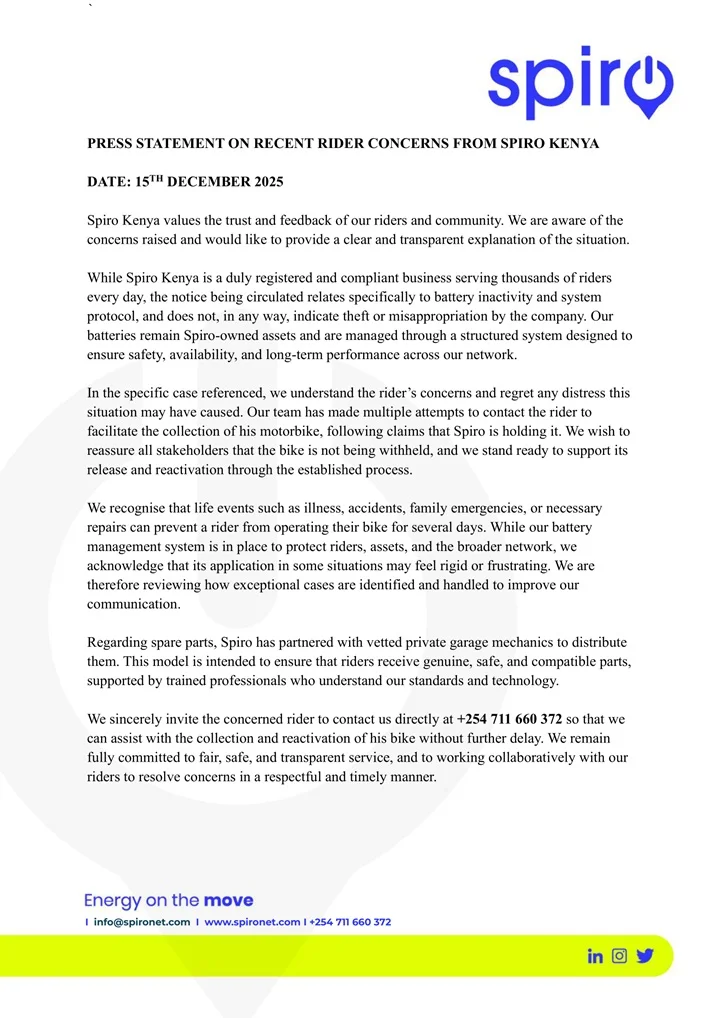
On December 15, Spiro Kenya released an official statement attempting to contain the backlash.

The company said:

  • The notice relates to battery inactivity, not theft
  • Batteries are Spiro-owned by design
  • The model keeps bike prices low—about KES 95,000 compared to higher costs if batteries were included
  • Battery swapping, not home charging, is a safety decision

Spiro also acknowledged rider frustration, admitting the system may feel “rigid or frustrating” during illness, accidents, or emergencies, and said it is reviewing how exceptions are handled.

It denied claims of bike confiscation and urged affected riders to contact the company for reactivation.

The response was widely seen and widely rejected.

Because it didn’t answer the question riders were asking:

If riders own the bike, why does removing a Spiro-owned battery disable the entire machine?

“A car without a fuel tank”

Riders pay roughly KES 95,000 for a Spiro bike. But without a Spiro battery—non-purchasable, non-chargeable at home, and usable only through Spiro’s swap stations—the bike is effectively a metal shell.

One viral post captured the frustration perfectly:

“It’s like buying a car without a fuel tank, then being told you can only refuel at one company’s stations—and they can shut you down remotely.”

In a widely shared thread, @omondike_ described the system as “modern-day bondage,” arguing that riders are trapped in a closed ecosystem where one company controls pricing, movement, repairs, and uptime.

That thread alone has racked up nearly 130,000 views, over 1,500 likes, and 700 reposts, pushing the debate beyond tech circles into mainstream Kenyan discourse.

Monopoly fears and spare-parts pain

Battery control is only part of the anger.

Spiro confirms that spare parts are distributed through vetted garages to ensure safety. Riders, however, describe a de facto monopoly.

Common complaints include:

  • Spare parts priced far above ICE equivalents
  • No freedom to repair bikes independently
  • Disabled bikes requiring towing over long distances
  • Long waits for approvals and replacements

For boda boda riders operating on razor-thin margins, these constraints don’t feel like innovation. They feel like dependency.

A backlash years in the making

This revolt didn’t appear overnight.

In November 2023, riders in Mombasa told Citizen TV that Spiro bikes suffered from slow battery swaps, frequent breakdowns, limited stations, and poor customer support. Some said the bikes struggled on steep terrain and long routes, leaving them parked more than ridden.

Trust further eroded in July 2024, when whistleblower Nelson Amenya alleged Spiro benefited from a controversial tax arrangement involving government officials, claims the company has not publicly addressed in detail. Those allegations resurfaced as the current backlash intensified.

Innovation vs human reality

To be fair, Spiro’s model isn’t unique. Battery-as-a-service is used globally to lower upfront costs and manage degradation. For many riders, it made electric bikes accessible.

But Kenya’s boda boda economy runs on informality, flexibility, and unpredictability—illness, funerals, rain, breakdowns, and bad weeks are part of life.

Systems designed to optimise assets don’t translate cleanly into livelihoods.

When technology starts disciplining people instead of serving them, backlash is inevitable.

What happens next?

As of December 20, public sentiment remains overwhelmingly negative. Despite PR efforts and influencer campaigns defending the model, calls for regulatory scrutiny, lawsuits, and boycotts continue.

Some riders still defend Spiro, arguing that no other electric bike comes close to its price point. But their voices are increasingly drowned out.

Spiro says it is reviewing how exceptional cases are handled. Whether that review produces meaningful policy change—or simply buys time—remains unclear.

One thing is now undeniable:

Kenya’s EV future cannot be built on innovation alone.
Trust, transparency, and dignity for riders are not optional features.

Electric mobility was supposed to offer more freedom than petrol bikes—not less.

Right now, to many riders, Spiro looks less like a green-energy saviour and more like a digitally enforced loan shark.

0 comment
0 FacebookTwitterPinterestLinkedinTumblrWhatsappTelegramEmail

The festive season is here! Streets sparkle with twinkling lights, the sweet sound of carols fills the air, and shopping malls hum with the excitement of families preparing for Christmas magic. Like everyone else, you’re thrilled to find the perfect gifts, plan the family feast, and maybe even take a well-deserved holiday.

But let’s be honest, Christmas season can weigh you down. Picture this: You’re at the supermarket, your trolley overflowing with Christmas goodies. As you reach the checkout, you realize you forgot to withdraw cash or left your debit card at home, or your phone is out of charge! The guys at the queue are getting impatient, and panic sets in.

At the family dinner, your cousin reminds you that you still owe them a Santa gift. A few minutes later, your aunt in the UK wants to send money home to buy a goat for Krisi (Christmas)-how do they ensure it gets to you quickly and safely?

The festive season is like a Christmas tree-bright and magical, but amid the joy and celebrations, the tinsel of financial chaos can tangle you up! But don’t worry, you can Lipa Bila Presha this Christmas with Equity Bank. Whether you’re shopping, sending money, or settling bills, Equity has a wide range of solutions tailored just for you.

Pay Stress-Free

Forget the hassle of cash while shopping at your favourite mall or buying Christmas goodies at City Market. Simply ask for the Equity Till Number at checkout, key it on your mobile phone, confirm the amount, and voila payment done! You can access the Till via mobile money wallets like MPESA, Airtel, and Equitel, or Equity platforms like the Mobile App, *247#, or Equity Online. It’s fast, convenient, secure, and keeps you moving during the holiday rush.

Scan, Pay, Done!

Out for dinner at a city restaurant or grabbing last-minute Christmas decorations at Eastleigh? Equity’s QR Code payments make it even easier. Just scan the QR code displayed at the counter using the Equity Mobile App, and your payment is processed instantly. It’s fast, secure, and perfect for those on the go. Customers with Visa, Mastercard, and UnionPay Apps can also scan the Till’s QR code to make payments. Lipa Bila Presha na Equitel

Equitel is your ultimate companion for convenience and affordability this festive season. Whether you’re buying lunch, shopping for gifts, or sending money to loved ones, Equitel ensures you can handle it all stress-free.

  • Free Equitel-to-Equitel Transactions: Send money to family and friends without worrying about transaction fees.
  • Zero Charges on Equity Till Payments: Pay at any merchant using the Equity Till Number without incurring additional charges.
  • Wide Accessibility: Access Equity’s services from anywhere, whether you’re in the city or upcountry.

Sending Money from Abroad? No Problem!

For your aunt in the UK, Equity’s international money transfer services make it easy to send funds directly to an account or an Equity agent near you. With options like MoneyGram, Western Union, and Swift Transfer, you can count on quick, reliable transactions with reduced fees. Whether it’s for gifts, school fees, or holiday shopping, Equity ensures your loved ones are sorted.

Swipe, Tap, Go

Whether you’re shopping locally or jetting off internationally, your Equity debit or credit card is like Santa’s little helper this season—always ready to swipe, tap, or insert! From booking those dream holiday flights to purchasing the perfect gifts online, your card makes payments so effortless and secure, it feels like Christmas magic.

Convenience, Security, Flexibility

Equity is not just about making payments—it’s about making your life easier:

  • Convenience: Multiple payment options, whether you’re shopping in-store, online, or at an agent.
  • Security: Safe and reliable transactions, allowing you to focus on the festivities.
  • Flexibility: Choose from tills, QR codes, cards, or Equitel for seamless payments.

This Christmas, let Equity take the pressure off your payments so you can focus on what truly matters—family, friends, and festive joy. Whether you’re shopping for gifts, sending money to family, or treating yourself to something special, you can do it all without worrying about cash or long queues.

So go ahead—fill that trolley, book that holiday, and enjoy the magic of the season. With Equity, you can truly Lipa Bila Presha. Call 0763 000 000 for help or inquiries. 

0 comment
0 FacebookTwitterPinterestLinkedinTumblrWhatsappTelegramEmail

Kenya’s travel industry is experiencing a new wave of regional movement, driven by increased tourism flows, conference travel, and stronger air connectivity across East Africa.

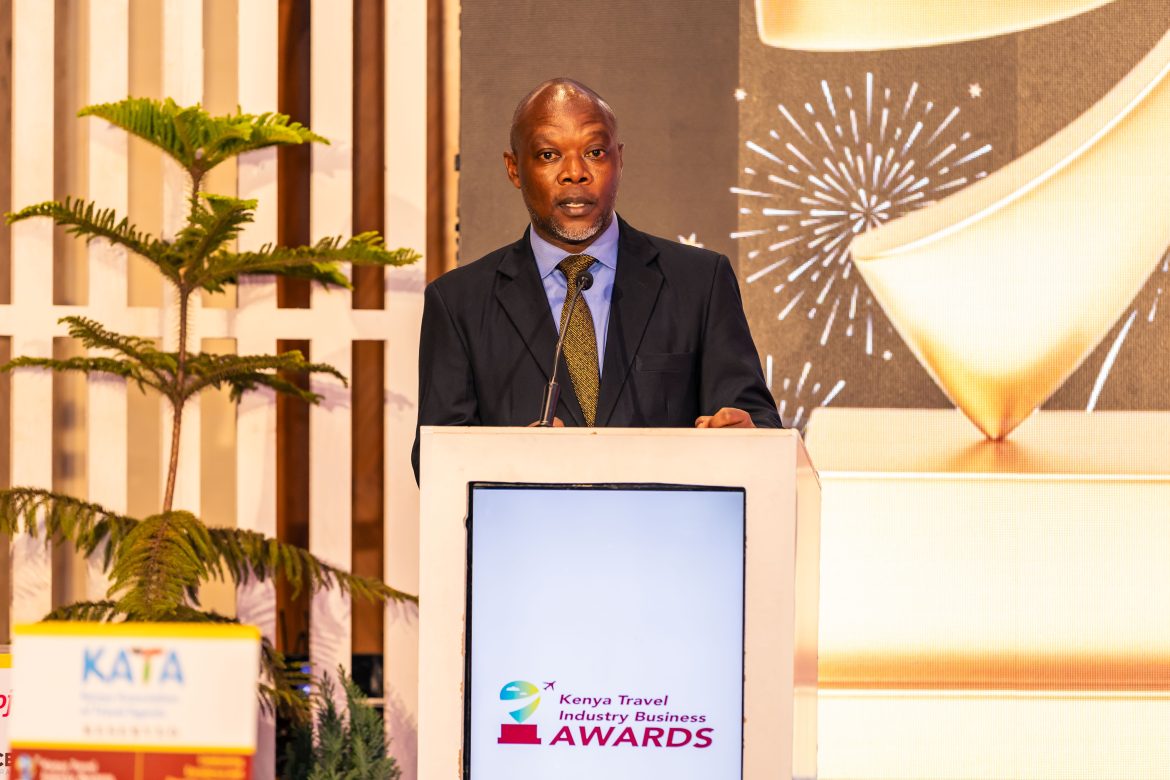
This momentum shaped discussions at the 2025 Kenya Travel Industry Business Awards (KeTIBA), where industry leaders examined how digital systems and financial tools can support the rising traffic.

Daily flights between Nairobi, Entebbe, Kigali, Arusha, Mombasa, and Zanzibar continue to grow, strengthening East Africa’s tourism corridor.

Travel agents say this mobility is creating more bookings, faster turnaround times, and higher expectations from travellers seeking quick and seamless transactions.

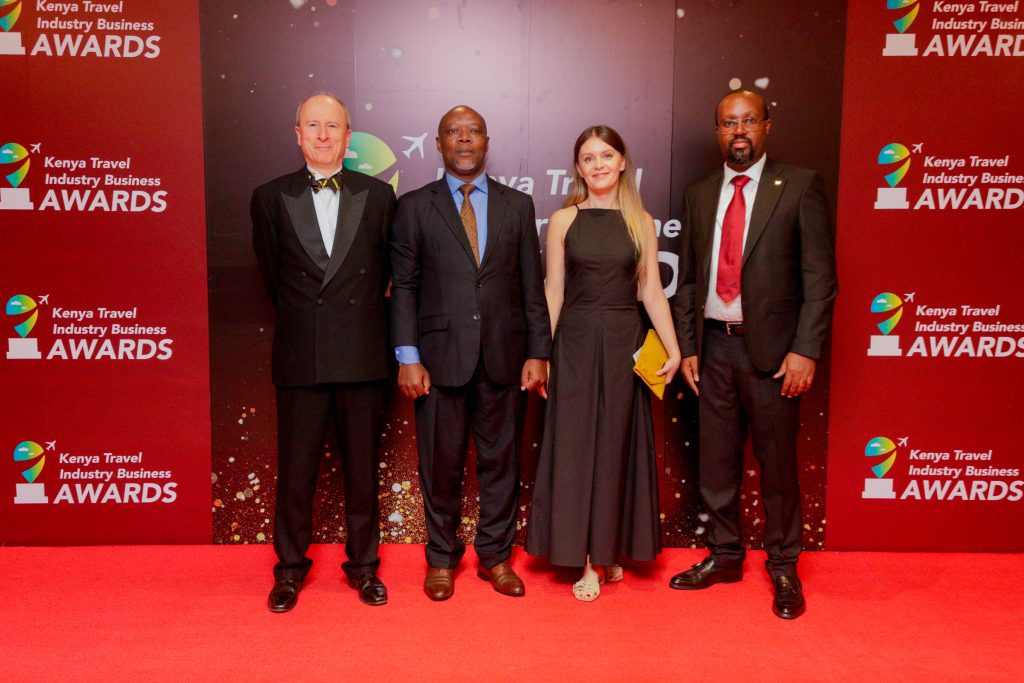
From (left to right): Jonathan Curtis – Vice president, American Express,  Collins Wanyonyi – Director SME Banking, Equity Bank,  Barbara Macejovska – Marketing, American Express, and Misheck Gathiti, Head of Merchant Acquiring, Equity Bank, during the KeTIBA Gala Dinner.

Behind this growth is the pressure on agencies to process bookings and settle payments with airlines within tight windows.

Most agencies operate in a credit-based environment, clients book first, pay later, while airlines require settlement within days.

This mismatch has made payment reliability a central industry concern.

Equity Bank’s Director of SME Banking, Collins Wanyonyi, observed that the sector has reached a critical point where digital efficiency is no longer optional.

“Travel agencies work under strict timelines where delays can mean lost seats or penalties,” he said.

“The entire ecosystem depends on payment systems that can move money instantly and accurately. Our work is to ensure the systems behind those transactions are reliable so businesses can serve travellers without delays.”

American Express Vice President Jonathan Curtis noted that high-value travellers, both local and international, continue to contribute significantly to tourism revenue.

“Premium travellers spend more and expect frictionless transactions,” he said.

“When payments move smoothly, it strengthens confidence in East Africa as a competitive travel destination.”

Kenya Association of Travel Agents (KATA) CEO Nicanor Sabula said the sector is still heavily credit dependent.

“Agencies must often fund airline payments before receiving money from customers, a challenge that intensifies during holidays and school break,” he said.

He added that traditional credit limits have constrained agencies during peak periods, forcing many to pause bookings or negotiate for alternative arrangements.

Beyond celebrating excellence, KeTIBA awards help push the industry toward better service, digital transformation, and stronger compliance.

Stakeholders noted that a more technologically equipped travel sector is essential for Kenya to remain competitive amid rising regional tourism.

0 comment
0 FacebookTwitterPinterestLinkedinTumblrWhatsappTelegramEmail

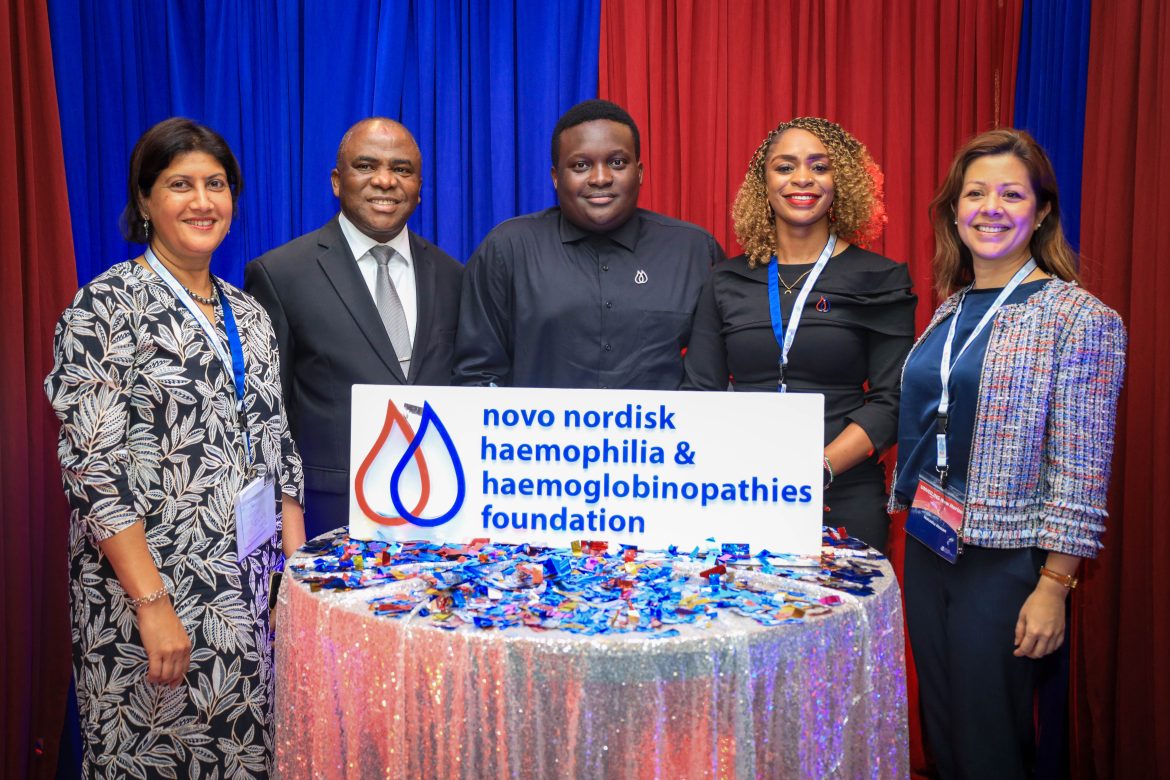
Novo Nordisk Haemophilia Foundation (NNHF) has
expanded its focus from haemophilia to formally include haemoglobinopathies, specifically sickle cell
disease and thalassemia, prompting a name change to the Novo Nordisk Haemophilia and Hemoglobinopathies Foundation (NNHF) to recognise clinical synergies and shared systemic barriers.

This evolution marks an enhanced commitment in Africa, which is the leading beneficiary of the
Foundation with programmes in at least 28 countries. The continent remains a hub for collaboration,
empowering African countries to achieve self-sufficiency by building resilient, locally anchored
systems that lead their own progress. Over the last 20 years, NHHF has supported programmes on
haemophilia in low and middle-income countries worldwide.

The World Health Organisation estimates that each year, between 300,000 and 400,000 children are
born with sickle cell disease in Africa, representing approximately two-thirds of the global burden. In
recent years, there has been growing momentum and focused action to combat sickle cell disease
globally, with Africa at the forefront of many new initiatives.

In her opening remarks, Natasha Honan, Senior Advocacy & Communications Manager, NNHF, noted
that the organisation is aiming to improve care for over 10 million affected individuals, primarily in
low- and middle-income countries.

She also said that NNHF will focus on Africa, promoting self-sufficiency and integrated care. With a new funding partnership from the Novo Nordisk Foundation, and continued funding from Novo Nordisk, she announced plans to scale up their reach, aiming to reach 100,000 beneficiaries by 2030. She went on to outline that the strategy includes data-driven advocacy, strengthening diagnostics, training healthcare workers, and aligning policies, with the goal
of ensuring sustainable, locally led care.

Emma Muraguri from the Novo Nordisk Foundation (NNF), highlighted that NNF supports medical
research, hospital activities, and international initiatives in diabetes and other health areas. With a
history dating back to insulin production, NNF has expanded to encompass cardiometabolic
diseases, food and agricultural systems, and antimicrobial resistance technology.

She highlighted recent achievements, including high-impact projects in East Africa and India, the establishment of centres of excellence, and new diagnoses. She said that NNF emphasises scalability, partner codification, and data-driven advocacy for systemic change.

Dr Yvette Kisaka, Representative, Ministry of Health, Kenya, emphasised the Ministry of Health’s
commitment to providing high-quality care, developing updated guidelines for sickle cell and
haemophilia, and piloting an infant screening program in five counties.

She emphasised the importance of aligning interventions with their vision and highlighted ongoing efforts to increase access to essential medications, such as hydroxyurea, and to improve health workforce training. She also emphasised the importance of collaboration and sustainability in healthcare programs.

Dr Adelard Kakunze, Technical Officer, CDC, noted that Africa CDC’s continental plan aims to provide
early diagnosis, quality care, and equitable access through eight strategic pillars: governance,
prevention, integrated health systems, equitable access, human resource capacity, psychosocial
support, health financial systems, and data surveillance. He stated that the plan aims to achieve 70% newborn screening by 2035, train a skilled workforce, and enhance data systems.

Dr Adiele Oyenze, Officer-In-Charge, World Health Organisation (WHO) – Kenya, highlighted the shift
in focus towards hemoglobinopathies, particularly sickle cell disease and haemophilia, in Africa,
referring to the WHO data, which estimates that 300,000 to 400,000 children are born with sickle cell
disease annually in Africa, with many dying before age five despite effective, low-cost interventions.
He also said that haemophilia is underdiagnosed, with only 9% of cases identified.

He insisted that collaboration among countries, improved diagnostic capacity, and access to essential medicines are crucial for sustainable progress.

Also present in the event were key stakeholders from English- Portuguese- and French-speaking
Africa, including government officials, healthcare professionals, representatives from relevant patient
organisations, and caregivers, to initiate the collaborative journey towards improved care and
outcomes for people living with haemophilia and sickle cell disease across Africa As the NNHF expands its vision to include haemoglobinopathies, specifically sickle cell disease (SCD) and thalassaemia, the continent’s pivotal role in addressing these conditions cannot be overstated.

Despite Africa’s significant burden of disease, diagnosis rates for haemophilia remain low, leaving
many without access to essential care.

This expanded vision perfectly aligns with NNHF’s strategy, which aims to achieve self-sufficiency for
haemophilia care in at least fifteen countries (the majority of which are from the African continent)
and to explore an integrated approach to managing haemophilia and sickle cell disease in most, if
not all, of the countries most highly burdened by SCD.

0 comment
0 FacebookTwitterPinterestLinkedinTumblrWhatsappTelegramEmail
  • Smart tourism advancement ensures a seamless, convenient experience by allowing hotel guests to bypass front desk check-in after a one-time ID and biometric upload
  • Securely held data will remain valid until expiration of ID, meaning faster check-in on subsequent visits, further enhancing the visitor experience for repeat guests

Dubai has announced the citywide introduction of a one-time contactless hotel guest check-in solution, setting a new global benchmark for guest convenience, safety, and innovation in the hospitality sector, and giving guests the option of bypassing in-person check-in procedures once implemented at the city’s hotels and holiday homes.

The pioneering biometric and digital technology capability, developed by Visit Dubai and available through several independent providers, is now available for immediate integration at hotels and holiday homes across Dubai, empowering guests to enjoy a seamless and expedited arrival experience.

Its introduction underscores Dubai’s commitment to leveraging advanced technology to further enhance its position as a future-forward global tourism destination, prioritising both guest satisfaction and operational excellence.

The innovative system allows guests to complete all check-in formalities prior to their arrival, directly from their mobile phones. By uploading essential identification documentation and biometric data once, the entire process is streamlined, significantly reducing or eliminating traditional check-in times.

Upon arrival, guests can bypass the usual check-in desk formalities at the start of every stay at participating hotels. The securely held data then remains valid until the identification document expires, meaning only a quick authentication, such as through facial recognition, would be required on subsequent visits.

Repeat visitors make up almost a quarter of total annual visitation to Dubai, and this new service welcomes them to the city with added convenience, consolidating their affinity for the destination.

Issam Kazim, CEO of the Dubai Corporation for Tourism and Commerce Marketing (Visit Dubai), part of the Dubai Department of Economy and Tourism, said: “The rollout of this guest-centric innovation will minimise friction from the moment travellers land, providing them a seamless, efficient start to their stay and maximising their time to enjoy our destination. It further enables efficient return visits for our loyal repeat guests, and allows Dubai’s hotels and holiday homes to focus on delivering more meaningful, high value guest interactions. This technology offers immense potential for hotels to further elevate their services, and we invite more owners and operators to integrate the capability into their systems, to optimise the guest experience.”

The solution is designed for easy integration into existing hotel apps or web platforms, ensuring a smooth transition for participating establishments. Beyond its immediate benefits, the technology holds significant potential to be leveraged across other tourism touchpoints, such as car rentals, paving the way for a more integrated and customised visitor experience throughout the city. It also builds on the incorporation of smart technology across the destination, including the introduction of smart tunnels at Dubai International Airport, which have reduced processing times at passport control to just seconds.

Dubai’s hospitality sector has been one of the cornerstones of its growth as a global destination, with world-class facilities and service available at 820 hotels and hotel apartments across the city. Complementing Dubai’s wider offerings, it has helped the city reach new heights, welcoming 15.70 million international overnight visitors in the first ten months of 2025, up 5% year-on-year, with guests spending a total of 36.71 million room nights at hotels across the emirate.

0 comment
0 FacebookTwitterPinterestLinkedinTumblrWhatsappTelegramEmail

The excitement around the ‘Choromoka’consumer promotion continued to rise this past weekend as Chrome celebrated its fifth millionaire, this time from the Eastern region. A lively winner’s party was held in Embu in honour of Morris Kimathi, who became Chrome’s newest millionaire after winning KES 1 million in the ongoing national campaign.

Morris wasn’t the only one celebrating. The event also recognized two additional regional prize winners: Gilbert Mbogo, who proudly walked away with a brand-new laptop, and Kevin Ngige, who secured a Bluetooth speaker, just a taste of the many rewards up for grabs in the campaign.

The event drew in friends, family, community members, and loyal Chrome consumers who came together to celebrate, dance, and witness life-changing moments firsthand. This third winners’ celebration further cements the campaign’s growing momentum across the country.

Speaking on the success of the ongoing promotion, Zipporah Ndung’u, Senior BrandManager – Chrome, shared: “This campaign has been incredibly energizing to witness, especially as we mark 10 years of Chrome a decade of being part of our consumers’ everyday moments. Seeing Morris, Gilbert, and Kevin celebrated by their community reminds us why we launched the ‘Choromoka’ promotion in the first place: to give back, celebrate, and create unforgettable experiences. The thousands of entries we continue to receive show just how excited consumers are. We encourage everyone to keep participating because there are still many more prizes to be won.”

The ‘Choromoka’ campaign has already delivered multiple millionaires and rewarded countless Kenyans with instant prizes, solidifying its position as one of the most impactful consumer promotions this year. With the nationwide tour continuing, the next big celebration will be heading to the Coast region, where more winners will be unveiled.

We encourage Chrome consumers to keep buying Chrome, scratch the label, and send the alphanumeric code to 22110 to enter the draw for their chance to ‘Choromoka’ with exciting prizes. Our next draw winner is slated to come from the Coast region; will you be the next millionaire or walk away with amazing rewards!

0 comment
0 FacebookTwitterPinterestLinkedinTumblrWhatsappTelegramEmail

Over 350 investors from Africa and beyond participated in the 2025 Kenya Trade & Investment Roadshow, a week-long mission designed to provide first-hand exposure to the country’s investment landscape across multiple sectors.

Participants toured priority economic sectors, including Special Economic Zones (SEZs), industrial parks, manufacturing hubs, logistics corridors, agribusiness projects, and ICT and innovation ecosystems.

The site visits were complemented by structured networking sessions, enabling investors to engage directly with sector leaders, policymakers, and potential partners.

Real estate emerged as a key focus for many participants, with a site visit to Tatu City in Kiambu County drawing particular attention.

The 5,000-acre mixed-use SEZ, part of Kenya’s Vision 2030 blueprint, combines residential, commercial, educational, medical, and industrial facilities.

Investors were briefed on planned infrastructure, including schools, offices, shopping districts, medical clinics, recreation areas, and a manufacturing zone expected to support over 250,000 residents.

Jeannette Amom, a Cameroonian investor, noted that the mission provided critical sector-specific insights and networking opportunities.

“The site visit at Tatu City allowed us to assess investment potential across multiple segments of a modern urban development,” she said.

Amom highlighted the SEZ incentives, including reduced corporate taxes, zero-rated VAT, import duty exemptions, and stamp duty waivers, as significant factors in evaluating investment viability.

Other participants indicated plans to conduct more detailed due diligence, focusing on market potential, projected returns, competitive positioning, and regulatory conditions. The availability of credible local partners, institutional support, and government policy clarity were cited as important considerations for investment decisions.

AQ Hamza, Director for International Trade Relations at Equity Group, said the sector-focused tours were designed to present investors with tangible opportunities underpinned by a stable business environment.

“By highlighting Kenya’s regulatory framework, infrastructure, talent pool, and sector-specific advantages, the mission aimed to demonstrate the country’s potential as a gateway for scalable, high-growth investments in the region,” Hamza explained.

Investors also emphasized Kenya’s skilled workforce, cost-efficient operating environment, and access to regional supply chains as competitive advantages.

Long-term assurances regarding investment protection and scalability were highlighted as critical factors for committing capital.

The 2025 Kenya Trade & Investment Roadshow reinforced investor interest in Kenya’s economic sectors, particularly real estate, and provided a platform for assessing opportunities in a structured, data-driven context.

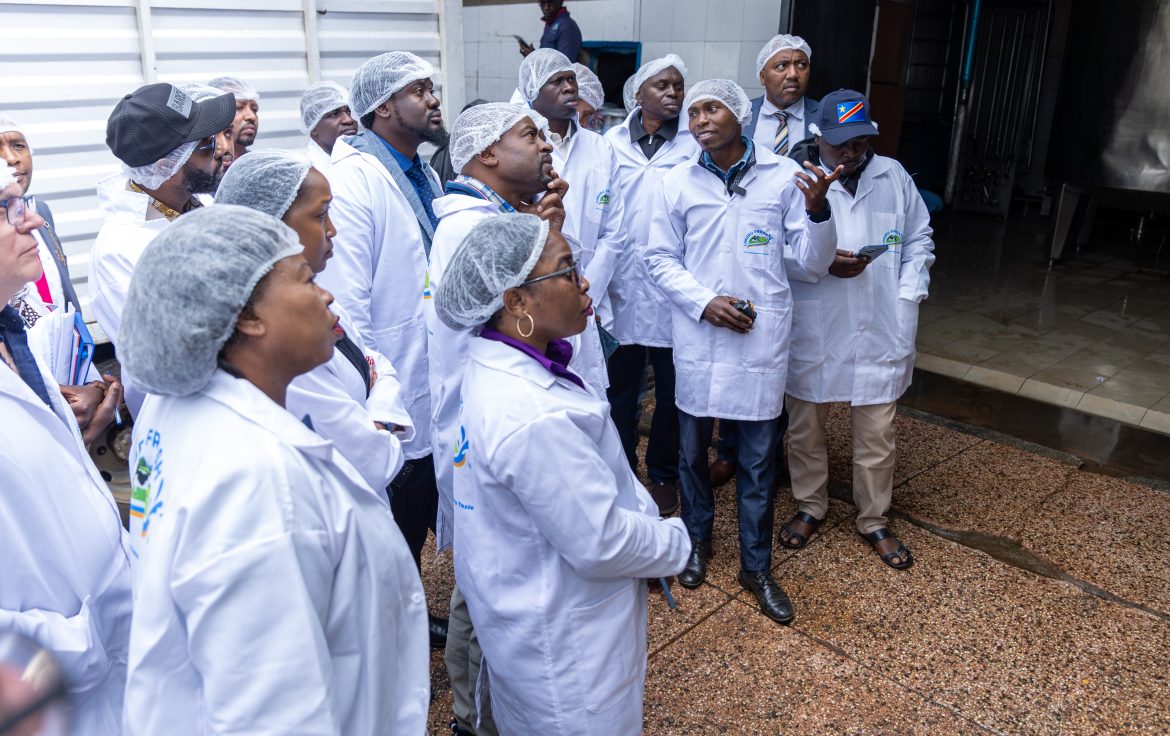
Another stop investors made was in Limuru Dairy.

Delegates watched from viewing corridors as fresh milk flowed through pipes into processing units for yoghurt and other dairy products, while on the factory floor rows of packaged yoghurt cups moved toward distribution.

But beyond the modern equipment and neat operations, the real story was the network of farmers behind it.

Hundreds of small-scale farmers, many organized in cooperatives, supply milk to the dairy every day.

Investors saw farmers at a milk collection point, arriving with chilled milk cans, receiving instant payment confirmations on mobile phones, and getting advice from extension officers on feed, animal health, and hygiene.

During a plant briefing, managers walked delegates through the entire chain: cooling systems, antibiotic checks, quality standards, and efforts to cut losses using solar-powered chillers.

If Limuru Dairy demonstrated coordination and processing efficiency, ForestFoods illustrated how working with nature can be a competitive advantage.

On the farm, kale, herbs, and legumes grew side by side; windbreaks reduced wind damage; helpful insects hovered over flowering strips; and compost piles steamed quietly as they matured.

The farm team spoke honestly about challenges, pests, labor needs, and learning as they go, but they also shared how this approach builds resilience: better yields over time, healthier soils, and lower reliance on expensive farm inputs.

0 comment
0 FacebookTwitterPinterestLinkedinTumblrWhatsappTelegramEmail

The government has announced plans to refurbish the iconic Utalii Hotel, signaling a long-awaited comeback for the prestigious facility.

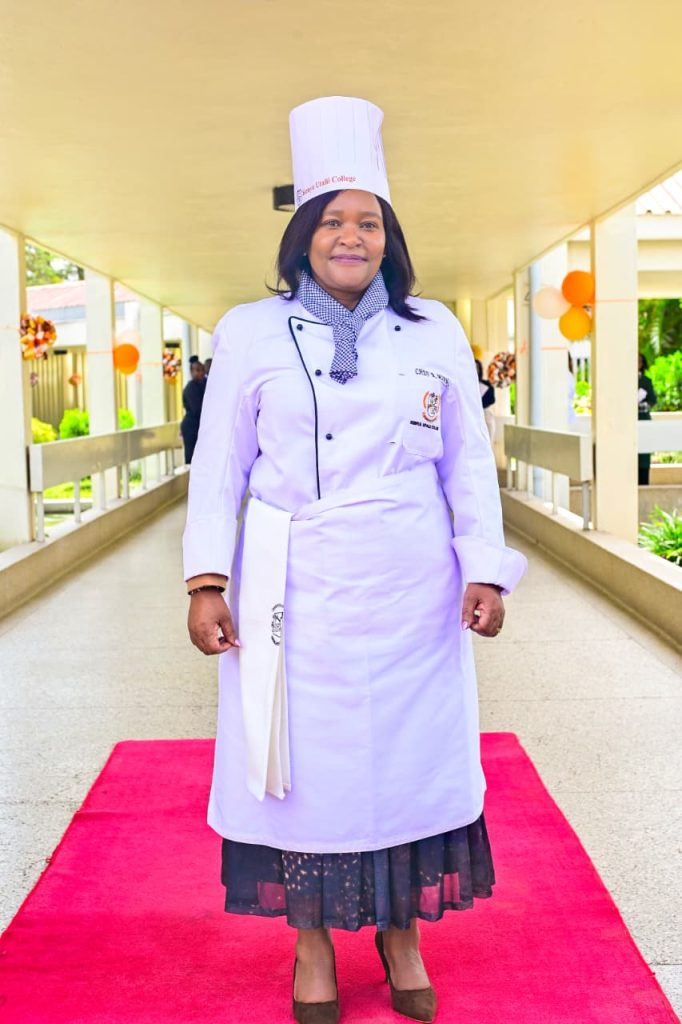
Speaking during the 49th graduation ceremony at the Kenya Utalii College, Tourism and Wildlife Cabinet Secretary Rebecca Miano revealed that funds have already been set aside to uplift the hotel, which has suffered years of neglect.

“The government has reflected on this matter over time, and I am here today to announce that we have set aside funds to refurbish the Utalii Hotel. The work will commence immediately,” said Miano.

She further noted that the refurbishment plan will include the construction of a new hostel under the government’s housing initiative.

“Utalii will be upgraded to meet globally accepted standards. We will transform this institution into what it is meant to be. I am convinced that nothing should stop Utalii from becoming Africa’s undisputed Centre of Excellence in hospitality training,” she added.

As part of ongoing reforms, the college also commissioned its new ultra-modern, state-of-the-art Individual Training Kitchen.

The Utalii Hotel was closed indefinitely in 2020 due to economic non-viability. A letter dated April 20 from the then Tourism Principal Secretary Safina Kwekwe Tsungu stated that the hotel had become a liability, failing to generate revenue while depleting the institution’s resources through overhead costs.

“Following submissions made by your office, it was noted that it is not viable for the institution to operate the Kenya Utalii Hotel as it does not generate revenue and yet depletes the institution’s resources in covering overhead costs,” Kwekwe wrote to the principal at the time.

The closure of the hotel and its two satellite campuses followed years of recommendations by the Auditor General, who had repeatedly flagged their economic unsustainability.

In 2017, then Auditor General Edward Ouko raised concern after the college posted a Sh410.5 million loss.

“The college is technically insolvent, and its continued existence as a going concern is dependent on financial support from the government and its creditors,” Ouko said in a report tabled in Parliament.

At the time, the college reported a deficit of Sh410.6 million, down from Sh452.6 million in 2016. Current liabilities stood at Sh3.4 billion, far exceeding current assets of Sh537.1 million, resulting in a negative working capital of Sh2.8 billion as of June 30, 2017.

Ouko further cited non-compliance with a loan agreement between the college and the government for a Sh140 million loan advanced in February 1996 to refurbish the hotel. By June 30, 2017, only Sh13 million had been repaid, while accumulated interest had ballooned to Sh2.9 billion.

“Although the previous year’s financial statements indicated that the college had entered negotiations with the government to have the loan and accumulated interest written off, no meaningful progress had been recorded,” he stated in a qualified audit opinion dated August 17, 2018.

Ouko warned that the college’s operations could grind to a halt unless the government intervened with financial support.

0 comment
0 FacebookTwitterPinterestLinkedinTumblrWhatsappTelegramEmail
Safaricom

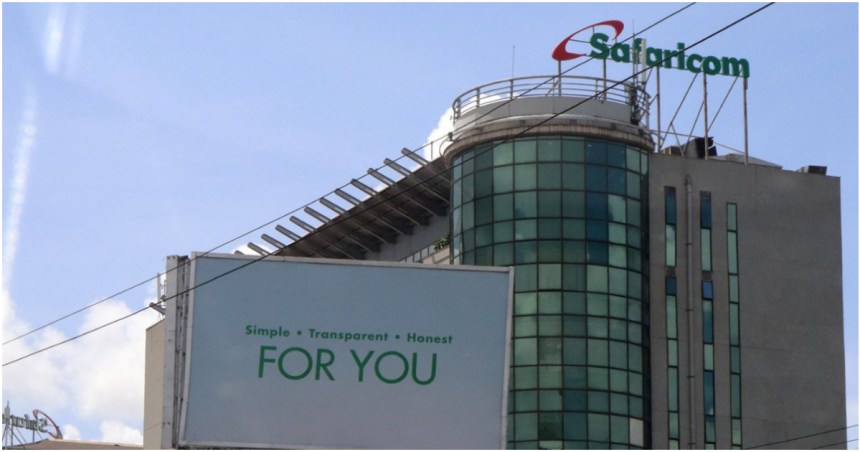
A silent but extremely significant power shift is unfolding inside Safaricom, and most Kenyans have not yet understood its full impact.

The public announcement issued on December 3 appears technical and routine, but buried in the text is a restructuring that could permanently alter who controls Sub Saharan Africa’s most profitable company. If Parliament, the courts and the public do not intervene, another major legal battle is almost guaranteed.

Vodafone Kenya Limited is buying 15 percent of Safaricom from the Government of Kenya at KSh 34 per share, a massive KSh 204.3 billion transaction. At the same time, Vodacom Group will increase its ownership of Vodafone Kenya to 100 percent, gaining an additional 4.99 percent indirect stake in Safaricom. When the dust settles, Vodafone Kenya which is fully owned by Vodacom Group will control 55 percent of Safaricom. That is a controlling majority. That is veto power. That is strategic dominance over Kenya’s largest taxpayer and the backbone of the financial technology ecosystem. Once that level of control is established, reversing it becomes almost impossible.

Meanwhile, the Government of Kenya drops from 35 percent to 20 percent. This means the State is no longer the strongest counterweight to foreign interests within the company. Public institutions such as NSSF also lose strategic leverage. The new reality is that a foreign entity will hold more voting power, more influence over the board and more authority over long term strategic decisions. Whether intended or not Kenya has effectively given up real control of its most important digital infrastructure company.

Even more concerning is the dividend buyout clause. Vodafone will pay KSh 40.2 billion upfront to acquire the rights to future Safaricom dividends that would have been paid to the Government. The Treasury gets quick cash today but loses steady long term revenue for years ahead. It is the kind of short term relief that appeals to a cash stressed government but it weakens the country’s fiscal position in the future. This is how countries slowly lose economic sovereignty. Not at once, but one desperate financial year at a time.

This raises a political question that cannot be ignored. Why sell such a large stake now Why at a premium Who gains the most from this timing The offer price of KSh 34 which is 21 percent above the market price proves that Vodafone is acquiring control not merely increasing an investment. No rational investor pays that kind of premium unless strategic dominance is the target. At a time when Safaricom shares have surged 96 percent this year why is the Government giving away long term revenue for one off payments Why is a national digital backbone being treated as an ordinary commercial asset These are questions that will not only stir public outrage but also fuel litigation and heavy debate in Parliament.

Vodafone Kenya claims it does not intend to take over Safaricom. However once a shareholder crosses 35 percent the transaction falls under takeover considerations in Kenyan law. At 55 percent Vodafone is far above that line. The company has already included a request for exemption from takeover rules which shows they know the legal implications. Activists will challenge this. Minority shareholders may challenge valuation. Parliament will question disposal of a strategic asset. Courts will be forced to determine whether national security or data sovereignty is threatened. The stage is set for another long and bitter Safaricom court fight.

Safaricom is not just a telecom operator. It is Kenya’s biggest taxpayer the foundation upon which M Pesa operates a national security asset the digital backbone of the economy and the most profitable company in Eastern and Central Africa. Allowing control of such an institution to shift quietly to a foreign group without national consultation is extremely risky. Safaricom must remain structurally Kenyan. This is not an anti investment stance. It is a call to preserve sovereignty over the infrastructure that keeps the country functioning. Once Vodacom crosses 55 percent Kenya loses its only effective veto power. And once that power is gone it will not return.

This transaction checks every trigger point for legal action. It involves a strategic national asset foreign majority control premium valuation that implies a takeover probable breaches of competition and public finance laws and a surrender of long term dividends. Kenya has fought over Safaricom before but this time the stakes are far higher.

The public announcement looks routine but the implications are enormous. A foreign shareholder will soon control Safaricom the Government becomes a junior player future revenue is traded for instant cash and national sovereignty over digital infrastructure is weakened. This is the largest ownership restructuring in Safaricom’s history executed quietly during a moment of fiscal desperation and minimal scrutiny.

If Kenyans do not step in now the story of how the country lost Safaricom will be written long after the ink on this deal has dried.

0 comment
0 FacebookTwitterPinterestLinkedinTumblrWhatsappTelegramEmail

This Christmas, Xiaomi Kenya is redefining celebration with its biggest festive campaign yet—giving customers the chance to drive home a FREE brand-new car, alongside exciting weekly prizes and exclusive device discounts throughout December.

Running from 1st to 31st December, the campaign invites customers across the country to take part in a month-long celebration of technology, rewards, and unforgettable festive cheer.

Win Big This Christmas

Customers who purchase any Xiaomi device during the campaign period automatically stand a chance to win incredible prizes, including:

  • 1 Brand-New Car
  • 70 Powerbanks – Weekly
  • 10 Smartwatches – Weekly
  • 4 Xiaomi 43-inch TVs – Weekly

Weekly winners will be announced during Xiaomi Kenya’s live lucky draws held every Friday at 12PM on Facebook and TikTok.

How to Participate

Joining the campaign is simple:

  1. Buy any Xiaomi device at participating stores.
  2. Scan the QR code provided at checkout.
  3. Fill in your details to complete your entry.
  4. Tune in every Friday to see if you’ve won.

Exclusive Festive Discounts

In addition to exciting prizes, customers can unlock special Christmas offers, including KES 2,500 off the popular Redmi Note 14. More savings and bundle deals will be available across Xiaomi Partner Stores.

Offer Available Nationwide

The Xiaomi Christmas campaign is exclusive to all Xiaomi Partner Stores countrywide, ensuring customers across Kenya can participate and enjoy the festive rewards.

0 comment
0 FacebookTwitterPinterestLinkedinTumblrWhatsappTelegramEmail

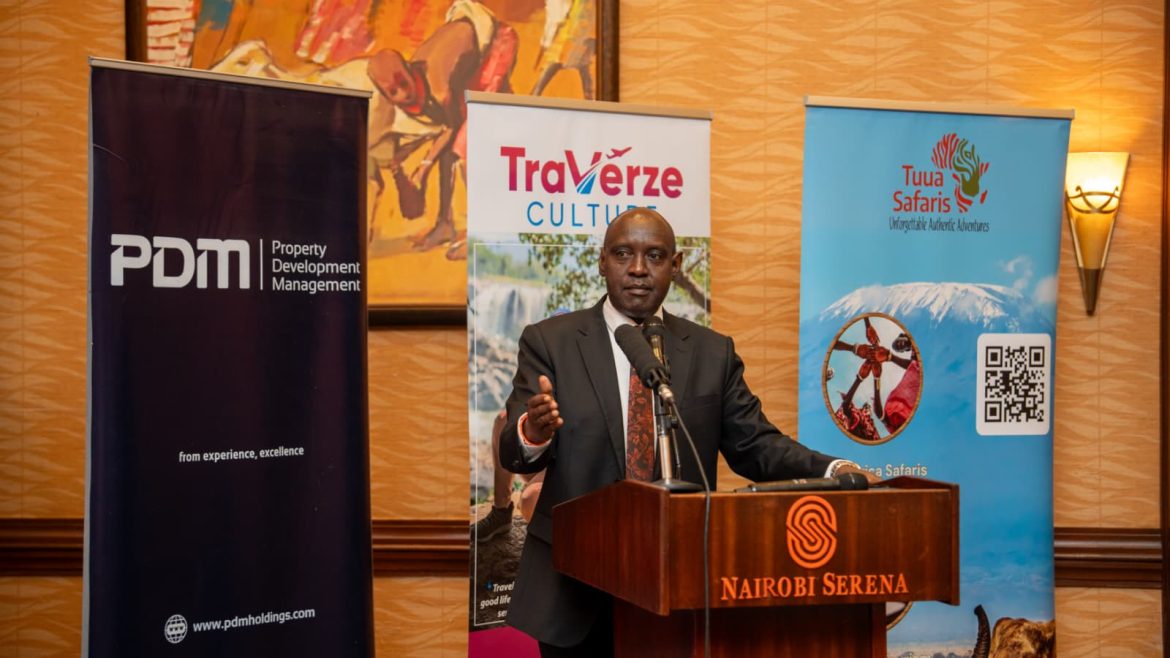
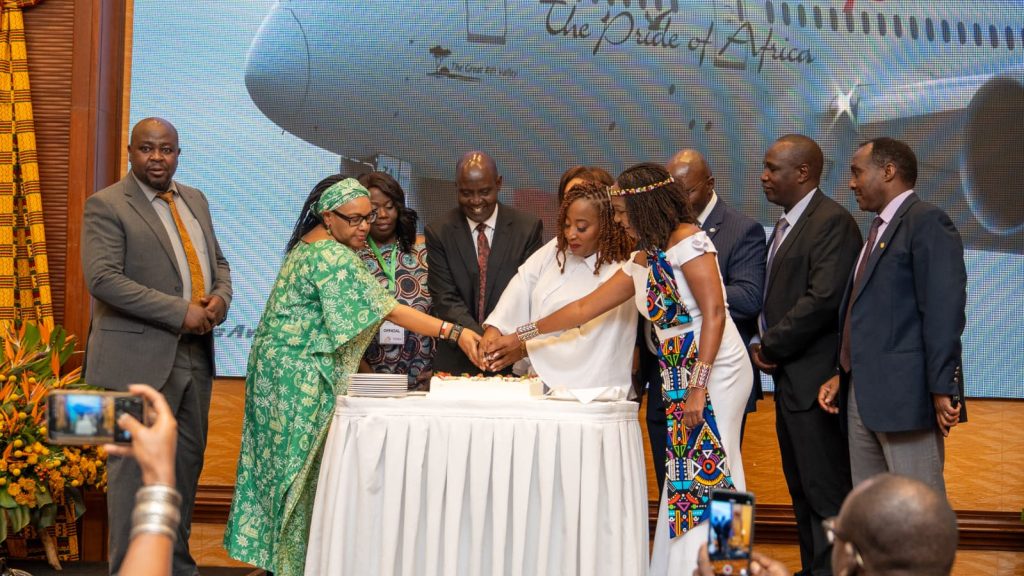
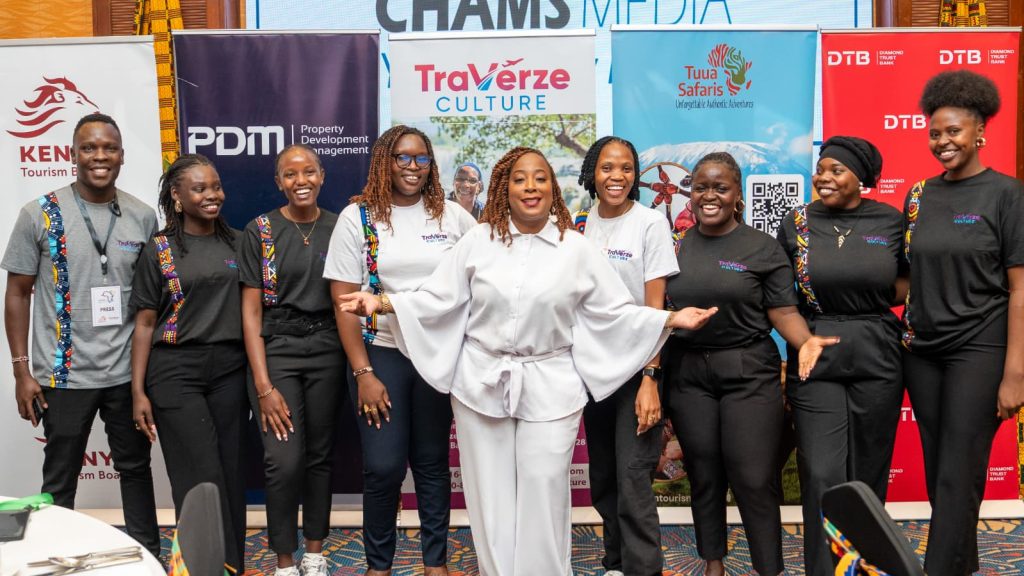
The Government of Kenya, in partnership with Traverze Culture, an African American–owned relocation and regenerative company, officially launched the Journey Back to Eden (JBE) Initiative.

The JBE Initiative is a private-sector-led program, in collaboration with the Ministry of Tourism & Wildlife, the Kenya tourism Board, and the Ministry of Foreign Affairs, in a partnership that ensures the initiative strengthens Kenya’s tourism sector while creating long-term economic, cultural, and social bridges between Kenya and its Diaspora communities.

While making the announcement at the official JBE launch hosted at the Nairobi Serena Hotel, Principal Secretary (PS) for the State Department of Tourism in Kenya is John Lekakeny Ololtuaa who was representing the Cabinet Secretary (CS.), for Tourism & Wildlife, Hon. Rebecca Miano, EGH welcomed this transformative initiative saying that it will bring a longstanding legacy of credibility and structure to the relocation and settlement experience.

“Kenya is open, ready, and eager to welcome our people home,” said PS Ololtuua.

Also present was Tuua Safaris CEO, Lucy Kimanzi who applauded Traverze for choosing Kenya as their destination.

Tuua Safaris , a partner with Traverze in the Journey Back to Eden added that this initiative will not only connect African Diaspora with Africa’s opportunities but will also promote cultural reintegration.

The initiative represents a historic invitation for African Americans, Afro-Caribbeans, and the global African Diaspora including Kenyan nationals who have lived abroad for years to return, invest, relocate, and build in Kenya.

According to Kea Wakesho Simmons, CEO, Traverze Culture., African Americans alone hold USD 1.6 trillion in annual spending power, alongside the hundreds of billions more commanded by the wider African Diaspora.

By offering a credible platform for reconnection, JBE will help position Kenya as a premier destination for cultural return, foreign investment, tourism, and family settlement.

The partnership also integrates the Aga Khan Development Network (AKDN), elevating the initiative’s credibility and enabling seamless support across healthcare, education, and financial services.

This will include lifestyle settlement, and community wellbeing, key considerations for families relocating from abroad and investors seeking to establish long-term roots in Kenya.

The JBE Initiative will offer an immersive 7 and 12-day experience designed to help diaspora participants explore Kenya’s potential across real estate & relocation, medical tourism and wellness, including Investment landscapes, business development and entrepreneurship, education as well as cultural and heritage reconnection.

The Initiative aligns with Kenya’s strategy to deepen economic, cultural, and social ties with global diaspora communities while strengthening sectors such as tourism, investment, real estate, and medical travel.

“Journey Back to Eden was created to give the diaspora not just a tour, but also a pathway home. This partnership with PDM Group elevates JBE by providing participants with the stability, clarity, and trusted infrastructure needed to make informed decisions about relocation, housing, investment, and long-term settlement in Kenya,” said Kea Wakesho Simmons, CEO, Traverze Culture.

The JBE Initiative strengthens Kenya’s tourism sector while creating long-term economic, cultural, and social bridges between Kenya and its Diaspora communities.

0 comment
0 FacebookTwitterPinterestLinkedinTumblrWhatsappTelegramEmail
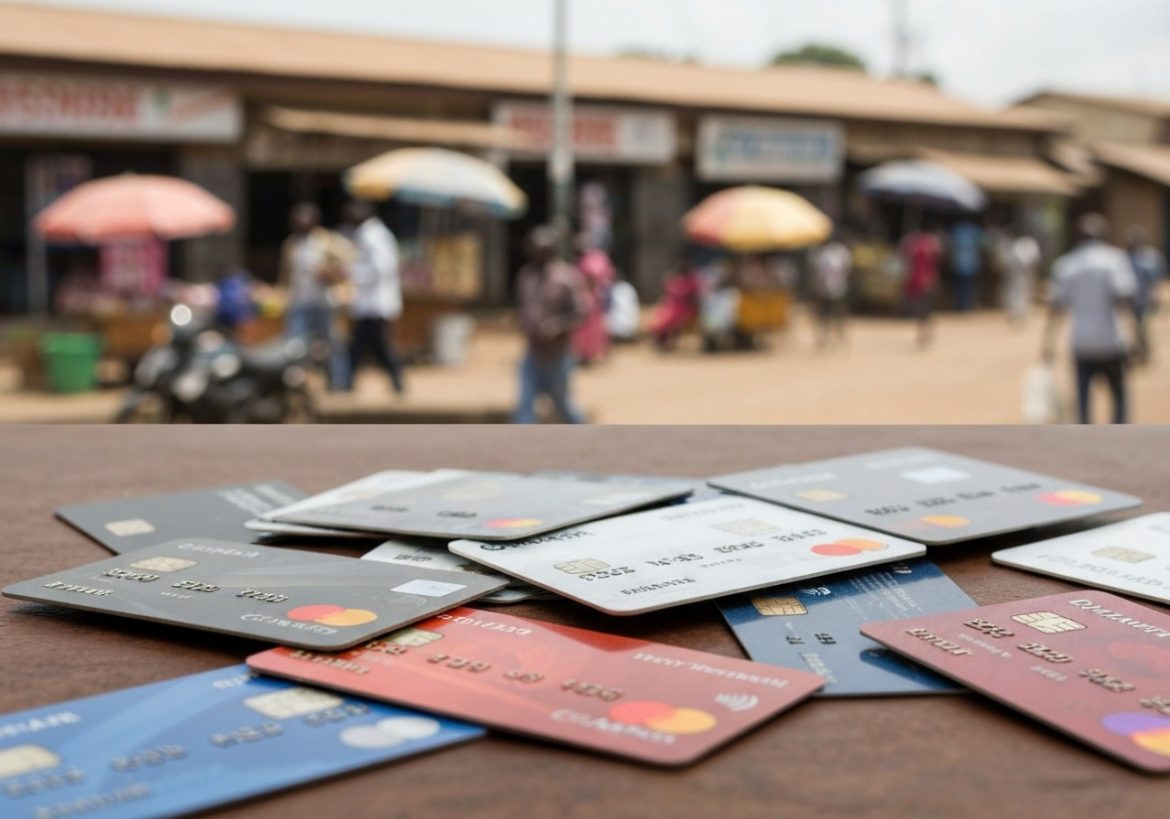
Card Fraud Demystified: Why It’s easy to protect your money

When you think of card fraud, you might picture a sophisticated hacker breaking into systems. But the truth is, card fraud often starts with something far simpler-and much closer to home. Imagine waking up to a notification about a transaction you didn’t make or discovering your child or relative used your debit card for an online shopping spree on a website you’ve never heard of.

It sounds amusing at first, but the implication of fraud is far less funny. It can disrupt your financial stability and drain your hard-earned money instantly. Card fraud costs consumers billions of dollars every year, and it doesn’t always involve high-tech schemes. Sometimes, it’s as simple as someone stealing your card details during a routine transaction or tricking you into clicking on a fake email that promises free rewards. Kaa Chonjo!!

Card fraud can happen when your card details aren’t properly safeguarded, for instance, if the card is out of view or sensitive information is shared by mistake.

Here are some common ways your card can be accessed illegally:

  • Phishing scams: Fraudsters trick you into revealing your card details through fake emails or websites.
  • Skimming devices: Hidden devices at ATMs or payment terminals steal your card information.
  • Card Misplacement: Leaving your card unattended or sharing your PIN with others can expose you to fraud.

Fortunately, with the right knowledge and precautions, you can protect yourself from falling victim to these schemes. As an Equity Bank customer, here’s how to protect yourself

  • Never share your card or pin details
  • Keep your card safe or always in sight
  • Report suspicious or unauthorised activity immediately

Equity Bank prioritizes your security by implementing advanced measures to protect your money, no matter where or how you transact.

  • Chip-and-PIN Technology

Equity’s cards are equipped with advanced chip technology, making them far more secure than traditional magnetic stripe cards. When you use your card at a merchant terminal, the PIN you enter acts as your personal security lock, ensuring only you can authorize the transaction. For contactless payments (tap-and-go), the bank has set low transaction thresholds to minimize risk, making it ideal for quick, low-value purchases.

  • 3D Secure for Online Shopping

Shopping online is convenient, but it can also be risky. That’s why Equity has added an extra layer of protection with 3D Secure technology. Every time you make an online purchase, it sends a one-time PIN (OTP) to your registered phone number. This ensures that only you can complete the transaction, giving you peace of mind when shopping on your favourite websites.

  • Real-Time Alerts

Picture this: every time a transaction hits your account, you get an instant alert. Real-time notifications keep you in control-whether it’s a purchase you recognize or one you don’t. And if something feels off, you can block your card right away using Equity’s mobile app or online banking. If you have changed your mobile number, kindly visit your branch to update your records to keep getting important alerts.

  • Self-Serve Blocking

Time is of the essence when dealing with fraud. That’s why with Equity, it’s easy for you to take control. If you suspect your card has been compromised, you can block it instantly using the Equity Mobile App or Equity Online or dial *247#. No need to wait-your security is in your hands.

  • Dedicated Fraud Monitoring

Behind the scenes, a dedicated fraud monitoring team works around the clock to protect your transactions. Using advanced systems, they continuously analyze patterns to detect and action on suspicious transactions.

Equity Bank doesn’t just stop at protecting your money-it empowers you with knowledge. Through public awareness campaigns and ongoing training for its staff, it ensures that both you and the team are equipped to prevent and handle card fraud effectively. Equity is also constantly upgrading its systems and processes to stay ahead of emerging threats.

If You Ever Suspect Fraud

  • Call 0763 000 000 (available 24/7).
  • Self-Serve Blocking: Use the Equity Mobile App or Equity Online.
  • Visit a Branch: Staff will assist you.

Protect your money and your peace of mind by staying vigilant. For more information, call 0763 000 000, click Secure Banking Tips | Equity Bank Kenya  for more card safety tips or visit your nearest Equity branch.

0 comment
0 FacebookTwitterPinterestLinkedinTumblrWhatsappTelegramEmail

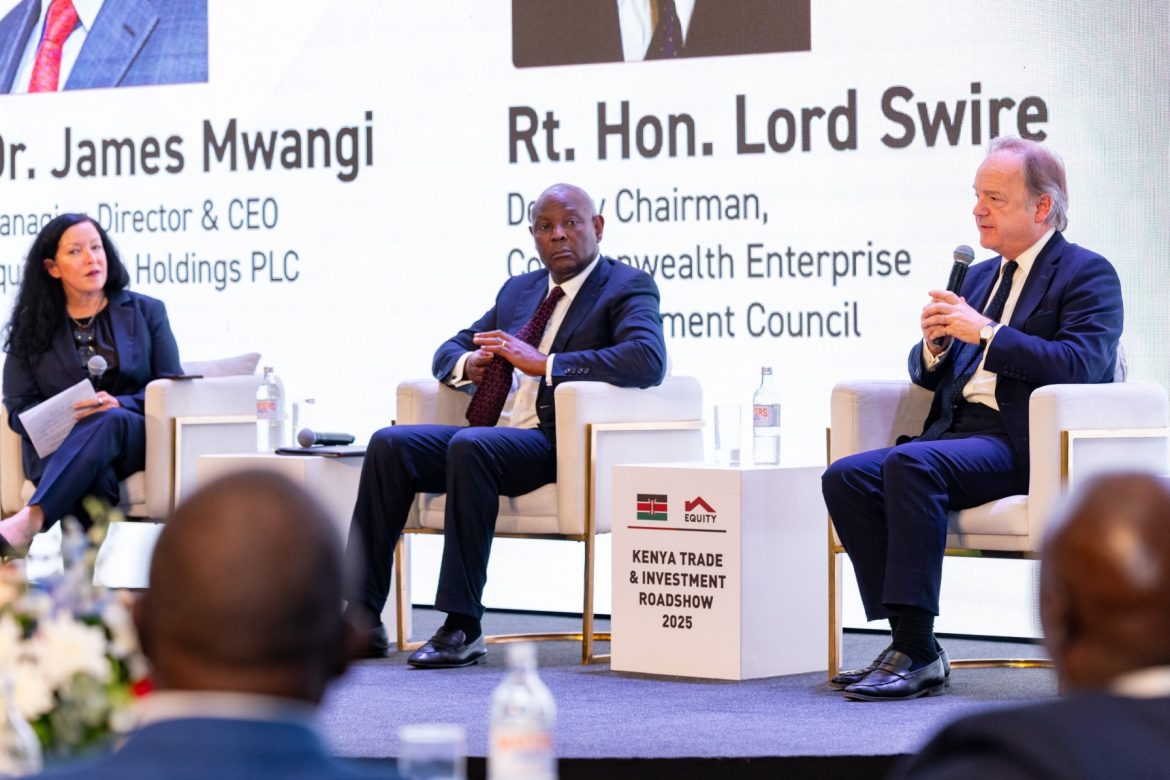
A Trade and Investment Roadshow held in Nairobi has positioned Kenya as a key gateway to a whooping 350m consumers in East and Central Africa.  

Over 300 policy makers, investors and businesspersons from 35 nationalities in Africa and beyond on Friday converged in Nairobi for a three-day summit that sought to explore business opportunities in Kenya.  

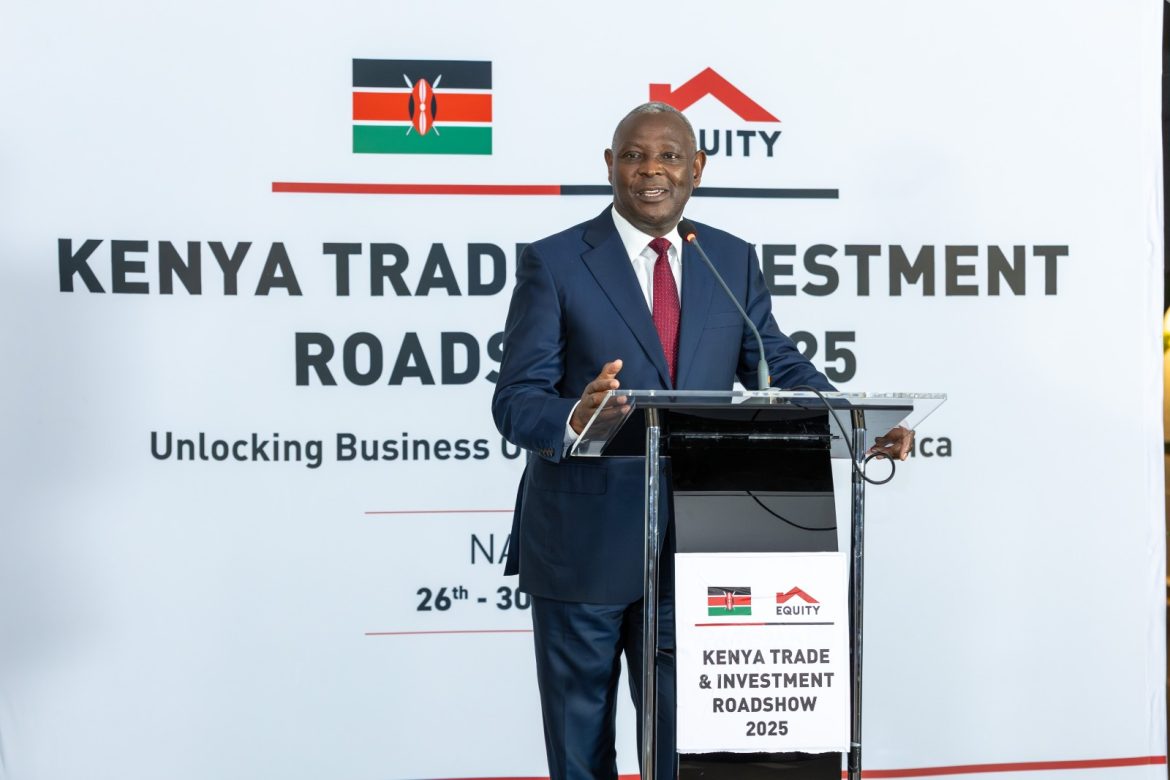
Addressing the summit, Equity Group CEO Dr. James Mwangi urged global investors to treat East Africa as a mature investment destination, arguing that Kenya and its regional neighbors now offer the scale, stability, and demographic advantage for long-term growth.  

Mwangi said the region’s fundamentals were aligning in a way that made the current moment strategically important for capital flows.  

“Africa is on a journey of very rapid growth for a prolonged period,” he said.   

“More than 75% of our population is under 35. They are digital natives. They will be your customers and partners for the next two decades.”  

The Kenya Trade and Investment Roadshow 2025 was organised by Equity Bank under the theme, “Unlocking East Africa: Kenya’s role as the Engine of Regional Prosperity.”

The summitfollowed the successful Trade Mission in Rwanda, where Kenyan traders joined over 300 investors from more than 20 countries in a continental dialogue on growth and opportunity.  

Mwangi asked investors to resist conservative engagement and instead pursue decisive transactional partnerships.  

“Please don’t go home with your idea,” he said. “It may not be the winning idea, but it may trigger the winning idea. And it might also be the winning idea that others will build on.”  

He emphasized that the roadshow was designed not as a diplomatic exchange but as a deal-making platform.  

“Spend more time in the one-on-one meetings, not just having a cup of tea, but signing agreements,” he said. “And those agreements should not end with a handshake; I invite you to shake hearts as you agree.”  

Mwangi presented Kenya as not merely a domestic market, but as a springboard into a broader integrated region.  

“See Kenya as the hub of the East African Community, and see a population of 350 million people,” he said. “That is a sizable and growing market whose GDP per capita is rising.”  

Equity Group, he said, now possesses the regional footprint and financial partnerships to support corporate expansion into East and Central Africa.  

“We are systemic in six markets, and our influence will open doors for you,” he said. “The World Bank, through IFC, is our second-largest shareholder, and the Norwegian sovereign wealth fund, the largest on earth, is our largest shareholder.”  

He noted that Equity’s network of partnerships across banking and development finance institutions made it capable of mobilising capital where necessary.  

“I cannot personally write the cheque to fund every investment proposal, but I have built formidable partnerships, from KCB, to Ecobank, to Standard Chartered, to Absa.   
The opportunity is here with us. Together, we can make this work,” he said.  

Africa’s natural-resource advantage, Mwangi argued, will underpin the continent’s strategic role as the world transitions to renewable energy and sustainable production.  

“There will be no energy transition without strategic minerals,” he said. “Africa is over-endowed. God was very generous.”  

Also addressing the forum, Rt. Hon. Lord Swire, Deputy Chairman of the Commonwealth Enterprise and Investment Council, said Kenya’s evolution into a regional economic hub reflected long-term institutional progress.  

“Kenya and its growth never cease to amaze me,” he said.   

“The opportunities are enormous, and I am astonished by what this country has become.”  

He said Commonwealth nations presented a ready trading bloc with structural efficiencies.  

“It is cheaper for one Commonwealth company to do business with another, an audited advantage of 19%,” he said.  

 “Don’t forget the Commonwealth. Look closely at the opportunities within it.”  

The trade roadshow continues as part of Equity’s wider international engagement programme linking Kenyan and regional companies to global capital sources.  

On his part, Aliou Maiga, the Regional Industry Director for the Financial Institutions Group in Africa at the International Finance Corporation, said Africa must nurture a generation of visionaries who not only think boldly but also execute boldly.   

He noted that this mindset is critical, especially at this point in the continent’s development, where unlocking economic opportunities for a rapidly growing population will shape the continent’s long-term trajectory.  

“Africa needs people who think big and make things happen,” Maiga said.   

“This is relevant today given where the continent is, and the urgent need to expand economic opportunities for our population. If we are able to create the right conditions and enable people to realize their potential, the future of this continent will be secured.”  

He emphasized that the World Bank Group’s role is anchored in supporting countries to build resilient and competitive economies by offering resources and expertise that catalyze sustainable growth.   

“As the World Bank, our mandate is to help develop economies by providing financial resources, technical expertise, and policy guidance to support sustainable development,” he said.   

“We work with governments, private sector partners, and communities to fund infrastructure, education, health systems, and innovation initiatives that can transform people’s lives.”  

Maiga also highlighted East Africa as a continental pacesetter in innovation, describing the region as a fertile ground for digital transformation and entrepreneurial leadership.   

“East Africa is at the forefront of innovation, leading the way in technology, entrepreneurship, and creative solutions across Africa,” he said.   

“This region has become a hub for startups, digital platforms, and tech-driven enterprises, fostering a culture of problem-solving and forward-thinking. That innovative spirit is driving economic growth, boosting job creation, and positioning East Africa as a key player in shaping Africa’s role in the global knowledge and technology economy.”  

0 comment
0 FacebookTwitterPinterestLinkedinTumblrWhatsappTelegramEmail


itel has rolled out an exciting new consumer rewards campaign dubbed “Shinda Mimili na itel”, giving customers across the country a chance to win cash awards totaling to Ksh 1.2Million and a variety of amazing gifts.

The campaign is designed to appreciate loyal customers while encouraging more Kenyans to experience itel’s latest range of smart devices and celebrate their unwavering loyalty and love for the brand over the years and two winners have been awarded each Ksh 200,000.

As part of the promotion, customers who purchase any of the following newly launched models from recommended retail outlets nationwide automatically qualify to enter the weekly draws:

  • itel Super 26 Ultra (256 + 8) RRP is Ksh 20,499
  • itel Super 26 Ultra RRP is Ksh 19,500
  • itel A90 RRP is Ksh 9,999
  • itel City 100 (128+ 6) RRP is Ksh 11,199
  • itel City 100 ( 256 + 4) RRP is Ksh 11,800
  • itel itel QLED Smart TV L4360N RRP is Ksh 16,099
  • itel itel QLED Smart TV L3260KN RRP is Ksh 9,999

Upon purchasing any of these devices, customers receive a raffle ticket, which they are required to fill out with their details. This ticket becomes their entry into the lucky draw, giving them a chance to walk away with exciting prizes — including cash awards and other surprise gifts.

To build more engagement and transparency, itel will be hosting its raffle draws live on TikTok every Tuesday. Customers and fans can tune in to the official itel TikTok channel to watch the draws in real time, celebrate winners, and keep up with the latest campaign highlights.

The “Shinda Mimili na itel” campaign reflects itel’s commitment to offering quality, affordable devices while giving back to its growing community of users. With accessible price points and the added thrill of weekly wins, the promotion has quickly captured attention across the country.Offer ends on 22nd December 2025.

Customers are encouraged to purchase their devices from authorized itel retail outlets, fill in their raffle tickets correctly, and stay tuned to the weekly TikTok Live sessions for a chance to be among the lucky winners.

0 comment
0 FacebookTwitterPinterestLinkedinTumblrWhatsappTelegramEmail
Equity Bank Group MD and CEO James Mwangi addressing investors ahead of Kenya Trade Investment Road Show 2025 in Nairobi

Global investors have been urged to look beyond conventional markets and unlock the immense, yet largely untapped, trade and investment opportunities within Kenya and the broader East African region.

The call came from Equity Group’s top leadership in the ongoing Kenya Trade & Investment Roadshow 2025, emphasizing the region’s demographic dividend, abundant resources, and a burgeoning private sector.

Dr. James Mwangi, Equity Group CEO and Managing Director, framed the current global economic landscape as a “turning point,” highlighting the growing significance of the private sector worldwide.

“For the first time, we see the private sector, particularly the listed companies, have a bigger market cap than the entire global GDP,” Dr. Mwangi stated, underscoring the formidable economic power wielded by private enterprises.

He positioned Africa as the “continent of opportunities,” citing its youthful and rapidly expanding population.

“One out of three by the turn of the century will be living in Africa,” Dr. Mwangi said adding that by 2050, “two of every three working population will be a young person from Africa.”

This demographic shift, he noted, will not only provide a massive labor force but also a substantial market with increasing “disposable income.”

Beyond human capital, Dr. Mwangi highlighted Africa’s rich natural endowments, including “65% of arable land” and “62% of all renewable energy that is exploited.”

He advised investors to “make early decisions and take a position before it becomes too competitive,” stressing that a “transformed Africa is a sustainable world.”

Equity Group’s role, he affirmed, is to “facilitate you… to open doors for you,” encouraging a shift towards “partnership and collaboration” to provide solutions to global challenges.

Echoing this sentiment, James Nyabanda, Equity Kenya Managing Director, warmly welcomed the delegates to “the home of Equity” and, more importantly, “the home of entrepreneurs.”

He underscored Kenya’s strategic importance as a gateway to the East African market.

“Over the next couple of days, we are looking to take you on real roadshows to see opportunities that are available in Kenya,” Nyabanda said.

He emphasized that the bank has established a “premier platform to enable us to connect businesses,” facilitating connections between Kenyan enterprises and international investors.

Nyabanda highlighted the sheer scale of the opportunity, noting that the East African market alone boasts “500 million individuals.” He encouraged attendees to take “full advantage” of the unique platform provided by the roadshow.

“It’s not just centered towards Kenya, but what Kenya and its neighbors are able to offer,” he said, inviting investors to join Equity in exploring and investing in the region’s dynamic economic landscape.

The roadshow aims to foster strong partnerships and build trust between international investors and local businesses, ultimately driving sustainable growth and development across the continent.

0 comment
0 FacebookTwitterPinterestLinkedinTumblrWhatsappTelegramEmail