
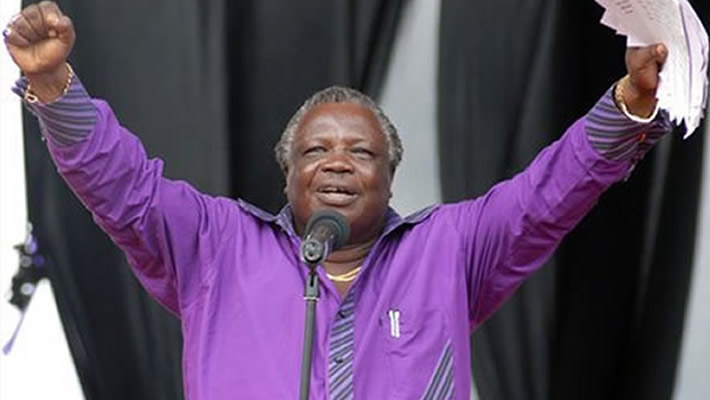
Francis Atwoli has been re-elected unopposed as Secretary-General of the Central Organization of Trade Unions (COTU) during the 15th Quinquennial Governing Council Delegates Conference and elections held at the Tom Mboya Labour College.
This marks the sixth time Atwoli has been re-elected to the position, extending his leadership of Kenya’s most powerful labour federation.
Atwoli thanked delegates and workers across the country for entrusting him with another mandate, promising to continue defending workers’ rights and strengthening the labour movement.
He noted that when he first assumed office in 2001, COTU had about 300,000 members, but the organisation has since grown to represent more than four million workers nationwide.
“I promised that we would run this organisation professionally, and today we are doing exactly that,” he said.
Atwoli first became COTU Secretary-General in 2001, taking over from Joseph Mugalla, and has remained one of the most influential figures in Kenya’s labour movement.
During the conference and elections, several other officials were also re-elected unopposed to various leadership positions. They include Rajabu Mwondi, Rev. Joel Chebii, Francis Murage, Benson Okwaro, Ernest Nadome, Carolyne Rutto, Rebecca Nyathogora, Wasington Adongo, Francis Wangara, Joseph Nyabiya, and Nelson Mwaniki.
Atwoli also commended the government and political leaders for staying away from the trade union elections, saying the move respected the independence of the labour movement.
“I want to thank the government and the political leadership in this country. I also thank politicians who kept away from the trade union elections. That showed respect for the independence of the labour movement,” he said.
According to Atwoli, the election process was conducted by union members themselves under the leadership of their respective general secretaries, ensuring transparency.
“Our members regulated the process themselves. As a result, the elections were free, fair, and transparent,” he said.
He added that since January 5, union members had travelled from different counties to witness the election process, demonstrating their commitment to the organisation.
“They came here because they know their leaders and believe in this organisation. They are not misled by propaganda on social media,” he said.
Reflecting on his leadership, Atwoli highlighted key milestones achieved under his tenure, including strengthening labour justice and expanding the country’s labour court system.
He said the Employment and Labour Relations Court previously had only three judges, but the number has now grown to more than 25 judges nationwide, improving workers’ access to justice.
Atwoli also pointed to COTU’s role in shaping the Constitution of Kenya 2010, particularly in securing protections for workers.
He noted that Article 41 of the Constitution guarantees the right to strike and the right to collective bargaining, placing Kenya among a few African countries that constitutionally protect these rights.
Another milestone, he said, has been the growth of collective bargaining agreements (CBAs), with more than 4,000 CBAs registered every two years with the Ministry of Labour.
“These agreements have helped improve salaries and working conditions in many companies,” he said, noting that some workers now earn salaries far above the minimum wage due to negotiated agreements.
Atwoli also acknowledged the cooperation between the labour movement and successive Kenyan administrations. From Daniel arap Moi, to Mwai Kibaki, to Uhuru Kenyatta, and now William Ruto, he said the government has consistently supported the participation of Kenyan workers in international labour discussions.
“President Ruto even led the Kenyan delegation to the International Labour Conference in Geneva and addressed the plenary session. This demonstrates the importance Kenya places on labour issues,” he said.
Atwoli further highlighted the development of the COTU Labour College in Kisumu, describing it as one of the leading labour training centres in Africa.
“When we started, the college was not in its current modern state. Today it has become one of the best labour colleges in Africa,” he said.
He added that the college will continue to serve as a centre for training workers, hosting conferences, and advancing labour education across the continent.
“This growth shows the confidence workers have in this organisation. Together, we will continue to defend workers’ rights, improve working conditions, and strengthen the labour movement in Kenya,” he said.

