Home Tags Posts tagged with "IEBC"
Tag:

IEBC

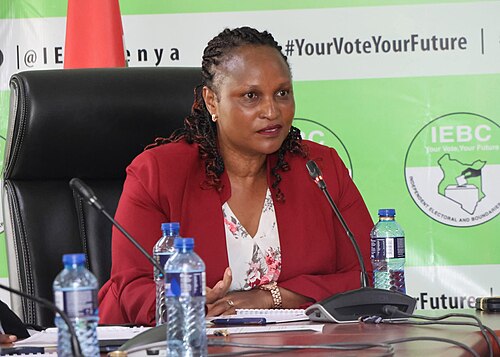
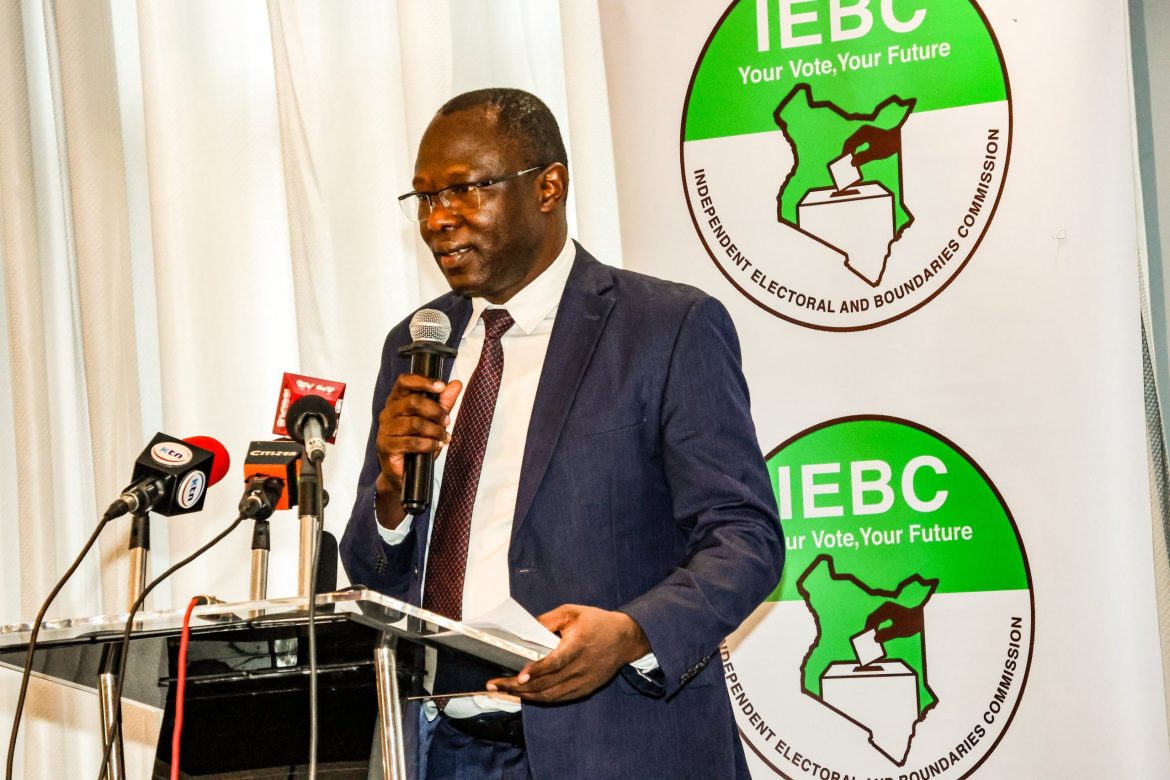
IEBC chairperson Erastus Ethekon

The Independent Electoral and Boundaries Commission (IEBC) has clarified widespread confusion over whether Kenyans who registered to vote before 2012 need to re-register ahead of the upcoming elections.

In a statement released on Saturday, April 4, 2026, the commission confirmed that citizens who registered before 2012 do not need to register again, provided they were captured in the biometric Register of Voters (ROV) introduced under the 2010 Constitution and the subsequent boundary delimitation in 2012.

“Not at all UNLESS they DID NOT register as voters from 2012 when the new Register of Voters (ROV) was established,” the commission said.

Before 2012, the voter register was manual. In 2012, the IEBC introduced a biometric system, requiring all eligible Kenyans to enroll and have their fingerprints and other details captured. This biometric ROV has been the official register since 2013 and was used in the 2022 General Election.

“As of the 2022 General Election, the Commission maintained an accurate and audited register comprising 22,120,458 voters,” IEBC noted.

The commission emphasized that only a few who may have missed registering in 2012 and never enrolled under the biometric system need to do so now. Everyone else who registered in 2012 or after is already in the system.

“No panic!! Hapa kazi tu!” the commission said, reassuring voters that the system is inclusive and participatory as Kenya deepens its democratic processes.

The clarification comes amid growing online discussions and misinformation, with some suggesting all old voters must re-register, potentially causing unnecessary anxiety among the electorate.

Voters are encouraged to verify their registration details online or at IEBC offices to ensure they can participate in the 2027 General Election.

IEBC reiterated that the electoral body remains committed to ensuring a smooth, transparent, and credible voting process for all Kenyans.
0 comment
0 FacebookTwitterPinterestLinkedinTumblrWhatsappTelegramEmail
Justin Muturi

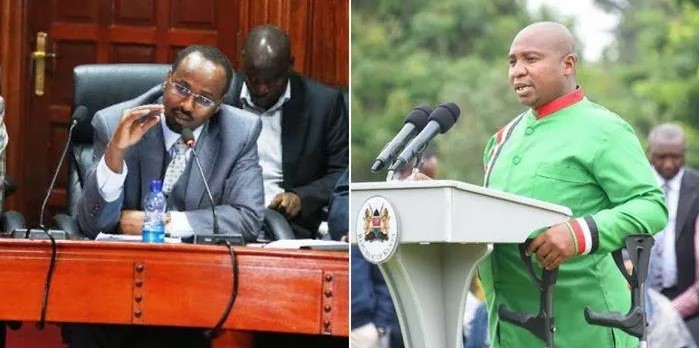
Former Cabinet Secretary and National Assembly Speaker Justin Muturi has made explosive claims about an alleged private meeting between President William Ruto and senior officials of the Independent Electoral and Boundaries Commission ahead of the 2022 General Election.

Speaking during an interview on Radio Generation on Tuesday, March 10, 2026, Muturi claimed that Ruto met privately with former IEBC chair Wafula Chebukati and commissioners Abdi Guliye and Boya Molu at his Karen residence in May 2022.

Muturi recounts Karen encounter

According to Muturi, the meeting occurred shortly before Ruto named Rigathi Gachagua as his running mate for the 2022 presidential election.

Muturi said he had been in Mombasa at the time when Ruto called and asked him to meet at his Karen residence upon returning to Nairobi.

“In May 2022, while I was in Mombasa, William Ruto called me and asked me to come meet him in Karen when I returned,” Muturi said.

He explained that when he arrived at the residence, the President was not immediately available.

“I waited for some time and eventually sent him a message saying I was leaving,” Muturi recalled.

Ruto later called him back and explained he was meeting several people, Muturi claimed.

“He told me he was meeting some three gentlemen. I asked which ones, and he told me himself: Wafula Chebukati, Abdi Guliye and Boya Molu,” Muturi said.

William Ruto
William Ruto

Meeting allegedly held at Ruto’s Karen residence

Muturi further claimed the meeting took place at Ruto’s private residence in Karen rather than at the IEBC offices.

“They were meeting at the main house in Karen, not at the IEBC offices,” he said.

He added that he was not aware of what was discussed during the meeting.

“I don’t know what was discussed, but what I do know is that from that meeting, William Ruto was very confident he would win the 2022 elections,” Muturi said.

Political questions

Muturi’s remarks are likely to spark debate given the sensitive role of the electoral commission during the 2022 presidential contest, as the country heads into the upcoming 2027 polls.

The IEBC, led by Chebukati at the time, was responsible for conducting the election that eventually declared Ruto the winner.

The results of the presidential election were contested by opposition leader Raila Odinga but were later upheld by the Supreme Court of Kenya.

0 comment
0 FacebookTwitterPinterestLinkedinTumblrWhatsappTelegramEmail
Marjan Hussein Marjan

In a dramatic move that shocked Kenya’s political establishment Tuesday evening, newly appointed IEBC Chairman Erastus Ethekon orchestrated the unceremonious exit of Chief Executive Officer Hussein Marjan, bringing down the curtain on more than a decade of service in the controversial 399 days before his contract was due to expire.

The bloodless coup at Anniversary Towers culminated in five commissioners being urgently recalled from a week-long workshop in Naivasha on Monday for a crisis meeting that sealed Marjan’s fate, with the executive’s future dissected in sessions held both in his presence and behind closed doors.

Sources privy to the boardroom drama revealed that Ethekon, barely seven months into his tenure as chairman, had been methodically building a case against Marjan since the commission was fully constituted last July, focusing on procurement decisions made when commissioners were absent and questions around the extension of the controversial Smartmatic contract.

The final act played out with surgical precision. When Marjan learned his days were numbered, he approached Ethekon seeking a dignified exit. The chairman obliged, offering a written confirmation that the departure would be by mutual consent. But in a twist that stunned the commission, Marjan returned on Friday at 5pm armed with legal counsel and a counter-proposal demanding full payment through March 2027 and compensation for unused leave.

That move proved fatal. Ethekon convened an emergency session on Monday afternoon with five commissioners, deliberately excluding Vice Chairperson Fahima Araphat Abdallah who was attending to private matters. The session, fully minuted, became the formal basis for terminating Marjan’s contract and marked the point of no return.

Commissioner Alutalala Mukhwana was first to arrive at Tuesday’s concluding meeting that began at 3:30pm, followed by Commissioner Anne Nderitu and Professor Francis Aduol. By 5:36pm, the verdict was sealed. When Marjan appeared at reception around 6pm, he found media already gathered, tipped off about the seismic shift underway. His terse “Sorry, I’m not going to speak to the media” response betrayed the tension of a man whose career had just been demolished.

The catalyst for Marjan’s downfall was a perfect storm of opposition pressure and internal discontent. Opposition leaders led by Wiper’s Kalonzo Musyoka had spent weeks demanding his removal, accusing him of hastily renewing Smartmatic’s contract when the commission was not in office. The company, which supplied the Kenya Integrated Elections Management System kits for the 2022 polls, has been dogged by controversy across multiple countries.

“We cannot have free and fair elections with Marjan at the IEBC,” Kalonzo had thundered at a funeral in Machakos County in January. “When there was no commission in place, he moved very fast and renewed Smartmatic’s contract. When the new commissioners came in, they found that he had already renewed those contracts. It was an illegal act.”

DAP-Kenya leader Eugene Wamalwa went further, demanding not just Marjan’s exit but his prosecution for abuse of office. The opposition’s fury was amplified by explosive allegations from a former Venezuelan military intelligence chief linking Smartmatic to election manipulation in multiple countries.

But it was not just external pressure that sealed Marjan’s fate. Inside the commission, questions swirled around procurement decisions and an Auditor-General’s report that raised governance concerns. During one particularly brutal confrontation, a commissioner pointedly asked Marjan whether his continued stay was sustainable given that the entire commission had lost confidence in him.

The sticking point was the Smartmatic contract extension. Commissioners discovered that a two-year extension approved in 2024 to expire at the end of 2026 had been signed unilaterally by the CEO when commissioners were not in office. Under IEBC’s standard operating procedures, all purchases of strategic election materials including ballot papers, voter registration kits, and ballot boxes must receive commissioner approval.

When Marjan attempted in November 2025 to extend the framework agreement to allow purchase of new equipment, commissioners flatly rejected the move. That rejection, sources say, was the beginning of the end.

Marjan’s final hours at IEBC were a study in contrasts. On Monday, he reported for duty at 8am and left at 3pm. It remains unclear whether he attended the meeting that ratified his contract termination. By Tuesday evening, he was penning an emotional farewell to staff, thanking them for “over decade of invaluable experience in elections management.”

“As I move on, I do so wiser, enriched and deeply grateful,” Marjan wrote, his words carefully chosen to maintain the fiction of mutual consent even as the walls closed in around him.

The timing of Marjan’s exit, coming just 15 months before the 2027 General Election, has raised eyebrows about the wisdom of such upheaval at a critical moment. But Ethekon was unrepentant, framing the move as necessary for institutional reform.

“The changes are meant to enhance effectiveness, efficiency, transparency, and accountability of the secretariat in service delivery to the people of Kenya,” the chairman declared in his statement, promising that the commission would embark on “critical reforms within the Secretariat.”

For Marjan, who joined IEBC as Deputy Commission Secretary in March 2015 and rose to become CEO in March 2022 after serving nearly five years in an acting capacity, the fall from grace has been swift and stunning. He shepherded the commission through the tumultuous 2022 General Election and held the fort when the electoral body operated without commissioners for months.

But in the cutthroat world of Kenya’s electoral politics, past service counts for little when new power arrives with its own vision. Ethekon, the 48-year-old Turkana native and former county attorney, had made clear during his vetting that he intended to restore integrity and public confidence in the commission.

His first major act as chairman has sent an unmistakable message: there is a new sheriff in town at Anniversary Towers, and he answers to no one but the Constitution and the Kenyan people. Whether this shake-up will indeed enhance the commission’s credibility or plunge it into fresh turmoil ahead of 2027 remains to be seen.

The commission has promised to announce an interim replacement “in due course” while the recruitment process for a substantive CEO begins. Marjan’s deputies, Ruth Kulundu and Obadiah Keitany, are scheduled to exit in March and May 2027 respectively, raising questions about whether they too might face the axe as Ethekon moves to put his stamp on the secretariat.

As Marjan clears his desk and contemplates his next move, one fact is inescapable: his tenure, which began with such promise and survived years of political turbulence, ended not with a bang but with a carefully worded statement about “mutual consent” that fooled no one who watched the drama unfold over those fateful 48 hours.

The real question now is whether Ethekon’s bold move will indeed deliver the credible, transparent electoral process he has promised or whether it has simply opened a new chapter of instability at Kenya’s most critical constitutional commission.

0 comment
0 FacebookTwitterPinterestLinkedinTumblrWhatsappTelegramEmail
IEBC chairperson Erastus Ethekon

The Independent Electoral and Boundaries Commission (IEBC) has announced a major recruitment drive, opening up hundreds of temporary job opportunities ahead of the February 26, 2026, by-elections.

In a public notice issued on Wednesday, January 21, 2026, the electoral body invited qualified Kenyans to apply for various short-term positions that will support the conduct of the upcoming polls.

IEBC Positions Available

According to IEBC, the commission is seeking applicants for the following roles:

  • Support Electoral Trainers (SETs)
  • Presiding Officers and Deputy Presiding Officers
  • Polling and Counting Clerks

The temporary positions will play a critical role in ensuring a smooth, transparent, and credible electoral process during the by-elections.

How to Apply For IEBC Jobs

Interested applicants are required to submit their applications online only through the official IEBC recruitment portal: https://jobs.iebc.or.ke.

“We are hiring! The Commission invites qualified applicants to apply for the following temporary positions for the #26thFebByelections: 1. Support Electoral Trainers (SETs) 2. Presiding and Deputy Presiding Officers 3. Polling/Counting Clerks Submit your application online via: https://jobs.iebc.or.ke,” IEBC stated.

The commission noted that the application deadline is Monday, January 26, 2026, leaving candidates with limited time to submit their details.

“Application deadline: Monday, January 26th, 2026. Your Vote, Your Future,” the notice reads.

February 26 By-elections

The IEBC Chairperson Erustus Ethekon had announced that the four remaining by-elections would be held on February 26, 2026.

Ethekon announced the by-election dates in a gazette notice released on December 19, 2025, confirming the vacancies in the areas and announcing directives to political parties and aspirants.

The by-elections will be for the Member of National Assembly for Isiolo South Constituency, Member of County Assembly for Muminji Ward and Evurore Ward in Mbeere North Constituency, Embu County, and West Kabras Ward in Malava Constituency, Kakamega County.

IEBC had also directed political parties intending to participate in the by-elections to submit the names of the persons contesting in party primaries and the date of the party primaries on or before Friday, 2nd January, 2026.

0 comment
0 FacebookTwitterPinterestLinkedinTumblrWhatsappTelegramEmail
IEBC Commissioner Ann Nderitu

The Independent Electoral and Boundaries Commission (IEBC) has revealed that the 22 upcoming by-elections across the country will cost taxpayers approximately Sh700 million, citing high logistical demands and stringent security requirements in Kenya’s electoral process.

Speaking during a TV interview, IEBC Commissioner Ann Nderitu explained that the bulk of the cost goes toward deployment and training of electoral officials, procurement of specialised election materials, and the extensive logistical network required to deliver them securely across the country.

“The biggest cost drivers are electoral officials, the procurement of materials, and the logistics involved in transporting everything to polling stations,” Nderitu said. “These elements carry the heaviest burden.”

She noted that election officials must undergo rigorous training to maintain the integrity and efficiency of the voting process. Coordinating their deployment is particularly demanding in remote and expansive regions.

“For instance, in Baringo County, we must carefully deploy vehicles to transport materials and personnel. In far-flung areas like Banisa in Wajir and parts of Turkana, we even use flights to ensure that ballot papers arrive safely. This is necessary to prevent delays and guarantee security,” she said.

Beyond personnel and transport, Nderitu emphasised that ballot papers themselves are a major cost driver due to high security standards.

“The ballot papers used in Kenya have more security features than currency notes,” she revealed. “Our elections are designed not just to manage votes, but to manage trust. Citizens must be confident that their votes are secure, the counting is transparent, and the results reflect their true choice.”

Kenya’s elections also rely on advanced technology aimed at enhancing credibility—systems that track voter identification, audit results, and secure ballots from manipulation. These, too, increase operational costs.

Nderitu contrasted Kenya’s system with other countries where elections are far cheaper and less centralised.
“In Sweden, political parties distribute their own ballot papers, and the electoral commission only supervises. Despite the minimal involvement, it remains one of the most trusted institutions,” she noted.

In Kenya, however, the IEBC bears both the responsibility of conducting elections and safeguarding public trust, necessitating heavy investment in logistics, personnel, and secure election technology.

The projected Sh700 million expenditure underlines the complexity and high stakes of Kenya’s electoral landscape, where ensuring credibility, transparency, and public confidence requires substantial resources.

The 22 by-elections are expected to be held in the coming weeks, with the IEBC promising tight security, strict adherence to electoral laws, and transparent management throughout the process.

Daily Trends has been nominated for the Bloggers Association of Kenya (Bake) awards 2025, under the Topical Creator category. Your vote will help us bring this home. Please follow this link to cast your vote. It is absolutely free. The list of nominees will appear after you have keyed in your details. https://bakeawards.co.ke/vote

0 comment
0 FacebookTwitterPinterestLinkedinTumblrWhatsappTelegramEmail
Boyd Were and Philip Aroko

The Independent Electoral and Boundaries Commission (IEBC) has fined Kasipul by-election candidates Boyd Were and Philip Aroko Sh1 million each following the deadly clashes that left two people dead and several others injured during a campaign confrontation earlier this month.

The penalties, payable within 48 hours, were issued after a disciplinary hearing in which the commission accused both candidates of violating the harmonized campaign schedule and fueling tensions that spiraled into violence in the Opondo area, Central Kasipul Ward, on November 6.

According to police, gunshots were reported as rival supporters clashed, leaving two young men dead. Authorities are pursuing a licensed firearm holder believed to have fired twice into the air during the chaos. Homa Bay County Police Commander Lawrence Koilem said the violence erupted after an incident at ODM candidate Boyd Were’s campaign venue triggered panic, prompting retaliation from his supporters.

The by-election follows the tragic killing of area MP Charles Ong’ondo Were, who was shot dead in Nairobi in April 2025 by unknown assailants.

In its statement, the IEBC said both Were and independent candidate Philip Aroko had ignored the agreed campaign timetable, a move the commission said directly contributed to the escalation of tensions among their supporters. The election agency accused them of “recklessness” and failing to provide leadership that would have discouraged confrontation.

As part of the disciplinary measures, the two candidates were ordered to sign a commitment to strictly adhere to the harmonised campaign schedule ahead of the November 27 by-election. Both have also received formal warnings indicating that any repeat of the offence could attract harsher sanctions, including possible disqualification from the race.

“The commission will not hesitate to invoke stronger penalties should the candidates, or their agents, engage in conduct that undermines peace, public order, or the integrity of the electoral process,” the committee warned.

The violence has heightened security concerns in Kasipul, with residents and civil groups urging the government to strengthen enforcement of campaign regulations and ensure that political events do not become flashpoints for deadly confrontations.

The IEBC appealed to all aspirants in the race to exercise restraint, guide their supporters, and uphold peaceful campaign practices as the by-election enters its final stretch. All eyes are now on whether Were and Aroko will comply with the commission’s directives—and whether calm can be restored in the tense constituency.

Daily Trends has been nominated for the Bloggers Association of Kenya (Bake) awards 2025, under the Topical Creator category. Your vote will help us bring this home. Please follow this link to cast your vote. It is absolutely free. The list of nominees will appear after you have keyed in your details. https://bakeawards.co.ke/vote

0 comment
0 FacebookTwitterPinterestLinkedinTumblrWhatsappTelegramEmail

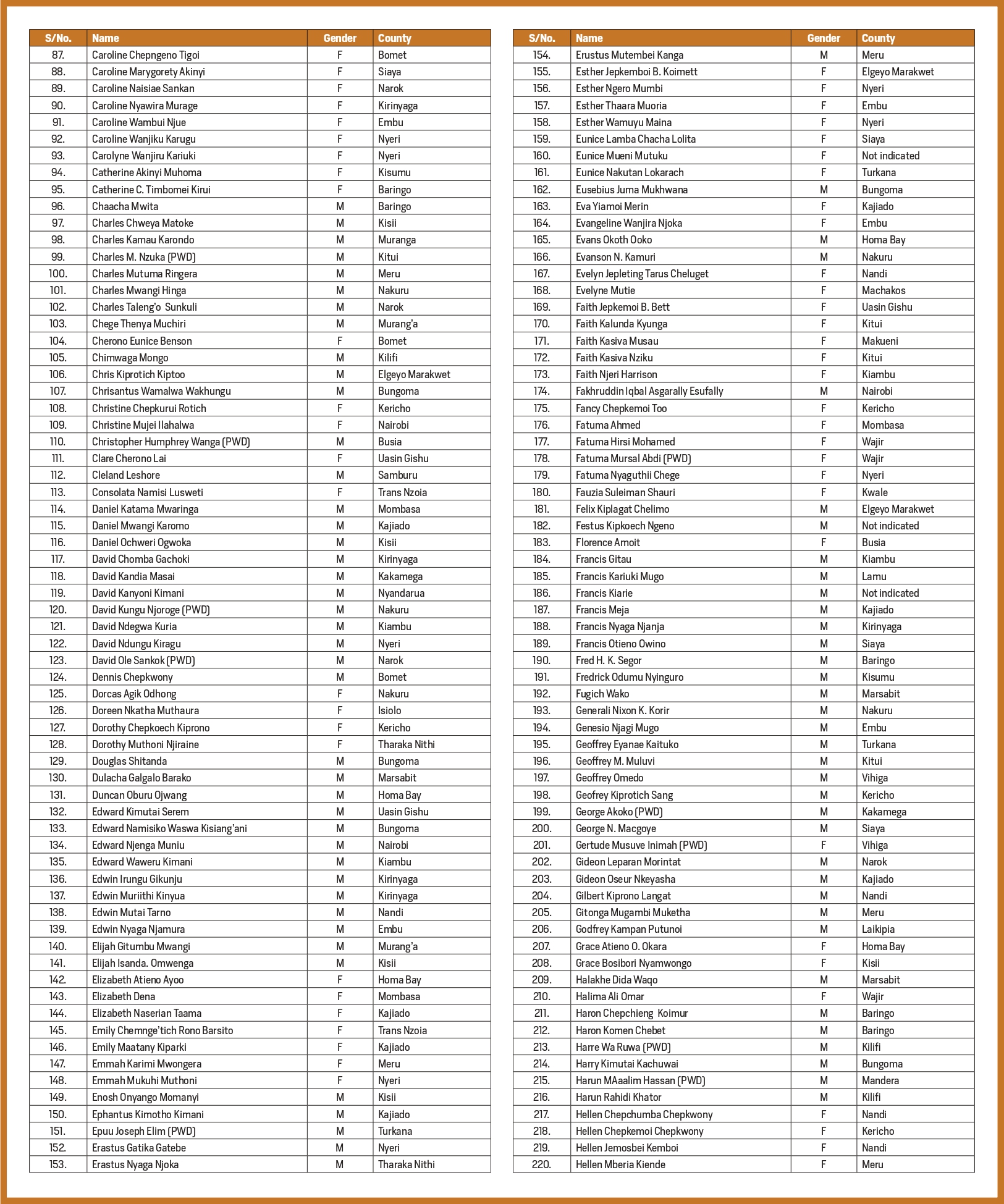
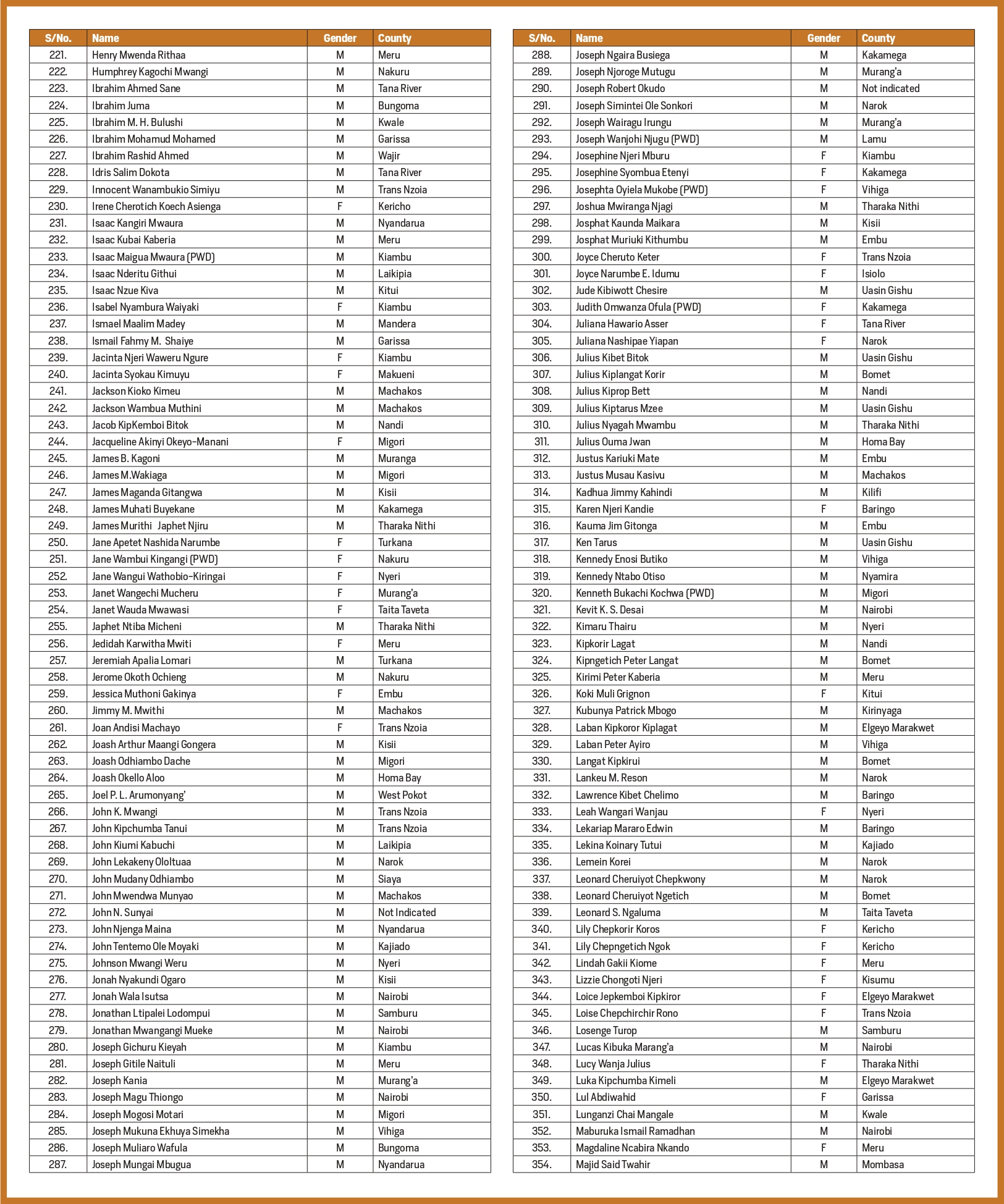
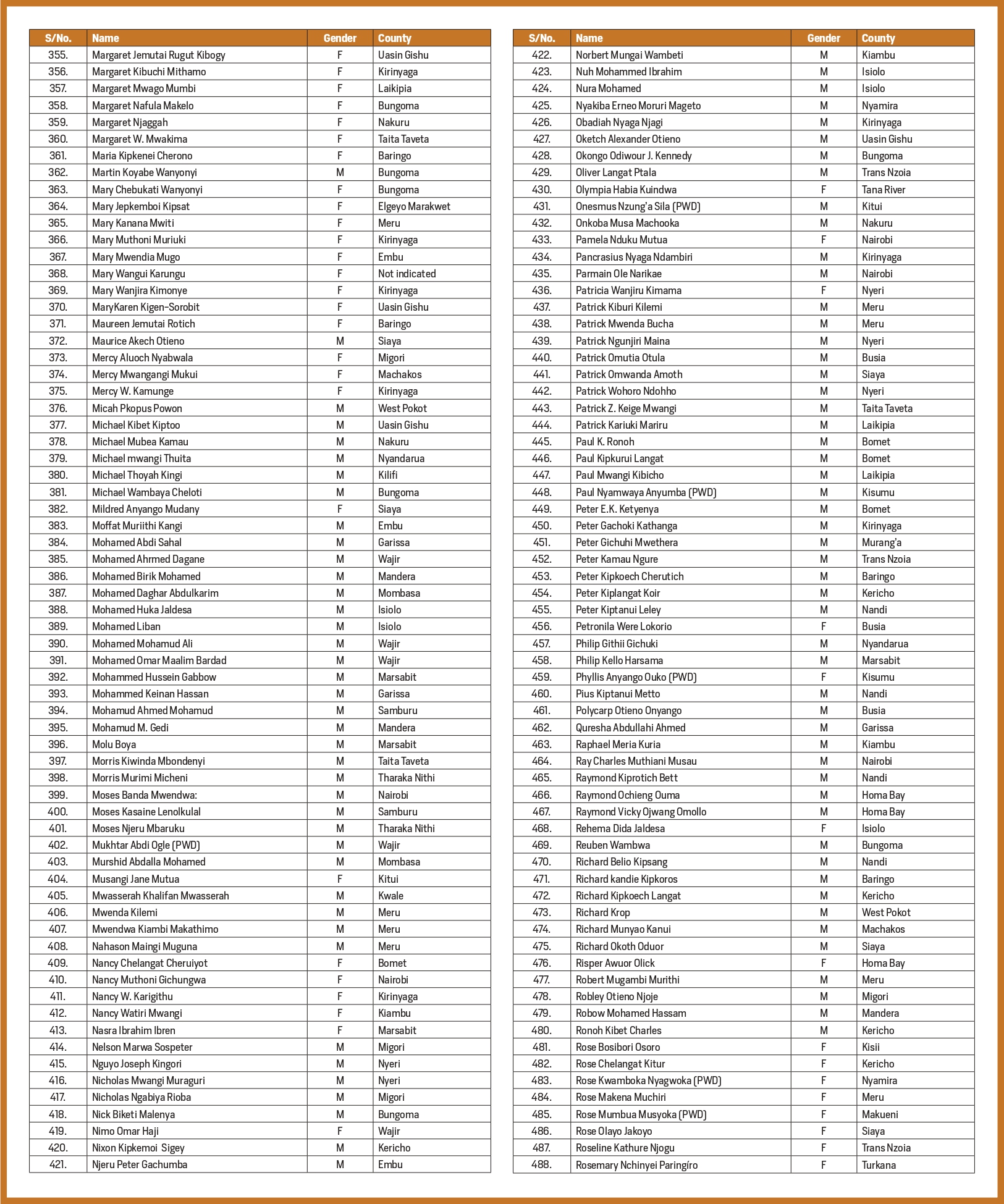
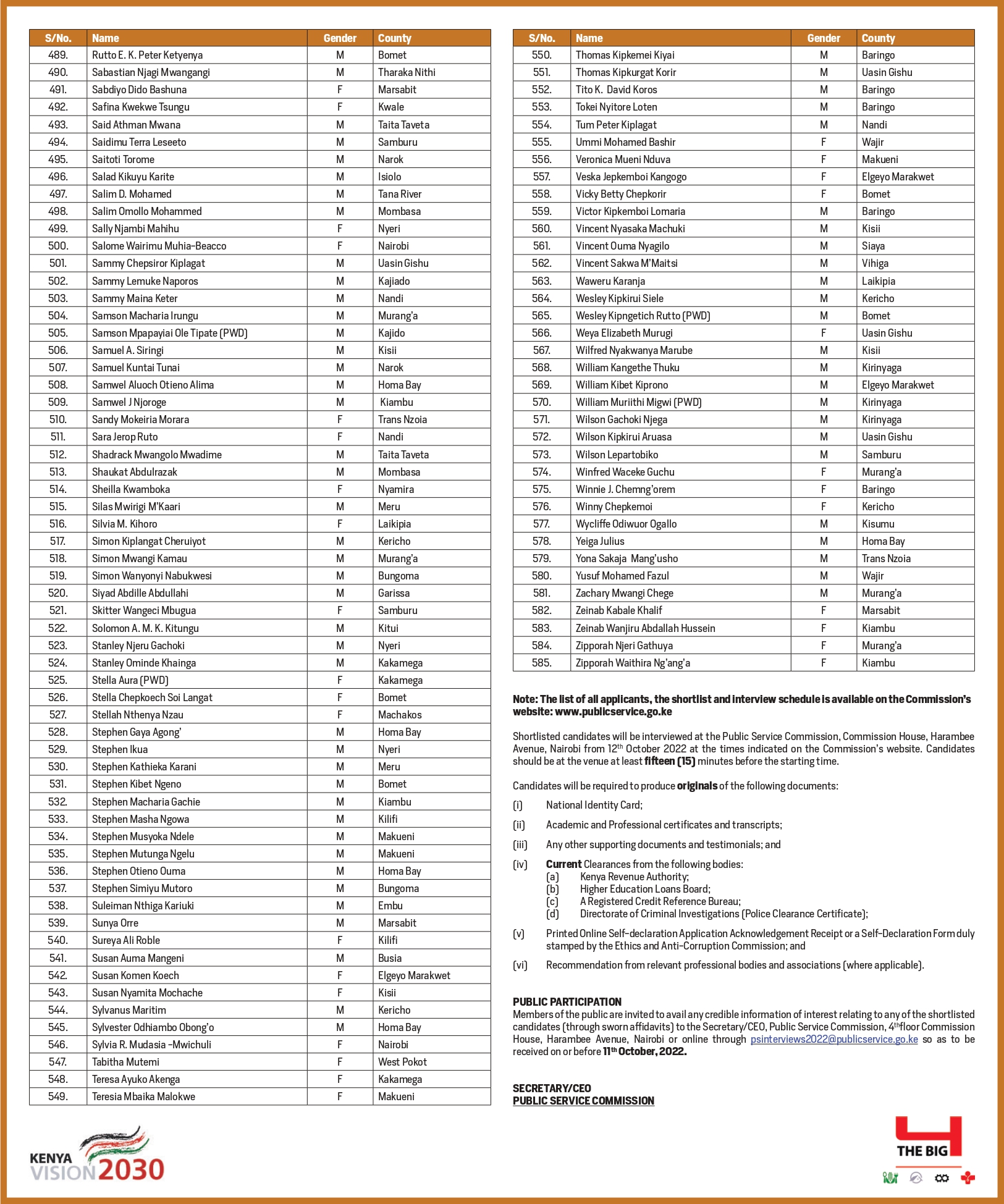
The Independent Electoral and Boundaries Commission (IEBC) commissioner Boya Molu is among the shortlisted candidates for Principal Secretaries jobs.

This is after the Public Service Commission (PSC) revised the list it had published on Friday, to include 108 names that were not on the initial list.

PSC had published 477 names in the initial shortlist but after revision, 585 names were published.

Boya Molu’s name features at number 396.

Former nominated MP David Sankok has also made it to the new list. Also included in the list was former Kisauni MP Ali Mbogo.

Former executive director of Kenya’s Non-Governmental Organizations (NGOs) Board, Fazul Mohamed, was also included in the new list.

PSC explained that it cancelled the list published on Friday, October 7, to make the process more inclusive.

See the full list below.

Image
Image
Image
Image
Image
0 comment
0 FacebookTwitterPinterestLinkedinTumblrWhatsappTelegramEmail

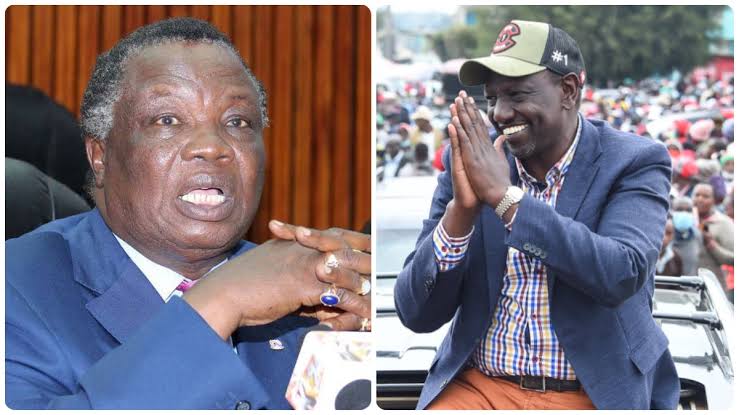
COTU Secretary General Francis Atwoli has broken his silence moments after the Supreme Court of Kenya upheld President elect William Ruto’s Win.

The Chief Justice Martha Koome-led court on Monday afternoon ruled that the Independent Electoral and Boundaries Commission (IEBC) had conducted a free, fair and verifiable election.

Atwoli has been heard confidently saying that Ruto will not become the president of the republic of Kenya.

The COTU boss has maintained his remarks during the Azimio la Umoja-One Kenya Coalition campaigns, and before that, he had even been heard saying that Ruto will not be on the ballot.

However, after the Supreme Court verdict, Atwoli took to his official social media handles and congratulated President elect Ruto.

Atwoli noted that COTU had unanimously agreed during their executive board meeting that they would thank and Congratulate the victor.

He went ahead to appeal to the workers and Kenyans at large to remain peaceful after the Supreme Court verdict.

“During COTU (K) Executive Board meeting on 17th August, we resolved THAT immediately after the Supreme Court judgement, we must thank and congratulate the victor. Consequently, we congratulate President William Ruto. We appeal to workers and Kenyans in general to remain peaceful,” Atwoli tweeted.

0 comment
0 FacebookTwitterPinterestLinkedinTumblrWhatsappTelegramEmail

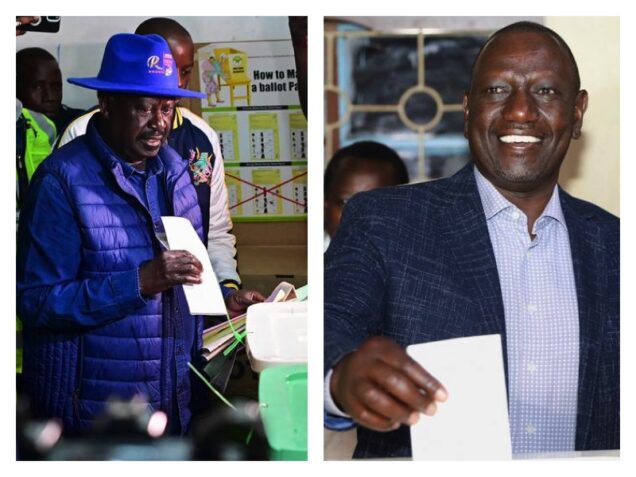
Azimio la Umoja-One Kenya coalition candidate Raila Odinga is leading the presidential race ahead of UDA’s William Ruto.

This is according to the official results announced by the Independent Electoral and Boundaries Commission (IEBC) from 69 constituencies as at Saturday 1500hrs.

With over 26% of votes counted, Raila had 54% and Ruto had 45%. The results are being displayed on a large screen at the IEBC presidential tallying centre at the Bomas of Kenya.

Kenya took to the ballot on Tuesday, August 9, 2022 to elect new leaders both at the local and National level.

Raila and Ruto are in a tight race to succeed President Uhuru Kenyatta who has finished his two-term limit.

Kenyans have been anxiously waiting for the announcement of the official presidential results. The process has, however, been slow since all the 34A and 34B forms have been subjected to a verification process before any announcement is made.

IEBC chairman Wafula Chebukati who is also the presidential returning officer blamed party agents, who are allowed to scrutinise results forms before they are added to the final tally.

The media started tallying the provisional results after the vote on Tuesday evening which showed Raila and Ruto neck to neck in a tight race.

The tallying of the provisional results, however, stopped after the IEBC started receiving results from constituency level, with Webuye East constituency in Bungoma County having been the first one to submit the results.

The provisional results showed small margins between Raila and Ruto.

Azimio la Umoja on Saturday held an inaugural conference of inspiration, congratulations and challenge for all its elected members.

They stopped just short of saying the ‘sacred’ words reserved for the IEBC, the name of the next president of the Republic of Kenya.

The meeting at the Kenyatta International Convention Centre was  chaired by running mate Martha Karua who all but said Azimio-One-Kenya had won.

She said they had “the numbers” in Parliament and cited victories in numbers of governors and other seats won by the alliance and announced by the IEBC . 

Azimio has its own tallying centre, as does Ruto, UDA flagbearer and Kenya Kwanza leader.

Participants wore Azimio blue as an ecstatic crowd gathered outside KICC. 

The tallying of the presidential results is ongoing at the Bomas of Kenya in Nairobi with the IEBC required to declare the winner before Tuesday, August 16, 2022.

0 comment
0 FacebookTwitterPinterestLinkedinTumblrWhatsappTelegramEmail

Nairobi County Senator and the United Democratic Alliance (UDA) gubernatorial candidate Johnson Sakaja can now breathe a sigh of relief in his quest to clinch the city’s top most political seat.

This is after the Independent Electoral and Boundaries Commission (IEBC) Disputes Tribunal on Sunday June 19, 2022 dismissed a petition challenging his gubernatorial candidature.

The Electoral agency which was hearing the petions filed against various candidates for a last day avered that it does not have jurisdiction to authenticate academic papers.

Sakaja has now been given a greenlight to contest for the Nairobi County gubernatorial seat in the upcoming August 9 General elections.

Also cleared to vie is the Wiper Party gubernatorial candidate in Machakos County Wavinya Ndeti.

The two candidates have been facing hurdles in their candidature over degree certificate hitch.

Several petitioners had moved to stop them from vying arguing that their degree certificates are not aunthicate.

Sakaja had presented a degree certificate from Team University in Uganda while seeking clearance to vie.

However , the degree was revoked days later by the Commission for University education.

The commission had tasked Sakaja to prove beyond reasonable doubts that he studied at the Saud University.

He had been asked to present, among other documents his school ID, proof of fee payment, a graduation photo, a graduation booklet, course work and the names of some of his lecturers.

He was to present the said documents by tomorrow Monday, June 20, 2022.

0 comment
0 FacebookTwitterPinterestLinkedinTumblrWhatsappTelegramEmail

Bungoma Governor Wycliffe Wangamati has been cleared to defend his seat in the upcoming August 9, 2022 general election.

This is despite the recent claims that he may be barred by the Independent Electoral and Boundaries Commission (IEBC) for appointing his running mate Sitati Nangalama, a state officer who did not resign on time.

This forced Wangamati to land on another option, Evans Wekesa as his running mate.

Speaking at the IEBC offices in Bungoma town, Wangamati who could not hide his joy rubbished the rumors that had been going round that he may not be cleared.

He called out his opponents to brace themselves for a very tough battle and also asked them to conduct their campaigns in peace.

“There have been rumors going around that I won’t be cleared but today I have been cleared and am now prepared to move forward. I urge every person who is seeking to be elected on any seat to conduct their campaigns in peace because Kenya is bigger than anyone and it will have to go on after the 9th of August so let us demonstrate peace,” he said.

Tongaren MP Dr. David Eseli who was also present called out the Ford Kenya party leader Moses Wetangula to stop misleading the people of Bungoma by imposing leaders on them saying that he can choose where to take his one vote but let the people choose the leaders that they want.

The DAP-K party leader Wafula Wamunyinyi also condemned Wetangula for the remarks he made while escorting the senate speaker Ken Lusaka who was presenting his papers to the IEBC on 5th where he said that his team is ready to get physical during this campaign when need arises.

“We are not going to be shaken by any threats and if anyone thinks that he can engage in violence during this period then he should look for people who can condone that and not us. We as DAP-K and AZIMIO One Kenya coalition at large, we advocate for peaceful campaign period and elections,” he said

0 comment
0 FacebookTwitterPinterestLinkedinTumblrWhatsappTelegramEmail

Sirisia MP John Koyi Waluke has been cleared by the Independent Electoral and Boundaries Commissions (IEBC) to defend his seat despite the ongoing graft case.

Waluke was in 2020 convicted for acquiring Ksh 313 million through the National Cereals and Produce Board (NCPB) fraud.

Just recently, Waluke’s name had appeared on the list of the aspirants who had been blacklisted by EACC because of integrity questions but he was on Tuesday May 31, 2022 cleared to seek reelection in his constituency.

He expressed his joy noting that the constitution of Kenya is supreme and he is protected by it saying that there was no one eligible to deny him a chance to vie for any seat in the country.

“I am very happy to have been cleared and I really appreciate the IEBC for standing firm to prove that indeed they are independent and they have done their work independently. Today is the day to show everybody in the country that I have been cleared and to make it clear to my opponents that am 100% in the race,” he said.

Waluke went ahead to ask the residents of Sirisia, Kenyans at large and also the political leaders and aspirants to ensure they observe peace during this campaign period, asking the youths to refuse being lured onto violence by politicians to cause havoc and destruction in the society.

Waluke went ahead to ask the residents for cooperation in building the constituency saying that he will work closely with the incoming president to ensure that Sirisia benefits largely in its government if reelected.

He also drummed up support for the AZIMIO presidential candidate Raila Amollo Odinga saying that he is the one forming the next government.

He asked the residents to be keen to protect their votes saying that they should not vote for the people that they are sure they cannot win.

0 comment
0 FacebookTwitterPinterestLinkedinTumblrWhatsappTelegramEmail

The independent Electoral and Boundaries Commission (IEBC) has yet again missed out on the target of the anticipated second phase of voter’s registration following a low turnout.

Bungoma county election manager Solomon Mudanya while speaking to this writer noted that since the roll out of the second phase of voter’s registration on 17th January to 6th, the expected number to be registered in Bungoma county was 186,000 but they barely registered a quarter of the desired number which was 33,179 voters only.

Mudanya further expressed his dissatisfaction in the low turnout of the youths saying that the high number among the registered was the medium aged people as compared to the youths.

“I think apathy is high among the young people and should be the main reason that has led to low turnouts among the youths. They tend to not seeing the necessity in engaging in voting because they have been failed by the leaders that they chose before, however, they have the power and the number to elect the right leader who can represent them well but they instead choose to ignore,” he said

He said that Bungoma county was also affected by unnecessary transfers whereby the residents transferred their voter to other counties or different constituencies after being manipulated by the aspirants by giving them handouts.

The second phase of voter’s registration came about after the government failing to meet the target in the first phase hence giving another chance to the citizens who haven’t registered to do so.

Mudanya noted that there might be no other phase to conduct the exercise and so the registered ones might be used to represent those who didn’t register.

0 comment
0 FacebookTwitterPinterestLinkedinTumblrWhatsappTelegramEmail

According to Communications Authority of Kenya (CA), a total of 224 polling stations might bring headache since they have no network coverage, a move that might disadvantage transmission of results.

CA Director General Ezra Chiloba yesterday told the senate ICT Committee that if no action is taken between now and August, then the Independent Electoral and Boundaries Commission will be compelled to use satellite mobile phones to transmit from the areas.

Ezra Chiloba said that CA is making all efforts to ensure that most polling stations and centers are covered with either 3G or 4G network.

Submission of electoral results to IEBC headquarters is by law supposed to be done electronically from the polling stations, and was the min sticking point in the 2017 elections, as this was not proved to have been done in many cases due to lack of reliable internet connectivity.

The Supreme Court in the 2017 that nullified the presidential elections narrowed down on 11,000 polling stations, some of them in Kiambu, Murang’a, Kisumu, and other places that generally should have good internet network, and with the IEBC said could not transmit their results forms because of lack of connectivity.

Mr. Chiloba has said 481 polling centers that have 2G network coverage will be upgraded to 3G and/ or 4G network before the polls.

Mot of these 224 polling stations are in marginalized areas. Chiloba said that CA is facing challenges such as insecurity and resistance from the communities in the region in ensuring they are covered.

“You got to Turkana for example to ensure that they have network but the locals will tell you they need water and not network,” Mr. Chiloba told the committee chaired by Baringo Senator Gideon.

He said that due to accessibility challenges, the electoral commission is yet to submit GPS coordinates of 140 polling centers so that they can be covered.

However, Kitui SEnator Enock Wambua asked why the network coverage issue was being addressed late.

“An election cycle is five years in Kenya, why wait until few months before elections to release that some areas don’t have network. Why do I have the feeling that CA is just concerned with the 2022 elections and connecting various parts of the country to network coverage?” he asked.

Nominated Senator Abshiro Halake told Chiloba to ensure that technology will be an equiliser for all the regions ahead of the 2022 elections.

She also expressed concerns why some regions have no network totally yet some regions are set for an upgrade of 3G to 4G.

In as situational brief on September this year, IEBC chairman Wafula Chebukati told CA to solve the issue of of 3G internet network, which the commission says only covers 83.6 percent of the country.

However, Mr. Chiloba on Monday told the senators that 3G network coverage now stands at 97 percent of the country.

0 comment
0 FacebookTwitterPinterestLinkedinTumblrWhatsappTelegramEmail

As the countdown to 2022 general elections continues, there are 15 vote-rich counties that are possibly the determinants of the winner in the presidential contest between Deputy President William Ruto and ODM leader Raila Odinga.

In an analysis done by Nation.Africa, the two most recent presidential elections shows the 15 counties made all the difference between Jubilee Party’s double wins and the opposition’s losses.

It indicates their huge bearing on the August polls if past voting patterns are repeated.

In 2013, Uhuru Kenyatta beat his opponent Mr. Odinga by a thin margin of 800,000 votes, and only 8000 ballots separated them from going into a run-off based on the electoral rules that require a winning presidential candidate to secure above 50 percent of total votes cast.

While in 2017, President Kenyatta garnered more votes and the margin between him and Raila Odinga widened by 1.5 million votes. This change was immensely contributed by the 15 counties which all gave Jubilee Party 1.1 million votes.

In seven of these counties; Murang’a, Nyandarua, Marsabit, Kisii, Nyeri, Kirinyaga and Nyamira- Raila’s votes reduced by over 80,000 in 2017 compared to 2013. While Mr. Kenyatta’s votes gained almost 500,000 extra votes in the seven counties in 2017.

This has made Mr. Odinga to work hard in campaigning in these counties to woo Jubilee voters.

The other counties that assisted Uhuru Kenyatta to lead were Kiambu, Nakuru, Tharaka Nithi, Meru, Embu Turkana, Uasin Gishu and Laikipia.

The current political rivals, Raila Odinga and DP Ruto have camped in these counties lately as campaigns gather momentum, showing an analytical approach to the rivals’ vote-hunting strategies.

Although the Supreme Court nullified 2017 results, the figures are the only reliable numbers to compare voting patterns with 2013.

Importantly, these 15 counties account for a third of the recently projected new voters that IEBC targets to register by next year’s General Election.

The counties are home to approximately 2.8 million of the potential 9.2 million new voters that the electoral body aims to register.

What this means is that the presidential aspirants must work hard to get the high voter turn out in these regions.

0 comment
0 FacebookTwitterPinterestLinkedinTumblrWhatsappTelegramEmail

The Independent Electoral and Boundaries Commission (IEBC) has changed the day of Gazettement of the 2022 General Elections.

In an announcement made on Friday, the commission said that it will Gazette the date of elections on January 19, which is a change from an earlier set date of March 14, 2022.

IEBC also announced that it has made changes to the date on when political parties should submit candidates’ names to the agency.

The new date for political parties to declare their candidates in the next General Election is May 26, 2022.

Initially, the parties were to conduct party primaries, resolve intra-party disputes and submit names of candidates from April, 16 2022 to May 19.

The electoral body said that this will expand the timelines and allow parties a period of 129 days to conduct party primaries.

The Commission’s chairperson Wafula Chebukati last month said that the general elections will be held on August t, and no plans to adjust the date.

On August 9, during a meeting with media stakeholders in Mombasa, Chebukati said that he saw reports of planned delay of the general elections.

He said that IEBC does not react to opinions from organizations or individuals.

According to him, the election date is clearly indicated in the Constitution and no one has supreme power to alter poll dates.

0 comment
0 FacebookTwitterPinterestLinkedinTumblrWhatsappTelegramEmail