Home Tags Posts tagged with "KETRACO"
Tag:

KETRACO

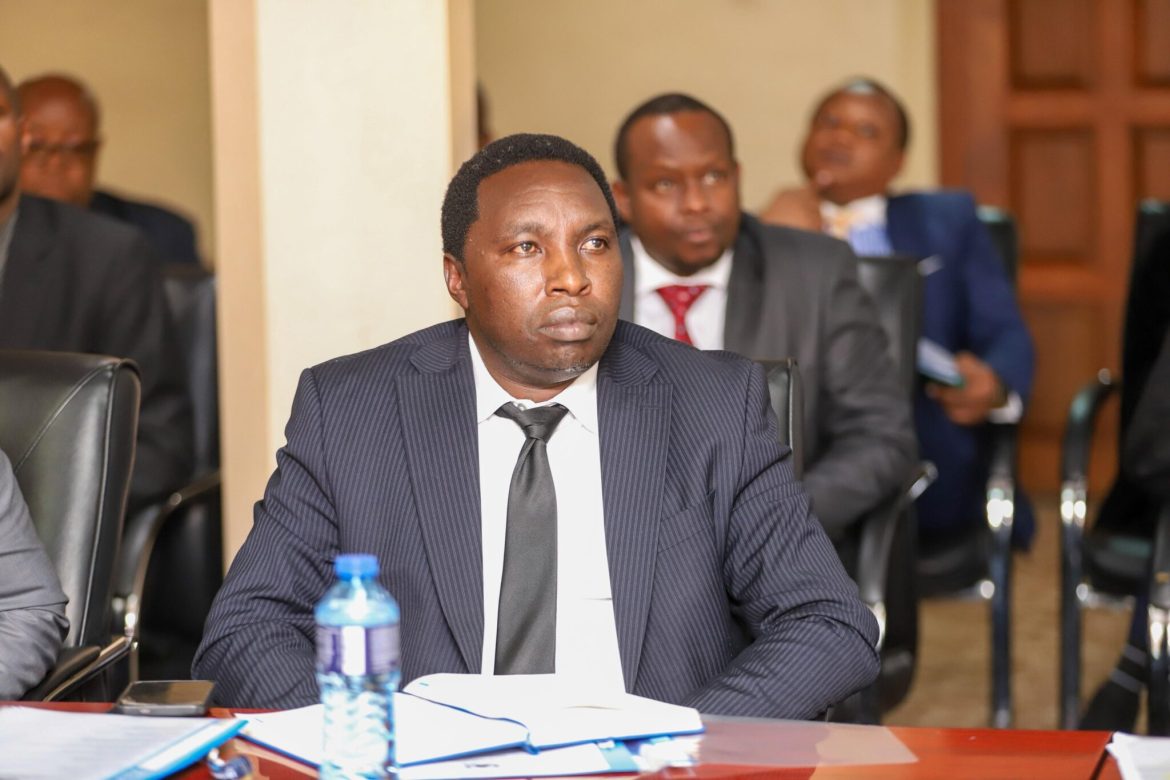
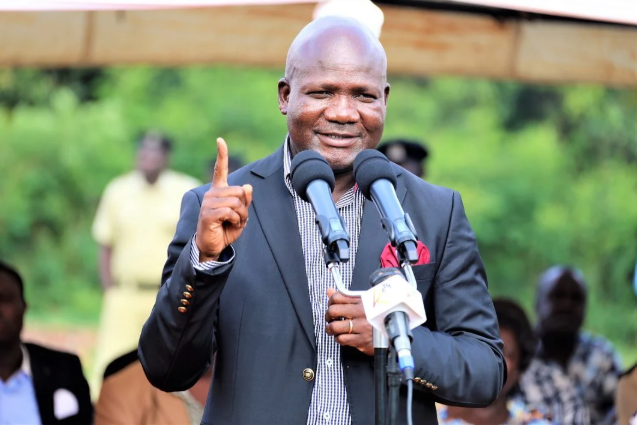
Kipkemoi Kibias, the Acting Managing Director and Chief Executive Officer of the Kenya Electricity Transmission Company Limited (KETRACO)

A storm is raging at the heart of Kenya’s energy sector after the Kenya Electricity Transmission Company (KETRACO) abruptly cancelled its high-stakes recruitment for a substantive Managing Director and CEO, fueling explosive claims that the process had been tailored from the outset to favour acting boss Kipkemoi Kibias.

The sudden U-turn, announced in a brief notice on April 23, 2026, came just days after a Nairobi law firm threatened court action, citing what it described as a deeply flawed and illegal recruitment process.

But while the advert is gone, the questions it has raised are only getting louder.

KETRACO Recruitment Process That Collapsed Overnight

KETRACO had advertised the top job on April 7, positioning it as a routine public sector hiring process. Less than three weeks later, the entire exercise was scrapped—without explanation.

Insiders say the board’s rapid retreat is telling.

“Boards don’t just cancel CEO recruitments overnight unless there’s a serious problem,” said an energy sector analyst familiar with the developments. “This looks less like a mistake and more like a plan that got exposed.”

At the centre of the controversy is whether the recruitment was ever genuinely open—or whether it was structured to formalise the appointment of Kipkemoi Kibias, who has been serving in an acting capacity since September 2025.

The “Rigged Criteria” Allegations

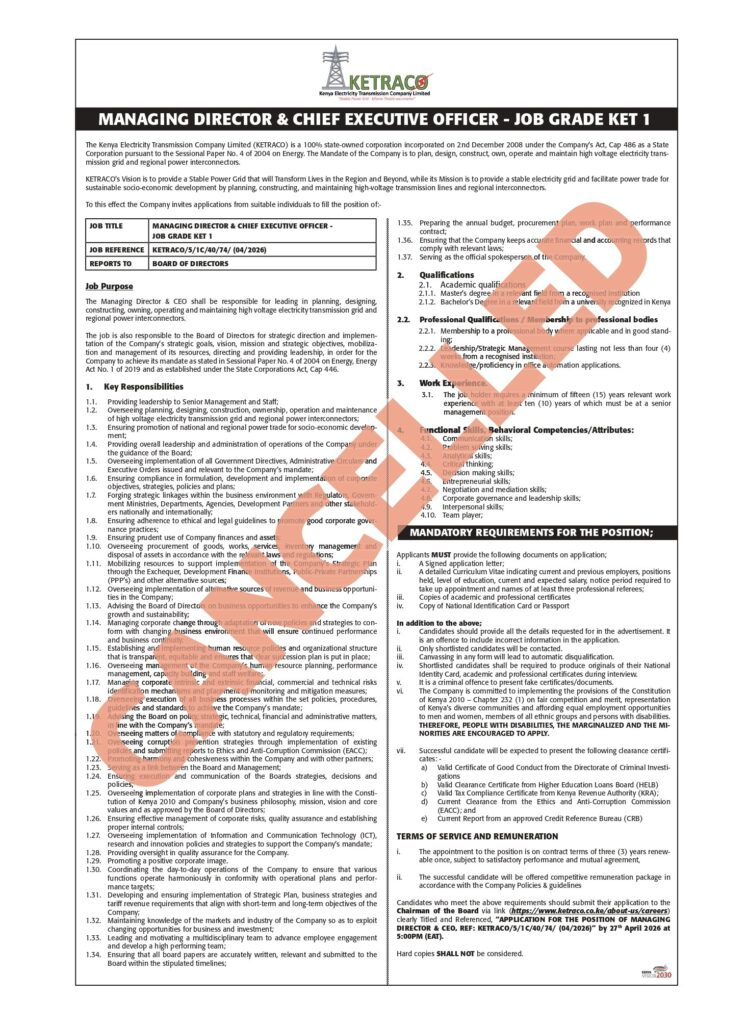
The now-cancelled advert has drawn intense scrutiny for allegedly introducing qualification requirements that go beyond what Kenyan law provides.

Legal experts point to the Government-Owned Enterprises Act 2025, which sets clear minimum qualifications for CEOs of state corporations: a relevant degree, at least 10 years’ experience, five years in senior management, and compliance with integrity standards.

However, the KETRACO advert reportedly went further—demanding a Master’s degree and introducing additional experience thresholds.

More controversially, it required candidates to present a Credit Reference Bureau (CRB) clearance, a condition not provided for in law.

Critics argue that such requirements can act as silent filters.

“In Kenya’s economic climate, CRB listings are common—even among highly qualified professionals,” said one governance expert. “Introducing that requirement is an effective way to lock out competition without naming names.”

The suspicion among insiders is that these criteria could have narrowed the field in a way that advantaged an insider candidate—namely Kipkemoi Kibias.

The 20-Day Window That Triggered Alarm

The controversy did not end with the qualifications.

The advert ran for 20 days, falling short of the 21-day minimum required under public service hiring guidelines. That single day difference has now become a critical legal fault line.

Within days, a Nairobi law firm issued a formal demand letter to KETRACO’s board, warning that the entire process was unlawful and threatening immediate court action.

The board folded almost instantly—cancelling the advert before the deadline for legal action even expired.

For many observers, that quick capitulation speaks volumes.

“If they believed the process was clean, they would have defended it,” said a Nairobi-based lawyer. “Instead, they pulled it down immediately.”

The Man at the Centre: Kibias

While no official wrongdoing has been established against Kipkemoi Kibias, his position at the centre of the controversy is unavoidable.

A long-serving KETRACO insider, Kibias rose through the ranks to become General Manager for System Operations before being appointed acting CEO following the abrupt exit of former boss John Mativo.

He has held the acting role for over seven months—a period critics say should have been sufficient for a clean and transparent recruitment process.

Instead, what emerged was a flawed advert that lasted barely two weeks before being scrapped.

That sequence of events has fueled claims that the process may have been engineered to legitimise a predetermined outcome.

A Board Under Pressure

The scandal has placed the KETRACO board, chaired by Mohamed M Abdi, under intense scrutiny.

This is not the first time the company has faced governance questions. Previous disputes over board appointments and internal management decisions have already drawn legal challenges and public criticism.

Now, the CEO recruitment saga threatens to deepen concerns about transparency, accountability, and compliance within one of Kenya’s most strategic state corporations.

KETRACO plays a central role in the country’s electricity infrastructure, managing high-value transmission projects that directly impact economic growth and energy access.

What Happens Next?

With the advert cancelled, attention now shifts to what comes next.

KETRACO is expected to re-advertise the CEO position—but under significantly increased scrutiny from legal experts, policymakers, and the public.

Any repeat of the earlier irregularities could trigger immediate court action.

Meanwhile, pressure is mounting on the Ministry of Energy and other oversight bodies to ensure the next process is fully compliant with the law and free from manipulation.

Bigger Than One Job

Beyond the immediate controversy, the scandal has reignited a broader debate about governance in state corporations.

The Government-Owned Enterprises Act 2025 was introduced to curb exactly this kind of alleged manipulation—where boards quietly shape recruitment processes to favour preferred candidates.

If the allegations around KETRACO prove accurate, critics warn it could signal that old habits persist despite new laws.

A Cloud That Won’t Lift Easily

For Kipkemoi Kibias, the stakes are particularly high.

Even if he eventually secures the substantive CEO role, the controversy surrounding this aborted recruitment could cast a long shadow over his tenure.

Because in public institutions, perception matters as much as process.

And right now, the perception is clear—and deeply troubling:

That Kenya’s most critical energy infrastructure company may have tried to stage-manage its own leadership transition.

Whether that perception proves justified will depend on what happens next.

But one thing is certain—the next move by KETRACO will not go unnoticed.

0 comment
0 FacebookTwitterPinterestLinkedinTumblrWhatsappTelegramEmail
KETRACO SGR Deal

Fresh questions are emerging over a controversial Sh24.2 billion Standard Gauge Railway (SGR) electrification deal after the Kenya Electricity Transmission Company Limited (KETRACO) quietly deleted key webpages detailing the project, which was signed in 2018 under the leadership of then Managing Director Fernandes Barasa.

The deleted webpage had announced the signing of a $240 million (approximately Sh24.2 billion) contract between KETRACO and China Electric Power Equipment and Technology Company Limited, promising to electrify the Mombasa–Nairobi SGR line and have electric trains running by 2021.

A screengrab of the deleted webpage on the KETRACO website.

It is now 2026, and the SGR continues to operate on diesel-powered locomotives, raising concerns that the ambitious electrification project may have been nothing more than a paper deal.

Screenshots of the now-deleted page, which have been circulating online, show KETRACO once celebrated the agreement as a major milestone in modernising Kenya’s flagship railway project. The disappearance of the page has triggered suspicions of a possible cover-up and renewed scrutiny of decisions made during Barasa’s tenure.

The development comes amid growing accountability pressure on KETRACO, particularly after Auditor General Nancy Gathungu revealed that the agency owes landowners more than Sh4 billion in unpaid compensation linked to various transmission projects.

At the time of signing the SGR electrification deal in January 2018, KETRACO announced plans to construct 14 substations along the 472-kilometre railway corridor, with completion expected within 28 months. Fernandes Barasa publicly championed the project, touting zero carbon emissions, lower operating costs, faster trains, and expanded economic activity along the corridor.

However, doubts about the project’s feasibility surfaced almost immediately. Then Kenya Railways Managing Director Atanas Maina questioned whether Kenya had sufficient power supply and financing capacity to sustain an electric railway. Those concerns were later echoed by then Transport Cabinet Secretary James Macharia, who told Parliament that the country lacked both the guaranteed electricity supply and the financial muscle to support SGR electrification.

In a little-noticed clarification issued after the signing ceremony, KETRACO admitted that the agreement was only a commercial contract and not a financing deal. The agency stated that the contract would only take effect after the National Treasury secured funding—something that never happened.

“KETRACO has not borrowed any loan for the electrification of the SGR Project,” the agency said at the time, sharply contradicting earlier triumphant messaging suggesting the project was ready for implementation.

Critics are now asking why KETRACO publicly announced a Sh24.2 billion contract without secured financing, and whether the move was misleading by design or a result of gross mismanagement.

The controversy has revived scrutiny of Fernandes Barasa’s tenure at KETRACO, which was marred by several high-profile scandals. Barasa, now the Governor of Kakamega County, previously faced investigations by the Ethics and Anti-Corruption Commission over the Sh18 billion lost in penalties related to the delayed Lake Turkana Wind Power transmission line, as well as unexplained excess payments and irregular transactions.

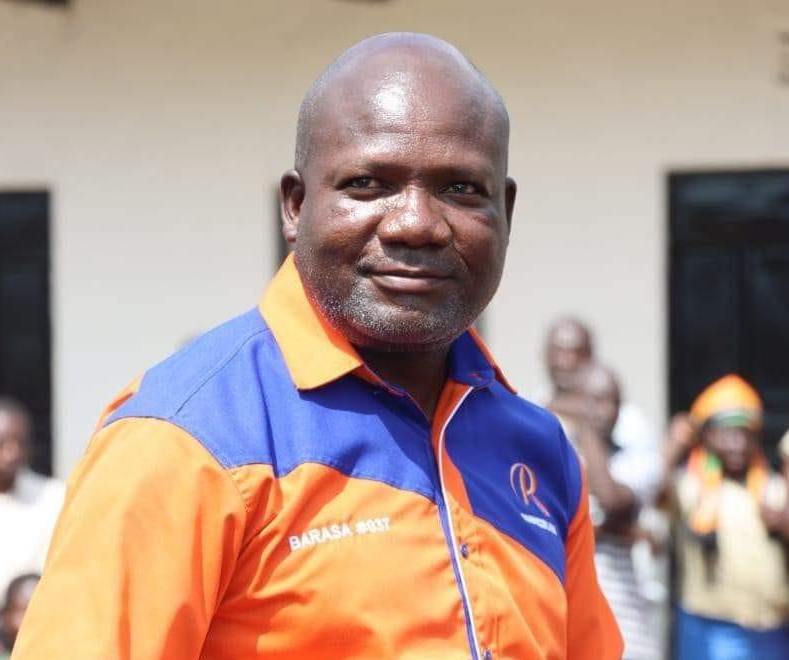
Former KETRACO MD and Kakamega Governor Fernandes Barasa.

His resignation from KETRACO in 2022, shortly before appearing before Parliament’s Public Investments Committee, was widely viewed as controversial.

The SGR electrification saga also highlights Kenya’s growing embarrassment when compared to regional peers. Ethiopia completed a 750-kilometre electric railway to Djibouti in 2016, while Morocco operates Africa’s first high-speed electric rail. Tanzania and Uganda are also planning electric SGR systems, raising fears that Kenya’s diesel railway could face interoperability challenges in the future.

Despite repeated requests, KETRACO has not explained why the webpage detailing the SGR electrification deal was deleted, who authorised the action, or whether any funds were ever paid to the Chinese contractor. Calls and emails to the agency’s current management went unanswered by the time of publication.

The silence has only fueled speculation that authorities may be attempting to erase public records of a failed or fictitious mega project.

As Kenyans continue to grapple with rising fuel costs and a struggling SGR that bleeds billions annually, the unanswered questions surrounding the Sh24.2 billion electrification deal remain glaring.

Was the project a genuine plan that collapsed, or a costly illusion sold to the public? And why, eight years later, does KETRACO appear more eager to delete evidence than to provide answers?

For now, the deleted webpage has become a symbol of broken promises, missing accountability, and a growing public demand to know what really happened to Kenya’s Sh24.2 billion.

0 comment
0 FacebookTwitterPinterestLinkedinTumblrWhatsappTelegramEmail

Kakamega Governor Fernandes Barasa was born to parents of limited means, and like millions of Kenyans, he grew up in the village.

The former Kenya Electricity Transmission Company Limited (KETRACO) CEO was born and raised in Khabondi village, Mumias East constituency in Kakamega County.

Fernandes Barasa Education

Fernandes Barasa began his schooling at a local primary school.

He then attended Naitiri High School and proceeded to Kenyatta University for Bachelor of Commerce, Master of Business Administration, and Ph.D. in Accounting and Finance degrees.

He joined KU in 1993 to pursue a Bachelor of Commerce degree in Accounting and graduated in 1997. He was the Chairman of Commerce Accounting Students Association (CASA) in 1996-1997.

Fernandes Barasa’s Career

Fernandes Barasa got his first job as an assistant accountant AT Kenya Airways in 1997.

Years later, he joined KETRACO and started out as a Chief Finance Officer, in 2010.

He would then rise to the rank of the Chief Executive Officer (CEO) at the same organization in 2015.

He is Fellow of Chartered Professional Accountants (FCPA) and former Chairman of the prestigious Institute of Certified Public Accountants of Kenya (2015 – 2017).

He also worked as the chairman of of the Institute of Certified Public Accountants of Kenya (ICPAK) between June 2015 and July 2017.

During his tenure as the Managing Director (MD) and CEO at Kenya Electricity Transmission Company Limited (KETRACO), he was conferred The Order of Grand Warrior (OGW) award in recognition of his outstanding and distinguished service to the nation in various capacities.

Since getting appointed to Ketraco in April 2016, Mr Barasa has grown in terms of wealth.

During the August 2022 general election, Barasa was elected the Kakamega County Governor on an Orange Democratic Movement (ODM) ticket.

Fernandes Barasa’s Family

Fernandes Barasa is married to Prof. Janet Kasilly Barasa. They are blessed with four children whose profile has been kept low.

Fernandes Barasa’s Wife

Barasa is married to Prof. Janet Nasambu Kassilly Barasa who is a senior lecturer at Masinde Muliro University of Science and Technology (MMUST).

She holds a doctorate degree in Islamic Religion and Culture.

Fernandes Barasa wins Kakamega gubernatorial race against Cleophas Malala |  Pulselive Kenya

Her areas of academic and research interest are in the fields of Islamic Theology, Comparative Religion, African Religion and culture, Religion and Gender.

Her major scholarly contribution was her role in unravelling the nexus between Islam and the Bukusu culture of Bungoma County and her role in Curriculum Review process for the School of Arts and Social Sciences.

Trinnykante (@76manuela) / Twitter

She currently serves as a Professor of Religion and Culture in the Department of Social Science Education at MMUST.

Fernandes Barasa Net Worth

Since getting appointed to Ketraco in April 2016, Mr Barasa has grown in terms of wealth.

He has been running his own foundation dubbed Fernandes Barasa Foundation which has been dishing out goodies to youths in Kakamega County.

Apart from issuing hundreds of boda boda motorcycles to youths, he has been constructing houses for the less foirtunate in Kakamega.

These saw him rise to be the Kakamega County Governor.

0 comment
0 FacebookTwitterPinterestLinkedinTumblrWhatsappTelegramEmail

An online poll has placed KETRACO CEO Fernandez Barasa as the suitable candidate to succeed Kakamega governor Wycliffe Oparanya.

The poll that was ran on Strawpoll.com by one of the platform’s users challenged Kenyans to vote for the most suitable candidate from alist that had Barasa, Kakamega Senator Cleophas Malala, former Kakamega Senator Boni Khalwale, Governor Opranya’s deputy Prof Kutima and Lugari MP Ayub Savula.

50% of those who voted had Barasa as their suitable candidate with only 30.18% voting for Malala.

Prof Kutima came third with 7.93% followed by Khalwale who had 6.71%.

In the poll that had a question “who is best suited to replace Oparanya in 2020”, Savula emerged last with 5.18%.

The online poll had attracted 328 by the time this story went on air.

The 2022 Kakamega gubernatorial race is expected to be very tight with the current senator expected to face it off against the current KETRACO CEO FCP Fernandez Barasa.

In Kenya online polls are used to do analysis of the support base of a candidate and do political calculations.

0 comment
0 FacebookTwitterPinterestLinkedinTumblrWhatsappTelegramEmail