Home Author
Author

Daily Trends

Kenya’s growing digital adoption is transforming how individuals manage their daily lives, from mobile banking to online shopping and e-commerce. However, this convenience comes with significant risks. While the Communications Authority (CA) recently reported an 82% drop in cyberattacks—down from 4.6 billion incidents in the previous quarter to 842.3 million—the threat to personal cybersecurity remains high.

Cybercriminals are shifting tactics, targeting individuals through weak passwords, outdated software, and poor online security practices. This has left many Kenyans vulnerable to exploitation, with identity theft emerging as a particularly alarming issue.

Fraudsters are taking advantage of gaps in verification systems to steal personal information, leaving victims to deal with financial losses, damaged reputations, and the stress of reclaiming their identities.

#KaaChonjo

Take Justus for example. One morning, he received a call from a fake bank representative claiming that his national ID had been used to register multiple SIM cards and take out loans he knew nothing about. The caller urged him to share his ID number and other personal details to “resolve the issue” immediately.

Feeling uneasy, Justus remembered Equity Bank’s fraud awareness campaigns that emphasized: “Always verify before you act.” Instead of sharing his details, he hung up and called Equity Bank’s official customer care line at 0763 000 000. The bank’s representative confirmed that the call was a scam, reassured him that his account was secure, and verified that no new loans had been taken out in his name. They also guided him on steps to protect his identity, including reporting the incident to the relevant authorities and safeguarding his personal information.

Thanks to his quick thinking and the bank’s support, Justus avoided becoming a victim of identity theft and ensured his finances remained safe.

How Fraudsters Operate

Unfortunately, not everyone is as prepared as Justus. Fraudsters are constantly devising new ways to exploit unsuspecting individuals. They often use tactics like:

  • SIM-swap fraud: Fraudsters gain access to your phone number and use it to intercept sensitive information like OTPs.
  • Phishing scams: Fake emails or messages trick victims into revealing personal details that are stolen.
  • Data breaches: Stolen personal information is used to access credit facilities or commit other fraudulent activities.

Equity Bank is committed to ensuring the safety of its customers by providing robust security measures and empowering you with the knowledge to stay ahead of fraudsters. Here’s how you can protect yourself and your finances:

  • Always verify: If you receive a suspicious message or call, contact Equity Bank’s official customer care line (0763 000 000) for guidance.
  • Enable two-factor authentication (2FA): Add an extra layer of security to your accounts.
  • Never share sensitive information: Your PIN, OTP, passwords, or account details should remain private. Equity Bank will never ask for this information via phone, text, or email.
  • Monitor your accounts: Regularly check your transactions and report any unusual activity immediately.
  • Secure your devices: Use strong passwords, enable two-factor authentication, and avoid saving your banking passwords on shared devices.
  • Avoid public Wi-Fi: Use mobile data for online banking to prevent fraudsters from intercepting your information.
  • Verify communication: Always confirm any communication from banks by contacting official customer service numbers.
  • Act quickly: If your card, phone, or SIM is lost, report it immediately to block unauthorized access.

By staying vigilant and following these tips, you can protect your hard-earned money and ensure a safer financial future. Remember, Equity Bank will never ask for your PIN, OTP, or password. If in doubt, always call the official customer care line for assistance.

For more tips on secure banking, visit: Secure Banking Tips | Equity Bank Kenya

0 comment
0 FacebookTwitterPinterestLinkedinTumblrWhatsappTelegramEmail

Guinness, the Official Beer of the Premier League, is bringing its legendary Guinness Matchday experience back to the Bar Next Door, Kiambu Road and Konqa on Sunday, 1st March 2026. 

Starting from 5:00 p.m. till late, football enthusiasts will gather for a high-stakes double-header that could decide the fate of the 2025/26 Premier League. 

The evening kicks off with Manchester United facing Crystal Palace. While the Red Devils look to solidify their standing, the spotlight shifts to a massive London Derby as Arsenal take on Chelsea. 

For Mikel Arteta, this is a crucial game. Currently holding a five-point cushion at the top of the table, this fixture is widely anticipated to represent the defining period of their season. A win against their London rivals would firmly maintain them as favourites for the Premier League trophy, while a slip-up could open the door for the chasing pack. 

The experience will feature live screening of the games on HD screens, with perfect sound, Guinness Clean Sheet Challenge, expert punditry from our Matchday Committee, and perfectly chilled Guinness. 

Off the pitch, the energy will be just as electric, at the Bar Next Door, the atmosphere will be curated by the smooth sounds of Charisma and the high-octane energy of MC Gogo, supported by the relentless vibes of BV Accurate and DJ Daffy. The party train goes all the way to Konqa, where hip-hop heavyweight Khaligraph Jones will headline the night alongside the incomparable mixmaster DJ Grauchi. 

Event Details

  • Date: Sunday, 1st March 2026 
  • Venue: Konqa 254, Ruaka and Bar Next Door, Kiambu Road 
  • Time: 5:00 p.m. –till late 
  • Entry: FREE  

Please drink responsibly. Alcohol is not for sale to persons under the age of 18.

0 comment
0 FacebookTwitterPinterestLinkedinTumblrWhatsappTelegramEmail

Treasury Cabinet Secretary John Mbadi has fired a warning shot at Kenya’s embattled microfinance and digital credit sector, threatening to revoke licences of firms that deliberately structure loans to make repayment impossible — even as four of the industry’s most controversial players walked free from court on a legal technicality.

Appearing before the Senate on Wednesday, Mbadi accused some lenders of issuing logbook-secured loans with the hidden objective of repossessing and selling borrowers’ vehicles rather than recovering debt.

“There are lenders who issue credit facilities and take borrowers’ logbooks with the objective of selling the vehicles. They have structured the loans in such a way that repayment becomes practically impossible. Such entities must operate within the law or we will revoke their licences,” Mbadi told senators during a session broadcast live.

His remarks come barely 48 hours after the High Court dismissed a constitutional petition seeking to eject Mwananchi Credit Limited, Platinum Credit Limited, Izwe Loans Limited and Premier Credit Limited from the market over allegations that they were advancing digital credit without proper licensing from the Central Bank of Kenya (CBK).

Court Escape on Technical Grounds

The petition, filed by Mark Muko, argued that the four lenders had been operating illegally, exposing borrowers to predatory interest rates and abusive recovery practices.

However, the High Court ruled that the petitioner had failed to exhaust dispute resolution mechanisms provided under the Microfinance Act Regulations before approaching the court, rendering the case premature and procedurally defective.

Legal experts note that the ruling was not a declaration of compliance by the lenders but a procedural dismissal. “The court did not give digital lenders a clean bill of health. It simply said the matter was brought to the wrong forum at the wrong time,” one Nairobi-based advocate observed.

Litigation Storm and Inflated Debt Claims

For some of the named firms — particularly Mwananchi Credit — the reprieve comes amid mounting litigation. A landmark 2023 High Court decision drastically reduced a Sh22 million loan demand to the original Sh7 million principal, affirming the application of the in duplum rule, which bars lenders from charging interest exceeding the principal loan amount.

Subsequent rulings have questioned ballooning loan claims and repossession tactics, with judges warning that courts will not allow microfinance firms to operate outside statutory protections designed to shield borrowers from exploitation.

Court records indicate a surge in cases challenging loan terms, with potential combined claims against some lenders running into billions of shillings if even a fraction succeed.

Regulatory Crackdown

Mbadi outlined sweeping regulatory reforms aimed at restoring order to a sector that has expanded rapidly in recent years.

He disclosed that the CBK now requires all Non-Deposit Taking Credit Providers to obtain licences under a strengthened Digital Credit Providers framework, which sets eligibility, governance and consumer protection standards.

As of December 2025, 195 licensed entities were advancing a combined Sh110.5 billion in credit to Kenyan borrowers.

The Treasury has also quadrupled fines for violations of the Banking Act from Sh500,000 to Sh2 million. Mbadi confirmed that credit providers’ pricing models must comply with the in duplum rule under Section 44 of the Act.

Additionally, the CBK is working with the Office of the Data Protection Commissioner to curb abusive debt collection practices, including doxxing and harassment of borrowers’ contacts.

Data from the Competition Authority of Kenya shows consumer complaints against microfinance and digital lenders rose by 28 percent in 2025 — the sharpest annual spike recorded.

A Sector at a Crossroads

The near-simultaneous Senate warning and court dismissal highlight the contradictory moment facing Kenya’s credit market. While the judiciary insists on procedural discipline, the Executive has signalled that regulatory tolerance for predatory lending has ended.

For lenders, the message is clear: comply with licensing rules, maintain transparent pricing structures and respect consumer protection laws — or risk losing the right to operate.

For borrowers emboldened by recent court precedents and Mbadi’s public stance, the legal battles are far from over. The petition may have collapsed on technical grounds, but the broader question of whether parts of Kenya’s digital lending sector have crossed the line from credit provision into financial exploitation remains very much alive.

0 comment
0 FacebookTwitterPinterestLinkedinTumblrWhatsappTelegramEmail
88 Nairobi Tower

An American investor has moved to the Environment and Land Court at Milimani, claiming he was fleeced of Sh225 million in a botched off-plan property deal tied to the high-profile 88 Nairobi development.

In court papers, the investor identified as KYH paints what he describes as a calculated scheme that led to the loss of more than Sh161 million after he committed to purchase ten premium apartments in the luxury skyscraper.

The 88 Nairobi Deal

The project, undertaken by Eighty-Eight Nairobi Limited, was marketed as Africa’s tallest residential tower and a symbol of opulence in Nairobi’s Upper Hill.

KYH says he signed the purchase agreement in March 2024 for a total consideration of Sh225 million, attracted by promises of high returns, world-class finishes, and strong capital appreciation.

88 Nairobi Tower project

According to the filings, by October 2024, he had paid approximately $1.25 million — more than 70 percent of the purchase price — fully settling seven of the ten units.

Sudden Default Notice

The dispute arose when the investor says he received a final notice demanding an additional $250,000 within three days, failure to which the developer would cancel the agreement.

He argues that the notice period was unreasonable, particularly given that he is based in the United States and frequently travels. He further claims that despite formally instructing the developer to route all official correspondence through his Kenyan lawyers, critical notices were sent directly to him.

In a sworn affidavit, he describes the move as deliberate and designed to trigger a technical default.

“What was presented as Nairobi’s iconic address has turned into a financial trap,” he states.

Liquidated Damages Clause

At the heart of the dispute is a contractual clause allowing the developer to retain up to 50 percent of the purchase price as liquidated damages in the event of default.

In this case, the investor says that could translate to roughly Sh113 million. He contends that the amount is punitive, disproportionate and amounts to unjust enrichment.

He further alleges that the developer utilized his $1.25 million to fund construction while declining to transfer title or refund the money. Under the agreement, any refund would allegedly depend on resale of the units and would not attract interest.

Multiple Respondents Named

The suit also names Jonathan Jackson, associated with the project through the Lordship Group, as having played a central role in marketing the development to diaspora investors.

Other respondents include Bank of Baroda, the Nairobi Lands Registrar and the Attorney-General.

KYH is seeking declarations that the termination of his agreement was unlawful and that his proprietary interests in the fully paid units remain valid. He also wants the court to restrain enforcement of forfeiture clauses and to order restitution of the sums paid.

Wider Market Concerns

In a dramatic turn, the investor has asked the court to allow other buyers in similar circumstances within the same project to join the proceedings — potentially opening the door to a broader legal battle over off-plan property sales practices.

The case adds to growing unease in Kenya’s off-plan property market, particularly where luxury developments heavily target diaspora investors with promises of prestige and profit.

The respondents had not filed their defence by the time of publication. The matter is awaiting directions at Milimani.

For now, the dispute casts a long shadow over 88 Nairobi, raising fresh questions about risk, transparency, and accountability in Kenya’s high-end real estate sector.

0 comment
0 FacebookTwitterPinterestLinkedinTumblrWhatsappTelegramEmail

Arsenal’s quest for the first Premier League title in 22 years is entering a critical phase, with one significant London derby poised to shape the narrative of their 2025/26 campaign. The fixture against Chelsea on March 1 is widely anticipated to represent a defining period for Mikel Arteta’s side.

The burning question on every neutral lip and likely every Gunner isn’t merely if this fixture will ‘shape Arsenal’s most hopeful campaign,’ but whether the Gunners can finally conquer their familiar demons, or if they’re simply gearing up to pen another tragically compelling chapter in the epic saga of the real league bottlers.

Under Arteta’s stewardship, Arsenal have finished runners-up in the Premier League for the past two consecutive seasons. The 2022/23 campaign saw them finish five points adrift of Manchester City, while the 2023/24 season concluded with a two-point deficit to Pep Guardiola’s side. Last season, 2024/25, saw Liverpool, managed by Arne Slot in his inaugural season, secure the title with a ten-point advantage over Arsenal. This sequence of near misses has, inevitably, led to scrutiny regarding the club’s capacity to sustain a title challenge over a full season.

This season, significant investment and strategic appointments were made at Emirates Stadium. The arrival of acclaimed football director Andrea Berta, who oversaw eight new signings totalling in excess of £250 million ($333.5m), was understood to be a clear signal of intent, designed to bolster squad depth and address previous injury concerns. Arsenal subsequently capitalised on early-season instability among their traditional rivals.

Liverpool’s title defence was hindered by a combination of factors, including the demise of striker Diogo Jota, a heated disagreement between head coach Arne Slot and forward Mohamed Salah, and significant squad adjustments following player sales. Manchester City, navigating an ongoing Premier League legal challenge regarding alleged financial breaches from 2009-2018, experienced a period of inconsistent form and tactical experimentation under Guardiola. Manchester United, for their part, underwent a change in management earlier in the season, with Rubén Amorim’s tenure concluding amidst scrutiny over squad selection and tactical approaches. Chelsea, recent winners of the Club World Cup, and Newcastle also faced periods of struggle, with the former having parted ways with head coach Enzo Maresca, and the latter contending with a notable injury list. Tottenham Hotspur, under former head coach Thomas Frank, found themselves unexpectedly contending at the lower end of the table despite a strong UEFA Champions League showing.

Arsenal’s campaign had, until recently, progressed favourably. They secured qualification from their UEFA Champions League group unbeaten, topping it with 18 points. In the Premier League, the club has incurred only three defeats this season – against Liverpool, Aston Villa, and Manchester United – and had maintained a position at the summit of the table, benefiting from City’s occasional dropped points against mid-table opposition.

However, since January 2026, Arsenal’s league form has seen a dip, registering just four wins from their last nine Premier League encounters. This run has allowed Manchester City to close the gap, with Arsenal currently holding a five-point advantage, albeit having played one more game than City. A recent 2-2 draw at home to relegation-threatened Wolves, where Arsenal surrendered a two-goal lead, reflects the current challenge. However, Arsenal managed to stretch the lead with a 4-1 away victory against bitter North London rivals, Tottenham Hotspurs.

The immediate focus for Arsenal now shifts to their London derby against Chelsea. There is an understanding that securing maximum points from this fixture is paramount, particularly with Manchester City’s own challenging schedule. City recently defeated Newcastle and will face Leeds next. Historically, City have demonstrated a formidable capacity to accelerate their performance in the latter stages of a title race, a factor that will undoubtedly exert pressure on Arsenal.

Chelsea, despite their current league position, will approach their encounter with Arsenal with significant motivation. They are vying for a top four position, competing with a resurgent Manchester United and Liverpool. Chelsea recently drew 1-1 with Burnley, and their form will be critical in determining Arsenal’s fate.

Looking further ahead, Arsenal is scheduled to face Manchester City in the Carabao Cup final following the Chelsea fixture. This will be succeeded by a critical league visit to the Etihad Stadium, a match widely anticipated to be a pivotal moment in the Premier League title race. There is also the potential for the two clubs to meet in the UEFA Champions League knockout stages. Consequently, any dropped points in the upcoming London derby could significantly alter Arsenal’s standing ahead of these crucial encounters.

Catch the action live at the Guinness Matchday on March 1st at Bar Next Door Kiambu Road and Konqa 254 Lounge in Ruaka. The experience will feature live screening of the game, Arsenal vs Chelsea, on HD screens, with perfect sound, expert punditry, and ice-cold Guinness.

0 comment
0 FacebookTwitterPinterestLinkedinTumblrWhatsappTelegramEmail

At the start of every year, many of us map out what we want to achieve: school fees, bills, savings, business goals, or even that long-awaited family purchase. We think about how to raise income, how to cut costs, and how to grow our finances. Yet one important piece of planning is often missing; Insurance! 

For many households, insurance feels distant or unnecessary. It is seen as something you think about later. But the truth is that life doesn’t wait. 

Take a farmer who depends on livestock for daily income. Suddenly, a prolonged drought, flash floods, or a disease outbreak wipes out this key source of income, leaving the family financially vulnerable.

Or think of the small shop owner who has worked for years to stock their shelves and build a steady clientele. One night, a short circuit causes a fire that destroys part of the store and stock. Recovery means expensive replacement costs and days without income.

A break in leaves a family without critical household items necessary for their day-to- day use. These are not distant possibilities; they happen every year; they are not just interruptions. They can derail the best laid financial plans and push families into debt or hardship. Laid financial plans and push families into debt or hardship.laid financial plans and push families into debt or hardship.

This year, as you set your financial goals, it’s worth asking: What would happen to my plan if the unexpected struck today?

Equity makes insurance accessible and relevant for everyday Kenyans by integrating insurance solutions into everyday banking. Make insurance part of your overall financial plan and protect yourself against common risks that can wipe out progress.

General insurance covers assets and risks many of us face daily; from motor vehicles and household items to fire, drought, flash floods, theft, burglary, and public liability.

With the right cover, the farmer can be compensated for livestock lost to drought, floods, or disease outbreak. The shop owner can recover lost stock without losing months of hard work. Families can replace essential household items lost to burglary without diverting money from school fees or other planned expenses.

Equity’s branch network and Relationship Managers are on hand to guide you through understanding what cover you need, how it works, and how it aligns with your financial goals. They help you choose protection that fits your needs and your budget, so you are prepared before risks turn into losses.

Including insurance in your financial plan does not mean expecting the worst. It means being prepared and protecting the progress you have worked hard to achieve. It means knowing that a single accident, fire, theft, or damage will not erase months or years of effort.

This year, consider Equity Insurance as part of your financial plan. Protect what you have and protect what you are building for the future.

0 comment
0 FacebookTwitterPinterestLinkedinTumblrWhatsappTelegramEmail
EACC

The Ethics and Anti-Corruption Commission (EACC) has arrested a serving Garissa Member of County Assembly (MCA) and two former senior county officials over the alleged fraudulent payment of Ksh51,495,516 to a private company for goods and services that were never delivered.

The suspects are set to be arraigned before the Garissa Law Courts for plea taking.

The Arrests

Those arrested include:

  • Abdi Ibrahim Daar, MCA for Balambala Ward and sole director of Qorjarey Enterprise & General Supplies Limited.
  • Mohamud Dubow Korane, former Director of Accounting Services, County Government of Garissa.
  • Yussuf Bethe Ali, former Senior Principal Economist at the county.

According to EACC, investigations established that the County Government of Garissa irregularly paid Ksh51,495,516 to Qorjarey Enterprise & General Supplies Limited between August 2021 and September 2022. The payments were purportedly for the supply of emergency relief food items and water trucking services during the 2021/2022 and 2022/2023 financial years.

However, investigators found that the goods and services were never delivered.

Alleged Irregularities

The anti-graft agency revealed several irregularities in the transactions, including:

  • Lack of budgetary provision and absence of an approved procurement plan for the alleged emergency supplies.
  • The company not being among pre-qualified suppliers for the relevant financial years.
  • Forged documents allegedly used to facilitate the payments.
  • Approval and processing of payments without any procurement process.

Investigations further established that Daar, who served as a Social Development Officer at the County Government of Garissa between 2018 and 2022, was the sole director and bank signatory of the company that received the funds.

The EACC alleges that Korane and Ali processed and approved the payments in favour of the company despite the absence of supporting procurement documentation or evidence of service delivery.

Charges and Prosecution

Upon conclusion of investigations, the Commission forwarded the file to the Office of the Director of Public Prosecutions (DPP), which concurred with the recommendation to charge the suspects.

They are expected to face charges including:

  • Conspiracy to commit an offence of corruption contrary to Section 47A (3) of the Anti-Corruption and Economic Crimes Act.
  • Abuse of office contrary to Section 46 of the Act.
  • Forgery contrary to Section 345 of the Penal Code.
  • Fraudulent acquisition of public property contrary to Section 45 (1) of the Act.

The three suspects were arrested on Sunday, February 22, 2026, and are scheduled to appear in court on Monday, February 23, 2026.

Civil Recovery

In addition to the criminal proceedings, the EACC said it will institute civil proceedings to recover the allegedly unlawful payments.

The Commission reiterated its commitment to safeguarding public resources and urged public officers to uphold integrity and accountability in the management of public funds.

The case adds to a growing list of corruption prosecutions targeting county governments over alleged misuse of public funds earmarked for essential services.

0 comment
0 FacebookTwitterPinterestLinkedinTumblrWhatsappTelegramEmail
Jonathan Ngenga (Standing) and Peter Kamau appear before Milimani Chief Magistrate Lucas Onyina on Friday, February 20, 2026.

The Milimani Law Courts on Friday adjourned the hearing of a Ksh106.8 million fraud case involving businessman Jonathan Ngenga Ndisya and his co-accused, accountant Peter Kamau, after the defence sought more time due to the absence of counsel.

Ngenga, a director of Joncil Enterprises, appeared before Chief Magistrate Lucas Onyina alongside Kamau. The matter had been scheduled for a hearing, but did not proceed after Ngenga informed the court that his advocate, Joe Mwangi, was unable to attend.

“Your Honour, my advocate has not been able to attend today’s court after he got an emergency from his upcountry and had to rush home to attend to it. It is my prayer we postpone the hearing to another date,” Ngenga told the court.

The prosecution did not oppose the request. Magistrate Onyina allowed the application and directed that the matter be mentioned virtually on March 2, 2026.

Alleged Ksh106.8 Million Scheme

The two accused persons face multiple charges linked to an alleged scheme to defraud Agro Irrigation and Pump Services Limited of Ksh106,822,690 between July 1, 2018 and March 31, 2020.

According to prosecutors, Ngenga and Kamau conspired to defraud the company contrary to Section 317 of the Penal Code. They allegedly pretended that Joncil Enterprises had deposited the funds into the firm’s bank account as payment for goods supplied.

Ngenga faces an additional count of obtaining money by false pretences contrary to Section 313 of the Penal Code. The charge sheet states that he misled Agro Irrigation and Pump Services Limited by claiming the funds had been credited to the company’s account between July 1, 2018 and March 12, 2020.

Additional Charges Against Accountant

Kamau, who previously worked as an accountant at Agro Irrigation and Pump Services Limited, faces further charges of stealing by agent. Prosecutors allege that between January 1, 2015 and December 31, 2019, he fraudulently transferred Ksh4,777,094 from the company to his personal account.

In a separate count, Kamau is accused of stealing Ksh3,500,000 from Desire Flora (K) Limited, where he also served as an accountant, by transferring the money to his personal account without authority.

He is also charged with fraudulent false accounting for allegedly preparing financial records indicating that Joncil Enterprises had paid Ksh106,822,690 to Agro Irrigation and Pump Services Limited.

Evidence and Next Steps

The prosecution is expected to rely on bank statements, transaction records, forensic audit reports, and testimony from company officials as well as financial experts to prove its case.

Both accused persons remain out on bail. The matter will be mentioned virtually on March 2, 2026, when further directions on the hearing are expected to be issued.

0 comment
0 FacebookTwitterPinterestLinkedinTumblrWhatsappTelegramEmail
PS Patrick Mariru

A bombshell audit report tabled in Parliament has revealed that Defence Principal Secretary Patrick Mariru approved procurement proceedings for the Sh41.9 billion renovation of Bomas of Kenya without budgetary authority, in what the Auditor-General describes as a breach of Kenya’s public finance and procurement laws.

The scathing findings by Nancy Gathungu, contained in the Ministry of Defence’s latest audited accounts, expose what could become one of the most explosive accountability battles in recent government history.

Backdated Approval Raises Legal Red Flag

At the centre of the controversy is a critical discrepancy in the timeline. According to the audit, PS Mariru signed a request for direct procurement authorisation on February 17, 2025, four days after tender invitation documents and a site visit certificate had already been issued on February 13 and 14, 2025.

Under Section 69(2) of the Public Procurement and Asset Disposal Act, 2015, procurement approvals cannot operate retrospectively except in cases of urgent need. No emergency was declared, and no exemption was sought.

The Auditor-General concluded that the Ministry of Defence acted in contravention of procurement law and warned that the government risks incurring penalties and additional charges if payments are delayed.

No Budget Allocation

Perhaps more troubling is the audit’s finding that the Bomas renovation — now rebranded as the Bomas International Convention Centre (BICC) — was not included in the approved 2024/25 development budget of the State Department for Culture, Arts and Heritage, the entity originally mandated to oversee the project.

Sections 68 and 149 of the Public Finance Management Act require accounting officers to ensure that expenditure falls within an approved budget. Any procurement without authorised funding is classified as financial misconduct and may attract personal liability for the responsible officer.

This raises the prospect that PS Mariru could be held personally accountable for losses arising from the irregular procurement.

Legal Battles and the Turkish Tender

The Sh41.9 billion Phase II project follows an earlier tender worth Sh31.6 billion awarded in November 2023 to Turkish construction firm Summa Turizm Yatirimciligi Anonim Sirketi.

The Ministry of Defence later terminated the award without signing a formal contract, citing lack of funds and changes in scope. The Public Procurement Administrative Review Board ruled in December 2024 that a tender cannot be cancelled after award.

Subsequent attempts by the ministry to overturn the decision in the High Court and later at the Court of Appeal failed, with judges upholding the firm’s rights.

Despite these losses, the ministry initiated a fresh procurement process for Phase II — the same process now flagged by the Auditor-General as unlawful.

Funding Secrecy Unravels

For months, the source of financing for the Bomas project remained unclear, with officials citing national security grounds due to the involvement of the Kenya Defence Forces.

However, outgoing Tourism Fund Board Chair Samson Some recently confirmed that the Tourism Fund was financing Phase II through a Public-Private Partnership model. The arrangement involves committing a portion of annual levy collections toward repaying private investors.

The audit report also flagged contradictions in the repayment structure: while the contract agreement provided for nine instalments payable within 24 months, the National Treasury approved a deferred payment plan stretched over 10 years — a discrepancy auditors described as a significant red flag.

Mounting Pressure

The findings come as PS Mariru faces other legal challenges, including contempt proceedings over delayed compensation payments to former soldiers.

Meanwhile, Parliament’s Public Investments Committee has called for a forensic audit of Sh500 million spent on feasibility studies for the renovation, intensifying scrutiny of the project.

What began as an ambitious plan to transform Bomas into a world-class convention centre has now spiralled into a procurement and finance controversy with far-reaching implications.

With the Auditor-General’s findings now before Parliament, lawmakers are expected to summon key officials to explain how a Sh41.9 billion project proceeded without clear budget authority — and whether personal accountability will follow.

0 comment
0 FacebookTwitterPinterestLinkedinTumblrWhatsappTelegramEmail

The the Office of the Director of Public Prosecutions (ODPP) has today urged a Milimani court to Jail and convict former Migori Governor Zachary Okoth Obado and his co-accused over the brutal killing of university student Sharon Otieno.

Appearing before the Milimani High Court, Senior Assistant Director of Public Prosecutions Gikui Gichuhi painted what she described as a chilling and meticulously coordinated assassination plot designed to eliminate Otieno and silence a key witness to avert political scandal and reputational ruin.

“The evidence paints a coherent picture of the accused acting in concert, with a shared intention to eliminate Sharon Otieno and silence witness (XYZ) to avoid political fallout, reputational harm and embarrassment,” Gichuhi told a packed courtroom.

According to the prosecution, the murder was not spontaneous but a carefully orchestrated joint criminal enterprise executed through trusted insiders. Co-accused Michael Juma Oyamo and Casper Ojwang Obiero were allegedly central operatives in the deadly plan.

The court heard that the pair were present at Graca Hotel on the night of September 3, 2018 — the last confirmed location where the deceased and a surviving witness were seen before their alleged abduction. Prosecutors said the vehicle used in the operation, registration number KCL 418K, was linked directly to Obiero’s household and driven by a longtime associate, tightening what they termed an “unbroken chain of evidence.”

In gripping submissions, the prosecution walked the court through what it described as overwhelming proof — including witness testimonies, cyber-forensic reports, phone data analysis and investigative findings — all allegedly converging on the accused.

“From the start, we committed to showing the court that the evidence, like pieces of a puzzle, forms a complete picture of the events that led to Sharon’s tragic death,” Gichuhi said.

The State further tore into the defence strategy, dismissing it as inconsistent, contradictory and crafted as an afterthought meant to muddy the waters.

“There is no reasonable doubt,” the prosecution insisted, maintaining that the accused must be held fully accountable.

Obado, Oyamo and Obiero face charges of murdering Otieno, whose death in 2018 sparked national grief and renewed debate about power, gender violence and political impunity.

The court has already ruled that the trio have a case to answer, setting the stage for a dramatic conclusion to the years-long legal battle. Judges will reconvene on March 18, 2026, when the date for the long-awaited judgment is expected to be announced.

0 comment
0 FacebookTwitterPinterestLinkedinTumblrWhatsappTelegramEmail
Safaricom

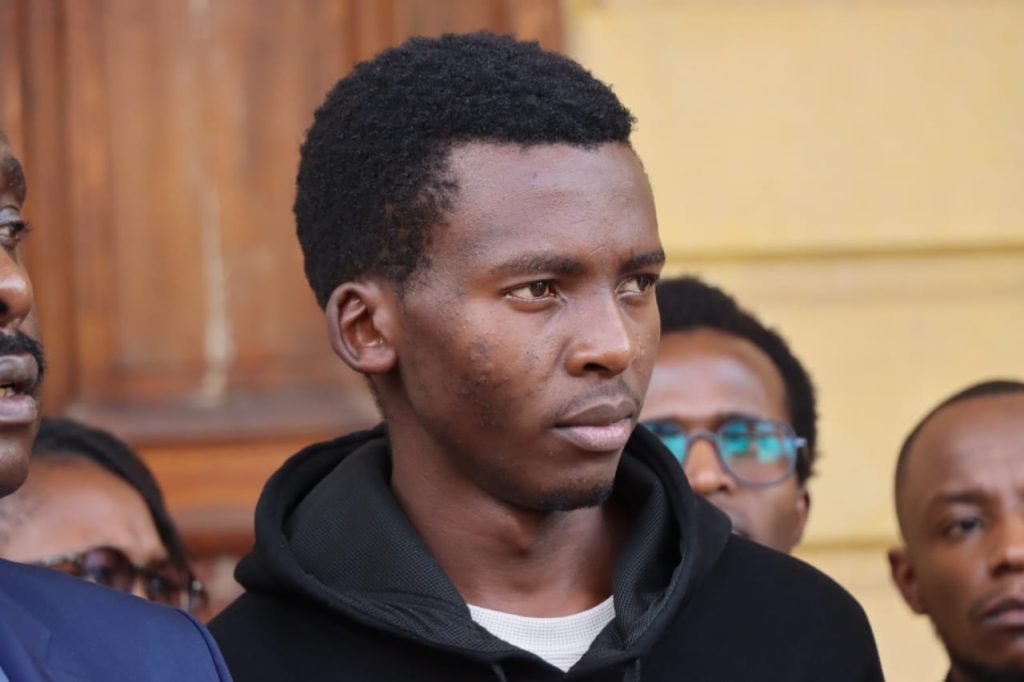
The acquittal of Moi University student David Mokaya by the Milimani Law Courts has opened a legal Pandora’s box that threatens to embarrass both Kenya’s dominant telecommunications company and the Directorate of Criminal Investigations in equal measure, as the young man’s lawyers announced plans to pursue the State for malicious prosecution while the court itself placed Safaricom on notice over what it described as a blatant and illegal breach of a subscriber’s constitutional rights.

Magistrate Caroyne Mugo, in a ruling delivered on February 19, 2026, did not merely acquit Mokaya of charges that he published false information about President William Ruto.

She went further, pointedly flagging Safaricom as a company with serious questions to answer after it emerged during trial that the telecommunications giant had surrendered Mokaya’s private subscriber data to police investigators without any court order authorising the disclosure.

The magistrate’s remarks were not obiter.

They were deliberate, targeted and carry the weight of judicial censure that Safaricom’s legal and regulatory affairs teams will find impossible to ignore.

David Mokaya outside Milimani Courts after being acquitted.

The facts of the case, as they emerged during weeks of testimony, paint a disturbing picture of a security apparatus that moved with remarkable speed and remarkable disregard for constitutional safeguards once a social media post touching on the President’s name entered the system.

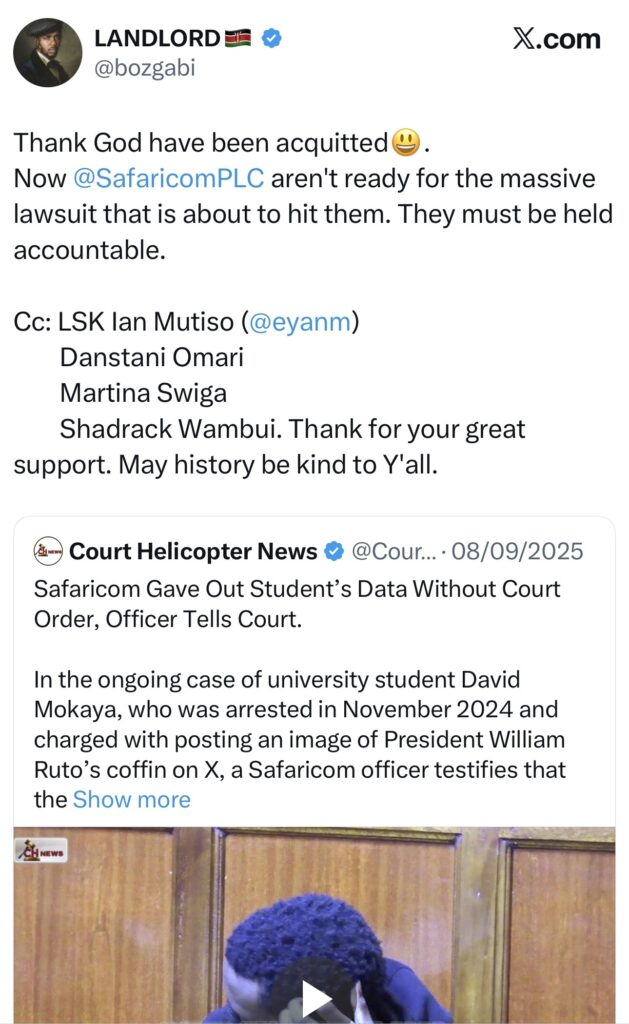
On November 13, 2024, a post appeared on platform X under the username “Landlord @bozgabi” depicting a funeral procession with a military escort carrying a casket draped in the Kenyan flag, accompanied by a caption that investigators said referenced President Ruto.

Within twenty-four hours, a senior police officer identified in court as Michael K. Sang had written directly to Safaricom demanding the subscriber details behind the account.

By November 15, a team of detectives from the Serious Crimes Unit had descended on Eldoret, tracked Mokaya to an area opposite Moi University’s Annex, and arrested him.

A Samsung phone, a laptop and his identity card were seized before anyone had troubled themselves to obtain a search warrant.

It was Chief Inspector Bosco Kisau who delivered the most damaging admissions from the prosecution’s own witness stand.

Under cross-examination by defence lawyers Danstan Omari, Ian Mutiso and Shadrack Wambui, Kisau conceded that he had not been served with a court order authorising the investigation of Mokaya’s devices. He admitted he was unaware of a High Court ruling requiring law enforcement to obtain judicial authority before compelling mobile service providers to release subscriber details.

He further admitted that he could not confirm the origin, source or geographic location of the disputed post.

He could not confirm whether the SIM card linked to the account had been properly registered. He had not recorded a statement from the complainant, President Ruto.

And crucially, when pressed directly, he conceded that the post in question did not actually contain a photograph of the President.

Safaricom employee Daniel Hamisi, who also took the stand, confirmed that he had released Mokaya’s details upon a written request from a senior police officer, without any court order having been presented or demanded.

His testimony crystallised what civil liberties advocates have long argued: that Kenya’s Data Protection Act of 2019 and the constitutional right to privacy exist on paper in a manner that is, in practice, subordinate to a phone call or a letter bearing a senior officer’s signature when matters touching on political figures are involved.

The magistrate was unsparing.

She found that police had failed miserably in their duty, that the accused had been framed, and that no direct evidence linked Mokaya to the alleged offence.

She noted that Mokaya’s social media account was shared with three other individuals who were never traced or called as witnesses, creating reasonable doubt that could not be resolved by the prosecution’s threadbare evidence.

She noted that the alleged offence was said to have been committed in Nairobi while Mokaya was physically in Eldoret.

She noted the complete absence of forensic or digital evidence tying him to the post. She observed that the court could not rule out the possibility that the post itself had been fabricated and planted on an account associated with his name.

She also noted something that ought to concern the leadership of the Safaricom corporation and its board.

The company’s compliance with an unlawful police request, without demanding judicial authorisation, may constitute a violation of the Data Protection Act.

That legislation imposes clear obligations on data controllers and processors regarding the circumstances under which personal data may be disclosed to third parties, including law enforcement.

Disclosure without a court order, in circumstances where one is legally required, is not a procedural technicality.

It is a substantive breach carrying potential regulatory consequences from the Office of the Data Protection Commissioner and civil liability in the courts.

Omari and Mutiso, who led Mokaya’s defence and who are no strangers to high-profile constitutional litigation, wasted no time in signalling what comes next.

They told the court after the ruling that they intend to sue the State for malicious prosecution. Legal analysts familiar with their track record consider this not an idle threat but a certainty.

A malicious prosecution claim would require establishing that the prosecution was initiated without reasonable and probable cause, that it was actuated by malice, and that it terminated in the accused’s favour. On the facts as found by the magistrate, all three elements appear to be richly available.

The civil suit, when filed, will almost certainly name Safaricom as a defendant or at minimum as a party from whom discovery is sought.

The company will need to account for its internal processes around law enforcement data requests. It will need to explain why its compliance team released subscriber data without demanding what the law requires.

It will need to address whether this was an isolated incident or systemic practice. These are questions that Safaricom’s corporate communications machinery cannot deflect with a press statement.

For Mokaya himself, the personal cost of this ordeal is not easily quantified.

He was charged on November 13, 2024, and the case dragged through a full trial over a period of roughly three months.

His lawyer told the court that the student could not even speak in the immediate aftermath of the ruling due to mental trauma and shock that had gripped him since his arrest.

He spent the duration of the case on a bond of one hundred thousand shillings or a cash bail of fifty thousand shillings, money that a finance student at a public university would not easily produce. His devices were confiscated. His movements were constrained. His studies were disrupted.

The broader significance of this case extends well beyond one young man’s acquittal.

It arrives at a moment when the relationship between digital speech, state power and telecommunications infrastructure is under intense scrutiny across Africa.

Kenya’s Data Protection Act was celebrated when it passed as a significant step toward aligning the country with international data protection standards.

The Mokaya case suggests that the legislation’s practical force remains weak in the face of political pressure and institutional habit.

When a senior police officer can write a letter to a telecommunications company on a Tuesday and have subscriber location data by Wednesday morning without a magistrate or judge having been involved at any point, the statute’s protections are nominal at best.

The Law Society of Kenya, through Mutiso’s involvement in the case, has effectively placed its institutional weight behind the argument that telecom companies must resist unlawful data requests regardless of who is making them and regardless of whose name appears in the underlying social media post.

That argument will now be tested in the civil courts, where Mokaya’s lawyers say they will press it with full force.

Safaricom has not issued a public statement on the matter at the time of publication.

The company, which controls the overwhelming majority of Kenya’s mobile subscriber market and whose M-Pesa platform is embedded in the economic life of tens of millions of Kenyans, has significant reputational exposure if the civil litigation proceeds and produces further uncomfortable disclosures about the ease with which law enforcement has historically been able to extract personal data from its systems.

The magistrate reminded police, in terms that deserve to be read widely, that the duty to observe the law does not diminish because the name of the President or any other powerful figure appears in a social media post.

She reminded them that cases of this nature must be handled with caution and free from public or political pressure.

She reminded them that the criminal procedure code and the Constitution are not suspended when someone posts something uncomfortable about a head of state.

For a twenty-four-year-old finance student from Moi University who spent months answering charges that a court ultimately found may have been built on a fabricated foundation, those reminders came at significant personal cost.

The question that will now occupy Kenya’s legal community is whether the institutions that failed him will be made to pay one.

0 comment
0 FacebookTwitterPinterestLinkedinTumblrWhatsappTelegramEmail

A legal storm of historic proportions is gathering around Senior Counsel Fred Ojiambo and Paul Gachuhi senior partners at Kaplan &Stratton as explosive allegations of forgery and deception threaten to unravel reputations built over decades.

Eighty-year-old Senior Counsel Fred Ojiambo, a revered church elder at Nairobi Baptist Church and long celebrated as one of Kenya’s most formidable legal minds, is now staring down a stunning credibility crisis that threatens to shake his law firm’s legacy.

The veteran advocate ‘s partner has been dragged into a storm of controversy after being implicated in an alleged cover-up involving a sensational forgery claim at the prestigious law firm Kaplan & Stratton.

At the heart of the scandal is an accusation that his partner Gachuhi forged the will of former Attorney General James Karugu.

Kaplan &Stratton now finds it’s legacy under intense scrutiny, as questions mount over what it knew, when it knew it, and whether one of the country’s most respected legal institutions was used to mask an alleged fraud at the highest level.

This comes a day after Ojiambo was reported to the Directorate of Criminal Investigations(DCI), by Raphael Tuju over claims that he facilitated the filing of a false affidavit in a dispute pitting himmthe East African Development bank,(EADB).

While addressing the press on Monday, Tuju accused Ojiambo of putting his family at risk yet he claims to be a Christian.

“While Kaplan and Stratton over the years have managed to cultivate an image of a respected international law firm complete with a British sounding name stemming from the original owners, the firm has been in the news lately with senior partner Mr. Peter Gachuhi being investigated and prosecuted in respect of the forgery of the will of the late former AG Karugu. Fred Ojiambo operates behind a facade of being an upright born-again Christian lawyer who is a Church Elder carrying Bibles in the right hand. In reality, with the left hand he is filing documents filled with lies in court in support of a scheme to wrongfully deprive my family and I of properties acquired through decades of hard work”,he said

In a dramatic twist, six suspects who include a pastor from Nyandarua , are accused of forging the will of former Ag Karugu have appointed Ojiambo , the senior partner at Kaplan & Stratton to argue their case, despite mounting allegations of conflict of interest and claims that the firm has been entangled in what critics call a two-year cover-up.

At the center of the scandal is Ojiambo’s partner, Gachuhi, and six others accused by Victoria Nyambura Karugu ,the late AG’s daughter of orchestrating what she describes as an “elaborate cut-and-paste forgery” of her father’s will.

Nyambura has alleged that the contested document is riddled with “poor grammatical mistakes” inconsistent with her father’s writing style and worse, bears forged initials. Forensic examination, she claims, revealed it was a crude “cut and paste job.”

The AG Dorcas Oduor ,has now thrown the full weight of the State behind the prosecution, declaring that forgery is a criminal offence that must be investigated and prosecuted.

In court filings, the AG backed both the Director of Public Prosecutions and the DCI, terming attempts by Gachuhi and other suspects to halt investigations an “abuse of court process.”

Courtroom drama escalated when Ojiambo allegedly refused to hand over the disputed will to investigators, claiming he had a court order barring the DCI from accessing it.

That claim, according to filings, turned out to be false. Gachuhi was ultimately compelled to surrender the document for forensic examination.

Further controversy erupted when Ojiambo allegedly sought to have the DPP unlawfully interfere in the succession dispute ,a request that was flatly denied, leaving the senior counsel politically and professionally exposed.

Meanwhile, Nyambura has moved to formally join the case at the High Court, describing her earlier exclusion as “mischievous and calculated.”

She has filed hundreds of pages of evidence, including what she says are DCI findings that were withheld from Justice Mwamuye when the suspects secured ex parte orders halting their arraignment before the Chief Magistrate on charges of forgery and conspiracy to defraud

He is also facing a fresh call for investigation by former Cabinet Minister Raphael Tuju, who has accused him of fabricating evidence in a commercial dispute linked to the East African Development Bank.

If found culpable, both Ojiambo and Gachuhi risk professional ejection from Kaplan & Stratton for gross misconduct and potentially lengthy prison terms.

0 comment
0 FacebookTwitterPinterestLinkedinTumblrWhatsappTelegramEmail

A fresh governance storm is brewing over the apparent transfer of key Nairobi City County functions to the National Government, raising constitutional, legal and political questions about the future of devolution in the capital.

Reports indicate that garbage collection, public works and water services are currently being managed by the National Government.

However, no publicly gazetted Deed of Transfer has been presented, as required under Article 187 of the Constitution of Kenya.

Under the Constitution, transfer of functions between levels of government must be formalized through a written agreement detailing the scope of responsibilities, duration, financing arrangements, asset management, personnel deployment and accountability mechanisms. The process must also uphold public participation under Article 10.

In March 2020, former Nairobi Governor Mike Mbuvi Sonko signed a Deed of Transfer with then Devolution Cabinet Secretary Eugene Wamalwa, leading to the formation of the Nairobi Metropolitan Services (NMS). Four functions—Health, Transport, County Planning and Development, and Public Works—were formally handed over and gazetted.

Although NMS oversaw notable infrastructure improvements, its exit left unresolved bills estimated at Sh16 billion, gaps in asset inventories and unsettled human resource matters. The functions were later reverted to the County Government through a structured process spearheaded by the Intergovernmental Relations Technical Committee (IGRTC), which has since developed a procedural manual to guide lawful transfers.

Governance expert John Burugu says the current situation appears procedurally deficient.

“Transfers of functions are not political favors; they are constitutional processes anchored in Article 187,” said John Burugu.

“Without a gazetted Deed of Transfer clearly outlining financing, accountability and asset management, the arrangement risks legal uncertainty and administrative confusion.”

He questioned whether the County Assembly and Nairobi residents have been adequately consulted.

“Public participation is not optional. Article 10 makes it a binding national value. Nairobi residents deserve to know who is responsible for essential services and under what legal framework,” John Burugu stated.

Burugu further warned that failure to comply with statutory provisions, including those under the Urban Areas and Cities Act, could undermine institutional accountability.

“Nairobi is the capital city of the Republic. Governance decisions made here set precedent for the entire country. Transparency, legality and clarity must guide any transfer of devolved functions,” said John Burugu.

0 comment
0 FacebookTwitterPinterestLinkedinTumblrWhatsappTelegramEmail

As Kenya’s beauty industry expands and social media fuels increasingly complex skincare routines, dermatologists in the country are now urging Kenyans to rethink what healthy skin really means.

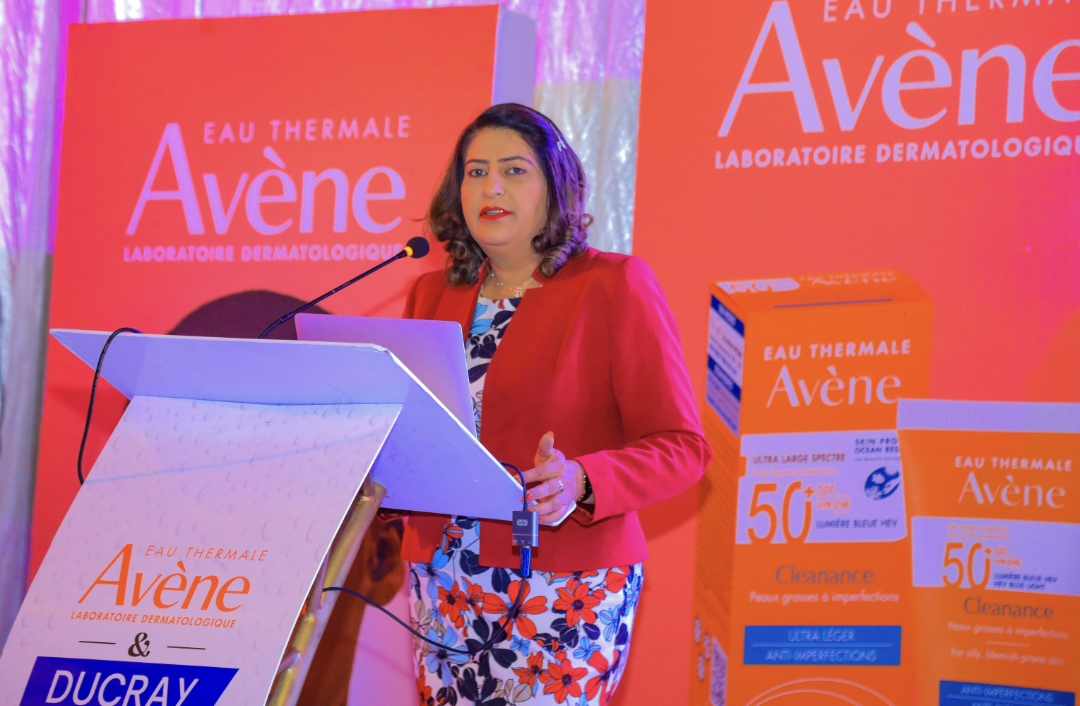
Speaking during the official launch of Pierre Fabre’s dermo-cosmeceutical portfolio in Kenya, Dr. Roop Saini, a committee member of the Kenya Association of Dermatologists (KAD), delivered a clear message: more products do not equal better skin. She emphasized that skincare is fundamentally a medical issue, not just a cosmetic one.

“Effective skincare is not defined by the number of products we use, but by how well those products respect skin biology and support long-term skin health,” Dr. Saini said.

Kenya’s skincare market is rapidly expanding, with the sector projected to reach about USD 125 million (roughly KSh 16 billion) by December 2026, driven by rising demand for dermo-cosmetics and increased consumer awareness.

Yet this growth has coincided with a surge in complex and often counterproductive routines. According to local healthcare reports, conditions such as acne, eczema, dry skin and hyperpigmentation now account for roughly 10-30 percent of all outpatient dermatology visits nationwide.

According to her, whereas skincare should be simple and rewarding, most Kenyans are doing too much and too often and this she says, is the cause of most skin problems in the country.

This overuse, she warned, often leads to barrier damage, chronic irritation and inflammation, particularly problematic in a country where hyperpigmentation is a common concern.

“Many patients today are using multiple active ingredients at the same time, harsh exfoliants and inappropriate viral or TikTok trends from social media,” she warns.

Healthcare reports tracking dermatological trends in Kenya indicate that conditions such as acne, eczema, hyperpigmentation, and dry skin make up roughly 10–30 percent of all outpatient dermatology visits nationwide, a notable proportion that highlights a broad public health concern rather than a niche issue.
To effectively tackle this, Dr. Saini advocates for a straightforward approach.

“The honest truth is, a simple skincare routine. Simple routines are sustainable, and sustainable routines are effective. Consistency for us is far more important than the number of products that are used on the skin,” she advises.

0 comment
0 FacebookTwitterPinterestLinkedinTumblrWhatsappTelegramEmail
Mohammed Noor Muhyadhin Mohammed

Detectives from the Operation Support Unit (OSU) have arrested a second suspect in connection with the Sh28 million fake gold scam that defrauded an American national of USD 217,900 in a botched 495-kilogram gold deal.

The suspect, Mohammed Noor Muhyadhin Mohammed, was apprehended in Nairobi as investigators widened the probe into what authorities describe as a well-coordinated money laundering network.

Funds Traced to Business Account

Investigations revealed that on February 3, 2026, Mohammed allegedly received USD 217,900 through his company, Mohazcom Trading, into an account held at the National Bank of Kenya.

The funds had reportedly been debited from accounts belonging to MOAC Advocates at the same bank and were purportedly payment for 495 kilograms of gold that was never delivered to the victim.

Detectives say that shortly after the funds were credited, Mohammed wired the entire amount to accounts held by Tecno Mobile Limited at Citibank in Hong Kong. The transfer was allegedly meant to facilitate a new shipment of mobile phones, which investigators say has yet to arrive in Kenya.

Alleged Forex Bureau Link

Further inquiries established that Mohammed has maintained a business relationship spanning more than a decade with a forex bureau located along Standard Street in Nairobi.

Investigators believe the forex bureau may have played a key role in facilitating substantial cross-border transfers, including the transaction now under investigation.

Authorities are examining whether the transfers exhibit classic indicators of money laundering, including layering and rapid offshore movement of funds.

Connection to Earlier Arrest

Mohammed’s arrest follows the earlier arraignment of Willis Onyango Wasonga, also known as “Marcus,” who was presented before the Milimani Law Courts on February 16, 2026.

Wasonga was charged with conspiracy to defraud, obtaining money by false pretences, and multiple offences under the Proceeds of Crime and Anti-Money Laundering Act (POCAMLA). He pleaded not guilty and was granted a bond of Sh1 million with two contact persons or an alternative cash bail of Sh350,000.

Alleged Cover-Up Attempts

In what detectives describe as an attempt to legitimise the transfer of USD 217,900, MOAC Advocates reportedly presented a debt settlement agreement allegedly signed by Mohammed and another suspect still at large.

However, investigators have since determined that the document was allegedly designed to create the appearance of a legitimate transaction and conceal fraudulent activity.

More Suspects Pursued

Mohammed remains in custody undergoing processing pending arraignment, while detectives pursue three additional suspects believed to be linked to the scheme.

The Directorate of Criminal Investigations (DCI) says the case underscores its ongoing commitment to dismantling gold scam syndicates and combating money laundering networks that exploit international investors and damage Kenya’s commercial reputation.

Authorities have urged members of the public to report suspicious gold transactions and financial crimes through anonymous reporting channels as investigations continue.

0 comment
0 FacebookTwitterPinterestLinkedinTumblrWhatsappTelegramEmail

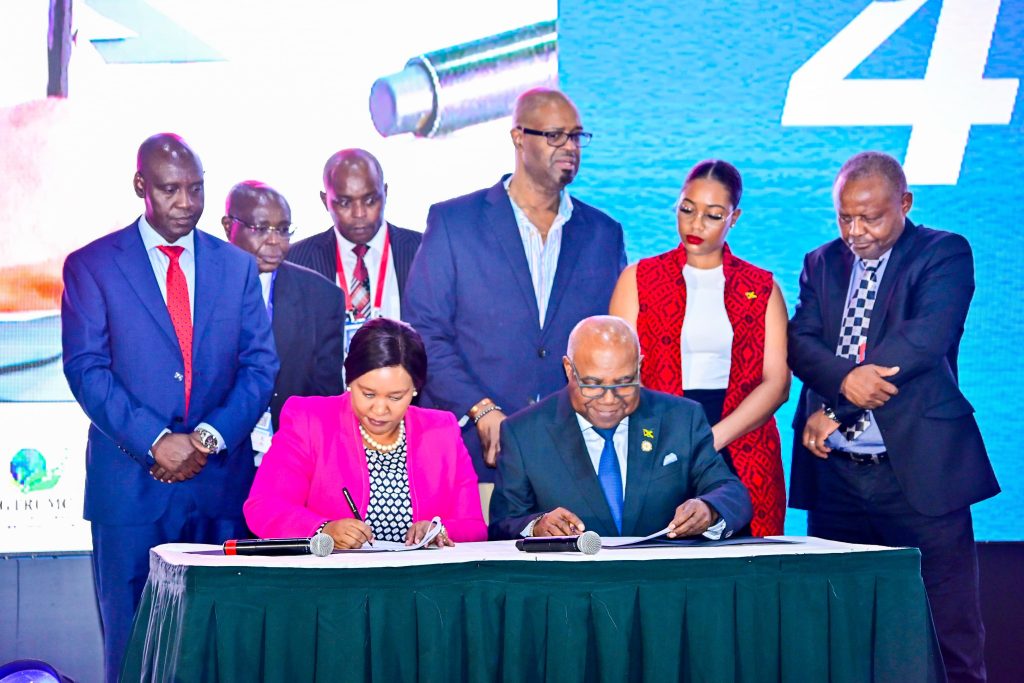
The government of Kenya has signed a memorandum of understanding with the government of Jamaica that will help the two nations work towards leveraging on technology and innovation for a sustainable and a more resilient tourism sector.

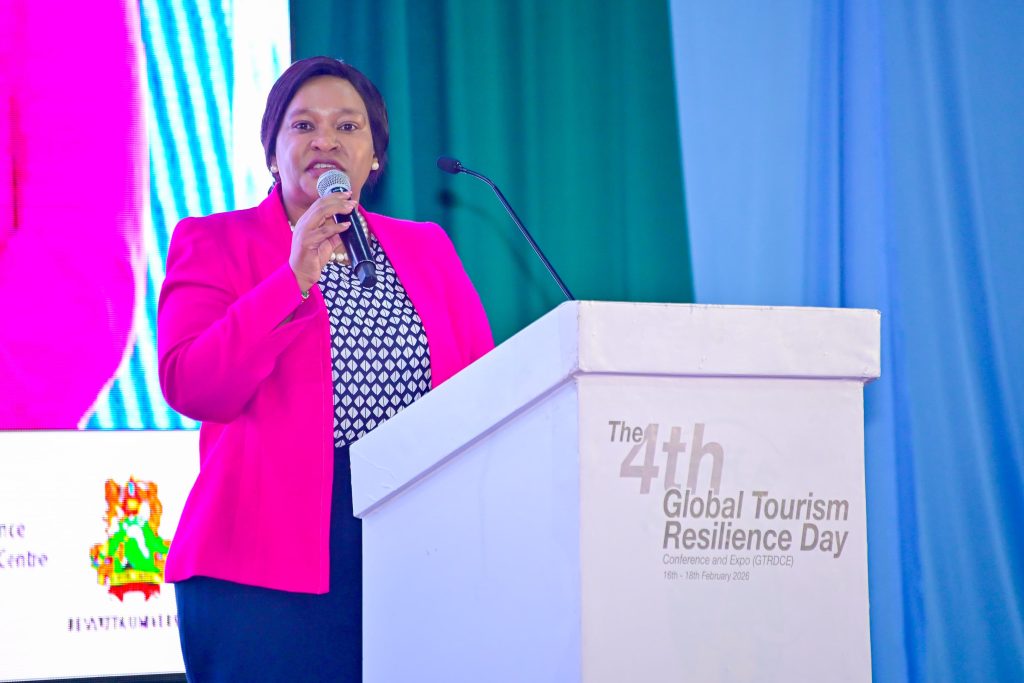
Speaking during the ongoing 4th Global Tourism Resilience Day Conference and Expo at the Kenyatta International Convention Centre (KICC), Tourism and Wildlife Cabinet Secretary Rebecca Miano called for a resilience fund and structured financing frameworks to support African countries withstand shocks, particularly in more vulnerable destinations heavily reliant on tourism.

“Africa cannot afford to build tourism growth on foundations of hope and reactive responses. We must embed resilience into our policy architecture, infrastructure investments, workforce training and community protection systems,’ she said.

According to Miano part of the agreement was also the establishment of the Global Tourism Resilience Centre at the Kenyatta University.

“ One of the outcomes of signing the MOU with Jamaica is receiving assistance in developing an AI tool for tourism in Kenya,” she said.

Miano further highlighted tourism’s role in job creation and revenue generator hence the need for systematic protection from external shocks.

“When tourism collapses under crisis, it is not just visitor numbers that fall. It is workers’ salaries, families’ and small businesses’ survival, and entire communities’ dignity,” she added. “Our responsibility as leaders is to ensure these vulnerabilities are addressed before disasters strike, not after.”

On his part, Jamaica’s Tourism Minister, Edmund Bartlett who is the champion of the UN resolution establishing Global Tourism Resilience Day said the conference was founded on a transformative realization that tourism needed more than promotion and needed protection.

He noted that global consultations had revealed a shared vulnerability across destinations worldwide, underscoring that resilience is now the new currency for tourism destinations seeking stability and competitiveness.

Addressing emerging threats, he emphasized that the tourism sector must urgently confront risks such as cyberattacks, misinformation and disinformation, which can destabilize destinations within hours.

According to UN Tourism’s latest World Tourism Barometer, the world recorded an estimated 1.52 billion international tourist arrivals in 2025 alone, almost 60 million more than the previous year.

The three-day conference brings together over 400 delegates and 40 expert speakers from across the world to advance practical solutions for crisis-proof tourism system.

0 comment
0 FacebookTwitterPinterestLinkedinTumblrWhatsappTelegramEmail