Home Latest News
Category:

Latest News

A private investigations company has reported Amaco Insurance to the Consumer Protection Authority over alleged continued failure to settle payments for investigative services duly rendered to the insurer.

In a letter dated 17th March 2026, addressed to Director General, Consumer Protection Authority, Matis Solutions Limited complained that Amaco Insurance has failed to pay it Kshs 1,520,485 in respect to investigative services provided to the insurer between April 2023 and August 2025.

In the letter, Matis Solutions Limited said a senior manager at Amaco Insurance had halted the processing of the payment in dubious circumstances.

“The payment was halted pending the involvement of a third party who is neither a director, shareholder nor contractual counterparty of Matis Solutions Limited,” read the letter, in part.

In the letter signed by Director and Principal Officer Salome Wakore Muita, Matis Solutions Limited accused Amaco Insurance claims manager Jedidah Wachira of interference with lawful contractual payments, conflict of interest and improper commercial practices.

“On Monday, 1st December 2025, I held a meeting with Claims Manager Madam Jedidah Wachira who advised that payment could not proceed until I reached an agreement with an alleged counterpart/acquaintance…,” said Muita, in the letter. “This individual does not appear in any documentation relating to Matis Solutions Limited as I am the sole entrepreneur behind the company.”

Muita states that Wachira’s actions raised serious governance and compliance concerns, “particularly where the processing of a legitimate payment appears to have been made conditional upon the involvement of a third party who has no apparent contractual relationship with the service provider.”

In the letter, Muita requested CPA to investigate the conduct of Amaco Insurance and its Claims Manager Jedidah Wachira and determine whether the alleged conduct amounted to unfair trade practices or improper commercial conduct.

She also appealed to CPA to direct Amaco Insurance to resolve the payment dispute and settle all outstanding sums lawfully due.

Muita has also asked CPA to “take any regulatory or enforcement action deemed necessary” to “safeguard fairness, accountability and compliance within the insurance sector.

0 comment
0 FacebookTwitterPinterestLinkedinTumblrWhatsappTelegramEmail

By Prashant Byndoor, Country Manager East Africa

Rising transaction volumes, tighter regulation and growing competition are placing new demands on banks and cooperative lenders across Kenya and East Africa, while institutions adapt their payment operations to cope with sustained pressure.

These pressures sit on top of very high transaction volumes. Real-time payment systems across Africa now process close to 64 billion transactions with cumulative flows approaching US $2 trillion, according to recent analysis.

Banks, cooperative lenders and payment operators are already carrying this volume through their daily operations. Digital transactions sit behind activities such as member savings contributions, loan disbursements, merchant payments, salary transfers and bill settlement.

The same infrastructure also carries national-level payment flows that connect households, businesses and public-sector programmes through shared rails.
What tests institutions is not usage, but keeping these flows stable as oversight becomes more exacting and disruption harder to absorb.

Regulation is tightening around cooperative finance
Oversight of payments and cooperative finance in Kenya is becoming more demanding, particularly for institutions built around member savings. Compliance now requires deeper reporting, clearer controls and greater investment in risk management.

Smaller operators feel this most directly, while mid-tier banks are moving closer to cooperatives as regulatory expectations across the sector rise.
Savings and Credit Cooperative Organisations (SACCOs) collect member savings and lend back into their communities.

Many households and small businesses use them for regular transactions rather than occasional services. The regulated SACCO sector now holds more than Sh1 trillion in assets and serves over seven million members, with a growing share of activity passing through agent networks and electronic channels rather than branches.

Technology decisions are increasingly judged on whether systems can stand up to operational and regulatory pressure. Payment platforms need to reconcile cleanly, provide visibility and run predictably as volumes increase. Workarounds between systems add cost and risk that institutions are finding harder to justify.

Governance questions are being raised openly
Governance discussions within the cooperative sector have become more direct. Board composition, regulatory compliance, cybersecurity and longer planning horizons are more than side topics. They are raised in meetings, sector forums and regulatory engagements because weaknesses in these areas show up quickly once payment volumes rise.

For member-owned institutions, trust is built or lost through routine operations. When transactions fail, take too long to resolve, or cannot be clearly explained, confidence erodes regardless of product range or pricing – and governance gaps become visible immediately.

Demographics and competition tighten margin for error

Demographic pressure adds another layer. With a large proportion of the population under 35, cooperative institutions face growing expectations around digital access, speed and availability. Sector discussions increasingly link long-term sustainability to the ability to engage younger members through mobile-first channels and services that align with how they already transact.

At the same time, competition for deposits and payment flows is increasing. Banks, fintechs and non-bank providers are targeting segments traditionally served by cooperatives, raising the cost of operational weakness. Payment reliability and clarity therefore carry commercial weight alongside regulatory importance.

Transaction growth exposes system limits
Rising digital transaction counts place strain on operating models built around loosely connected platforms. Many institutions run payments across core banking systems, mobile applications, agent networks and external service providers. Where integration remains partial, reconciliation effort increases and visibility weakens.

That task is complicated by the need to coordinate payments across mobile money, cards, bank transfers, agent networks and cross-border flows, often within the same operating day.

At current volumes, these gaps create governance problems. Oversight slows, risk indicators surface later, and responsibility becomes harder to trace across systems. Interoperability serves a practical role here by reducing operational burden and supporting clearer institutional control as participation widens.

Partnerships reflect operating reality in 2026
Cooperative leaders are increasingly turning to partnerships with fintech firms and technology providers as part of their 2026 planning. Recent sector discussions point to collaboration being used to modernise core systems, improve operational visibility and support member access to services across multiple digital channels. Some examples from wider industry show why.

In Ethiopia, EthSwitch has used BPC to support nationwide payments modernisation through an interoperable instant payments ecosystem designed to connect institutions, simplify shared infrastructure and extend reliable digital payment access across the country, giving access to easier accessible payments to over 115mln Ethiopians, who now can use QR codes for day-to-day money operations. The examples exist on another continent as well.

In Ecuador, COONECTA aimed to make a bold statement that the future of finance in Ecuador will not be led solely by traditional banks or global fintechs but it will be shaped by the cooperative sector, empowered by BPC’s world-class technology.

It shows the same logic at cooperative-network level, giving credit unions in small towns and rural communities access to integrated digital financial services through a shared platform rather than leaving each institution to modernise alone.

This reflects the demands of continuous payment processing and real-time monitoring. Specialist capabilities are required as institutions work to meet regulatory expectations while keeping payment operations predictable at higher volumes. The task is to adopt these capabilities in ways that strengthen country-wide infrastructure, widen community access and preserve governance and accountability firmly within the institution.

A constructive response is taking shape

The payments environment across East Africa has moved into a stage where reliability is tested daily rather than occasionally. Systems that sit behind savings, credit and commerce are expected to run without pause, reconcile cleanly and provide clear visibility while transactions are still in motion.

Continuous settlement has become the operating baseline, requiring institutions to monitor activity and handle exceptions as transactions move rather than after they complete.

Rising volumes are encouraging simpler operating structures and clearer lines of control, rather than layers of manual intervention.

Kenya’s next phase in payments will be defined less by growth alone than by how well institutions can sustain it. Transaction volumes keep rising, expectations around speed and transparency tighten respectively, and pressure on cooperative lenders and banks will only increase.

Investing in interoperable, resilient payment infrastructure that supports stronger oversight and wider inclusion should become an important focus. Institutions that invest in those foundations are well placed to maintain trust and keep pace with how payments are now used.

0 comment
0 FacebookTwitterPinterestLinkedinTumblrWhatsappTelegramEmail
KeRRA Officers Filmed Taking Bribes in Kitengela Tender Scam

Two officials from the Kenya Rural Roads Authority (KeRRA) in Makueni County are at the center of a major corruption scandal after they were allegedly filmed receiving bribes from contractors in Kitengela to influence the awarding of road tenders.

The officers, identified as Moffat Kitheka (ICT) and Lilian Chepkemoi (procurement), are accused of extorting money from contractors in exchange for favorable consideration during the ongoing tender evaluation process for road projects in Makueni County.

Caught on Camera

According to reports, the two officials were last week caught red-handed in what sources describe as a “stealth operation,” where they were allegedly recorded receiving bribes from contractors operating vehicles described as a Prado and a Premio.

The evaluation process for the tenders is currently being conducted at the National Industrial Training Authority (NITA) grounds in Kitengela, where the officials are said to have been summoning contractors and demanding payments.

Sources claim the duo has been “auctioning” tenders to contractors willing to comply with their demands, raising serious concerns about the integrity of the procurement process.

Longstanding Allegations

Contractors and elected leaders from Makueni County have reportedly raised concerns in the past over the conduct of the two officials, accusing them of being part of a wider network involved in corrupt tendering practices.

They allege that in previous evaluations, the same officers took bribes and awarded contracts to unqualified and questionable contractors, undermining service delivery and infrastructure quality in the county.

“ These officers are causing a lot of damage and must be disciplined,” said an MP from Makueni.

“ We will not sit back and allow them mess us up.”

Calls for Immediate Action

Contractors are now appealing to the Ethics and Anti-Corruption Commission (EACC) and KeRRA headquarters to urgently intervene and take disciplinary action against the implicated officers.

The scandal has sparked outrage among stakeholders, with calls for thorough investigations and prosecution of those involved to restore confidence in the tendering process.

The alleged bribery scheme threatens to compromise critical road development projects in Makueni County, with fears that contracts may be awarded based on kickbacks rather than merit.

If proven, the case could expose deep-rooted corruption within the procurement system and trigger wider investigations into operations within KeRRA.

As pressure mounts, all eyes are now on anti-corruption authorities to act swiftly and decisively in addressing the allegations and safeguarding public resources.

0 comment
0 FacebookTwitterPinterestLinkedinTumblrWhatsappTelegramEmail
A major scandal is rocking one of Nairobi’s most influential evangelical churches, Mamlaka Hill Chapel, as its presiding bishop, Charles Muhia Ng’ang’a, faces explosive allegations of an inappropriate relationship with a congregant’s wife

A major scandal is rocking one of Nairobi’s most influential evangelical churches, Mamlaka Hill Chapel, as its presiding bishop, Charles Muhia Ng’ang’a, faces explosive allegations of an inappropriate relationship with a congregant’s wife and alleged misuse of church funds.

The drama unfolded at the Milimani Law Courts, where long-serving church member Njihia Njoroge filed a replying affidavit in response to Bishop Muhia’s defamation suit.

In it, Njoroge claims to have uncovered a trove of WhatsApp messages and audio recordings that paint a disturbing picture of personal and financial misconduct.

Shocking WhatsApp Messages

According to the affidavit, the scandal began in October 2025 when Njoroge’s 14-year-old daughter came into possession of a mobile phone previously used by his wife, EN. On the device, Njoroge discovered messages from the Bishop that he says were “wholly inappropriate” for a spiritual leader.

Some of the texts included declarations of affection and late-night communications that Njoroge described as crossing professional and moral boundaries:

  • “I’ve never worked with anybody as lovely and thoughtful as you… just know that I love you so much!”
  • “Thanks EN, meanwhile we’re showering in the office”
  • “It’s why I need you in my life”

Njoroge says the discovery left him feeling “profoundly betrayed,” especially since he had previously approached the Bishop privately, following biblical guidance, to address growing tensions in his marriage.

Bishop Admits to Messaging

During a private meeting recorded by Njoroge, the Bishop reportedly admitted to sending the messages, calling them “inappropriate” but denying any physical relationship. He allegedly said, “May God kill me and remove me from this world if I have ever touched your wife or desired to sleep with her.”

While acknowledging his wrongdoing, the Bishop reportedly did not propose accountability measures or suggest that EN should step aside, leaving Njoroge feeling the matter remained unresolved.

Alleged Financial Misconduct

Beyond the personal scandal, the affidavit reveals messages pointing to potential misuse of church funds. Njoroge alleges that EN was being asked to process construction cheques, send money for personal vehicle repairs, handle church accounts, and even forward personal medication to the Bishop.

Messages included instructions like:

  • “Hi EN, please text me registration of the personal vehicle repaired with church funds.”
  • “Process two construction cheques, one immediately and one to be held… I’m trying to get as much done before Christmas as possible.”

Njoroge’s legal team argues that these messages suggest EN was exploited both emotionally and professionally, functioning as the Bishop’s personal assistant, procurement officer, and confidante, while her husband remained in the dark.

Church in Turmoil

This case has sent shockwaves through Mamlaka Hill Chapel, raising serious questions about leadership, accountability, and ethics in religious institutions.

With audio recordings, WhatsApp messages, and evidence of financial directives now in court, the drama shows no signs of ending soon.

The unfolding saga has captured national attention, raising concerns about the blurred lines between personal misconduct and institutional governance in Kenya’s religious institutions.

0 comment
1 FacebookTwitterPinterestLinkedinTumblrWhatsappTelegramEmail
Edwin Sifuna

Nairobi Senator Edwin Sifuna has touted the early success of the Linda Mwananchi platform, revealing that the initiative has attracted nearly 25,000 subscribers just days after its launch.

In a social media update on Saturday, March 21, 2026, Sifuna described the numbers as impressive but urged supporters to view them within a broader political context.

“We closed the week at just under 25k… This is impressive, lakini perspective ni muhimu. 25k will get you elected MCA in almost all the wards in Kenya, MP in a few constituencies, and Senator in Lamu and Isiolo counties, going by 2022 data. Mkae mkijua,” he said.

The Linda Mwananchi platform, which has been linked to a reformist wing within the Orange Democratic Movement (ODM), is positioning itself as a grassroots-driven movement aimed at mobilizing citizen participation and political accountability.

Sifuna’s remarks suggest that the initiative is not merely an online campaign tool, but a potential political force capable of influencing electoral outcomes if the numbers translate into active voter support.

On Wednesday, March 18, 2026, Sifuna announced that the Linda Mwananchi website, which had been temporarily pulled down after suspicious cyber attacks, had now been restored and urged his supporters to continue enrolling online.

“Friday 27th March, Nairobi! Sunday 29th March tupatane Mombasa. Meanwhile, kama wewe ni Sifuna wa Narok ingia hapo http://lindamwananchi.com uhesabike!” he wrote on X.

Sifuna had earlier announced the temporary shutdown of the Linda Mwananchi website just a day after its launch.

In a statement shared through his official X account on Saturday, March 14, the vocal lawmaker cited a surge in cyberattacks and the need to improve the platform following overwhelming public interest.

He said the website, which went live on Friday, March 13, attracted thousands of sign-ups within hours, reflecting strong public enthusiasm for the initiative. However, the platform also experienced numerous malicious attacks, forcing the team behind the project to temporarily take it offline.

“What a start! http://Lindamwananchi.com went live yesterday, and thousands of you signed up. That’s the energy we need. On behalf of the entire team, thank you so much!” he stated.

Sifuna said the shutdown would allow developers to address technical issues, strengthen security, and incorporate the many suggestions submitted by users who interacted with the site during its first day online.

Despite the challenges, the lawmaker welcomed the strong public response, saying it demonstrated the level of interest Kenyans have in the platform’s objectives. He thanked supporters for signing up and providing feedback aimed at improving the site.

0 comment
0 FacebookTwitterPinterestLinkedinTumblrWhatsappTelegramEmail
Fake fertilizer in Kakamega

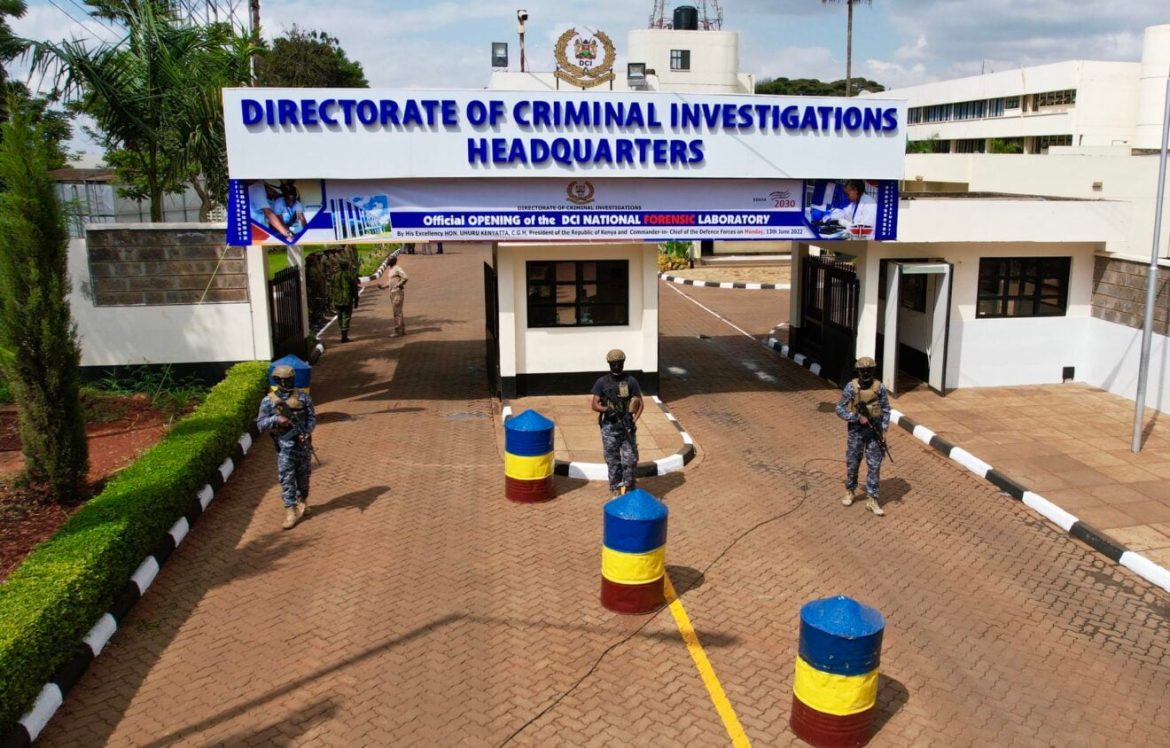
Eight suspects have been arrested following the dismantling of a fertilizer adulteration and repackaging syndicate in Kakamega County, in a major crackdown by the Directorate of Criminal Investigations (DCI) targeting fraud in the agricultural sector.

The suspects were nabbed during an intelligence-led operation at Ejinja Village in Rurambi Sub-County, where detectives uncovered what they described as a processing and distribution hub for fake fertilizer products.

Taking to social media on Friday, March 20, 2026, DCI stated that those arrested include the alleged mastermind Napoline Murende Wakukha, alongside Isaya Chepkose Marende, Brivin Yeswa, Milkzadek Meja Nandwa, Martin Shilabula, Strola Deptica, Pascal Wathika Omusikoyo, and Jesca Bulimo.

“Eight suspects have been arrested following the dismantling of a suspected fertilizer adulteration and repackaging syndicate in Ejinja Village, Rurambi Sub-County, Kakamega County, after a targeted, intelligence-led operation by detectives,” DCI stated.

“The arrested individuals include the principal suspect, Napoline Murende Wakukha, alongside Isaya Chepkose Marende, Brivin Yeswa, Milkzadek Meja Nandwa, Martin Shilabula, Strola Deptica, Pascal Wathika Omusikoyo, and Jesca Bulimo.”

According to the DCI, a joint team drawn from its Operations Support Unit and Kakamega offices conducted the raid after weeks of surveillance and actionable intelligence.

Investigators established that the premises was being used to illegally handle and alter Government of Kenya (G.O.K) subsidized fertilizer intended for farmers.

“A joint team of detectives drawn from DCI Headquarters — Operations Support Unit and their Kakamega-based counterparts conducted the raid at a homestead that had been identified as a processing and distribution point for fraudulent fertilizer products targeting unsuspecting farmers,” the statement reads.

“The operation followed sustained surveillance and actionable intelligence, which established that the premises was being used for the illegal handling of Government of Kenya (G.O.K) subsidized fertilizer.”

During the operation, detectives recovered two vehicles, a Toyota Fielder and a Mazda CX-5, both loaded with fertilizer bags, some full and others empty.

A Mazda CX-5 that was intercepted. PHOTO/DCI/X

Authorities also seized large quantities of fertilizer of various brands, including UREA TOSHA labelled as subsidized fertilizer, YARA products, BORA BORA variants, MEA CAN, DAP, and CALCIGROW granules.

Of particular concern was fertilizer suspected to have been tampered with, including contents from 39 bags of OCP Africa TSP labelled as government-subsidized input.

A Toyota Fielder that was loaded with fertilizer. PHOTO/DCI/X

In addition, officers recovered empty branded bags, 48 packets of cement colour pigment believed to have been used to alter the appearance of fertilizer, and three sewing machines used for repackaging the products for resale.

Preliminary investigations indicate that the group targeted registered farmers by persuading them to redeem government-issued subsidy vouchers on their behalf in exchange for small incentives.

The fertilizer would then be diverted, adulterated using pigments to mimic high-value products such as DAP, repackaged, and sold at full market prices.

Detectives also suspect possible collusion with individuals linked to National Cereals and Produce Board (NCPB) depots in Voi and Webuye, which may have facilitated the irregular acquisition of subsidized fertilizer.

Authorities warned that such practices undermine government subsidy programmes, expose farmers to financial losses, and threaten agricultural productivity.

The scene has since been processed by Crime Scene Investigation personnel, with the suspects remaining in custody pending arraignment in court.

The DCI reiterated its commitment to protecting key government programmes from exploitation and ensuring those involved in economic sabotage are brought to justice.

Members of the public have been urged to remain vigilant and report any suspicious activities involving the illegal handling or sale of subsidized farm inputs.

0 comment
0 FacebookTwitterPinterestLinkedinTumblrWhatsappTelegramEmail
Office of the President, Harambee House

The Directorate of Criminal Investigations (DCI) has detailed how a sophisticated multi-million shilling fraud scheme targeting foreign investors was executed inside Harambee House, leading to the arrest of seven suspects.

In a press statement issued on Friday, March 20, 2026, the agency dismissed what it termed as “misleading and sensationalized” media reports, clarifying that no serving government officials were involved in the elaborate scam.

According to investigators, the fraud dates back to January 10, 2026, when a foreign investor, Talal Yousef Yousef Zaitoun of Swedish firm Jokara AB, received an unsolicited WhatsApp message from an individual identified as Stanley Ndawula.

Ndawula later linked the investor to Geoffrey Were, who allegedly posed as a consultant working with government agencies. The suspects then lured the investor into what appeared to be a lucrative government tender involving the supply of 500 Toyota Hiace High Roof ambulances.

“The Directorate of Criminal Investigations (DCI) wishes to set the record straight and strongly refute misleading and sensationalized headlines and reports appearing in sections of the media, particularly The Standard, concerning the arrest of seven individuals at Harambee House on 10th March, 2026,” the statement reads in part.

“Key facts of the matter are as follows: Mr. On 10th March, 2026, DCI detectives, acting on credible intelligence, arrested seven suspects who had illegally accessed a boardroom on the 12th floor of Harambee House. The suspects were masquerading as officials from the Ministry of Interior, National Treasury, Ministry of Health and had lured two foreign nationals Talal Yousef Yousef Zaitoun, representing M/S Jokara AB (a Swedish company), and his brother Mr. Hatem Youssef Yousef Zaitoun into a fictitious government tender for the supply of 500 Toyota Hiace High Roof Ambulances.”

On January 26, the investor travelled to Kenya and was received at the airport before being escorted to Harambee House. With the help of an accomplice, the suspects facilitated unauthorized access into the building.

Inside, the victim was ushered into a boardroom and introduced to individuals posing as officials from the National Treasury and Ministry of Health. He was presented with forged documents, including fake prequalification certificates allegedly signed by senior government officials.

The fraudsters offered two “investment packages,” with the victim opting for a USD 110,000 deal for multiple business opportunities.

Investigations reveal that on January 30, the victim transferred USD 110,000 to an account belonging to a law firm in Kenya.

On February 11, an additional USD 360,750 was wired under the pretext of insurance costs, bringing the total amount lost to USD 470,750 (over KSh 60 million).

The suspects later demanded an additional USD 1.08 million, prompting the victims to return to Kenya for further negotiations—unaware that detectives were already tracking the scheme.

On March 10, DCI detectives moved in and arrested the suspects inside a boardroom on the 12th floor of Harambee House, where they had again arranged a meeting with the victims.

Those arrested include Geoffrey Were Odondi, Michael Musyoki Ngumbi, Kororia Simatwa, Evans Simotwo, Allan Muthaiga Kariuki, Munialo Jared Masinde, and Purity Njeri Njiami.

DCI said Njiami, a former public servant, played a key role in facilitating unauthorized access to restricted areas but held no current government position.

The suspects were arraigned at the Milimani Law Courts on March 16, where they faced multiple charges, including conspiracy to defraud, obtaining money by false pretenses, forgery, and money laundering.

They pleaded not guilty and were released on a bond of KSh 5 million each or a cash bail of KSh 300,000 with two sureties. Their passports were confiscated, and the case is set for mention on April 1, 2026.

0 comment
0 FacebookTwitterPinterestLinkedinTumblrWhatsappTelegramEmail
KeNHA

The Kenya National Highways Authority (KeNHA) has issued an urgent travel advisory following the heavy rainfall that was witnessed on the evening of Thursday, March 19, 2026.

In an advisory shared via social media at night, the authority warned that flooding and heavy silt deposits had disrupted a key section of the Mai Mahiu–Suswa–Narok (B7) Road.

KeNHA said the affected section lies at Kedong Ranch near Suswa, where rising floodwaters and debris have made the road unsafe for motorists.

“The Kenya National Highways Authority (KeNHA) wishes to notify motorists that this evening the Mai Mahiu-Suswa-Narok (B7) Road experienced flooding and silt deposition at Kedong Ranch near Suswa. The Authority is currently working to reopen the affected section of the road,” KeNHA stated.

The authority confirmed that emergency teams have been deployed and are working to clear the silt and restore normal traffic flow.

“Motorists are advised to avoid driving through flooded areas and to strictly follow instructions from the police and traffic marshals to prevent being swept away or getting stuck in silt deposits,” the agency said.

The disruption comes amid ongoing heavy rains pounding parts of the country, with KeNHA warning that conditions remain dangerous, particularly along the stretch between Naivasha Inland Container Depot (Km 14) and Suswa Ranch (Km 39).

Drivers who have not yet begun their journeys have been urged to delay travel until the floodwaters subside.

For those with unavoidable trips, the authority has recommended alternative routes, including Ngong – Suswa, Nairobi – Naivasha – Nakuru – Mau Narok – Narok, and Nairobi – Naivasha – Longonot – Suswa.

KeNHA Director General Luka Kimeli also assured road users that the authority is working around the clock to ensure safety and reopen the road as soon as possible.

“KeNHA assures all road users that it is working around the clock to restore normal traffic flow and ensure the safety of motorists,” the statement read.

0 comment
0 FacebookTwitterPinterestLinkedinTumblrWhatsappTelegramEmail
Equity Bank

A Kenyan man has sparked widespread online debate after accusing Equity Bank of denying his wife time off to mourn the death of her father-in-law.

In a viral post on X (formerly Twitter), user Muthomi Martins claimed that his wife, an employee at the bank, was refused compassionate leave following the death of his father. He expressed frustration over what he described as a lack of empathy from her employer.

“Thank you for successfully denying my wife even a day to mourn my dad. You’re such an uncaring partner… Shame on you,” Martins wrote, tagging the bank in his post.

He further alleged that his wife had been informed she could only attend the burial on the eve of the ceremony and would be required to return to work immediately afterward.

To support his claims, Martins shared a screenshot of a WhatsApp conversation with his wife, in which she reportedly explained the conditions set by her workplace regarding her absence.

Beyond the immediate incident, Martins also accused the bank of subjecting his wife to difficult working conditions, including transferring her to a distant branch while she was on maternity leave.

“All that matters is your assets while your junior staff are left on their own to suffer,” he added.

The post quickly gained traction online, drawing mixed reactions from Kenyans. While some users condemned the alleged actions and called for better workplace policies around bereavement leave, others urged caution, noting that the claims were yet to be independently verified.

In response, Equity Bank acknowledged the complaint and sought further details from the complainant.

“Dear Martins, Equity is committed to an environment where open, honest communications are the expectation. Please see a DM from us, requesting for more information on this,” the bank said in a public reply.

The lender also directed the complainant to its independent reporting platform, assuring that any information shared would remain confidential and anonymous.

The incident has reignited conversations around employee welfare, workplace policies, and the balance between corporate demands and personal emergencies in Kenya’s banking sector.

As the matter unfolds, it remains unclear whether the bank will take further action or provide additional clarification regarding the allegations.

0 comment
0 FacebookTwitterPinterestLinkedinTumblrWhatsappTelegramEmail
Millicent Omanga Ditches UDA For DCP Ahead of 2027 Elections

Former nominated Senator and 2022 Nairobi Woman Representative aspirant, Millicent Omanga, has officially left the United Democratic Alliance (UDA) and joined the Democracy for the Citizens Party (DCP), signaling a major political realignment ahead of the 2027 general elections.

The announcement was made by the DCP leader and former Deputy President, Rigathi Gachagua, who welcomed Omanga to the party, hailing her as “Mama Miradi” for her grassroots development initiatives and people-focused leadership.

In a statement shared on X on Thursday, March 19, 2026, Gachagua emphasised that DCP is committed to citizen-centered politics, asserting that the party “listens to the people every step of the way and leaves no Kenyan behind.”

“Welcome to DCP Party Senator Millicent Omanga, Mama Miradi. Our party stands with the people; we listen to them every step of the way and this is the home for people-oriented leadership. We recognize and affirm every citizen of Kenya and we leave no Kenyan behind,” Gachagua stated.

He described Omanga’s move as a boost to the party’s efforts to expand its national footprint and strengthen its grassroots engagement.

Her departure from UDA, where she previously contested the Nairobi Woman Representative seat, is seen as a strategic move ahead of the 2027 elections.

Omanga’s shift could reshape alliances in Nairobi politics, especially as parties consolidate support bases ahead of the next general election.

The DCP has welcomed the move as part of its broader strategy to attract leaders with strong public appeal and grassroots networks, aiming to challenge established political formations and present a viable alternative for voters across the country.

0 comment
0 FacebookTwitterPinterestLinkedinTumblrWhatsappTelegramEmail
KeNHA

The Kenya National Highways Authority (KeNHA) has issued a public alert warning Kenyans against a surge in fake recruitment messages circulating online, urging job seekers to remain vigilant and rely only on its official communication channels.

In a statement released on Thursday, March 19, 2026, the Authority said it had noted “increased cases of misinformation” targeting unsuspecting members of the public, particularly individuals seeking employment opportunities within the agency.

KeNHA emphasized that all its official communication with stakeholders, including recruitment notices, will only be conducted through designated and verified platforms.

These include its official telephone contacts, email addresses, and social media accounts.

Among the verified channels listed are the Authority’s landline and mobile numbers, a toll-free line, WhatsApp contact, as well as official email addresses such as dg@kenha.co.keintegrity@kenha.co.ke, and complaints@kenha.co.ke.

It also highlighted its presence on major social media platforms, including Facebook, X (formerly Twitter), Instagram, TikTok, LinkedIn, and YouTube under its official names.

“The public is advised to remain vigilant and only rely on these verified channels for any communication from KeNHA,” the statement read.

The warning comes amid rising cases of online fraud in Kenya, where scammers impersonate government agencies and demand payments in exchange for fake job opportunities.

Such schemes often target young graduates and job seekers desperate for employment.

KeNHA reiterated that it does not charge any fees for recruitment processes and cautioned the public against engaging with individuals or platforms claiming to offer employment opportunities outside its official channels.

The Authority further encouraged members of the public to report any suspicious communication through its integrity and complaints email addresses, noting that safeguarding the recruitment process remains a top priority.

0 comment
0 FacebookTwitterPinterestLinkedinTumblrWhatsappTelegramEmail
Babu Owino

Embakasi East MP Babu Owino has dismissed claims that he is seeking the position of Secretary General in the Orange Democratic Movement (ODM), instead declaring his ambition for a higher office within the party.

The lawmaker has maintained that he wants to be the ODM party leader, the position that is currently held by Siaya Senator Oburu Odinga.

Babu Owino argued that the Secretary General of ODM remains Nairobi Senator Edwin Sifuna.

“I want to be the Party Leader, not Secretary General. The Secretary General remains Edwin Sifuna,” Babu Owino stated, responding to a controversial notice that had circulated online and was purportedly published in the Daily Nation.

The notice, which announced a Special National Delegates Conference (NDC), listed among its agenda the endorsement of Babu Owino for the powerful Secretary General position—sparking widespread debate across political circles and social media.

However, the outspoken legislator was quick to distance himself from the claims, framing the move as both misleading and inconsistent with his political ambitions.

His firm response has since fueled speculation about a potential leadership contest within ODM.

ODM Dismisses Notice as Fake

Amid the growing buzz, ODM swiftly disowned the notice, terming it fraudulent and warning members against being misled.

In a strongly worded rebuttal shared via social media, the party outlined several inconsistencies that, in its view, expose the notice as fake:

  • The Party Leader does not sign notices convening National Delegates Conferences or similar meetings.
  • A meeting of such magnitude cannot legally be called on less than 21 days’ notice.
  • The Daily Nation has no record of publishing the alleged notice.

“FAKE on arrival,” ODM declared, shutting down the authenticity of the document.

Known for his bold political style and strong grassroots appeal, Babu Owino has increasingly positioned himself as a key voice among the party’s younger generation.

His latest remarks are likely to intensify internal discussions on the future of ODM leadership, especially as questions linger over the party’s direction in the coming years amid wrangles.

0 comment
0 FacebookTwitterPinterestLinkedinTumblrWhatsappTelegramEmail

Seven suspects linked to an alleged multi-million dollar fraud scheme involving a fake government contract have been arraigned before a Nairobi court and charged with multiple offences.

The 7 accused include Michafi Musyoki Ngumbi, Evans Simotwo, Geofrey Were Odondi, Allan Mutahi Kariuki, Purity Nieri Niamu, Muniaro Jared Masinde and Kororia Simatwa —appeared before Milimani Chief Magistrate Teresa Nyangena, where they denied all the charges.

However, their co-accused, Rose Mbuthia, failed to appear in court, prompting the magistrate to issue summons requiring her to appear before the court.

According to court documents, the eight are accused of conspiring to defraud a foreign national, Talal Yousef Yousef Zaitoun, of USD 470,750 (approximately KSh 60 million).

The prosecution alleges that between January 10 and February 25, 2026, the group falsely claimed they were in a position to secure a Kenyan government tender for the supply and delivery of 500 high-roof diesel Toyota Hiace ambulances.

The court heard that the suspects allegedly misrepresented themselves as capable of facilitating the contract purportedly from the Ministry of Interior and National Administration — claims investigators say were false.

In a separate charge co-accused Geofrey Were Odondi faces charges of obtaining money by false pretences, with prosecutors stating that he received the funds through Lianyungang Chanta International Wood Company Limited under the guise of facilitating the non-existent deal.

Odondi is also charged with acquisition of proceeds of crime after allegedly receiving USD 450,750 through an Equity Bank account registered under Damira Multiactivities, knowing or having reason to believe the funds were proceeds of crime.

Additionally, Michafi Musyoki Ngumbi faces two counts of forgery. He is accused of forging a contract agreement purportedly between the Ministry of Interior and a foreign firm, Jokara AB, for the ambulance supply, as well as a letter of notification of award to make the deal appear legitimate.

All the accused present in court denied the charges.

Magistrate Nyangena released each of the seven accused persons on a cash bail of Sh300,000 and directed that Rose Mbuthia appear before court as summoned. The case will be mentioned on a later date.

0 comment
0 FacebookTwitterPinterestLinkedinTumblrWhatsappTelegramEmail

Subukia Constituency is shaping up to be one of the most closely watched political battlegrounds ahead of the 2027 general elections, following the entry of Nairobi-based IT and AI expert Hussein Dida into the parliamentary race.

Often described by supporters as a visionary technocrat, Dida has already sparked excitement among residents, with some likening his ambitions for Subukia to transforming it into the “California of Kenya” — a hub of innovation, economic opportunity, and modern infrastructure.

Rising Popularity Among Youth and Families

Dida is quickly gaining traction, particularly among mothers and the Gen Z demographic in Subukia. His approachable personality and consistent acts of generosity have earned him grassroots support, positioning him as a relatable and people-centered leader.

Ground Engagement and Community Presence

His recent activities highlight a campaign deeply rooted in community engagement. Just yesterday, Dida joined mourners in paying their last respects to the late Charles Mwangi, a 29-year-old who tragically lost his life in a road accident at the coast.

Speaking during the burial, Dida expressed solidarity with the bereaved family:
“He leaves behind a young family who we need to keep in prayers as they come into terms with living a life without a father and a husband.”

Later that same day, he attended a harambee at Holy Family School, where parents and well-wishers came together to raise funds for the construction of a new dining hall. His presence reinforced his commitment to education and community-driven development.

Vision for a Model Constituency

As he builds momentum toward 2027, Dida has outlined a clear vision to transform Subukia into a model constituency. His key priority areas include:

Education: Improving infrastructure and access to quality learning

Economic Empowerment: Creating opportunities for youth and small businesses

Security: Strengthening local safety systems

Infrastructure Development: Enhancing roads, connectivity, and public utilities

A New Era for Subukia?

With his tech background and grassroots approach, Dida represents a new wave of leadership blending innovation with community focus. As the race gradually takes shape, his entry has already injected fresh energy into Subukia’s political landscape — setting the stage for what could be a transformative election cycle.

As the countdown to 2027 begins, all eyes will be on whether Hussein Dida can turn his bold vision into reality and redefine the future of Subukia.

0 comment
0 FacebookTwitterPinterestLinkedinTumblrWhatsappTelegramEmail
Mwananchi Credit

The financial struggles facing popular microfinance firm Mwananchi Credit are no longer news.

The latest development saw the company close its office at Pension Towers and move all operations to Ecobank Towers.

According to a notice posted on the company’s social media pages, all services previously offered at Pension Towers will now be conducted from the 10th floor of Ecobank Towers.

For the past month, the microfinance institution has reportedly been facing serious financial difficulties, leading to the dismissal of a large number of employees.

Staff members who spoke on condition of anonymity claim the company’s situation has worsened to the point where even paying salaries has become a challenge.

“Some time back, CEO Dennis Mombo told us that the company was undergoing restructuring and that no jobs would be affected. It came as a shock to us when those claims turned out to be untrue, as he later dismissed most staff without any notice,” said one employee.

Another senior staff member alleged that the CEO has developed a tendency to dismiss employees who question management decisions.

“He seems very stressed when you look at him. The company is not doing well at all. These days, his main work appears to be firing and hiring. We see new employees coming in almost every day,” said the staff member, who also requested anonymity.

Employees say the constant staff turnover has also begun to erode customer confidence, as loan files are frequently handled by different officers.

“Following up on customer loans has become very difficult. Today you handle a file, and tomorrow you are fired,” another employee said.

This is not the first time the company has made headlines for the wrong reasons. Earlier this year, staff members publicly complained about delays in salary payments at a time when the country continues to face tough economic conditions.

0 comment
0 FacebookTwitterPinterestLinkedinTumblrWhatsappTelegramEmail
Equity Bank

On a night that Rwandan banking officials are still reluctant to discuss openly, unknown operatives gained access to the digital nerve centre of Equity Bank Rwanda and began moving money. Not in trickles, but in avalanches. SIM cards with no prior transaction history were suddenly purchasing mobile money float worth Rwf100 million apiece.

At the daily transfer cap of Rwf2 million, moving Rwf4.7 billion through legitimate channels would have required more than 2,000 individual transactions over multiple days.

Instead, it vanished in what investigators now believe was a single coordinated offensive through bulk float purchases, a channel that sits outside the strict withdrawal limits governing conventional banking and that, until now, nobody had thought to weaponise at this scale.

Equity Bank Rwanda confirmed on March 15, 2026, that it had detected and contained irregular transactions within its systems, triggering internal security and incident response procedures and reversing the majority of the transactions within 24 hours.

The bank was careful with its language. It did not name a figure. It did not say it had been hacked. It said its monitoring systems had worked. “Our internal monitoring systems detected the irregular transaction activity and immediately triggered the security and incident response protocols in line with operational and risk management procedures,” the Kigali-based lender said in its public announcement.

That leaves Rwf3.5 billion still unaccounted for, scattered across mobile wallets, agent accounts and the accounts of dozens of individuals who may or may not have known what they were receiving.

Attempts by this publication to obtain comment from the National Bank of Rwanda were unsuccessful. Rwanda Investigation Bureau spokesperson Dr Thierry Murangira said he had no information on the case. The office of the Finance Minister did not respond.

THE VENDOR AT THE CENTRE

The suspected entry point into Equity Bank Rwanda’s systems was not through the bank itself but through a third-party platform.

Investigators have zeroed in on ESICIA Ltd, a Kigali-based technology company that has provided internet banking solutions to financial institutions in Rwanda since 2005. ESICIA, which markets itself as ISO 27001 and PCI DSS certified and holds contracts across the banking, government and telecoms sectors in the region, supplies Equity Bank Rwanda with a vendor-managed internet banking platform that the bank operates under licence.

Investigators are now examining whether the ESICIA platform was exploited to gain unauthorised access to the bank’s infrastructure or to manipulate transactions.

The Rwanda Investigation Bureau has moved to obtain system access logs that would show who entered the platform, at what time and what actions were performed.

Digital forensic specialists are simultaneously reviewing server records and user activity trails. ESICIA Chief Executive Officer Innocent Kaneza declined to comment when contacted by Taarifa. He did not respond to this publication’s enquiries either.

The implications of a vendor-side breach, if confirmed, would be severe. It would mean that the security of a Tier-1 bank’s digital operations had been compromised not from within its own walls but through a contractor’s system, one that sits between the bank and its customers.

It would also raise uncomfortable questions about how Rwanda’s central bank supervises the third-party technology arrangements of supervised institutions, and whether ESICIA’s ISO certifications accurately reflected the real-world security of its systems.

THE MOBILE MONEY TRAP

To understand how Rwf4.7 billion could move so quickly without triggering alarms, investigators have had to examine a gap buried inside Rwanda’s digital payments architecture.

The mechanism is called float. In Rwanda’s mobile money ecosystem, registered agents who facilitate transactions for customers obtain their operating balances by depositing equivalent cash into trust accounts held at banks.

The telecom operator, in this case MoMo Rwanda, then credits the agent’s mobile wallet with digital value that mirrors the deposit. That float is the working capital of Rwanda’s mobile economy. Without it, agents cannot transact.

The fraud appears to have weaponised this mechanism. Rather than moving funds through the bank’s normal transfer channels, where daily limits would have made bulk movement impossible, the perpetrators are believed to have used the internet banking platform to generate float purchases of extraordinary size.

SIM cards that had never previously received even Rwf1,000 were suddenly credited with Rwf100 million apiece in float.

Some of those SIM cards were registered outside Rwanda and were not recognised agents within the mobile money ecosystem. Nobody has yet explained how they were allowed to make such purchases. “That is where the biggest question arises,” a source familiar with the investigation said. “Who issued those SIM cards, who owns them and how were they allowed to purchase such large amounts of float?”

A senior official at MoMo Rwanda told Taarifa that he had learned of the matter from press reports and declined to provide details.

Neither MoMo Rwanda nor the National Bank of Rwanda has issued any public statement on the fraud. The silence from key institutions has drawn sharp comment from financial sector observers, who say it reflects a troubling pattern of opacity around major incidents in Rwanda’s financial system.

THIRTY-FIVE IN CUSTODY, SIX IN UGANDA

As of March 15, 35 people were in custody in Rwanda. The Rwanda Investigation Bureau is leading the probe, conducting forensic analysis of digital systems, financial records and electronic devices seized from suspects.

Most of those detained are believed to be individuals whose bank or mobile money accounts received suspicious transfers linked to the fraudulent transactions.

Investigators are working to determine whether the recipients knowingly participated or whether their accounts were used without their full understanding by whoever orchestrated the scheme.

“You cannot receive Rwf100 million in your account and claim you don’t know where it came from,” an official said. “Investigators want to know who sent the money and why it landed there.”

The human mule architecture of the fraud, in which stolen funds are dispersed rapidly across hundreds of accounts, is consistent with sophisticated cybercrime operations seen in Kenya, Nigeria and South Africa over the past decade.

Once money is fragmented across multiple wallets, recovering it requires either the willing cooperation of every account holder or a court process to freeze and claw back each deposit separately.

Among those detained are two Equity Bank Rwanda employees from the IT department, both connected to data centre operations. Their detention does not necessarily establish guilt, bank officials have been careful to note. Investigators are examining whether perpetrators may have gained physical or technical access to the bank’s systems from inside.

“The suspicion was that there must have been physical access to the data centre,” a source said. “But even that I cannot confirm. RIB needs to complete the forensic investigation.” Simultaneously, six suspects were arrested in Uganda.

Police forensic teams are extracting and analysing digital images from devices seized in the Ugandan arrests to determine whether those individuals were directly involved or were themselves used by a wider network.

THE MWANGI CRACKDOWN THAT WASN’T ENOUGH

The timing of the Rwanda breach is as damaging as its scale. It lands less than a year after Equity Group CEO Dr James Mwangi launched the most aggressive anti-fraud purge in East African banking history, one in which more than 1,500 Equity employees across the group’s operations were dismissed in successive waves between May and July 2025 after internal audits uncovered a culture of staff collusion, unauthorised transaction facilitation and conflicts of interest.

The trigger was a Sh1.5 billion payroll fraud in Kenya, in which the IT system credentials of a Group Processing Centre manager were used to process over 40 transactions totalling nearly Sh1.5 billion before the money was transferred to rival banks.

Mwangi, who told Business Daily in May 2025 that he would be “consistently ruthless” in the purge, extended the clean-up to Uganda in June 2025 and pledged to sweep through all seven of the group’s operating markets. Rwanda, Tanzania, South Sudan and the Democratic Republic of Congo were explicitly named as jurisdictions where similar integrity audits would follow.

Eight months after that pledge, fraudsters have apparently struck the Rwanda subsidiary in what investigators believe was an externally orchestrated attack rather than the insider collusion that drove the Kenyan losses.

But the distinction offers limited comfort to a bank that had staked its regional reputation on having cleaned house.

The Rwanda fraud raises the harder question: whether a determined, technically capable external adversary could still defeat a bank’s defences even after its internal vulnerabilities had been addressed, and whether the audit of human integrity had distracted attention from the robustness of the digital infrastructure and the third-party systems that run it.

A PATTERN ACROSS KIGALI

The Equity incident is not an isolated event. Banking sector sources have told this publication and sister outlets in Kigali that at least three other Rwandan financial institutions have been targeted in comparable attacks in recent months.

BPR Bank Rwanda, the KCB Group subsidiary that is the country’s largest commercial bank by branch network with over 154 outlets, was reportedly struck by a similar fraud scheme involving approximately Rwf1.2 billion.

NCBA Bank Rwanda faced a related incident involving around Rwf400 million, although the bank reportedly managed to recover about Rwf250 million.

Bank of Kigali, the country’s dominant lender controlling more than 30 per cent of all banking assets, has also been affected by a comparable incident in recent months, though the precise amount has not been independently confirmed.

Most striking of all, sources within the banking sector have told Taarifa that even the National Bank of Rwanda itself has recently experienced attempted cyber intrusions.

In the most brazen reported case, the suspected perpetrators allegedly operated from a hotel located less than 50 metres from the central bank’s premises, attempting to penetrate the BNR’s network from a position virtually within its shadow.

The frequency and ambition of the attacks suggest a level of organised criminal capability that has not previously been publicly acknowledged in Rwanda, a country that has invested heavily in positioning Kigali as a digital finance hub and that is currently implementing a Financial Sector Development Strategy 2025-2030 explicitly aimed at accelerating the growth of digital banking and fintech.

THIS IS NOT THE FIRST TIME

Equity Bank Rwanda has been targeted before. In November 2019, Rwandan authorities arrested 12 people, including eight Kenyans, three Rwandans and a Ugandan, in an attempted cyber-fraud operation targeting the bank. They were convicted and sentenced to eight-year jail terms in 2021.

The 2026 attack appears far more sophisticated in its exploitation of the mobile money float mechanism, its cross-border architecture, and its apparent use of a vendor’s system as the entry point rather than a direct assault on the bank’s own network. It is a reminder that the criminal ecosystem learns, adapts, and probes for new gaps even as institutions patch the ones already known.

Equity Bank Rwanda, in a statement released alongside its confirmation of the fraud, said it maintains a zero-tolerance approach to financial crime and is continuing to strengthen its cybersecurity infrastructure, transaction monitoring systems, and internal controls.

The bank insisted that no customer funds had been lost and that any unrecovered amounts would be absorbed by the institution.

The assurance, standard in such circumstances, means that Equity Group’s balance sheet will ultimately bear the exposure even as RIB works to recover the Rwf3.5 billion still outstanding.

For now, Rwanda’s financial sector regulator has said nothing. MoMo Rwanda has said nothing. The bank itself has said as little as it legally must.

The silence, investigators and observers agree, is itself an answer of sorts, one that says the full dimensions of what happened that night are still being mapped, and that the institutions responsible for oversight are not yet ready to explain how the maps came to have such large blank spaces in them.

0 comment
0 FacebookTwitterPinterestLinkedinTumblrWhatsappTelegramEmail