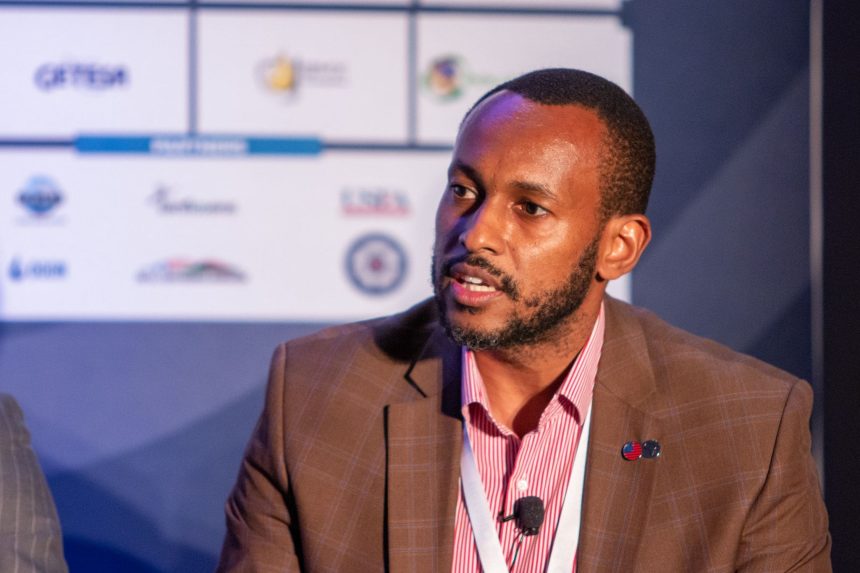
Ken Mugambi, the Group Chief Executive Officer of Trinity Energy, has been thrust into the centre of a controversial multi-billion-shilling oil allocation dispute in South Sudan following revelations that his company was awarded a disputed crude cargo worth about KSh7.8 billion.
The controversy stems from an official letter dated March 31, 2026, issued by South Sudan’s Ministry of Petroleum, which designated Trinity Energy Limited as the lifter of a 600,000-barrel cargo of Dar Blend crude oil valued at approximately $60 million.
Official ministry letter named Mugambi directly
The letter, signed by newly appointed Undersecretary Dr. Santino Ayuel Longar, was addressed directly to Mugambi in his capacity as Group CEO of Trinity Energy Limited in Juba.
The cargo was scheduled to load between April 29 and 30, 2026, at Port Sudan’s Bashayer terminal.
According to the letter, all proceeds from the crude sale were to be retained by African Export-Import Bank (Afreximbank) to offset debts owed by the South Sudanese government under existing financing arrangements.
The arrangement effectively positioned Trinity Energy as the designated lifting vehicle for the debt recovery process.
Cargo allegedly allocated to another company
However, the deal quickly descended into controversy after it emerged that the same cargo had allegedly already been awarded to another company days earlier.
Reports indicate that on March 27, 2026, the outgoing petroleum undersecretary, Dr. Chol Deng Thon Abel, had signed a separate letter allocating the exact same 600,000-barrel cargo to Euro American International Energy DMCC, a Dubai-based company linked to Sudanese businessman Idris Taha.
Just days later, another official communication reportedly restored the cargo allocation back to Euro American.
The developments created a dramatic situation in which the same physical crude cargo appeared to have been allocated to two different companies within a span of eight days.
Questions over Trinity’s role
The controversy has triggered questions over whether Trinity Energy had prior knowledge of the earlier allocation and whether the company knowingly entered into a dispute involving competing claims over sovereign crude exports.
Kenya Insights, which published the explosive report, said questions sent to Trinity Energy and Mugambi regarding the allocation conflict, contractual awareness, and the company’s role in the arrangement went unanswered at the time of publication.
Trinity’s long history in South Sudan oil sector
The latest scandal is not the first time Trinity Energy has found itself linked to controversy surrounding South Sudan’s oil sector.
The company has operated in South Sudan since 2012 and grew into one of the country’s largest fuel suppliers, reportedly handling more than 40 percent of South Sudan’s energy demand at one point.
Its dominant fuel storage infrastructure and deep commercial ties within Juba’s petroleum sector have repeatedly placed the company at the centre of oil-backed financing arrangements.
Afreximbank financing links
In 2018, Trinity Energy entered into trade finance agreements with Afreximbank involving tens of millions of dollars for fuel imports into South Sudan.
Investigative reports by international watchdog group The Sentry later alleged that Trinity was awarded more than 40 percent of South Sudan’s crude cargo allocations between 2018 and 2019 under controversial financing arrangements.
The investigations claimed the company sold the crude to Glencore Singapore and that the transactions raised concerns around transparency, governance, and possible financial misconduct.
The reports further alleged that Trinity paid large “facilitation” and lobbying fees linked to the setup of the oil-backed financing deals.
Mugambi’s corporate profile under scrutiny
Mugambi, who officially became Trinity Group CEO in February 2025 after previously serving as Deputy CEO, is widely known in East African business circles as a seasoned corporate executive.
His professional background includes affiliations with the Kenya Association of Manufacturers, an MBA from the University of Calgary, and a degree in actuarial mathematics from the University of Nairobi.
Trinity Energy also operates an expanding retail fuel network across Kenya, South Sudan, and the Democratic Republic of Congo.
But analysts say the latest revelations now place Mugambi’s leadership under renewed scrutiny, particularly regarding Trinity’s continued involvement in South Sudan’s politically sensitive oil allocation system.
Debt recovery operation
At the heart of the matter is South Sudan’s massive debt to Afreximbank, which reportedly exceeded $657 million after rulings in UK court proceedings tied to oil-backed financing arrangements.
The March 2026 cargo allocation appears to have formed part of a debt recovery mechanism through which crude sale proceeds would flow directly to Afreximbank instead of South Sudan’s treasury.
Under that arrangement, Trinity Energy was allegedly functioning as the operational conduit for lifting and transferring the crude.
Unanswered questions remain
Several major questions remain unresolved, including:
- Why the same cargo was allegedly allocated to multiple companies
- Whether Trinity had legal assurance over the cargo
- What commercial fees or benefits Trinity stood to gain
- Whether South Sudan’s normal public finance procedures were bypassed
Neither South Sudan’s Ministry of Petroleum nor Trinity Energy had publicly responded to the allegations by the time the report circulated widely online.
The controversy is now expected to intensify scrutiny over South Sudan’s oil governance system, the role of foreign-linked intermediaries, and the involvement of regional corporate players in sovereign crude allocation deals.