Home Author
Author

Daily Trends

Guinness, the Official Beer of the Premier League, once again raised the bar for football fans by hosting an epic Guinness Matchday experience at Al Capone Thika Road on Sunday 25th January. Scores of passionate fans gathered to celebrate their love for the beautiful game, witnessing a dramatic weekend of Premier League action.

Sunday’s standout fixtures featured Crystal Palace vs Chelsea, which saw the Blues assert dominance in the London derby, brushing aside Crystal Palace 3-1 on their own turf, and setting the tone for the day’s high-stakes showdown between table-topping Arsenal and archrivals Manchester United. The highly anticipated game ended in a 3-2 victory for Carrick’s United.

The excitement was further amplified by insightful expert punditry from Manchester City’s Lotan Salapei who hyped up the crowd with live commentary and banter, adding an extra layer of entertainment to the day’s high-pressure match.

Through massive HD screens and crisp audio, Guinness delivered an unparalleled, immersive match experience that captured every crunching tackle and triumphant ripple of the net in breathtaking clarity. Delivering an unparalleled, immersive match experience.

“The energy at this Guinness Matchday has been phenomenal! I’m in awe of the passion that has been exhibited by fans from both sides of the high-stakes Arsenal vs Manchester United game. The fervor and energy displayed at Al Capone is the reason why Guinness Matchday exists; to bring together everyone who shares in our love for the beautiful game and perfectly chilled Guinness. We are grateful for the record attendance and will be hosting another spectacular matchday soon. We invite all our consumers to watch out for the details of where to catch the next Guinness Matchday.” Said Joy Murugi, Brand Manager for Guinness.

Beyond the pitch action, attendees enjoyed perfectly chilled Guinness and a chance to be rewarded for their passion and knowledge of the Premier League through the Guinness Cleansheet challenge. The Guinness Matchday series continues to redefine how Kenyan football fans experience the beautiful game, blending the world’s most popular league with the world’s most iconic beer. Football fans across the country can look forward to more exciting matchdays throughout the season.

0 comment
0 FacebookTwitterPinterestLinkedinTumblrWhatsappTelegramEmail

Across Kenya’s evolving social scene, a quiet shift is taking place. More consumers are becoming intentional about how they drink, choosing balance, pacing, and mindfulness over excess. This growing moderation mindset is not about stepping away from alcohol altogether, but about redefining enjoyment on one’s own terms.

From wellness-led communities and daytime social plans to longer, more layered occasions that stretch from afternoon into evening, consumers are seeking options that allow them to stay present without overindulging. As a result, the alcohol category is beginning to reflect a broader spectrum of needs; creating room for lighter, more session-able choices that complement modern lifestyles.

Brands are increasingly recognizing that moderation is no longer a niche behaviour, but a mainstream consideration. It sits alongside conversations around mental clarity, productivity, fitness, and social connection, especially among urban consumers who want flexibility without feeling excluded from shared experiences.

Within this context, White Cap Crisp has found relevance by offering an option that fits naturally into moderation-led moments. Rather than positioning itself as a replacement or alternative to traditional beer experiences, the brand supports consumers who want to pace themselves while still participating fully in social occasions.

Commenting on this shift, Faith Musyoka, White Cap Crisp Brand Manager, said:
“We are seeing more consumers who want to be intentional about their drinking without disconnecting from the moments that matter. Moderation today is about choice and flexibility, and our role is to ensure there are options that allow people to enjoy responsibly while still feeling part of the occasion.”

This approach reflects a broader recalibration within the industry; one that acknowledges that enjoyment does not have to be tied to intensity. For many consumers, the value lies in refreshment, rhythm, and the ability to engage longer with friends, activities, and conversations.

As moderation continues to shape social behaviour, brands that understand this nuance, meeting consumers where they are rather than telling them how to drink will remain relevant. The future of social enjoyment, it seems, is less about extremes and more about balance.

0 comment
0 FacebookTwitterPinterestLinkedinTumblrWhatsappTelegramEmail


For many Kenyan households, financial planning often starts with saving, budgeting, or investing. Yet financial experts opine that the most important step comes earlier: securing life assurance.

It is the safety net that protects everything else; your income, your dependants, and the goals you have set as a family.

Without life assurance, a single emergency can undo years of progress. An unexpected illness, the loss of a breadwinner, or a sudden disruption in income can drain savings, force the sale of assets, or plunge families into debt.

With community contributions, medical fundraisers and burial costs becoming a routine in societies, the emotional and financial toll is evidently devastating to many people.

Life assurance provides a cushion. It ensures dependants remain financially stable even when income is interrupted. It covers immediate needs, preserves dignity, and protects long-term plans such as education or home ownership.

Life Assurance protects education by guaranteeing that school fees continue to be paid even if the parent or breadwinner passes away, ensuring children’s learning is never interrupted.

It also safeguards home ownership by covering outstanding mortgages or home loans, thus preventing families from losing their homes during sudden financial disruptions.

Unlike traditional savings, which can be depleted quickly, life assurance provides a structured payout when it matters most.

Many families also rely on life assurance as a disciplined way to build long-term savings. Certain policies combine protection with a savings element, allowing households to plan milestone events, children’s education, emergencies, or retirement, while enjoying the security of insurance cover.

Equity Insurance has focused on offering life solutions that are simple to understand, accessible to everyday families, and aligned to real financial needs.
What Equity Insurance offers in Life Assurance
Equity has positioned itself around four key life assurance pillars that reflect what Kenyan families ask for.

Family Protection Covers

These ensure that dependants are financially secure in the event of death or permanent disability of the breadwinner. Benefits typically cover living expenses, education needs, and other critical family obligations.

Education policies

These allow parents and guardians to save consistently for a child’s future while remaining protected. Should anything happen to the parent, the insurer continues paying premiums, ensuring the child’s education plan is uninterrupted.

Credit life cover

This protects borrowers by ensuring that loans are automatically settled if the insured person passes away or becomes permanently disabled. It prevents families from inheriting debt.

Investment-linked life policies

These combine insurance protection with a savings or investment component, helping customers grow wealth over time while staying protected against risks.
Across these options, Equity also offers flexible premium payment plans.

Instead of paying a full year upfront, customers can spread payments over manageable instalments, a major advantage for salaried workers and small business owners juggling multiple financial commitments.

Dedicated bancassurance officers in Equity branches further assist customers in choosing the right type of cover, explaining benefits, clearing misconceptions, and ensuring that policies match each customer’s income level and goals.

As the cost of living rises and financial uncertainties increase, say life assurance is no longer optional. It is the foundation of responsible financial planning. It safeguards progress, preserves dignity, and ensures that one emergency doesn’t erase years of effort.
Life assurance is not for later; it is for now.

With accessible products and flexible payment structures, you can take the first step towards securing financial future today and protect the plans you are working so hard to build.

To get started visit any Equity Branch near you
Learn more visit: Insure with Equity | Equity Bank Kenya

0 comment
0 FacebookTwitterPinterestLinkedinTumblrWhatsappTelegramEmail
CS Rebecca Miano

By Rebecca Miano, Cabinet Secretary for Tourism and Wildlife

Kenya has set an ambitious but achievable target: attracting at least five million international tourists annually by 2028. This goal is not merely about increasing visitor numbers; it is about growing tourism revenue, expanding employment opportunities, and positioning tourism as a central pillar of inclusive economic growth. Achieving this target, however, will require a united national effort—one in which county governments play a leading role.

Tourism is a devolved opportunity. While the national government provides policy direction, international marketing, and strategic coordination, the tourism products that visitors experience are located within counties. Wildlife, landscapes, cultural heritage, adventure experiences, festivals, and community-based tourism initiatives are all managed at the county level. For Kenya to reach five million visitors by 2028, counties must actively come on board as partners in tourism development, promotion, and investment.

For too long, Kenya’s tourism performance has relied on a narrow product base, primarily wildlife safaris and coastal tourism. These products remain vital, but they alone cannot deliver the scale of growth required to meet our national targets. Many countries possess unique and compelling attractions that remain underdeveloped, under-promoted, or disconnected from national marketing efforts. Unlocking these assets through deliberate county action is essential to expanding Kenya’s tourism offering and competitiveness.

County governments must therefore prioritize tourism within their development agendas. This means integrating tourism diversification into County Integrated Development Plans, allocating adequate resources to product development, and creating enabling policy environments that attract private sector investment. Counties should focus on developing all-season tourism products that reduce seasonality, lengthen visitor stays, and spread tourism benefits more equitably across regions.

Data-driven planning will be central to this effort. The ongoing national tourism product mapping exercise is designed to provide counties with reliable data on tourism assets, gaps, and opportunities. Counties are encouraged to fully participate in this exercise and use the findings to guide infrastructure development, product management, and targeted marketing. Effective policy decisions must be grounded in evidence, not assumptions.

Equally important is destination branding. Counties must clearly define and promote their unique tourism identities while aligning with the national Magical Kenya brand. Strong county brands enhance the national brand by presenting Kenya as a diverse, multi-experience, year-round destination. Coordinated branding and marketing between national and county governments will be critical to attracting new markets and increasing repeat visitation.

Tourism growth is also a jobs agenda. As we work toward five million tourists by 2028, the sector has the potential to significantly expand employment, particularly for young people. Counties can support this by promoting youth entrepreneurship, digital tourism innovation, skills development, and community-based tourism enterprises.

Ultimately, reaching five million tourists by 2028 is a shared responsibility. National government cannot achieve this goal alone. I therefore call upon county governments to come on board fully—through policy alignment, investment, innovation, and collaboration. Together, we can unlock Kenya’s full tourism potential, grow arrivals and revenue, and ensure tourism delivers lasting benefits for our people and our economy.

0 comment
0 FacebookTwitterPinterestLinkedinTumblrWhatsappTelegramEmail

Wambugu Muchiri & Company Advocates is under criminal investigation for attempted insurance fraud, after allegedly filing claims for fake accident victims.

The matter relates to a minor road accident that occured on 28th July 2025 along Limuru Road involving a Toyota Matatu, registration KBV 043P, in which three passengers sustained minor injuries, according to official police reports.

Despite this, the law firm reportedly filed claims asserting that 10 passengers had suffered varying degrees of injuries, listing the following as alleged victims:

Dick Davis Akello, Rose Kadogo Makhana, Margret Wanjiku Kahoro, Mary Nyambura Irungu, Scholastica Dibango, Eshibachi Michael Obuchere, Silas Nalanya, John Limuli, Jane Rose Mutegi, and Antony Gachoka Kuria.

Investigations by AMACO Insurance Company ltd revealed that the claims were allegedly supported by fake P3 forms and police abstracts. AMACO subsequently wrote to the Base Commander of Gigiri Police Station on 6th January 2026 seeking verification of the documents.

In a response dated 7th January 2026, the Base Commander stated: “Following our review and verification, we hereby formally inform you that the police abstract and P3 form brought to our office by your representative are forged documents and did not originate from Gigiri Traffic Base. We have confirmed that the said documents are not genuine and are not traceable to our records. Kindly note that we disassociate ourselves entirely from the said documents and any claims arising from them.”

After the Base Commander disowned the documents, AMACO reported the matter to the Directorate of Criminal Investigations (DCI). The lawyer involved was arrested but later released under circumstances that remain unclear.

Further fraudulent matters are being sorted across various files for follow-up and further action.
The case has raised serious concerns about insurance fraud, document forgery, and accountability within the legal profession, and investigations are ongoing.

0 comment
0 FacebookTwitterPinterestLinkedinTumblrWhatsappTelegramEmail
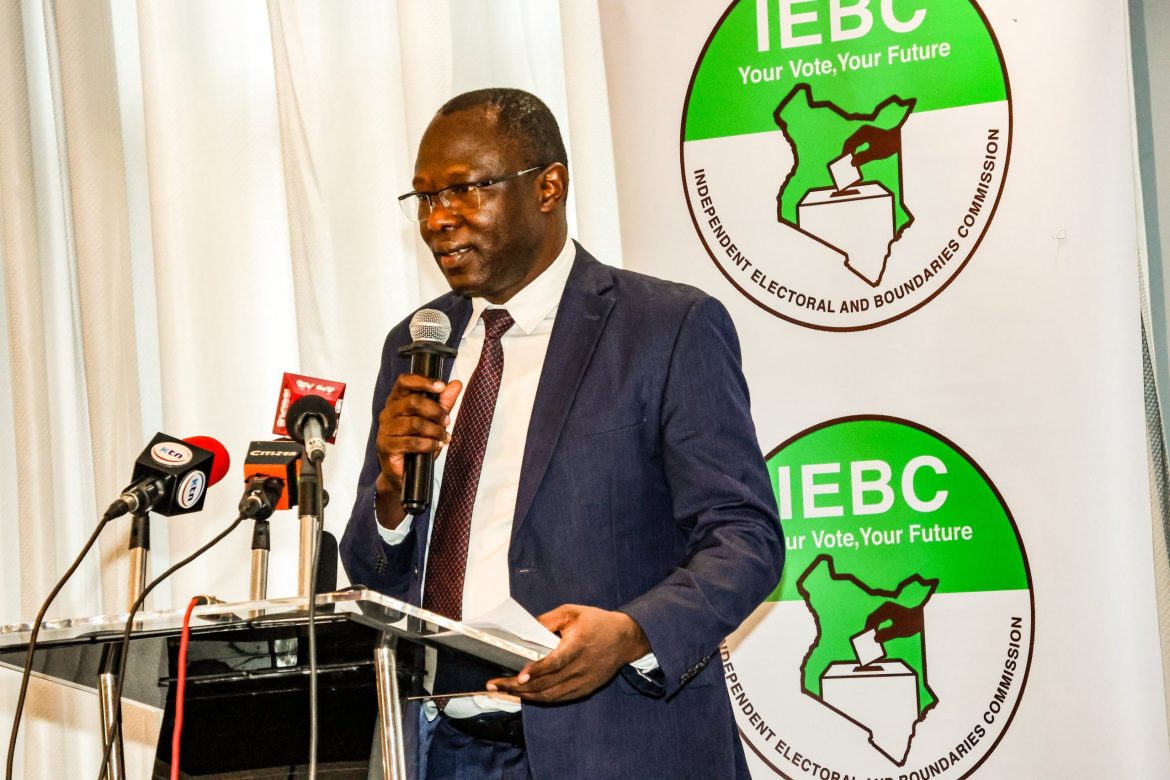
IEBC chairperson Erastus Ethekon

The Independent Electoral and Boundaries Commission (IEBC) has announced a major recruitment drive, opening up hundreds of temporary job opportunities ahead of the February 26, 2026, by-elections.

In a public notice issued on Wednesday, January 21, 2026, the electoral body invited qualified Kenyans to apply for various short-term positions that will support the conduct of the upcoming polls.

IEBC Positions Available

According to IEBC, the commission is seeking applicants for the following roles:

  • Support Electoral Trainers (SETs)
  • Presiding Officers and Deputy Presiding Officers
  • Polling and Counting Clerks

The temporary positions will play a critical role in ensuring a smooth, transparent, and credible electoral process during the by-elections.

How to Apply For IEBC Jobs

Interested applicants are required to submit their applications online only through the official IEBC recruitment portal: https://jobs.iebc.or.ke.

“We are hiring! The Commission invites qualified applicants to apply for the following temporary positions for the #26thFebByelections: 1. Support Electoral Trainers (SETs) 2. Presiding and Deputy Presiding Officers 3. Polling/Counting Clerks Submit your application online via: https://jobs.iebc.or.ke,” IEBC stated.

The commission noted that the application deadline is Monday, January 26, 2026, leaving candidates with limited time to submit their details.

“Application deadline: Monday, January 26th, 2026. Your Vote, Your Future,” the notice reads.

February 26 By-elections

The IEBC Chairperson Erustus Ethekon had announced that the four remaining by-elections would be held on February 26, 2026.

Ethekon announced the by-election dates in a gazette notice released on December 19, 2025, confirming the vacancies in the areas and announcing directives to political parties and aspirants.

The by-elections will be for the Member of National Assembly for Isiolo South Constituency, Member of County Assembly for Muminji Ward and Evurore Ward in Mbeere North Constituency, Embu County, and West Kabras Ward in Malava Constituency, Kakamega County.

IEBC had also directed political parties intending to participate in the by-elections to submit the names of the persons contesting in party primaries and the date of the party primaries on or before Friday, 2nd January, 2026.

0 comment
0 FacebookTwitterPinterestLinkedinTumblrWhatsappTelegramEmail
Ngong Hills wind turbine

Panic swept through Ngong Hills on Tuesday afternoon after a wind turbine at the Ngong Hills Wind Farm was engulfed in flames, sending thick plumes of smoke billowing into the sky in a dramatic incident that has left Kenya Electricity Generating Company (Kengen) counting losses estimated to run into tens of millions of shillings.

The shocking scene unfolded at around 3 pm, stunning nearby residents and visitors who frequent the scenic hills, a popular tourist and hiking destination just outside Nairobi.

Images obtained by Daily Trends show intense flames consuming the towering turbine, with dark smoke visible from miles away, sparking fear and speculation over possible power disruptions and safety risks.

Kengen Breaks Silence

In a press statement issued on Wednesday, January 21, 2026, Kengen confirmed the fire, clarifying that the incident occurred during a scheduled maintenance exercise at the wind farm.

According to the power producer, the affected turbine, a 0.85-megawatt unit, had already been taken offline as part of planned maintenance works when the fire broke out.

“The affected 0.85-megawatt wind turbine was already offline at the time of the incident,” Kengen stated, adding that all personnel on site were accounted for and safe.

The company further assured Kenyans that the incident posed no risk to the national power supply, dismissing fears of blackouts.

“There has been no interruption or risk to electricity supply to the national grid,” the statement read.

Investigations Launched

Kengen revealed that its internal safety team, working alongside relevant regulatory and safety agencies, has launched investigations to determine the cause of the fire and assess the full extent of the damage.

The probe will also focus on identifying corrective and preventive measures to avert similar incidents in the future.

While the exact cause remains unclear, the scale of the fire has raised questions about turbine safety, maintenance protocols, and the vulnerability of critical renewable energy infrastructure.

Reaffirming its commitment to safety, the electricity generator emphasized that workplace safety remains a core value across all its operations.

Kengen noted that strict health and safety standards continue to guide its maintenance and power generation activities, even as it expands Kenya’s renewable energy footprint.

The Ngong Hills Wind Farm is one of Kenya’s earliest and most iconic wind power projects, playing a crucial role in the country’s push toward clean, green, and sustainable energy.

As investigations continue and damage assessments are finalized, the dramatic blaze has reignited debate on infrastructure resilience, even as Kenya races toward a renewable-powered future.

0 comment
0 FacebookTwitterPinterestLinkedinTumblrWhatsappTelegramEmail

Kitutu Chache South Member of Parliament (MP) Antony Kibagendi has been arrested.

The lawmaker revealed via his social media accounts on Tuesday, January 20, that he had been blocked by officers from the Directorate of Criminal Investigations (DCI).

“I Have been aggressively blocked by DCI officers and arrested,being taken to DCI HQs,” Kibagendi stated.

Kibagendi later clarified that he had been taken to Muthaiga Police Station. While he did not reveal the reasons behind his arrest, the lawmaker took to social media to call out Interior Cabinet Secretary Kipchumba Murkomen and President William Ruto, saying that he will not be intimidated.

“Someone tell MURKOMEN AND WILLIAM RUTO that we shall not be intimidated. #WantamNiConstant,” he said.

However, Daily Trends has learnt that Kibagendi might have been arrested in connection with an assault incident which was captured on CCTV and went viral in December 2025. 

Reports indicate that a 38-year old man had filed an assault case against Kibagendi on November 27, 2025. 

In the footage that went viral, a man believed to be Kibagendi approached another fellow seated at the corner of a food establishment before proceeding to physically assault him in broad daylight. 

0 comment
0 FacebookTwitterPinterestLinkedinTumblrWhatsappTelegramEmail
Millie Odhiambo Says M-PESA Thieves Drained Her Account Over Christmas

Suba North MP Millie Odhiambo has sparked a massive online debate after revealing that her M-PESA account was allegedly wiped clean by fraudsters over the Christmas period, leaving her with just Ksh17.

In a statement shared via her official Facebook account, which quickly resonated with struggling Kenyans, the outspoken legislator dismissed the notion that politicians are immune to financial hardship, insisting that even MPs get broke.

“This Christmas I was broke—or you think we do not get broke?” Millie posed.

According to the MP, she had hosted guests during the festive season and was relying on funds in her M-PESA wallet, only to discover that the money had mysteriously disappeared.

“I had money on M-PESA. I decided to use it only to discover it had all been cleared by M-PESA thieves. Guess what? They left a balance of 17 shillings,” she said.

The revelation has struck a nerve at a time when many Kenyans are grappling with the harsh realities of “Njaanuary”—the financially draining month that follows the festive season.

With school fees deadlines looming, Millie admitted she was forced to borrow money to stay afloat, raising serious questions about the safety of mobile money platforms.

“Wheee. I had to kopa,” she stated, adding that the incident appeared suspicious.

The MP went further to suggest the fraud “looked like an inside job,” a claim likely to pile pressure on Safaricom as concerns over mobile money fraud continue to grow.

Demand for Refund

Millie has now publicly demanded her money back, calling on M-PESA to take responsibility and act swiftly.

“MPESA, I need my money back. This is Njaanuary and fees must be paid. Sawa?” she said.

Her statement has ignited a wave of reactions online, with many Kenyans sharing similar experiences of alleged M-PESA fraud and calling for stronger safeguards, quicker reversals, and greater accountability from service providers.

As of publication, Safaricom had not issued a response to the MP’s claims, but the explosive revelation has once again put the spotlight on the security of M-PESA, Kenya’s most popular mobile money platform, at a time when millions depend on it for daily survival.

0 comment
0 FacebookTwitterPinterestLinkedinTumblrWhatsappTelegramEmail
Smart tips for first-time car buyers in Kenya

Buying the first car often begins with excitement, scrolling through listings late at night, watching several car review videos, imagining weekend road trips, and picturing the freedom of no longer relying on matatus or ride-hailing apps.

But for many first-time buyers, the dream can quickly tangle with frustration. It might be the shock of hidden costs no one warned you about. Or walking into a dealership only to realize the “good deal” online looks like nothing the car parked in the yard. For some, it’s being handed over a long list of documents they’ve never heard of. Others get stuck between banks offering confusing financing terms or sellers pushing them to make decisions too fast.

In Kenya, many car owners will tell you buying your first car is not just a financial commitment, it’s an emotional journey full of learning moments, near-mistakes, and, for some, very expensive lessons. Whether you’re navigating it alone, leaning on advice from friends, or trying to decode online reviews, the process can feel overwhelming.

However, with the right preparation and a reliable financing partner, first-time car buyers can avoid the common traps and drive home with confidence, not regret. If you’re eyeing your first car, keeping these essentials in mind is critical to avoiding future regrets:

1. Set a realistic budget

Car buying is a one-time process, but car ownership is a long-term commitment. Before visiting a dealership or browsing online, work out what you can comfortably afford. Consider not just the purchase price, but insurance, fuel, service, taxes, parking, and, if financing, interest.

Many first-time buyers underestimate these costs and only realize later that the car is straining their monthly budget.

This is where Equity Asset Finance plays a key role. Equity allows flexible repayments on both the vehicle and insurance, enabling first-time buyers to spread costs in a predictable way that aligns with their income, reducing financial pressure from the very start.

2. New or used? Decide what fits your needs

New cars offer reliability and warranties but come at a higher cost. Used cars are more affordable but require careful inspection. First-time buyers are encouraged to consider popular models with readily available spare parts and strong service networks, making ownership easier and less costly in the long run.

3. Research, compare, and don’t rush

Take your time. Visit multiple dealerships, compare prices, and read reviews. A well-informed buyer has stronger negotiating power. The same principle applies to financing. Understanding your options ensures you choose terms that support, rather than strain, your finances.

4. Inspect thoroughly; preferably with a mechanic

For second-hand vehicles, inspection is non-negotiable. Check the engine, suspension, tyres, brakes, and service history. Hiring a trusted mechanic can help uncover hidden issues and protect you from costly mistakes after purchase.

5. Verify all legal documents

Always confirm the logbook is genuine, check for outstanding loans, and verify ownership via the NTSA portal. Many buyers get trapped by vehicles with hidden liabilities. Today, ownership transfer is done online, and the buyer must accept the transfer on their NTSA portal for the vehicle to be registered in their name. If the name on the logbook does not match the seller, that is a major red flag.

With Equity Asset Finance, the bank’s legal and operations teams facilitate and oversee this documentation process, significantly reducing the risk and administrative burden for first-time buyers.

6. Understand financing options

If buying on credit, critically examine loan terms. Look at monthly repayments, fees, and the total cost over time. Equity Bank offers up to 100% asset finance, allowing both salaried and business customers to apply using pay slip or bank statements. Repayments are matched to cash flow, and customers have the flexibility to clear their loans early without penalties.

For first-time buyers, this flexibility removes uncertainty and makes car ownership more manageable and sustainable.

7. Don’t be rushed into a deal

Salespeople often create artificial urgency to push quick decisions. Take time to think, walk away if unsure, and be ready to negotiate. In Kenya, bargaining is part of the buying culture and a rushed decision often leads to regret.

8. Consider future resale value

Choose models with strong resale value. Ex – Japan vehicles tend to retain value better, helping reduce the long-term cost of ownership and making it easier to upgrade in the future.

9. Insurance is mandatory; choose wisely

Always compare insurance options beyond price. It is also important to consider the claim settlement history, coverage limits, and reliability. Third-party insurance is cheaper but only covers damage to others, not your own vehicle.

Through Equity Bancassurance, customers can access competitive comprehensive insurance premiums, ensure proper protection while keeping insurance costs affordable and conveniently bundled with vehicle financing.

10. Learn basic maintenance

Routine maintenance keeps your car reliable and preserves its value. Basic knowledge helps you avoid being misled on repairs and allows you to make informed decisions. Follow service schedules, use trusted service centers, and keep proper records of all maintenance work.

In conclusion

Buying your first car doesn’t have to be stressful or confusing. With proper research, a clear budget, verified documentation, and an understanding of financing and insurance options, first- time buyers can avoid common pitfalls and enjoy the freedom that comes with vehicle ownership.

In the long run, a smart car purchase isn’t just about getting a good price; it’s about securing long-term peace of mind. With Equity Asset Finance, first-time buyers gain not just funding, but structured support, flexibility, and confidence throughout their car ownership journey.

0 comment
0 FacebookTwitterPinterestLinkedinTumblrWhatsappTelegramEmail
Why SMEs Need Tailored Digital Banking Solutions

The evolution of SME banking has for a long time been tied around technology, but many business owners are left to figure it out on their own. Rather than adapting to evolving business needs and market dynamics, SMEs often find themselves A/B testing various tech products without first diagnosing the underlying issues they need to solve.

This trial-and-error approach not only wastes your time as a businessperson and resources but also leaves you frustrated with tools that fail to address your core challenges.

Let us agree. For Kenya’s SMEs, digital banking is more than a convenience; it is a catalyst for growth. By simplifying financial operations and providing the tools needed to scale, these platforms empower businesses to focus on what truly matters: creating value, expanding their reach, and driving economic progress.

Picture this: As a business owner, you start your day juggling multiple tasks and multiple platforms, from processing supplier payments, managing cash flow, ensuring payroll is ready, and smooth operations across multiple teams or locations to responding to customer inquiries. By mid-morning, you are already behind schedule, caught up in a maze of manual processes and financial bottlenecks. For many small and medium-sized enterprises (SMEs) in Kenya, this is the daily reality.

The Growing Pains of Success

Data from the Kenya Association of Manufacturers (KAM) shows that over 60 percent of SMEs face significant cash flow challenges due to delayed payments. The lack of access to real-time financial data also leaves many business owners making decisions based on incomplete or outdated information, further hindering growth.

Building a Foundation for Growth

For SMEs, growth is thus sustainable when built on a strong financial foundation. Digital banking platforms provide these capabilities by:

  • Automating repetitive tasks like payroll and supplier payments
  • Providing real-time insights into cash flow and financial health
  • Offering flexibility to manage accounts anytime, anywhere

Take, for example, the rise of cross-border trade under the African Continental Free Trade Area (AfCFTA). SMEs engaging in regional trade need banking solutions that facilitate international transactions seamlessly. Digital platforms make it easier to process payments in multiple currencies, enabling businesses to expand their reach across borders.

Equity Online for Business

Among the digital platforms transforming SME operations in Kenya, Equity’s online banking solution for business, Equity Online for Business (formerly EazzyBiz), stands out as a tailored solution that addresses these challenges head-on. By automating processes, integrating with existing systems, and offering real-time data, it helps you to overcome the operational hurdles that come with growth. Features like bulk payments, cash flow management tools, and international transaction capabilities make it a valuable resource for SMEs looking to scale.

Beyond operational efficiency, Equity Online for Business empowers SMEs to make smarter financial decisions. By providing access to real-time insights and detailed analytics, these tools allow you to monitor cash flow trends, identify growth opportunities, and mitigate risks before they escalate. Additionally, the ability to integrate seamlessly with other financial systems ensures that you can scale without overhauling your existing processes, making it a cost-effective and future-proof solution.

While digital banking solutions like Equity Online for Business are transforming how SMEs operate, the broader shift toward digital financial services signals a significant change in Kenya’s business landscape. SMEs that adopt these tools are better positioned to compete in an increasingly interconnected world.

0 comment
0 FacebookTwitterPinterestLinkedinTumblrWhatsappTelegramEmail
Johnson Sakaja

Tension gripped Mukuru kwa Njenga on Tuesday morning after running battles erupted between residents and police officers over demolitions linked to an alleged road expansion, forcing Nairobi Governor Johnson Sakaja to personally step in.

For hours, Embakasi South descended into chaos as bulldozers moved in to flatten structures within the densely populated slum, triggering fierce resistance from locals who accused authorities of attempting to evict them without notice, consultation, or compensation.

Witnesses reported a heavy police presence early in the morning, with dozens of hooded officers assembling at Villa Police Station before moving into the area, a clear indication that authorities were anticipating unrest.

By mid-morning, the situation had escalated into confrontations, prompting Governor Sakaja to rush to the scene alongside Embakasi South MP Julius Mawathe in a dramatic intervention that immediately stopped the demolitions.

Scenes in Mukuru kwa Njenga on Tuesday, January 20, after police engaged residents in running battles.

Sakaja Codemns Mukuru Kwa Njenga Demolitions

Addressing angry Mukuru Kwa Njenga residents, Sakaja strongly condemned the demolitions, distancing Nairobi County from the controversial road works and blaming “unknown elements” for bypassing county procedures.

“No agency can purport to do work that belongs to the county without sign-off from the county government. We will not have that in Nairobi,” Sakaja declared.

The governor questioned how a feeder road, clearly under county jurisdiction, could be marked for expansion without the knowledge of the county’s planning committee, roads department, or the relevant County Executive Committee Member (CEC).

“Our planning committee is not aware, our roads chief officer is not aware, the CEC is not aware. Not even the President himself is aware,” he added.

Compensation Promised as County Apologises

In a rare public apology, Sakaja told residents the demolitions were “completely wrong” and assured those affected that compensation would be paid once proper consultations are conducted.

“The day we agree on access points, we will agree on compensation,” he said, revealing that the county had already compiled a list of affected residents.

He further raised serious questions after revealing that the institution responsible for the road had confirmed there was no need for additional road reserve, despite residents being forcefully removed from land they have occupied for decades.

MP Mawathe on Mukuru Demolitions

Backing the governor, Embakasi South MP Julius Mawathe dropped another bombshell, disclosing that consultations with the Kenya Urban Roads Authority (KURA) had ruled out any expansion of Catherine Ndereba Road.

“I was with KURA yesterday, and they said this is not their road. All authorities have confirmed there is no need for road expansion,” Mawathe stated.

Even more damning, the MP revealed that a court order is already in place stopping any expansion works, raising fresh concerns over who authorised the demolitions and why.

As calm slowly returned to Mukuru kwa Njenga, residents were left shaken, but defiant, demanding accountability for what they term as an illegal, traumatising exercise carried out under the watch of armed police.

With the county government disowning the project, KURA denying involvement, and a court order already in force, the Mukuru demolitions have now opened a new political and legal storm, one that could expose shadowy dealings behind Nairobi’s infrastructure projects.

0 comment
0 FacebookTwitterPinterestLinkedinTumblrWhatsappTelegramEmail
Robert Kyagulanyi Ssentamu, popularly known as Bobi Wine.

Robert Kyagulanyi Ssentamu, popularly known as Bobi Wine, has re-emerged and broken his silence after abduction fears.

Bobi Wine, in a statement shared via his official social media accounts on Saturday, January 17, said he had managed to escape from the Ugandan military, which had raided his home on Friday night.

He also disclosed that he was not at his home, but his wife and other family members are still under house arrest.

While addressing the fears surrounding his reported abduction, Bobi Wine said that his neighbours had concluded that the military had succeeded in abducting him and his family and spread the news.

“Last night was very difficult at our home in Magere. The military and police raided us. They switched off power and cut off some of our CCTV cameras. There were helicopters hovering over. I want to confirm that I managed to escape from them. Currently, I am not at home, although my wife and other family members remain under house arrest,” Bobi Wine stated.

“I know that these criminals are looking for me everywhere, and I am trying my best to keep safe. I understand that there has been great concern and speculation regarding my whereabouts. Please understand this is the context of a nationwide internet shutdown. Given the commotion that happened at our house at night, and given that no one is allowed to access the house, our neighbours concluded that they had succeeded in abducting us and spread the news.”

Uganda presidential results

He also rejected the presidential results that are being announced by the Uganda Electoral Commission and condemned the killings that have so far been reported in the country.

“I reiterate our COMPLETE REJECTION of the fake results Byabakama is reading. In addition to the ballot stuffing, the military takeover of the election, the detention of our leaders and polling officials, and other electoral offences, their results have zero backing!” Bobi Wine said.

“We condemn the murder of numerous citizens who have thus far attempted to peacefully demonstrate against the broad daylight thuggery. The people of Uganda have the right to protest in defence of their sovereign right to determine a government of their choice – not the kind of criminality we’re witnessing.”

He also claimed that the Ugandan government had employed various fraudulent techniques to usurp the will of the people in numerous constituencies across the country.

0 comment
0 FacebookTwitterPinterestLinkedinTumblrWhatsappTelegramEmail
Homa Bay region KERRA manager, Mr. Calvince Thomas

A Kenyan businessman has broken his silence with a disturbing account that points to alleged corruption at the heart of a key public institution. He claims a Homa Bay region KERRA manager, Mr. Calvince Thomas, used his office, influence, and fear to con him out of Ksh 2 million with promises of road construction tenders that never existed.

The victim describes a calculated scheme built on trust, intimidation, and claims of political protection. His story exposes how power, silence, and weak oversight can turn public offices into tools for private gain.

How a KERRA Region Manager Allegedly Turned Tenders Into a Personal Scam

According to the victim, the ordeal began as a promising business opportunity. He says associates introduced him to Calvince Thomas, the Kenya Rural Roads Authority Homa Bay Region Manager, as a man who controlled access to lucrative rural road projects.

The businessman claims Thomas presented himself as a decisive authority within KERRA. He allegedly spoke with confidence about procurement timelines, project allocations, and internal processes. The victim says Thomas insisted he had influence over who won tenders in Homa Bay County.

Their discussions focused on road works in Ndhiwa and Kasipul constituencies. These areas often receive KERRA funding for grading, drainage, and routine maintenance. The victim says Thomas framed the projects as already lined up and waiting for “trusted contractors.”

The complainant admits no written contract existed. Instead, he says Thomas relied on verbal assurances, official language, and his senior title to build trust. The victim claims Thomas also hinted at powerful backing, which discouraged questions and resistance.

That trust, the businessman says, proved costly.

Cash Payments and a Carefully Planned Meeting

The victim states that on October 30, 2023, he met Thomas at Willow Garden in Kileleshwa, Nairobi. He remembers the details clearly. He places the time at 12:37 PM.

During that meeting, the victim says he handed over Ksh 2 million in cash to the KERRA Homa Bay region manager.  He insists the amount matched their agreement in full.

According to the complainant, Thomas described the money as a facilitation fee. He allegedly promised that five KERRA road projects would follow. Three projects were to fall under Ndhiwa Constituency, while two were linked to Kasipul Constituency.

The victim says Thomas assured him his companies would receive priority once the tenders opened. He claims Thomas spoke with authority and certainty, leaving little room for doubt. The businessman says Thomas’s senior role within KERRA made the promises feel credible and safe.

After the payment, the victim expected formal tender notices, calls, or site visits. None came.

Political Protection Claims and Threats That Enforced Silence

When months passed with no progress, the victim sought answers. He recounts a follow-up meeting in February 2023 at Artcaffé in Hurlingham. There, he says the story changed.

According to the complainant, Thomas claimed the promised projects had already gone to companies linked to powerful government figures. He specifically mentioned Interior Principal Secretary Raymond Omolo. The victim stresses that these claims came from Thomas and remain unverified.

What disturbed him more, he says, was Thomas’s alleged attitude. The  KERRA manager reportedly bragged that other victims had reported him to the Directorate of Criminal Investigations over losses totaling Ksh 2.6 million.

The victim claims Thomas dismissed those reports and said political connections made him untouchable. He says Thomas laughed and spoke casually about investigations, sending a clear message of fear and intimidation.

Rather than refund the money, Thomas allegedly proposed a new verbal deal. He promised to allocate alternative projects before the end of the financial year. The victim says he agreed out of desperation and hope.

Nothing followed.

Broken Promises, Vanishing Calls and the Cost of Fear

Since that last meeting, the victim says Thomas went silent. He alleges the KERRA boss stopped answering calls, ignored messages, and cut off all contact.

The businessman admits he has not yet filed a formal police report. Fear has played a major role. He says the repeated claims of political protection made him doubt the value of reporting. He also worried about retaliation and blacklisting within the construction sector.

Still, the financial loss weighs heavily. He says the KSh 2 million came from years of work and strained his business operations. The pressure now affects his family and employees.

This publication confirms that these allegations remain untested in court. Efforts to reach Calvince Thomas for comment were unsuccessful by the time of publication. The Interior Principal Secretary named in the claims has not been linked to any wrongdoing, and no evidence connects him to the alleged scheme.

Even so, the account raises serious red flags. It highlights how procurement corruption, abuse of office, and fear can thrive when oversight fails. Contractors remain vulnerable when senior officials operate without accountability.

As calls grow for transparency and action, this case underscores the urgent need to scrutinize how a KERRA region manager wields power. Public institutions exist to serve citizens, not to enrich individuals. Silence only protects wrongdoing. Accountability restores trust.

0 comment
0 FacebookTwitterPinterestLinkedinTumblrWhatsappTelegramEmail
Screengrabs of CCTV footage of police assaulting youth in a pool entertainment joint in Nandi Hills.

Public outrage has erupted after an eight-minute CCTV video surfaced online showing armed police officers brutally assaulting young men inside a pool hall in Nandi Hills, Nandi County, in what many Kenyans are calling another disturbing case of unchecked police brutality.

The viral footage, which includes audio, captures uniformed officers armed with guns and batons storming the recreational facility in the early hours of Thursday morning. The officers are seen ordering the 12 young men inside the pool hall to lie on the floor before repeatedly beating some of them with batons.

At one point in the video, an officer is heard demanding identification documents from the patrons. Tensions escalate when one of the young men attempts to leave the premises, prompting officers to pounce on him and subject him to a vicious beating as others look on helplessly.

The incident has sparked widespread condemnation on social media, with Kenyans demanding immediate action from Inspector General of Police Douglas Kanja.

Nandi Senator Samson Cherargei demands action

Nandi Senator Samson Cherargei has come out strongly against the officers involved, describing the incident as “criminal, inhumane, and a blatant abuse of human rights.”

“I want to strongly condemn these acts of police brutality, criminality, and abuse of human rights perpetrated by police officers in Nandi Hills Town,” Cherargei said in a statement.

The senator demanded the immediate interdiction and suspension of the officers captured in the video to allow for independent investigations.

“I demand that the Inspector General of Police, Douglas Kanja, should immediately interdict and suspend the said police officers for this act of impunity. This will pave the way for independent investigations to be carried out,” he stated.

Cherargei pointed out that playing pool is not a criminal offence under Kenyan law, questioning the justification for the violent operation. He further noted that the officers’ conduct violated Article 244 of the Constitution, which requires the National Police Service to uphold professionalism, respect human rights, and foster public trust.

The senator has now called on the Senate Committee on National Security to urgently investigate the incident and ensure justice for the victims. He also urged the Independent Policing Oversight Authority (IPOA) to immediately commence investigations and prosecution proceedings against the officers involved.

“IPOA has been reluctant to prosecute police officers who were allegedly involved in killings in the Kimwani area in Nandi County. This culture of impunity must stop,” Cherargei said.

The Nandi Hills incident has reignited national debate over police violence, coming amid growing concern over the treatment of young men by law enforcement agencies.

According to the Missing Voices Annual Report 2024–2025 by human rights organisations, at least 104 people were killed by police, and 55 others forcibly disappeared between 2024 and 2025. The majority of the victims were young men aged between 19 and 34.

The report further notes that during the June–August 2024 anti-Finance Bill protests, at least 63 people were killed by police, while more than 65 others disappeared under unclear circumstances.

Senator Cherargei has vowed to relentlessly pursue accountability for the Nandi Hills incident.

“I will pursue these officers until justice is served for my constituents,” he said.

As pressure mounts, Kenyans are now waiting to see whether the police leadership and oversight bodies will act decisively, or whether the latest viral footage will join a long list of unresolved cases of alleged police brutality.

0 comment
0 FacebookTwitterPinterestLinkedinTumblrWhatsappTelegramEmail
Uganda Elections 2026

President Yoweri Museveni has taken an early lead in Uganda’s presidential election, according to provisional results released by the Electoral Commission on Friday morning.

The commission announced that with about 45 per cent of polling stations reporting, Museveni had garnered 76.25 per cent of the vote, translating to approximately 3.9 million votes.

His closest challenger, National Unity Platform (NUP) leader Robert Kyagulanyi, popularly known as Bobi Wine, was trailing with 19.85 percent, or approximately 1.3 million votes.

The early results place the long-serving president firmly ahead as the vote tallying process continues across the country, though the Electoral Commission cautioned that the figures remain provisional and subject to change as more polling stations submit their returns.

The election has been closely watched both locally and internationally, with Museveni seeking to extend his decades-long rule against a youthful opposition led by Bobi Wine, who has positioned himself as a symbol of change, particularly among young voters.

Votes are being counted in parts of Uganda amid an internet shutdown and opposition accusations of rigging in presidential and parliamentary elections.

“Massive ballot-stuffing reported everywhere,” declared presidential hopeful Bobi Wine in a post on social media, without providing documentary proof.

A photo collage of Yoweri Museveni and Bobi Wine.

The authorities have not responded to his allegations of electoral fraud, nor to his claim that “many” polling agents and supervisors belonging to his NUP party were “abducted, and others chased off polling stations”.

Delays of up to four hours have been blamed on malfunctioning biometric machines used to verify voters’ identities.

Some have linked the problems to the network outage, plus a lack of voting materials, and equipment not arriving at some stations on time.

Polling stations, therefore, closed later than planned. The electoral commission says that anybody who joined the queue by 5:00 pm was able to cast their ballot.

Earlier on, the electoral agency apologised for the “technical glitches” and said officials were working to resolve them.

In the presidential race, Yoweri Museveni, 81, in power since 1986, is seeking a seventh successive victory as he faces a challenge from Bobi Wine, a charismatic 43-year-old pop star.

The result of the presidential vote will be announced by 4:00 pm on Saturday, the electoral commission has said.

0 comment
0 FacebookTwitterPinterestLinkedinTumblrWhatsappTelegramEmail