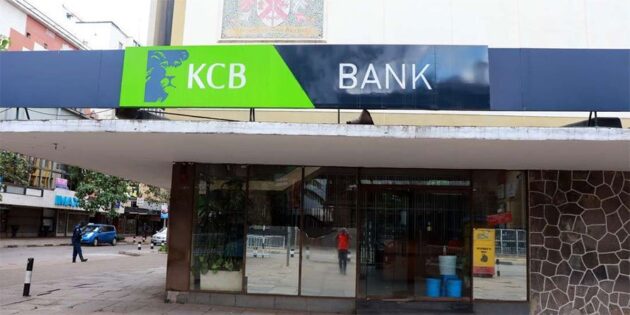
- From the Employment and Labour Relations Court to the High Court of Kenya, KCB Bank’s name is appearing with notable frequency in 2026 rulings and filings.
- Individually, each case may appear routine for a bank of KCB’s size. But collectively, they point to a broader narrative: persistent legal friction cutting across multiple areas of the institution.
- Unlike explosive fraud scandals, KCB’s situation in 2026 is unfolding as a “slow-burn controversy”, a steady accumulation of legal battles that, over time, could prove just as damaging.
KCB Bank Kenya is facing renewed scrutiny, not from regulators or auditors, but from the courts, where a steady stream of cases in 2026 is raising uncomfortable questions about the bank’s internal operations, labour practices, and lending decisions.
Even as the lender posts strong financial results, court records reviewed from the Kenya Law database reveal a pattern that critics say cannot be ignored: KCB is increasingly entangled in multi-front litigation, ranging from employee disputes to high-stakes commercial battles.
KCB’s Trail of Cases Across Kenya’s Courts
From the Employment and Labour Relations Court to the High Court of Kenya, KCB’s name is appearing with notable frequency in 2026 rulings and filings.
Among the standout cases:
- Mwaluma vs KCB Bank Kenya Plc (2026)
A labour dispute in which the claimant challenges the circumstances surrounding their exit from the bank, alleging irregularities tied to restructuring. The case underscores ongoing tensions between KCB and sections of its workforce. - KCB Bank Kenya vs Gillys Security & Investigations Ltd
A high-value commercial dispute centered on a KSh 84 million loan facility, with questions raised over documentation and the manner in which the loan was issued. The case has drawn attention to lending practices and transparency concerns. - Ndiritu vs KCB Bank Kenya (2026)
A financial dispute before the High Court tied to earlier banking transactions, highlighting how past deals are resurfacing as present-day legal risks. - Kitise vs KCB Bank Kenya Limited (2026)
An appeal case illustrating how disputes involving the bank can stretch across years, evolving into prolonged legal battles with significant implications. - In re KCB Bank Kenya Limited (2026)
A procedural application that, while technical in nature, reinforces the perception of constant legal activity involving the bank.
Not Isolated Incidents, But a Pattern?
Individually, each case may appear routine for a bank of KCB’s size. But collectively, they point to a broader narrative: persistent legal friction cutting across multiple areas of the institution.
Legal observers argue that the issue is no longer about isolated disputes, but about the frequency and diversity of litigation.
“When you see employment disputes, loan-related cases, and appeals all happening concurrently, it suggests systemic pressure points within the institution,” a Nairobi-based legal analyst noted.
Labour Disputes Signal Internal Strain
Cases like Mwaluma vs KCB highlight a recurring theme—employee grievances spilling into courtrooms.
Many of these disputes revolve around:
- Allegations of unfair termination
- Questions over disciplinary processes
- Claims linked to organizational restructuring
Insiders say this could be fallout from the bank’s tightened compliance and anti-fraud measures, which have led to dismissals in recent years—moves that may be triggering legal pushback from affected staff.
Lending Practices Under the Microscope
On the commercial front, the Gillys Security case stands out as a potential flashpoint.
At its core are allegations touching on:
- Loan documentation integrity
- Borrower consent and obligations
- Internal approval processes
While the matter remains before the courts, it raises broader concerns about how lending decisions are structured and enforced, a sensitive issue for any major financial institution.
Old Deals, Lingering Consequences
The Ndiritu and Kitise cases tell another story: the long tail of financial decisions.
These disputes, rooted in past transactions, are only now being resolved—or contested—years later. The result is a growing docket of cases that:
- Tie up legal resources
- Prolong uncertainty
- Keep the bank in continuous litigation cycles
Profitability vs. Perception
Despite the courtroom activity, KCB Group remains financially strong, reporting solid profits and maintaining its position as a regional banking powerhouse.
But analysts warn that financial performance does not cancel out reputational risk.
“You can be profitable and still have governance concerns. Courts reflect real disputes, and those disputes matter to investors and customers alike,” another expert observed.
A Slow-Burn Controversy
Unlike explosive fraud scandals, KCB’s situation in 2026 is unfolding as a “slow-burn controversy”, a steady accumulation of legal battles that, over time, could prove just as damaging.
Persistent litigation can:
- Erode employee trust
- Raise investor concerns
- Invite regulatory scrutiny
Silence or Strategy?
So far, KCB has largely allowed these matters to play out in court, maintaining a measured public stance.
Whether this reflects confidence in its legal position or a deliberate effort to avoid amplifying controversy remains unclear.
The Question Facing KCB
As more cases surface and existing ones progress, a critical question is emerging:
Are these courtroom battles simply the cost of doing business at scale or signs of deeper cracks within one of Kenya’s most powerful banks?
For now, the answers lie not in press releases but in the courtrooms where KCB Bank Kenya continues to defend its record.